
Commercial ice maker troubleshooting often starts with the obvious question: is there ice? If the machine produces no ice at all, the panic is immediate. But after supporting foodservice operators and equipment distributors for over two decades, I’ve learned that the most persistent problems are subtler—low production capacity, misshapen cubes, or intermittent failures that waste time and inventory. Most of these issues trace back to two overlooked areas: water quality and skipped maintenance. While typical guides recommend resetting the machine or descaling the evaporator, a systematic diagnosis grounded in how these units are engineered saves far more money than a quick fix.
How a Commercial Ice Maker Works
A commercial ice machine freezes water in a controlled cycle that lasts anywhere from 15 to 30 minutes per batch. An electric water valve fills a reservoir, a pump sends water over a chilled evaporator plate, ice forms in sections, and a harvest cycle uses heat or mechanical release to drop cubes into the storage bin. The entire sequence repeats until the bin sensor signals it is full. That sensor, the water inlet system, and the refrigerant loop must all coordinate. When one part drifts out of spec, the entire cycle degrades.
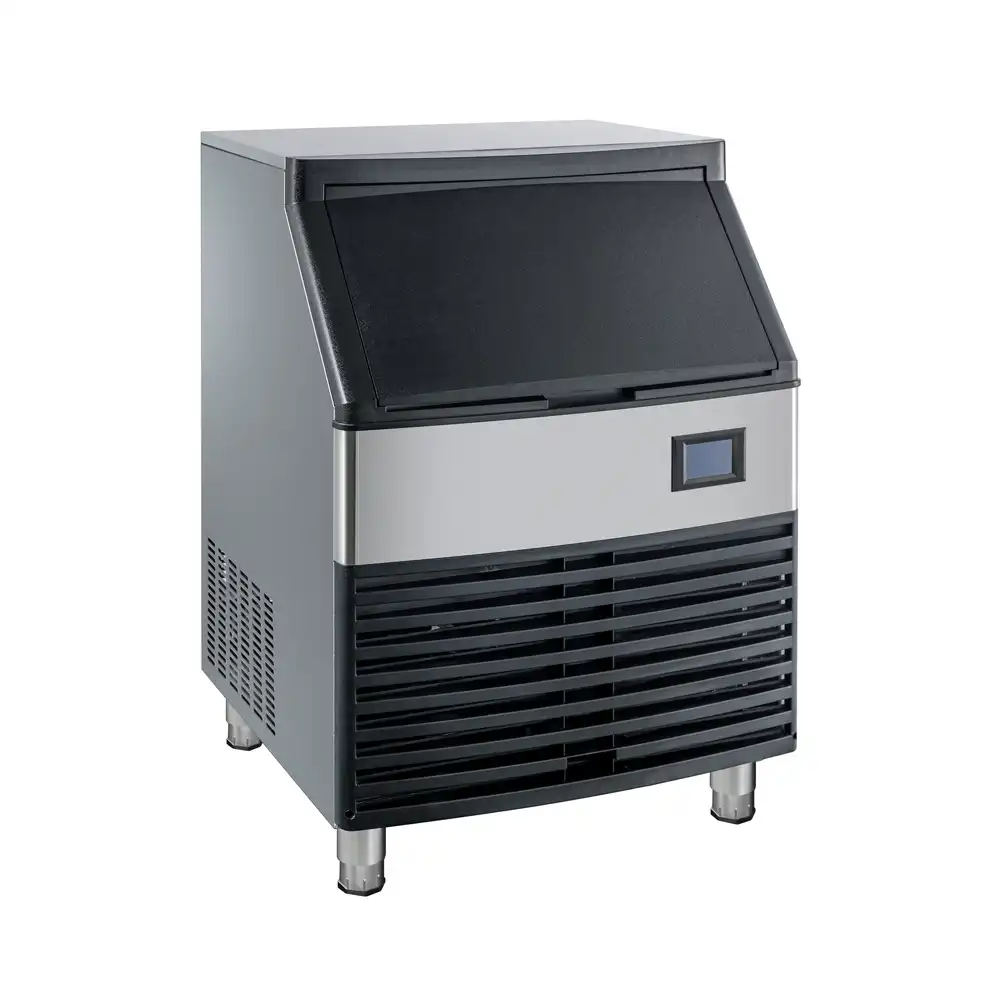
This is why I always tell equipment buyers to pay attention to the evaporator material and water system design, not just the daily ice rating. For instance, the Camay FB210A uses a copper-nickel evaporator and a water-flow ice-making system. In our manufacturing tests, that combination increases actual ice output by about 10% compared to a conventional spray-bar design, because the water film covers the plate more evenly and freezes faster. Understanding this mechanical sequence is the first step in diagnosing what went wrong.
The Overlooked Role of Water Quality
Most callbacks we see on ice maker failures are not compressor or control board problems. They are scale and slime. Hard water leaves mineral deposits on the evaporator, which insulates the freezing surface and slows ice formation. The machine then runs longer cycles, overheats, or produces thin, hollow cubes that shatter on harvest. Bacteria and mold from unfiltered water clog the distribution tubes and contaminate the ice itself.
If your machine has a self-cleaning function, use it every two to four weeks depending on water hardness. The FB210A, for example, runs a complete self-clean cycle via its LCD touchscreen, and its front intake with removable anti-dust mesh keeps airborne debris out of the condenser. But even with those features, the water filter is the first component to check when ice production drops or cubes look cloudy.
| Water Problem | Symptom | Immediate Fix |
|---|---|---|
| High mineral content | Thin, hollow, or irregular cubes | Replace water filter; increase descaling frequency |
| Sediment or rust | Ice discoloration, slow freezing | Install a pre-filter; clean inlet screen |
| Microbial growth | Slimy ice bin, off-taste | Sanitize bin and water circuit; check chlorine residual |
| Low water pressure | Machine won’t harvest or fills slowly | Confirm pressure above 20 psi; inspect inlet valve |
If your program involves multiple sites with varying water quality, it is worth confirming the correct filter media with the manufacturer before finalizing your BOM. Reach out at Sales@hzcamay.com with your location and water report if you need clarification.
Symptom Guide: Fixing the Most Frequent Failures
No Ice Production
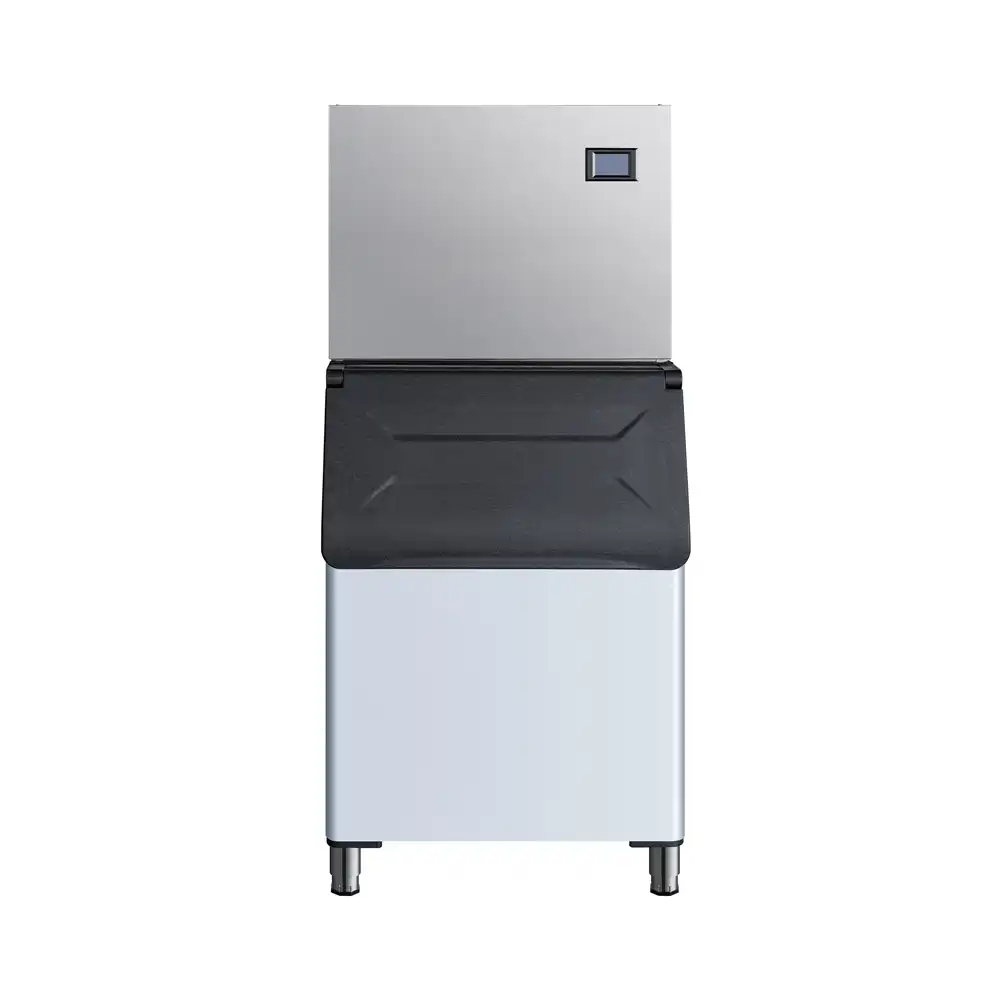
Check the bin sensor first. If it is stuck in the “full” position, the machine thinks it does not need to produce. Next, verify the water supply and inlet valve: a clogged filter or failed solenoid valve stops the cycle before it begins. Then look at the condenser. A dust-covered condenser coil raises head pressure and trips the thermal overload. On the FB550A, the front-facing removable dust screen makes this a thirty-second check.
Water Leak
Leaks usually come from the drain line, water inlet fitting, or a cracked reservoir. If the water appears on the floor only during the harvest cycle, the drain pan may be overflowing. Confirm the drain is not kinked and that the machine is level. A misaligned bin drain or a blocked standpipe can also send water onto the floor rather than to the floor drain.
Small or Hollow Ice Cubes
This nearly always points to insufficient water flow over the evaporator, often caused by scale buildup or low water pressure. In water-flow systems like the one in the FB210A, a weak pump or partially blocked distribution tube can starve sections of the evaporator. Descaling often resolves it, but if the problem returns within two weeks, the root cause is the incoming water quality, not the machine.
Ice Machine Runs But No Ice
If the compressor hums and the evaporator feels cold but no ice forms, suspect a refrigerant leak or a stuck harvest valve. The evaporator may get cold enough to form frost but not cold enough to freeze water into solid cubes. Sealed system repairs require a licensed technician. If the machine is still under warranty, contact the manufacturer before opening the refrigerant circuit.
Ice Tastes or Smells Bad
Absorbed odors from the kitchen or old ice left too long in the bin can taint fresh batches. Clean the bin with a sanitizing solution weekly and discard ice that sits unused for more than a few days. Check the water filter expiration and the cleanliness of the air-cooled condenser; a dirty condenser can pull kitchen fumes into the air intake and transfer them to the ice.
Diagnosing Deeper Component Issues
When surface-level checks fail, the problem usually sits in one of three places.
The evaporator plate itself can develop micro-cracks or delamination over time, especially if the machine has been cleaned with undiluted descaling acids. Our manufacturing team has seen units returned with corrosion pits deep enough to expose the refrigerant channels. At that point, replacing the evaporator is the only fix.
The electronic control board can misread sensor inputs. A failing thermocouple or harvest sensor may send the same signal multiple times, causing the board to skip a cycle or freeze mid-sequence. If you see erratic behavior that resets after power cycling, capture the error code from the display before you turn the unit off. Many modern models, including Camay’s DB series, log recent faults that can be retrieved from the control panel.
The inlet water valve is a mechanical wear item. When it fails partially open, water trickles continuously into the sump, causing ice to form too thick and block the harvest mechanism. Replace the valve if you hear a constant hiss even with the unit off.
Post-warranty diagnostics on sealed system components are seldom worth doing yourself. The cost of refrigerant recovery and brazing often approaches the price of a new drop-in unit, especially if the compressor or evaporator is at fault. If your machine is more than seven years old and the compressor is drawing high amps without cooling, it may be time to evaluate replacement.
Establishing a Preventive Maintenance Routine
The single best way to avoid troubleshooting calls is a written preventative maintenance schedule. I structure it in three tiers.
Daily: wipe down exterior surfaces, check ice bin for clumping, and verify the machine is level. Clumping indicates irregular freezing or a harvest timing problem; catch it early.
Weekly: sanitize the ice bin and scoop. Remove the front panel and inspect the condenser coil for dust or lint buildup. A coil brush or compressed air takes two minutes and cuts compressor wear dramatically.
Quarterly: replace the water filter, descale the evaporator and water circuit, and test the inlet valve for proper shutoff. If your kitchen uses a remote condenser, schedule the fan and cooling tower inspection on the same day.
Camay ice machines ship with a 13-month after-sales service package that includes a percentage of free spare parts and permanent online technical support. For operators who handle multiple locations, we often prepare a site-specific maintenance kit with OEM filters, descaler, and sensor replacements so that local staff can execute the quarterly routine without calling outside help.
Professional Support When Troubleshooting Reaches Its Limit
Some failures reveal themselves early. Others are intermittent and hide until a busy weekend service. Having a reliable point of contact matters. If you have already checked the basic items above and the machine still fails to meet its rated capacity, the next step is a guided diagnosis with someone who knows the model inside out.
Send your model number, a brief description of the symptom, and the error code (if shown) to Sales@hzcamay.com or call +8618157202219. We can walk you through the most likely cause based on the failure pattern we see across global installations. Often, the fix is simpler than it looks once the right diagnostic sequence is applied.
Common Questions About Commercial Ice Machine Repair
In our production audits, the number one reason a machine fails to meet rated output is water temperature. Many operators install the ice maker next to a hot line or dishwasher, and the incoming water exceeds 32 degrees Celsius. That forces the compressor to run longer per cycle, cutting daily production by up to 20 percent. Move the water supply line away from heat sources and insulate exposed copper tubing before replacing any parts.
It depends on the water quality, but quarterly descaling is a safe starting point for most municipal water systems. In hard-water regions, every six to eight weeks may be necessary. One indicator we use on site: if the evaporator grid plates have a chalky residue you can feel with a fingernail, it is past time. Use a nickel-safe descaler because acidic cleaners can etch the plating on copper-nickel evaporators.
The control board will usually blink a specific number of times or display a code like “E1” or “Err 3” before powering down. Write it down. On the Camay DB series, for example, an E1 code indicates a high-pressure cutout, typically from a dirty condenser or failed fan motor. An E2 is a water-related fault. These codes allow you to narrow the problem to a single subsystem without a multimeter.
Refrigerant leaks are rare in units under three years old, but we have seen them after long-distance shipping when a vibration clamp loosens. If the machine arrives and never gets cold enough to freeze water, rule out the simple causes first: voltage, condenser clearance, and installed filter orientation. If those check out and the evaporator frost pattern is uneven, ask your supplier about a pre-charged replacement evaporator assembly rather than a field repair.
In restaurants we have supported, ice consumption nearly always doubles in summer. The rated daily output on a specification sheet assumes 21 degrees Celsius ambient and 15 degrees Celsius water. In a hot kitchen, cut that number by half when sizing a machine. If you run out of ice every August, the fix is not a service call but a second machine or a larger bin. Send us your peak daily ice usage and we will confirm a suitable model for your climate.
If you’re interested, check out these related articles:
Heavy Duty Chef Base Refrigeration for Efficient Commercial Kitchens
Boost Kitchen Efficiency Workflow Optimization with Chef Base Fridges