

Running a bakery means watching the clock constantly. Products that sit too long at room temperature lose quality fast, and the window between fresh-from-the-oven and past-its-prime shrinks quicker than most people realize. A commercial blast chiller changes that equation entirely. It pulls heat out of baked goods so rapidly that bacterial growth stalls before it starts, moisture stays locked in, and texture holds for days longer than traditional cooling allows. For bakeries pushing volume or trying to separate production from sales hours, this piece of equipment stops being optional pretty quickly.
Rapid Cooling Reshapes Production Schedules
Commercial blast chillers break the traditional link between baking time and selling time. When products cool in minutes rather than hours, production can happen overnight or during slow periods without sacrificing freshness at point of sale. Dough chilling becomes predictable, which means fermentation behaves consistently batch after batch. Pastries that would normally go stale within hours maintain their structure because rapid temperature drops prevent moisture migration through the crumb.
The practical impact shows up in waste numbers and shelf life. Bakeries using blast chilling typically see product waste drop by 15 to 20 percent, and shelf life extends by three to five days depending on the item. That extra time creates flexibility for wholesale accounts, catering orders, and managing weekend rushes without scrambling to bake everything fresh each morning.
Features That Separate Adequate Equipment from Excellent Equipment
Temperature control precision matters more than most buyers initially expect. High-end bakery blast chillers maintain accuracy within plus or minus 0.5 degrees Celsius, which sounds like a small detail until you realize that delicate custards and laminated doughs respond dramatically to even slight temperature variations. That precision keeps results consistent across thousands of cooling cycles.
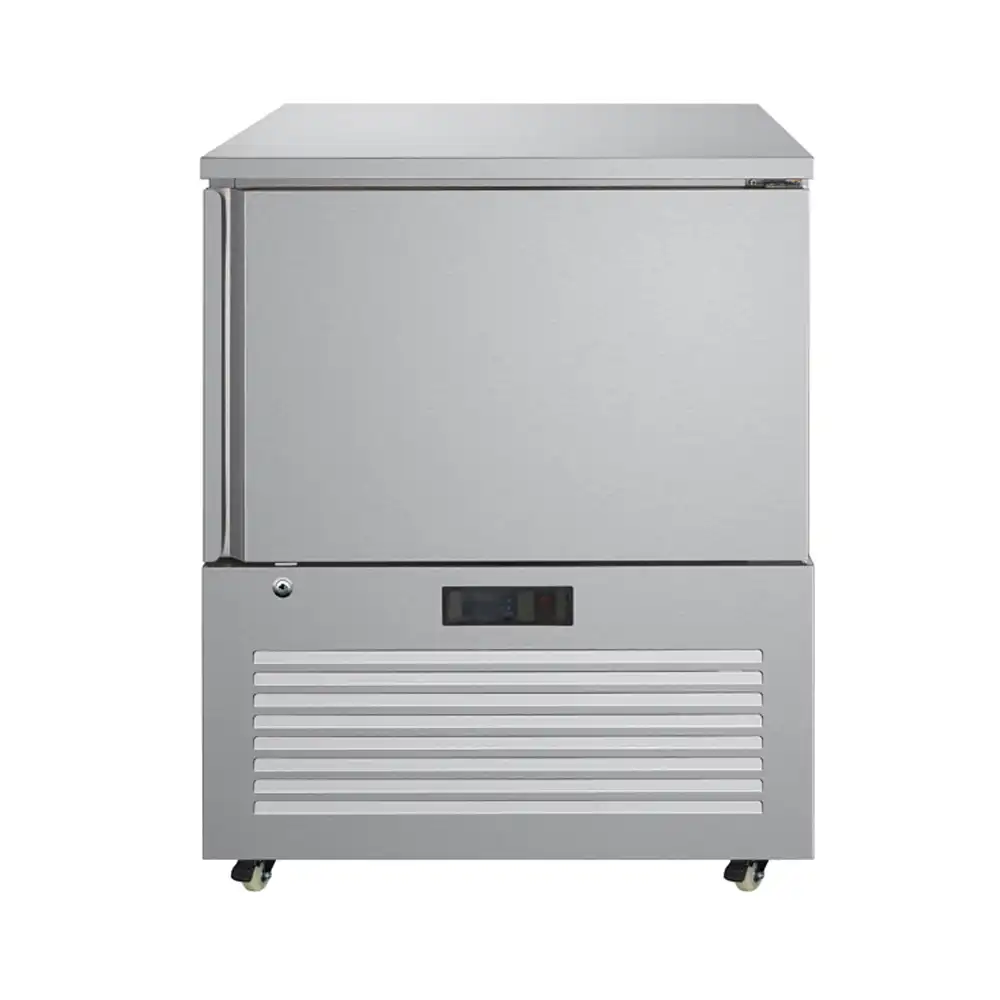
Capacity needs honest assessment. A small patisserie producing a few hundred items daily operates differently than a wholesale operation moving thousands of units. Undercounter models work for tight spaces and modest volumes, while roll-in units handle full sheet pan racks without breaking stride.
Energy consumption deserves attention because these machines run constantly during production hours. Variable speed compressors and polyurethane insulation with cyclopentane foaming can cut energy use by roughly 30 percent compared to older designs. Refrigerant choice matters too. R290, a hydrocarbon refrigerant, offers strong cooling performance with minimal environmental impact.
Sanitation features often get overlooked during purchasing but become critical during daily operation. Rounded interior corners, removable door gaskets, and smooth stainless steel surfaces make cleaning faster and more thorough.
Temperature Targets for Safe and Effective Chilling
Bakery products need to reach the 0 to 4 degree Celsius range within 90 minutes of leaving the oven. This timeframe exists because bacteria multiply fastest between 5 and 60 degrees Celsius. Pushing products through that danger zone quickly prevents microbial populations from establishing themselves. The 90-minute window comes directly from food safety research and forms the basis for most regulatory requirements around rapid cooling.
Food Safety Compliance Becomes Straightforward
HACCP protocols identify rapid cooling as a critical control point for good reason. Bacterial populations can double every 20 minutes under favorable conditions, and freshly baked products sitting at room temperature create exactly those conditions. Blast chilling eliminates the guesswork by documenting temperature drops automatically and ensuring products reach safe storage temperatures before bacteria gain any foothold.
Beyond the food safety fundamentals, blast chillers simplify audit preparation. Temperature logs, cycle records, and alarm histories provide the documentation that inspectors want to see. Equipment designed with sanitation in mind, featuring stainless steel construction and easy-access components, supports the cleaning protocols that HACCP compliance requires.
For further insights into maintaining optimal conditions for your refrigeration equipment, you might find our article 《Essential Maintenance Tips for Commercial Reach In Refrigerators》 particularly useful.
The Business Case for Specialized Cooling Equipment
Labor savings accumulate faster than expected. Traditional cooling methods require staff to monitor products, rotate trays, and manage timing carefully. A commercial blast chiller handles the cooling process independently once loaded, freeing workers for tasks that actually require human judgment and skill. Some operations report labor cost reductions around 25 percent for cooling-related work.
Inventory management improves when products can be made in advance without quality loss. Bakeries gain the ability to respond to unexpected orders, manage seasonal demand spikes, and maintain consistent stock levels without the stress of just-in-time production for every item. Waste reduction and extended shelf life translate directly to margin improvement, since every product that sells instead of going in the trash represents pure profit recovery.
Moisture Retention and Staling Prevention
Rapid cooling preserves bread and pastry quality through several mechanisms working together. Quick temperature drops minimize ice crystal formation in products destined for freezing, which preserves cell structure and prevents the mushy texture that slow freezing causes. For chilled items, fast cooling slows enzymatic activity responsible for staling. The starch retrogradation that makes bread go hard happens more slowly when products reach refrigeration temperatures quickly.
Energy Costs and Efficiency Considerations
Modern commercial blast chillers consume significantly less energy than equipment from even a decade ago. Variable speed compressors adjust output based on actual cooling demand rather than cycling between full power and off. Advanced insulation keeps cold air inside where it belongs. When evaluating units, energy efficiency ratings provide useful comparison points, though actual consumption depends heavily on usage patterns, ambient temperatures, and loading practices.
Matching Equipment to Actual Production Needs
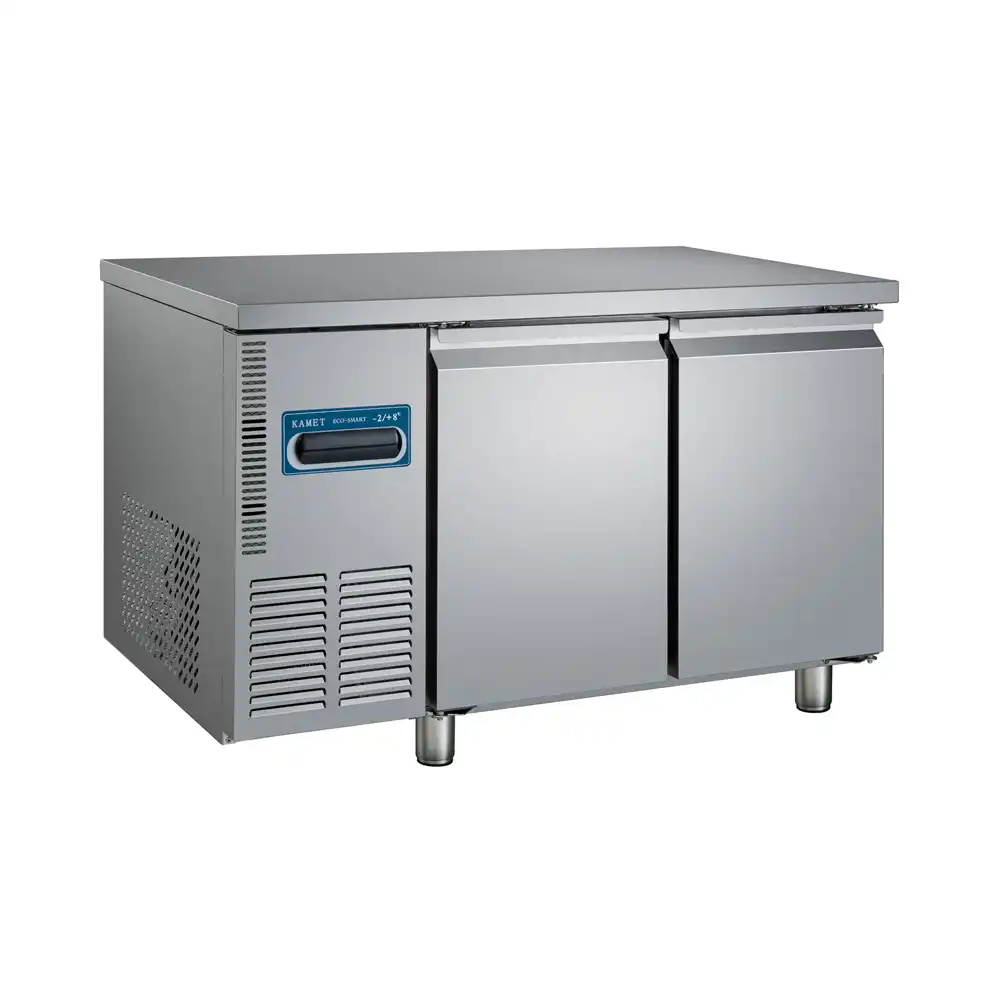
Oversizing wastes money on purchase price and ongoing energy costs. Undersizing creates bottlenecks that defeat the purpose of the investment. Honest assessment of daily production volume, peak demand periods, and growth projections guides appropriate sizing decisions.
Space constraints often drive format choices. Undercounter units fit into existing kitchen layouts without major renovation. Roll-in models require more floor space but handle dramatically higher volumes with less labor since full racks roll directly from oven to chiller. Pass-through configurations work well for operations where production and storage happen in separate areas.
Product mix influences feature requirements. Bakeries working primarily with dense breads have different cooling needs than operations focused on delicate pastries or cream-filled items. Customizable programs allow operators to create specific chilling cycles optimized for their particular products.
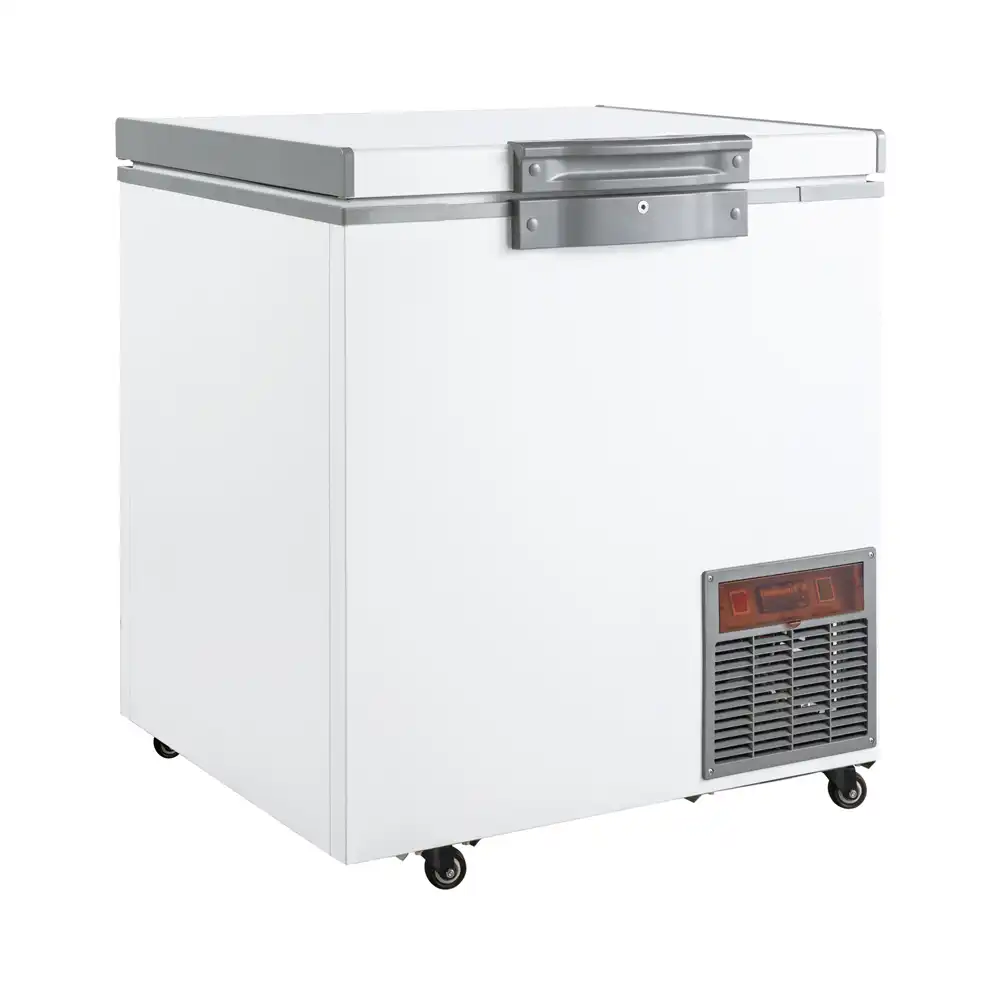
If you’re looking to optimize your kitchen’s workflow, our article 《Optimizing Kitchen Efficiency with Integrated Worktop Refrigeration》 provides valuable insights into how integrated solutions can enhance productivity.
Partner with ZHEJIANG KAIMEI for Your Cooling Needs
Ready to improve your bakery’s efficiency, product quality, and profitability? As a professional one-stop-shop refrigeration equipment manufacturer, ZHEJIANG KAIMEI CATERING EQUIPMENT CO., LTD offers tailored Blast Chiller solutions designed for the unique demands of modern bakeries. Contact us today at Phone: +8618157202219 or Email: Sales@hzcamay.com for a personalized consultation and discover how our expertise can transform your operations.
Frequently Asked Questions About Bakery Blast Chillers
How long should a commercial blast chiller last with proper care?
Well-built commercial blast chillers typically operate reliably for 10 to 15 years when maintained properly. Build quality, usage intensity, and maintenance consistency all affect actual lifespan. Compressor quality and insulation durability tend to be the limiting factors in most cases. Investing in equipment from established manufacturers reduces the risk of premature failure and ensures replacement parts remain available throughout the equipment’s useful life.
Do blast chillers handle both chilling and freezing applications?
Most commercial blast chillers designed for bakery use include both chilling and freezing capabilities. Chilling mode brings products to refrigeration temperatures quickly, while freezing mode pushes temperatures down to deep-freeze levels. This dual functionality proves valuable for operations that need to freeze some products for longer storage while chilling others for near-term sale. The same equipment handles both tasks, which simplifies kitchen layouts and reduces capital requirements.
What maintenance keeps a bakery blast chiller running properly?
Regular cleaning of interior surfaces prevents contamination and maintains food safety compliance. Condenser coils need periodic cleaning to maintain heat transfer efficiency, since dirty coils force compressors to work harder and consume more energy. Door seals require inspection for cracks or gaps that allow cold air to escape. Temperature probes should be verified against a known accurate thermometer periodically. Professional servicing at least annually checks refrigerant levels, electrical connections, and overall system performance. These maintenance tasks keep commercial blast chillers operating efficiently and prevent unexpected breakdowns during critical production periods.