
Commercial kitchens live and die by temperature control. A commercial blast chiller does one job exceptionally well: it pulls heat out of cooked food fast enough to stop bacteria before they get started. The difference between a properly chilled sauce and one that sat at room temperature too long shows up in flavor, texture, and whether your health inspector leaves happy. Getting the right unit means understanding what actually matters for your operation, not just picking the biggest model that fits.
How Rapid Cooling Changes Everything in Food Preservation
A commercial blast chiller works by forcing cold air across food at high velocity, dropping temperatures from cooking heat (+90°C) down to safe storage (+3°C) or freezing (-18°C) within 90 minutes. That speed matters because bacteria multiply fastest between +8°C and +63°C. Leave a pot of stock cooling on the counter, and you’re essentially running an incubator.
The cook-chill process does more than satisfy regulators. Rapid temperature drops lock in moisture that would otherwise evaporate during slow cooling. A béchamel sauce holds its consistency. Blanched vegetables keep their snap instead of turning limp. Kitchens running commercial blast chiller equipment consistently report less product going into the waste bin and more predictable results across service periods. Batch cooking becomes practical when you can safely hold prepared items for days rather than hours. That flexibility changes how you schedule labor and manage ingredient costs.
Matching Equipment to Your Kitchen’s Actual Needs
Choosing a commercial blast chiller starts with honest assessment of production volume and available space. A unit too small creates bottlenecks during service prep. One too large wastes energy cooling air instead of food.
Energy consumption deserves serious attention since these units run hard during chilling cycles. Models with better insulation and more efficient compressors cost more upfront but pay back over years of operation. The refrigerant type affects both environmental compliance and long-term operating costs, with R290 emerging as a cleaner option. Temperature controls should be precise and readable at a glance since guessing doesn’t cut it when food safety is on the line.
Commercial Blast Chiller Configurations for Different Operations
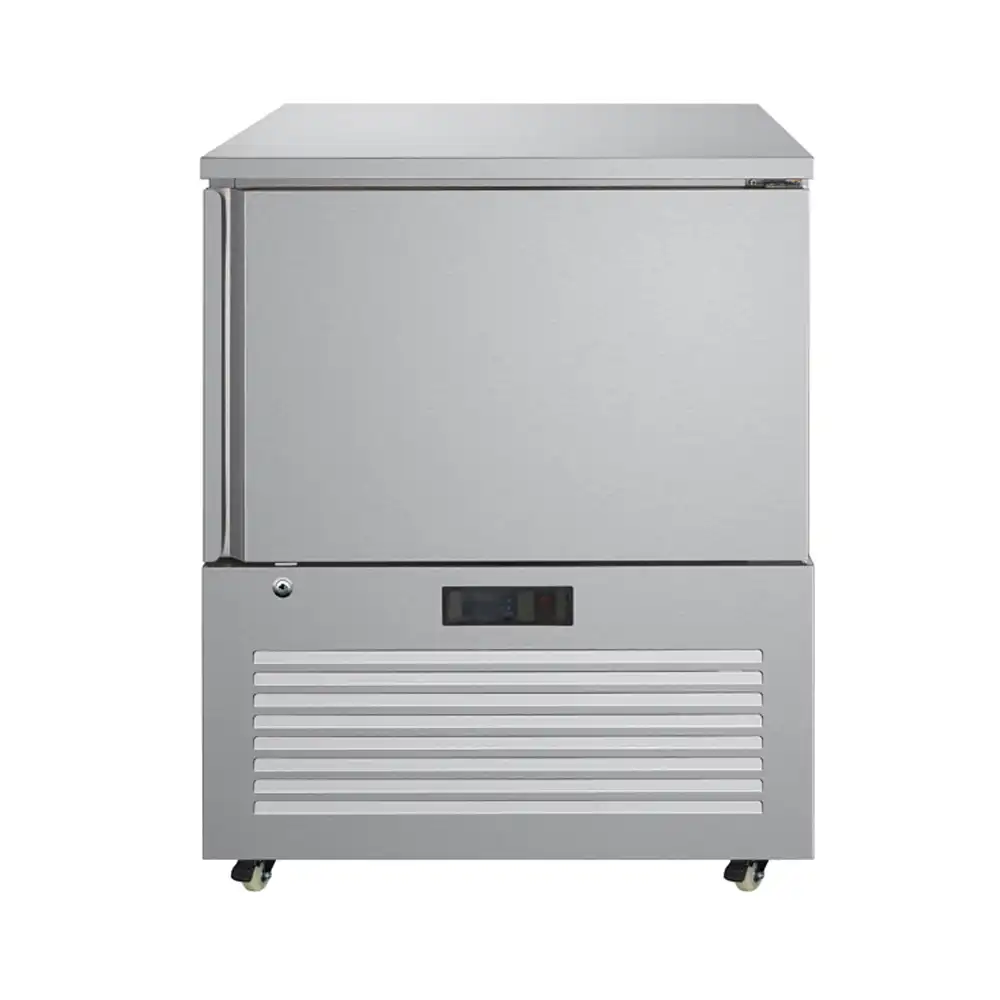
Roll-in commercial blast chiller units handle the highest volumes, accepting full trolleys directly from combi ovens. Production kitchens and central commissaries typically need this capacity. Reach-in models work like oversized refrigerators with adjustable shelving, fitting most restaurant kitchens without dominating the floor plan. Under-counter commercial blast chiller units tuck beneath prep stations, giving line cooks immediate access without crossing the kitchen.
| Feature | Roll-in Blast Chiller | Reach-in Blast Chiller | Under-counter Blast Chiller |
|---|---|---|---|
| Capacity | High | Medium | Low |
| Footprint | Large | Medium | Small |
| Mobility | High (with trolleys) | Low | High (often with casters) |
| Application | Batch production | General use | Specific workstations |
| Integration | Centralized | Flexible | Decentralized |
Where the Money Goes and Where It Comes Back
A commercial blast chiller represents a significant equipment purchase, but the math works out when you factor in what it prevents. Food that spoils before service is money thrown away. Ingredients prepped during slow periods and safely stored reduce overtime labor costs. Batch cooking during off-peak hours means your most skilled cooks work when conditions favor precision, not when tickets are flying.
Energy-efficient commercial blast chiller models draw less power during operation, which adds up across thousands of chilling cycles per year. The real savings often hide in inventory management. When you can confidently hold prepared components for several days, you order more precisely and waste less.
What Goes Into Total Ownership Costs
The purchase price of a commercial blast chiller varies widely based on capacity and features. Installation adds electrical work and possibly plumbing connections, running anywhere from a few hundred to over a thousand dollars depending on your existing infrastructure. Operating costs center on electricity and maintenance. Condenser coils need cleaning. Door gaskets wear out. Compressors eventually fail. Annual professional servicing catches small problems before they become expensive emergencies and keeps the unit running at rated efficiency.
The Science Behind Safer Food
Rapid chilling technology works because it denies bacteria the time they need to multiply. The danger zone between 5°C and 60°C (40°F to 140°F) is where pathogens thrive. A commercial blast chiller pushes food through this range quickly enough that bacterial populations never reach dangerous levels.
Speed also affects ice crystal formation during freezing. Slow freezing creates large crystals that rupture cell walls, releasing moisture when food thaws. Rapid freezing produces smaller crystals that leave cellular structure intact. This explains why blast-frozen proteins hold their texture better than items frozen in standard equipment. HACCP compliance becomes straightforward when your commercial blast chiller logs temperatures automatically and produces documentation for inspectors.
Why Speed Matters for Quality and Safety
A commercial blast chiller prevents bacterial growth by moving food through dangerous temperature ranges before microorganisms can establish colonies. This same speed preserves texture because proteins and starches don’t have time to break down or release moisture. Nutritional content stays higher when vitamins aren’t degraded by prolonged heat exposure. The result is food that tastes fresher, looks better on the plate, and stays safe longer in storage.
Getting Installation Right and Keeping Equipment Running
Where you put a commercial blast chiller affects how well it performs. These units generate heat during operation, so adequate clearance for airflow around the condenser prevents overheating. A level surface keeps doors sealing properly and prevents compressor strain. Electrical supply must match manufacturer specifications since underpowered circuits cause problems.
Daily maintenance means wiping down interior surfaces and removing food debris from shelving. Weekly attention to condenser coils prevents dust buildup that reduces cooling efficiency. Door gaskets should seal completely with no gaps or tears. When something seems off, addressing it immediately usually costs less than waiting. Understanding your warranty coverage helps you decide when to call for professional service versus handling minor issues in-house.
Regular cleaning and maintenance are essential for any commercial refrigeration equipment. For more detailed guidance, consider reading 《Essential Maintenance Tips for Commercial Reach In Refrigerators》.
Common Questions About Commercial Blast Chiller Equipment
What separates a blast chiller from a standard commercial freezer?
A commercial blast chiller uses forced-air circulation to drop temperatures within 90 minutes, while standard freezers cool gradually over many hours. This speed difference determines whether ice crystals form large enough to damage food texture. Blast chillers are designed for hot food going in. Standard freezers expect items already at refrigeration temperature. Using a regular freezer for rapid chilling overworks the compressor and still doesn’t cool food fast enough for safety.
What mistakes cause the most problems during operation?
Overloading a commercial blast chiller ranks first. Packing containers too tightly blocks airflow, and the unit can’t pull heat out of food it can’t reach. Hot items need space between them. Skipping temperature checks creates liability since you can’t prove food reached safe temperatures without records. Neglecting maintenance leads to gradual performance decline that operators often don’t notice until something fails completely.
Does blast chilling actually reduce food waste?
A commercial blast chiller extends safe storage time from hours to days for many prepared items. This longer window means kitchens can prep larger batches without risking spoilage. Menu items that previously required daily preparation can be made twice weekly. Portion control improves because you’re pulling from inventory rather than cooking to estimated demand. The reduction in thrown-away product typically justifies equipment costs within the first year or two of operation.
Optimize Your Kitchen with ZHEJIANG KAIMEI CATERING EQUIPMENT CO., LTD
As a professional One-Stop-Shop Refrigeration Equipments Manufacturer, ZHEJIANG KAIMEI CATERING EQUIPMENT CO., LTD offers a comprehensive range of commercial blast chillers designed for efficiency, reliability, and superior food safety. Explore our innovative solutions and discover how our expertise can optimize your kitchen operations. Contact us today at +8618157202219 or Sales@hzcamay.com for a personalized consultation or to request a detailed product catalog.