

Cooling is one of the least visible bottlenecks in a bakery or pastry shop. After a production push, racks of warm bread, custard-filled pastries, mousses, and freshly layered cakes all need to move through the temperature danger zone quickly. A blast chiller that matches your peak load shortens that window; one that is too small turns the day’s best-selling work into a queue. This guide explains how to choose a blast chiller size based on batch weight, cooling mode, tray fit, and available utilities.
Why Blast Chiller Size Is a Food Safety Decision
The U.S. FDA Food Code requires cooked items to pass from 135°F to 70°F within 2 hours and from 70°F to 41°F within 4 hours [1]. In a bakery, that clock starts while racks are still warm. Cream fillings, custard bases, and cooked fruit preparations are especially vulnerable because they hold heat at the center after the outside looks cooled.
A blast chiller does not change the food safety rule, but it changes how quickly you can meet it. The right size lets a bakery pull down multiple batches in the available time without stacking pans so tightly that cold air cannot reach the center trays.
Base the Size on Peak Batch Weight, Not Average Day
The sizing question should start with the heaviest production window, not the average day. A pastry shop may normally cool 8 kg per cycle, but during holiday production that figure can double or triple. If the chiller is selected for the normal load, the peak load will force staff to split batches, delay cooling, or overload the cabinet.
Record three numbers before comparing models:
| Factor | What to record |
|---|---|
| Peak batch weight | kg per cycle during the busiest production run |
| Tray format | GN 1/1, 600×400 mm pans, or bakery sheet pans |
| Target pull-down time | Minutes from hot core temperature to safe holding temperature |
Blast chiller capacity is rated by kg per cycle under defined test conditions, not by the volume of the cabinet [2]. Two units with similar exterior dimensions can have very different effective loads because of airflow, evaporator size, and compressor capacity.
Run the Cooling Load Calculation
A practical starting point is the thermal load formula:
Q = m × cp × ΔT / t
Where Q is the required cooling power, m is the mass of product per cycle, cp is the specific heat of the food, ΔT is the temperature change, and t is the target cooling time.
For example, if a bakery must cool 20 kg of cream filling from 65°C to 3°C in 90 minutes, the calculation provides the starting thermal load. The supplier then verifies whether the selected cabinet can maintain that pull-down under the EN 17032 test method [2]. This is an illustrative calculation; different fillings, sugar content, and pan depth change the result.
Check the Physical Fit: Trays, Racks, and Door Clearance
Cabinet capacity matters only if the bakery’s trays actually fit. Check the interior spacing between rack runners, the maximum pan depth, and whether the unit accepts a full rack or only individual pans. A bakery using 600×400 mm sheet pans should not be forced to transfer product into smaller trays at the busiest moment.
Also confirm door swing, aisle clearance, and the height of surrounding tables. A roll-in rack model may save labor, but it needs floor space for the ramp or lift path.
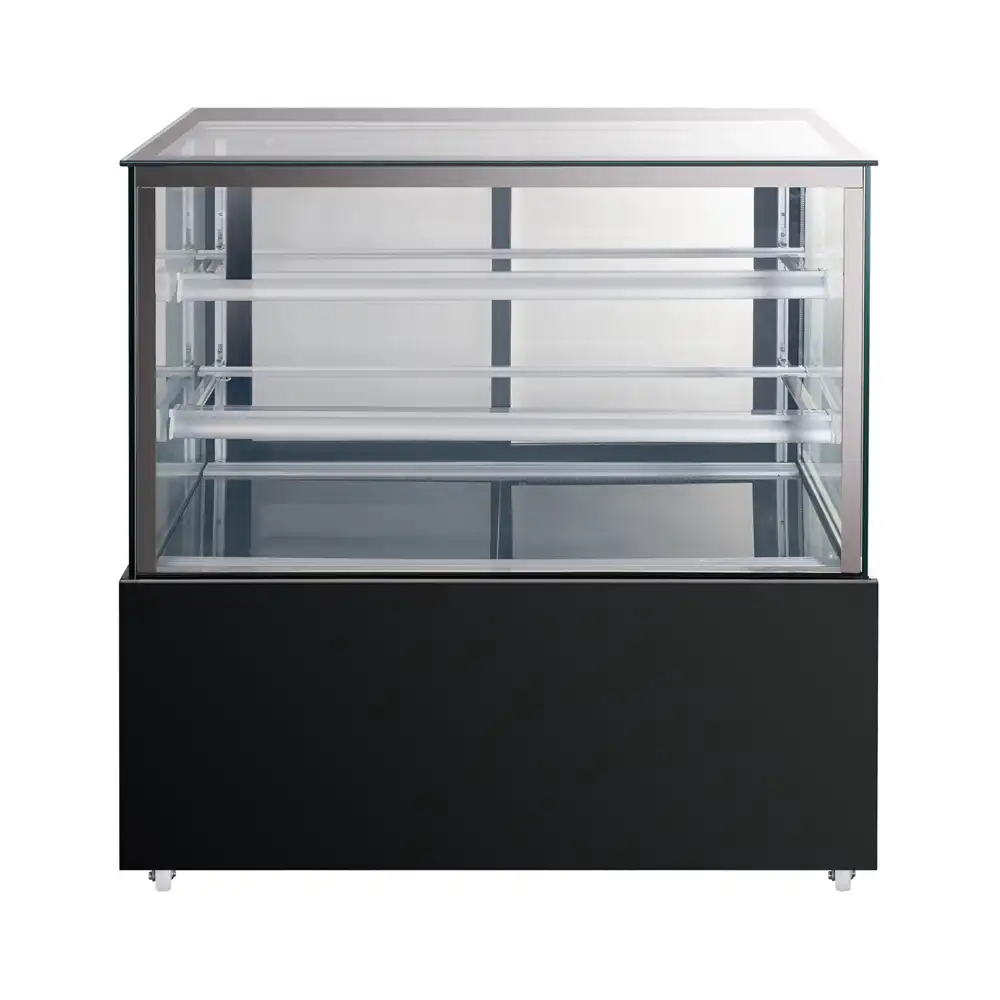
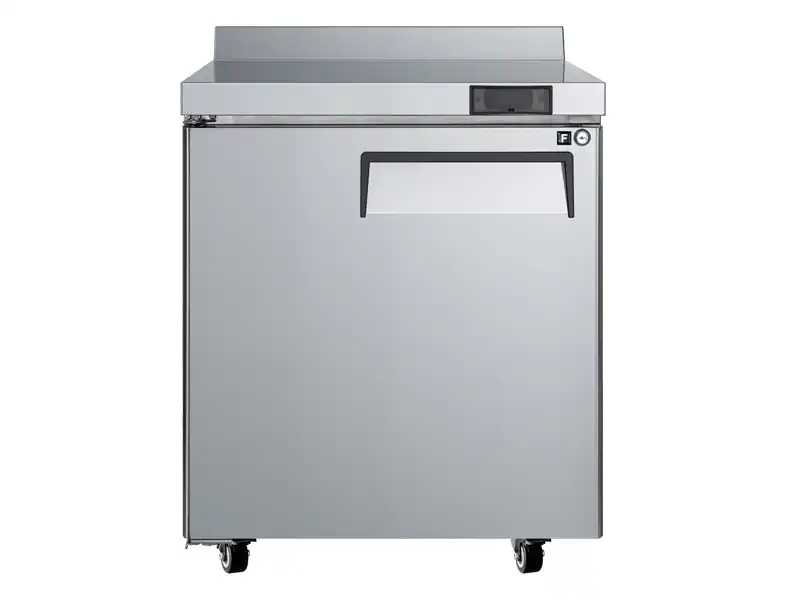
In a bakery that alternates between sheet pans, proofing racks, and refrigerated mise en place, the blast chiller should be placed where cold-side workflow already makes sense. <Optimizing Kitchen Efficiency with Integrated Worktop Refrigeration> covers how integrated worktop refrigeration supports this kind of production flow.
Choose a Unit with Both Soft Chill and Hard Chill Modes
Pastry kitchens usually need more than one cooling behavior. Soft chill is appropriate for delicate cake layers, creams, and products that need gentle temperature reduction. Hard chill, or blast freeze, is better for items that must pass through the danger zone quickly or for dough that needs to stop fermentation.
Select a size that can deliver both modes at the required batch weight. A unit that only meets its rated capacity in soft-chill mode may fall short when the bakery switches to rapid chilling for high-risk fillings.
Confirm Electrical, Drainage, and Ventilation
Blast chillers are refrigeration loads with defrost and evaporator drainage. Before final sizing, confirm the available power supply, breaker capacity, and whether the unit needs a floor drain or condensate pump. Check the manufacturer’s clearance recommendations for condenser air intake and exhaust.
A correctly sized chiller that cannot be powered or drained properly will be derated by installation conditions. Choose a unit certified to NSF/ANSI 7 for commercial refrigeration sanitation [3].
Common Sizing Mistakes to Avoid
The most common mistake is buying by pan count alone. Pan count does not equal thermal load, especially when the products are dense, high-moisture, or covered with lids. Other frequent issues include sizing for current demand without room for seasonal peaks, ignoring rack compatibility, and placing the unit so far from the production area that staff avoid using it.
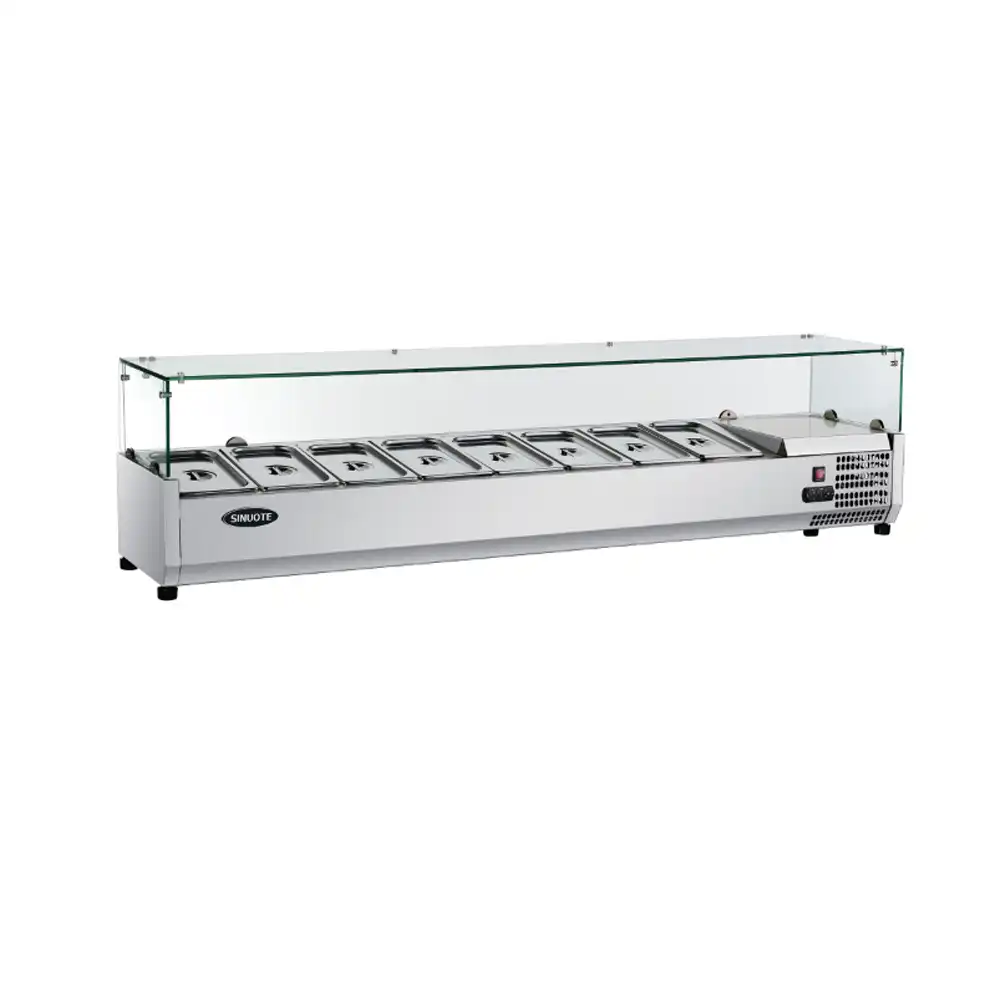
A common mistake is treating the blast chiller as an isolated box rather than part of a cold-side line with prep tables and refrigerated bases. <How to Choose the Best Chef Base Refrigerator for Your Kitchen> covers how to match refrigeration height, door swing, and workflow when building that line.
Spec Your Blast Chiller With Camay
Zhejiang Kaimei Catering Equipment Co., Ltd. helps bakery and pastry operations size commercial refrigeration around daily throughput, peak batch weight, and available floor space. Send your peak batch weight, tray format, target pull-down time, and power supply details to Sales@hzcamay.com or call +8618157202219 for a technical sizing review and OEM/ODM options.
Frequently Asked Questions
How many kilograms can a small blast chiller handle per cycle?
The answer depends on the product type, pan layout, and desired pull-down time. A small unit may hold one to two sheet-pan racks, but the effective kg per cycle should come from the manufacturer’s rated capacity under standard test conditions rather than interior volume.
Can a standard freezer replace a blast chiller?
A standard freezer is designed to hold already-frozen product at temperature, not to force cold air through warm product quickly. That difference is important for custard-filled pastry, mousse cakes, and cooked fruit preparations that need rapid temperature reduction.
Which is better for a pastry shop: soft chill or hard chill?
Many pastry shops benefit from a unit that offers both. Soft chill supports delicate layers and gradual cooling, while hard chill or blast freeze handles high-risk fillings and dough that need a faster temperature drop.
How do I calculate the load for a bakery?
Use the formula Q = m × cp × ΔT ÷ t, then add a practical safety factor for door openings, warm pan loading, and production peaks. The supplier should verify the final load against the unit’s rated capacity and installation conditions.
References
[1] U.S. Food and Drug Administration. Food Code 2022, Section 3-501.14: Cooling. https://www.fda.gov/food/fda-food-code/food-code-2022
[2] European Committee for Standardization. EN 17032:2019 — Blast chillers and freezers for professional use — requirements and test methods.
[3] NSF International. NSF/ANSI 7: Commercial Refrigerators and Freezers, 2023.
If you’re interested, check out these related articles:
Optimizing Kitchen Efficiency with Integrated Worktop Refrigeration
How to Choose the Best Chef Base Refrigerator for Your Kitchen
Boost Kitchen Efficiency Workflow Optimization with Chef Base Fridges
Heavy Duty Chef Base Refrigeration for Efficient Commercial Kitchens