
Selecting the ideal commercial refrigeration for a restaurant starts with a careful read of how the kitchen actually runs. We weigh kitchen size, menu diversity, and daily volume to determine the right capacity and unit types. That early assessment helps avoid headaches like cramped storage and energy waste while keeping long-term costs under control. With that groundwork, equipment capabilities align with day-to-day realities, and the refrigeration strategy actually works on the line.
1. Assessing Kitchen Layout and Available Space for Refrigeration Units
Efficient kitchen design weaves refrigeration into the workflow. We measure available floor space and study traffic patterns to place units where they help rather than hinder. Compact footprints or modular designs suit smaller kitchens. Larger operations might accommodate multiple specialized units.
2. Matching Refrigeration Capacity to Your Restaurant’s Menu and Volume
The volume and variety of ingredients set the storage requirement. High-volume establishments need larger units or multiple smaller ones to handle diverse items. Menus featuring fresh produce, meats, or dairy call for defined temperature zones. We size to peak inventory levels to prevent overcrowding and keep air moving properly.
3. Identifying Specific Food Storage Requirements and Temperature Zones
Different food types need precise temperature control to maintain safety and quality. Fresh produce performs best within specific humidity and temperature ranges. Meats and dairy require consistent cold storage to inhibit bacterial growth. Specialized items, like certain desserts, may need dedicated cooling environments.
Exploring Diverse Commercial Fridge Types to Suit Every Restaurant Operation
We look at various commercial refrigeration units, outlining their functions, applications, and advantages. Differentiating between reach-in refrigerators, undercounter units, and specialized prep tables helps match equipment to operational styles. Each type offers distinct benefits for accessibility, storage, and integration with food preparation. This look at options guides selection for stronger efficiency and food safety.
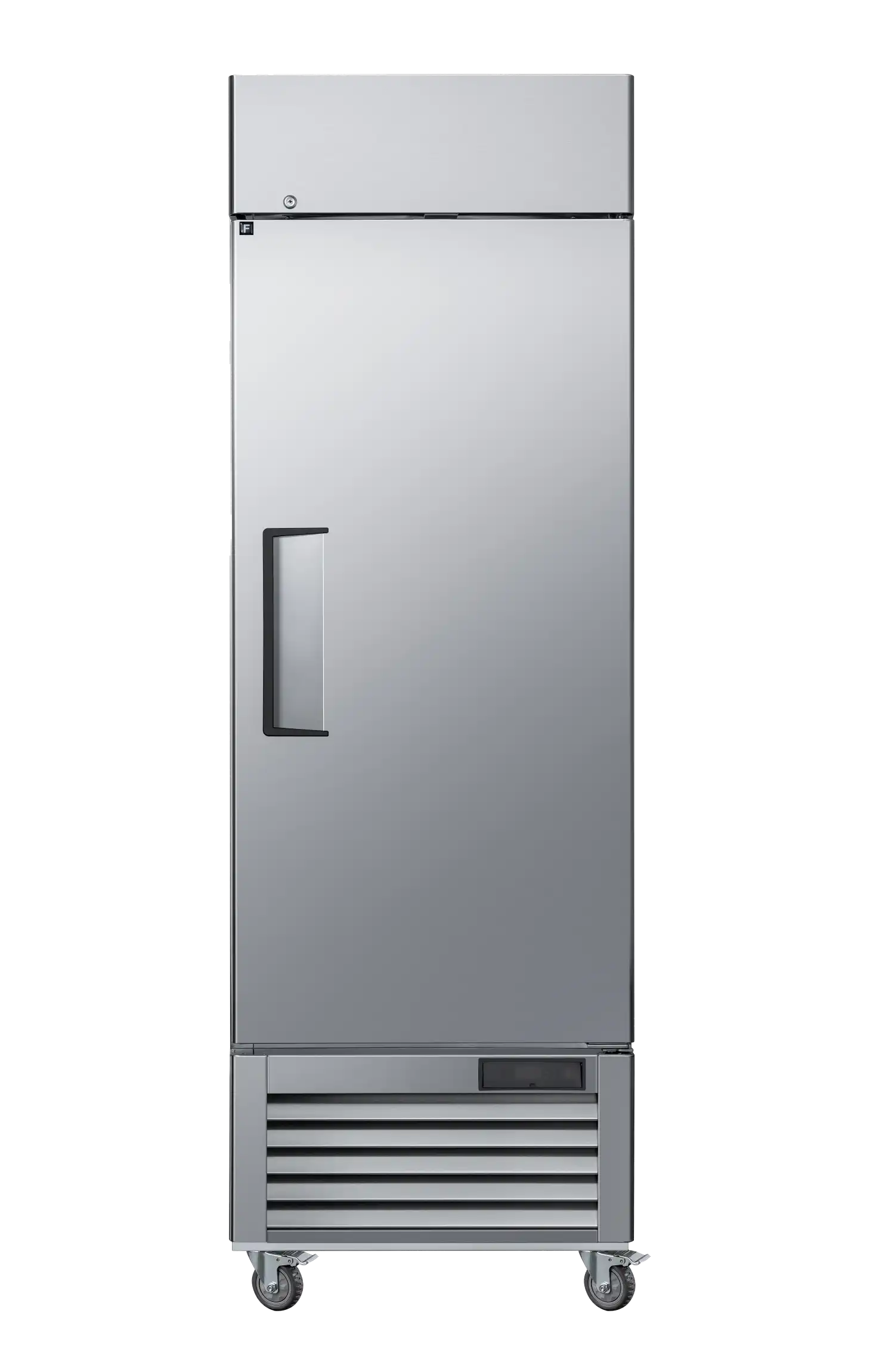
1. Reach-In Refrigerators and Freezers: Maximizing Vertical Storage
Reach-in units provide substantial vertical storage, ideal for high-volume kitchens. They hold large quantities of ingredients and keep them easy to access. Models like the “2 door commercial refrigerator” (Model MR-49) provide 1252 L of capacity. [[Ultimate Buyers Guide for Commercial Reach In Refrigerators]] These units are central to organized inventory management.
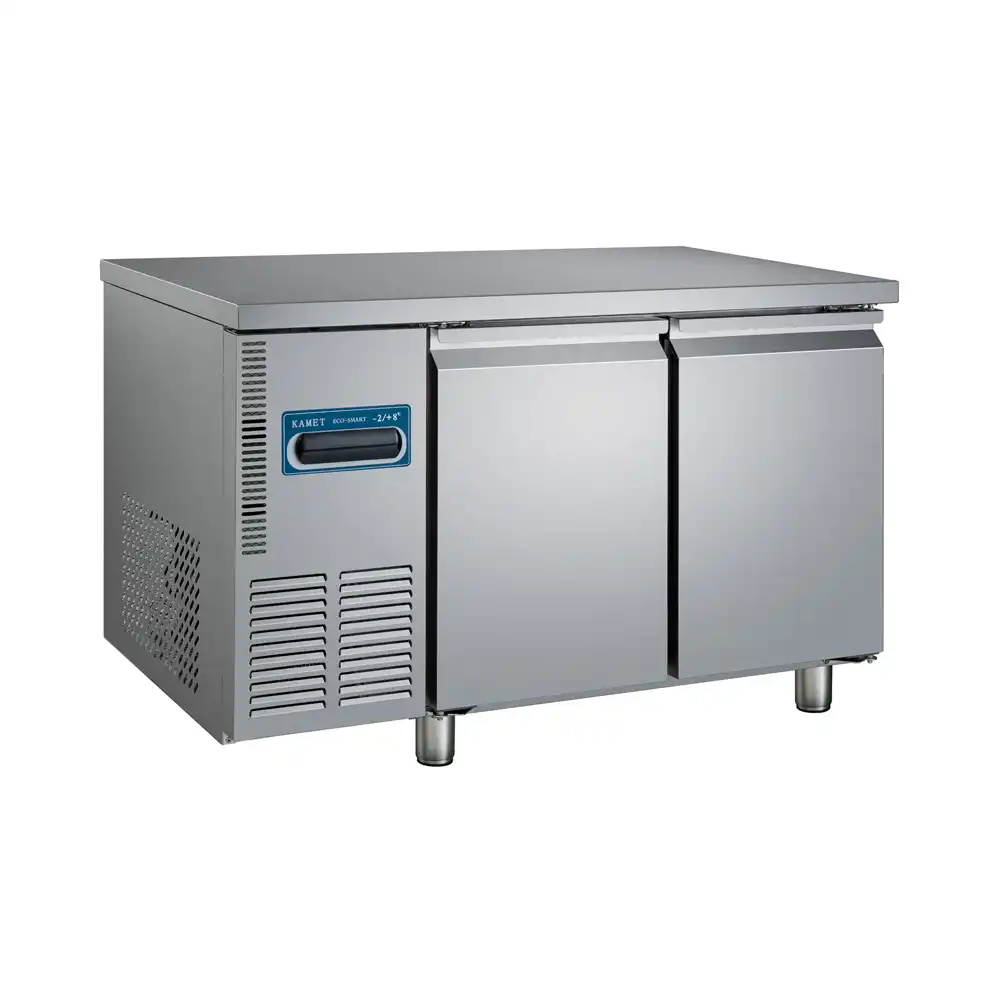
2. Undercounter and Worktop Refrigerators: Optimizing Space and Workflow
Undercounter and worktop refrigerators make busy kitchens more space-efficient. They place cold storage directly at prep stations. The Camay Commercial Worktop Refrigerator Cooler Fridge (Model MWTF-27-L) offers both storage and a durable work surface. This pairing streamlines food preparation tasks.
3. Specialized Prep Tables: Combining Storage with Food Preparation Efficiency
Specialized prep tables blend refrigeration with dedicated workspaces. They are built for focused tasks, such as pizza or salad preparation. The 13 Cuft Salad Storage Container for Fridge (Model MSR-48M) maintains ingredients at optimal temperatures during assembly. This design boosts efficiency and safeguards food during active preparation.
Key Features and Advanced Technologies to Prioritize in Commercial Refrigeration
We highlight the features and modern technologies that enhance commercial fridge performance and longevity. Critical aspects include compressor types, insulation materials, and smart temperature control systems. These elements support optimal food safety and reduced operational costs. Understanding these specifications helps secure a strong investment.
1. Energy Efficiency and Eco-Friendly Refrigerants for Sustainable Operations
Energy-efficient models significantly reduce operating costs over time. We prioritize units utilizing eco-friendly R290 refrigerant, which offers strong thermodynamic performance and lower environmental impact. Polyurethane/Cyclopentane foamed insulation further limits energy consumption. Certifications like ENERGY STAR confirm these gains.
2. Durability and Construction Materials: Ensuring Long-Term Reliability
Stainless steel construction, both interior and exterior, supports durability and hygiene. We specify models with robust components, such as heavy-duty compressors and self-closing doors. Removable gaskets and rounded inner corners make cleaning and maintenance straightforward. This construction supports a long operational lifespan.
3. Smart Temperature Control and Monitoring for Enhanced Food Safety
Advanced digital temperature systems provide precise control and monitoring. Optional IoT and WiFi functions allow remote management and real-time data access. This technology keeps temperatures consistent, which is vital for food safety and compliance. Alerts for any deviations help prevent spoilage.
Evaluating Operational Costs and Long-Term Value of Commercial Refrigerators
We assess the total cost of ownership beyond the initial purchase price. Energy consumption, maintenance, and potential repair costs all factor into the equation. Understanding these long-term financial implications supports economical decision-making. This evaluation surfaces refrigeration solutions offering the best return on investment.
1. Calculating Energy Consumption and Potential Savings with Efficient Models
Energy consumption forms a significant portion of a commercial fridge’s operating cost. We calculate potential savings by comparing the annual energy usage of different models. High-efficiency units, often ENERGY STAR certified, offer lower running costs despite a potentially higher upfront price. The outcome is substantial long-term financial benefits.
2. Understanding Maintenance Requirements and Warranty Coverage for Longevity
Regular maintenance extends equipment lifespan and supports optimal performance. We review manufacturer warranties and recommended service schedules for each unit. Products like the Camay Commercial Solid Door Undercounter (Model MTR-72) come with a 13-month after-sales service and online technical support. This proactive approach minimizes downtime and unexpected repair expenses.
Making the Final Decision: Integrating Performance, Space, and Budget
We bring the details together to guide commercial fridge selection. Actionable steps compare models against needs, budget, and operational priorities. The framework keeps decision-making clear and confident. By weighing all factors, you secure a refrigeration unit that supports current demands and future growth.
1. Creating a Checklist for Your Restaurant’s Commercial Fridge Purchase
A thorough checklist ensures all critical aspects are considered. We include capacity, dimensions, temperature range, energy efficiency, and certifications. Specific features like self-closing doors, mobility options, and smart controls are also noted. This organized approach streamlines the selection process.
2. The Benefits of Partnering with Experienced Refrigeration Manufacturers like ZHEJIANG KAIMEI
Partnering with experienced manufacturers like ZHEJIANG KAIMEI CATERING EQUIPMENT CO., LTD offers distinct advantages. With 26 years of experience, we provide durable, energy-efficient solutions and comprehensive OEM/ODM services. Our global certifications and dedicated after-sales support ensure reliable, high-quality equipment tailored to your specific needs.
Call to Action
Ready to upgrade your restaurant’s refrigeration? Explore ZHEJIANG KAIMEI CATERING EQUIPMENT CO., LTD’s extensive range of high-quality, energy-efficient commercial fridges, including worktop refrigerators, undercounter units, and specialized prep tables. Contact us today at +8618157202219 or Sales@hzcamay.com for expert consultation and to find the perfect refrigeration solution tailored to your restaurant’s unique needs.
FAQs
1. What is the difference between a commercial refrigerator and a commercial freezer?
Commercial refrigerators typically maintain temperatures between 0.5°C to 5°C (33°F to 41°F) for short-term storage of fresh ingredients, while commercial freezers operate at much colder temperatures, such as -18°C to -22°C (0°F to -8°F) or even ultra-low temperatures, for long-term preservation of frozen goods. ZHEJIANG KAIMEI offers both, like the Camay Commercial Worktop Refrigerator Cooler Fridge (MWTF-27-L) which can function as a freezer, and dedicated freezers like the 1-Door Commercial Solid Door Freezer (MF-23).
2. How important is energy efficiency in a commercial fridge for a restaurant?
Energy efficiency is critically important for restaurants as commercial refrigeration operates continuously, making it a significant contributor to utility costs. Choosing ENERGY STAR certified models, like many from ZHEJIANG KAIMEI, with features such as R290 eco-friendly refrigerant and polyurethane/cyclopentane foamed insulation, can lead to substantial long-term savings on electricity bills and reduce your restaurant’s environmental footprint.
3. What are the key certifications to look for when buying a commercial refrigerator?
When purchasing a commercial refrigerator, look for certifications such as ETL (for safety and sanitation, often indicating NSF compliance), DOE (Department of Energy), and ENERGY STAR (for energy efficiency). These certifications ensure that the equipment meets stringent industry standards for performance, safety, and environmental responsibility. ZHEJIANG KAIMEI’s products, including the Camay Commercial Solid Door Undercounter (MTR-72), boast a broad list of certifications including ETL, DOE, ENERGY-STAR, CE, and more.
4. Can I get a custom-sized commercial fridge for my unique kitchen layout?
Many manufacturers, including ZHEJIANG KAIMEI CATERING EQUIPMENT CO., LTD, offer OEM/ODM services for custom refrigeration requirements. While standard sizes are widely available, discussing your specific dimensions and operational needs with a professional supplier can help you acquire a bespoke solution that perfectly fits your kitchen space and workflow, optimizing efficiency and maximizing storage capacity.