

Running a small restaurant means every inch and kilowatt has to earn its place, especially with commercial refrigeration. Compact units still need to hold tight temperatures, keep service flowing, and fit without disrupting the line. We look at footprint, energy use, and reliability as one equation that has to work day after day. With that mindset, we help owners navigate choices and select equipment that supports their goals while protecting food safety and efficiency.
Understanding the Unique Refrigeration Needs of Small Restaurants
Small restaurants operate within tight margins and often tighter spaces, making every equipment decision critical. Unlike larger establishments, they cannot afford oversized appliances or inefficient systems. The right compact refrigerator integrates cleanly into the workflow, preserves ingredients, and minimizes utility costs.
1. Space Constraints and Layout Challenges in Compact Kitchens
Compact kitchens call for smart placement that uses every square inch. Traditional large commercial refrigerators are often impractical. Small restaurants need refrigeration units that fit under counters, integrate into prep stations, or offer multiple functions. This strategic placement keeps movement smooth and ingredients within reach. Efficient layouts prevent bottlenecks and improve service speed.
2. The Importance of Energy Efficiency in Small Restaurant Operations
Energy costs significantly impact a small restaurant’s profitability. An energy-efficient compact refrigerator reduces operational expenses over its lifespan. Modern units utilize advanced insulation and eco-friendly refrigerants like R290, which lower electricity consumption. We prioritize models with ENERGY STAR certification to guarantee optimal efficiency.
If you’re interested, check 《Boost Savings with Energy Efficient Commercial Upright Freezers》.
3. Maintaining Optimal Food Safety Standards in Limited Spaces
Food safety is non-negotiable in any restaurant. Compact refrigerators must maintain consistent, precise temperatures to prevent spoilage and bacterial growth. Digital temperature controls and reliable cooling systems are a must for compliance with health regulations. Proper food storage also reduces waste, contributing to cost savings and sustainability.
Key Features to Look for in Compact Commercial Refrigerators
Selecting a compact commercial refrigerator involves evaluating several key features beyond just size. Each component contributes to the unit’s overall performance, durability, and suitability for a demanding restaurant environment.
1. Assessing Dimensions and Capacity for Your Restaurant’s Needs
Careful measurement of available space is the first step. Consider both the external dimensions and internal capacity. A unit that fits perfectly into an existing layout optimizes kitchen flow. We recommend mapping out potential locations to visualize how a new refrigerator will integrate. Capacity should match daily ingredient volume to avoid overcrowding or frequent restocking.
2. Evaluating Refrigerant Types and Cooling System Performance
Modern commercial refrigerators primarily use eco-friendly refrigerants like R290. This hydrocarbon refrigerant offers superior energy efficiency and a lower environmental impact compared to older alternatives. Ventilated cooling systems ensure uniform temperature distribution, which is crucial for food preservation. High-quality compressors like Cubigel or Embraco provide reliable, long-term performance.
3. The Durability and Material Quality of Commercial Units
Commercial kitchens are high-traffic environments, demanding robust equipment. Stainless steel construction, both interior and exterior, offers exceptional durability and corrosion resistance. Reinforced hinges, sturdy handles, and heavy-duty shelves withstand constant use. We ensure our units meet stringent quality standards for longevity.
4. Smart Temperature Control and Digital Monitoring Capabilities
Precise temperature control is vital for food safety. Digital thermostats allow accurate temperature settings and easy monitoring. Optional IoT and WiFi connectivity provide remote monitoring and management, alerting staff to any deviations. This technology helps prevent food spoilage and ensures compliance with health codes.
5. Ease of Cleaning and Maintenance for Busy Kitchens
Busy restaurant kitchens require equipment that is easy to clean and maintain. Features like rounded inner corners, removable gaskets, and accessible condenser coils simplify routine cleaning. These design elements reduce labor costs and ensure hygienic operation. Regular maintenance extends the lifespan of the unit.
If you’re interested, check 《Essential Maintenance Tips for Your Commercial Chef Base Refrigerator》.
6. Essential Certifications and Compliance Standards for Commercial Use
Commercial refrigeration units must meet specific industry certifications. These include ETL, DOE, ENERGY STAR, CE, and NSF standards. These certifications guarantee safety, energy efficiency, and sanitation compliance. We ensure our products adhere to these global benchmarks, providing peace of mind to restaurant owners.
Top Compact Refrigerator Types for Small Restaurant Kitchens
Different compact refrigerator types serve distinct functions in a small restaurant. Choosing the correct type optimizes workflow and space utilization.
1. Undercounter Refrigerators and Freezers for Space Optimization
Undercounter refrigerators and freezers fit neatly beneath existing countertops, saving valuable floor space. They are ideal for storing frequently accessed ingredients close to prep areas. Models like the Camay MTR-48 and MTR-60 offer durable stainless steel construction and eco-friendly R290 refrigerant. These units provide efficient storage without disrupting the kitchen layout.
| Specification | Camay MTR-48 (Refrigerator) | Camay MTF-48 (Freezer) |
|---|---|---|
| Model | MTR-48 | MTF-48 |
| Classification | Refrigerator | Freezer |
| Cabinet Dimensions (WxDxH) | 1225×787×872 mm | 1225×787×872 mm |
| Capacity | 368 L / 13.00 Cuft | 368 L / 13 Cuft |
| Inner Temperature | 0.5°C to 5°C | -25°C to -15°C |
| Refrigerant | R290 | R290 |
| Insulation | Polyurethane/Cyclopentane | Polyurethane/Cyclopentane |
| Doors | 2 | 2 |
| Certifications | ETL, DOE, ENERGY-STAR | ETL, DOE, ENERGY-STAR |
2. Worktop Refrigerators Offering Dual Functionality
Worktop refrigerators combine refrigerated storage with a durable work surface. This dual functionality is invaluable in small kitchens where counter space is limited. The Camay Commercial Worktop Refrigerator Cooler Fridge (MWTF-27-L) exemplifies this design, providing a convenient prep surface while keeping ingredients chilled. These units are perfect for cafes and delis.
If you’re interested, check 《Optimizing Kitchen Efficiency with Integrated Worktop Refrigeration》.
3. Refrigerated Chef Bases for Efficient Prep Stations
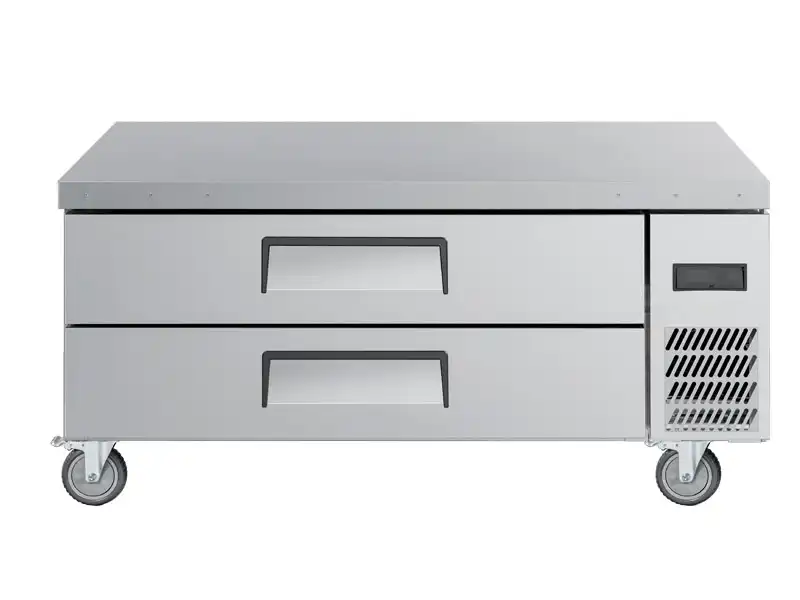
Refrigerated chef bases serve as robust foundations for cooking equipment like griddles and charbroilers. They offer refrigerated storage directly beneath the cooking surface, reducing steps for chefs. The Camay 60” Countertop Refrigerated Chef Base (MAR-60A) features a sturdy integrated worktop and precise temperature control, enhancing kitchen efficiency.
4. Salad and Pizza Prep Tables Enhancing Workflow
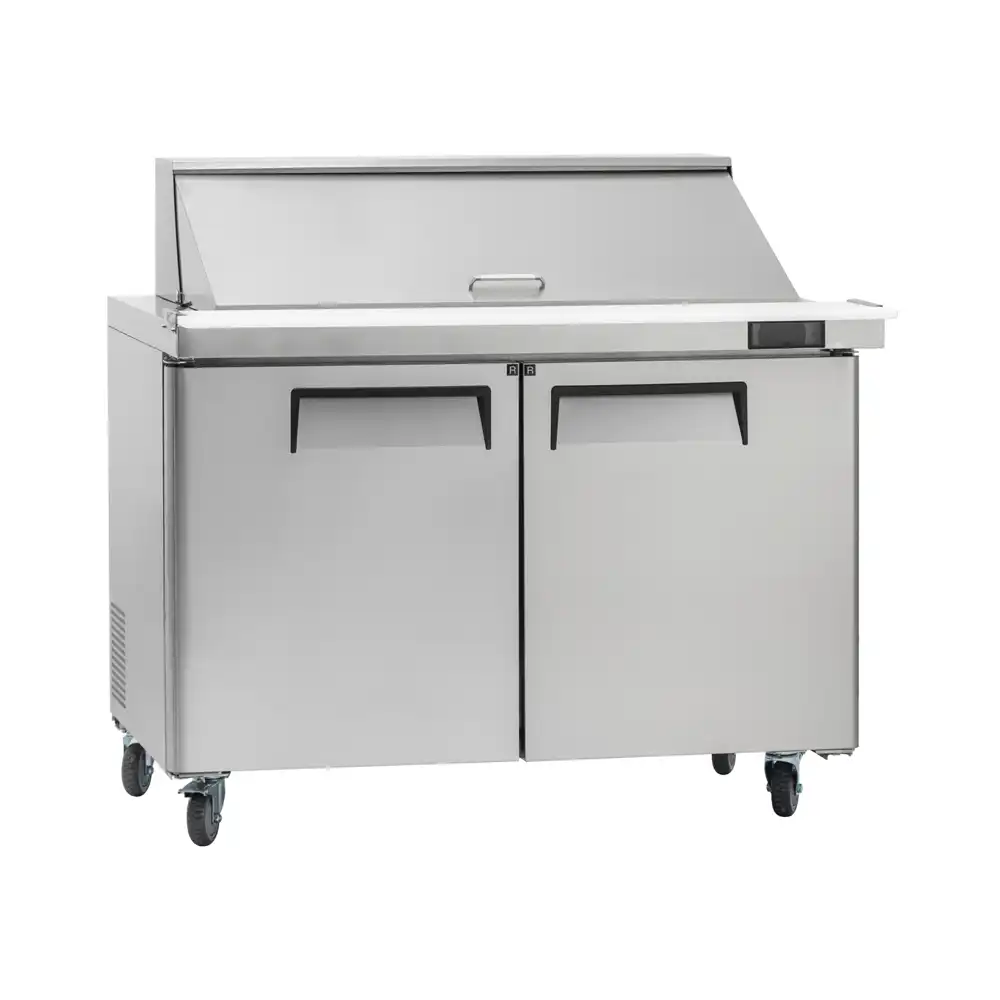
Salad and pizza prep tables are specialized compact refrigerators designed to streamline ingredient preparation. They feature refrigerated storage for toppings and a spacious work surface, often with cut-outs for ingredient pans. The Camay MSR-48M Salad Prep Table and VRX395 Pizza Prep Tables optimize workflow for specific menu items.
Comparing Leading Compact Refrigerator Models for Small Restaurants
Choosing the best compact refrigerator involves a detailed comparison of available models. We focus on practical aspects that directly impact a small restaurant’s daily operations and long-term success.
1. Analyzing Capacity and Footprint of Popular Units
We carefully analyze the capacity-to-footprint ratio of different models. A refrigerator with a high internal volume relative to its external dimensions offers better space utilization. For example, the Camay MTR-48 provides 13.00 Cuft of storage within a compact footprint, making it suitable for tight spaces. Understanding these metrics helps owners maximize their kitchen real estate.
2. Feature-by-Feature Comparison of Energy Efficiency and Performance
Comparing energy efficiency ratings, such as ENERGY STAR, matters for long-term cost savings. We also evaluate cooling system performance, looking for consistent temperature maintenance and rapid recovery after door openings. Units with advanced insulation and R290 refrigerant generally offer superior performance.
3. Evaluating Durability and Long-Term Reliability
Durability is paramount in a commercial setting. We assess material quality, construction techniques, and component reliability. Stainless steel interiors and exteriors, robust compressors, and self-closing doors contribute to a unit’s lifespan. A reliable compact refrigerator minimizes downtime and repair costs.
4. Price vs. Value: Making a Smart Investment
The initial purchase price is only one factor. We consider the total cost of ownership, which includes energy consumption, maintenance, and potential repair costs. Investing in a higher-quality, energy-efficient unit often yields greater value over time through reduced operational expenses and increased longevity.
Installation, Placement, and Maintenance Tips for Compact Refrigerators
Proper installation, strategic placement, and diligent maintenance are essential for maximizing the performance and lifespan of compact commercial refrigerators.
1. Strategic Placement to Maximize Kitchen Workflow
Place compact refrigerators strategically to minimize movement and optimize workflow. Position undercounter units near prep stations or cooking lines. Ensure doors can open fully without obstructing pathways. Consider how staff will access ingredients during peak hours. Thoughtful placement enhances efficiency and reduces strain on kitchen staff.
2. Proper Ventilation Requirements for Optimal Performance
Commercial refrigerators generate heat, requiring adequate ventilation to operate efficiently. Ensure sufficient clearance around the unit’s sides and rear for proper airflow. Blocked vents force the compressor to work harder, increasing energy consumption and potentially shortening the unit’s lifespan. Follow manufacturer guidelines for spacing.
3. Routine Cleaning and Maintenance Schedules for Longevity
Establish a regular cleaning and maintenance schedule.
1. Clean interior and exterior surfaces daily with a mild, food-safe cleaner.
2. Inspect and clean door gaskets weekly to ensure a tight seal.
3. Clean condenser coils monthly to prevent dust and grease buildup.
4. Check temperature settings and digital displays regularly for accuracy.
5. Schedule professional inspections annually to address potential issues.
Adhering to these steps extends the life of your equipment.
4. Troubleshooting Common Issues with Compact Refrigeration
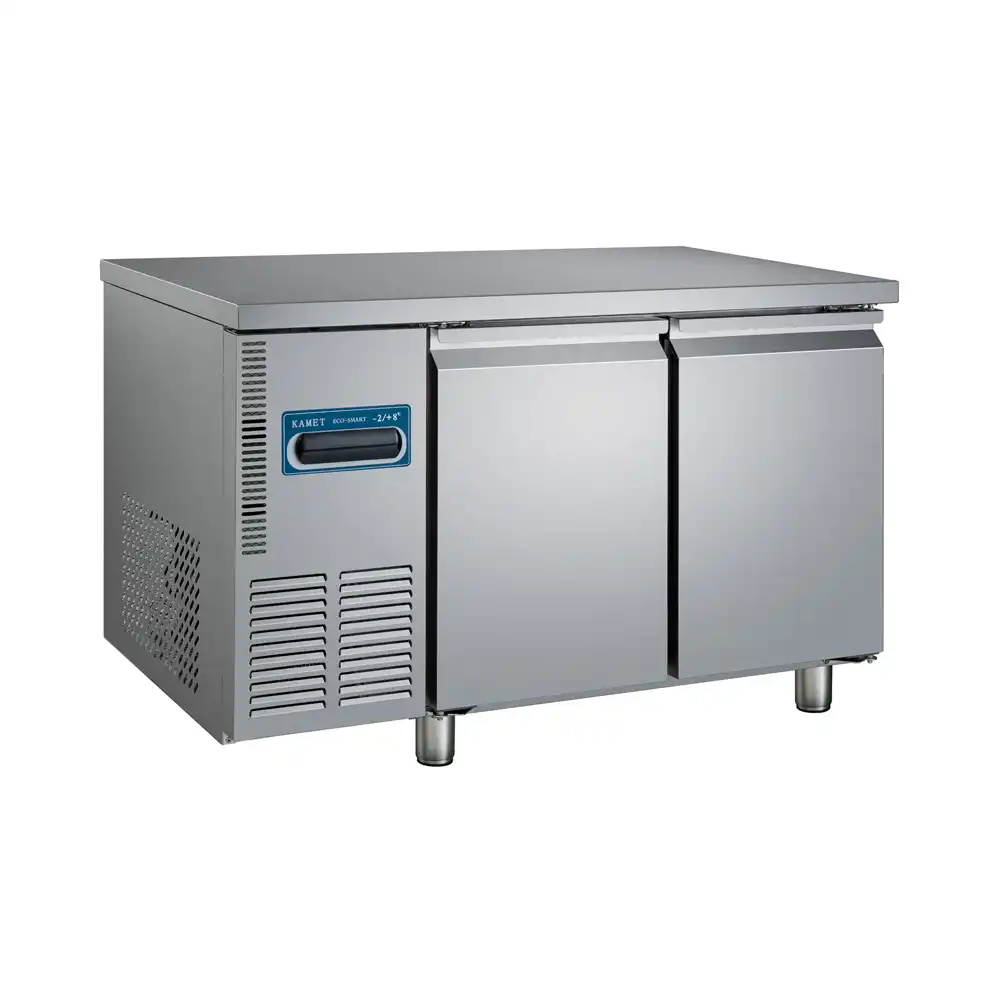
Common issues include temperature fluctuations, excessive noise, or water leaks.
1. Check power supply and circuit breakers if the unit is not cooling.
2. Ensure doors are properly sealed and not left ajar.
3. Clean condenser coils and evaporator fans if cooling is insufficient.
4. Inspect drain lines for blockages if water accumulates inside or outside.
5. Consult a qualified technician for complex problems or persistent issues.
Discover Your Ideal Compact Refrigeration Solution
Selecting the right compact refrigerator is a strategic investment for any small restaurant. At ZHEJIANG KAIMEI CATERING EQUIPMENT CO., LTD, we specialize in providing high-quality, energy-efficient commercial refrigeration solutions tailored to your specific needs. Our range of undercounter units, worktop refrigerators, and chef bases are designed for durability, performance, and optimal space utilization. Contact us today to discuss your requirements and find the perfect fit for your kitchen.
Phone: +86 181 5720 2219
Email: Sales@hzcamay.com
FAQs
1. What is the ideal temperature range for a compact restaurant refrigerator?
The ideal temperature range for a commercial refrigerator is generally between 0.5°C and 5°C (33°F and 41°F). This range ensures food safety by inhibiting bacterial growth while preserving freshness and quality. Regular monitoring with a reliable thermometer is crucial.
2. How often should a commercial compact refrigerator be defrosted?
Most modern commercial compact refrigerators feature automatic defrost systems, eliminating the need for manual defrosting. For units without automatic defrost, manual defrosting should occur when ice buildup reaches about 1/4 inch thick to maintain efficiency and proper cooling.
3. Are compact refrigerators energy efficient for small restaurants?
Yes, many compact commercial refrigerators are designed with energy efficiency in mind. Look for models with ENERGY STAR certification and those utilizing eco-friendly R290 refrigerant. These features significantly reduce electricity consumption and lower operating costs for small restaurants.
4. What certifications are important for commercial compact refrigerators?
Key certifications include ETL (for electrical safety), DOE (for energy efficiency), ENERGY STAR (for superior energy performance), and NSF (for sanitation standards). These certifications ensure the unit meets industry safety, performance, and hygiene requirements for commercial use.
5. Can a compact refrigerator also function as a prep table in a small restaurant?
Absolutely. Many compact commercial refrigerators are designed with dual functionality. Worktop refrigerators and refrigerated chef bases provide both cold storage and a durable work surface, making them excellent choices for small restaurants seeking to maximize space and efficiency.