

A chef base and a worktop refrigerator serve overlapping purposes: both keep ingredients cold and serve as a work surface. However, they are built for very different kitchen environments, and choosing the wrong one is one of the most common specification errors I see in commercial kitchens. A chef base is engineered to sit directly under grills, salamanders, and charbroilers, absorbing radiant heat and heavy impacts, while a worktop refrigerator is designed for general cold storage and light prep in cooler areas. The difference comes down to construction details that affect heat tolerance, insulation, compressor life, and long-term durability.
What Is a Chef Base Refrigerator?
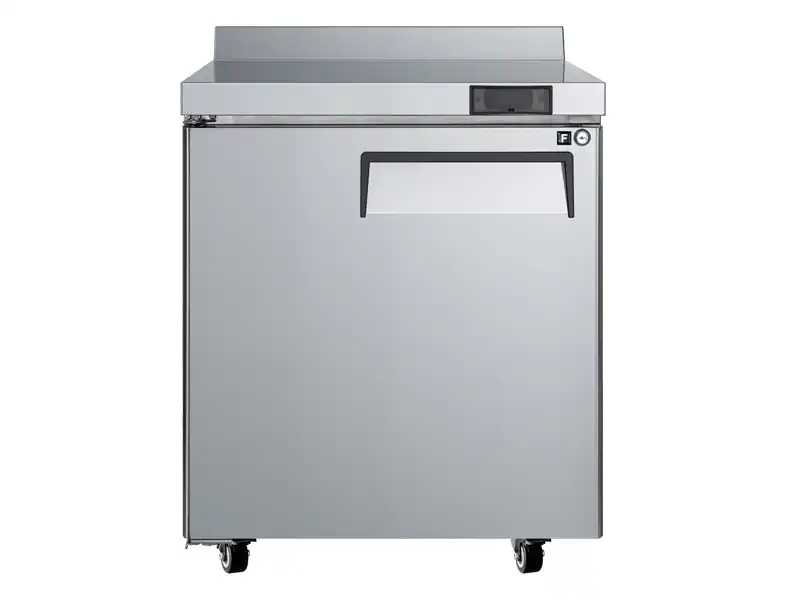
A chef base is a low-profile refrigerated cabinet with a reinforced worktop, designed to be placed under countertop cooking equipment. In a high-volume kitchen, cooks need immediate access to chilled proteins, sauces, and prepared ingredients without stepping away from the line. The chef base delivers that access. The top surface is built to withstand the radiant heat and occasional spillover from a grill, broiler, or salamander directly above it. Our Camay MAR-60A chef base, for instance, uses a one-piece stainless steel top with a drip-resistant V edge that prevents liquids from seeping into the cabinet. The unit runs at 0.5°C to 5°C and uses polyurethane cyclopentane insulation to maintain that temperature even when ambient heat spikes during rush periods. The compressor is selected for extended duty cycles in higher ambient temperatures, a critical difference that many purchasing managers overlook.
What Is a Worktop Refrigerator?
A worktop refrigerator, sometimes called a countertop refrigerator or undercounter worktable, is also a refrigerated cabinet with a usable top surface, but it is intended for prep areas and back-of-house storage rather than the cook line. These units, such as our MTR-72 three-door undercounter refrigerator, offer between 368 and 576 liters of storage at the same 0.5°C to 5°C range. The worktop is a standard stainless steel surface suitable for light prep tasks, but it is not reinforced for heavy cookware or continuous heat exposure from above. The primary function is to store and organize bulk ingredients while giving kitchen staff a convenient work surface nearby.
How Do Construction and Materials Differ?
The critical distinction between these two units lies in three areas: worktop reinforcement, insulation layer integration, and compressor duty rating.
The worktop itself: a chef base top is often built as a single-piece, thicker gauge stainless steel sheet with a welded edge profile that prevents fluids from tracking into the door seals or insulation. The MAR-60A, for example, has no seams on the cooking plane. A standard worktop refrigerator uses the cabinet top as a functional shelf; it is sturdy enough to hold small appliances or cutting boards but lacks the structural bracing needed to support heavy cast-iron cookware or constant thermal cycling.
The insulation system is engineered differently even though both units use polyurethane/cyclopentane foaming. In a chef base, the insulation layer is placed and optimized to shield the refrigerated compartment from the downward heat gradient. The door gaskets and hinges are also tested for higher temperature tolerance. If you use a standard worktop refrigerator under a salamander, the heat loading will eventually degrade the door seal, leading to temperature loss and compressor overcooling.
The compressor and condensing unit: chef base compressors are selected for high-ambient operation. In many kitchens, air temperatures above the cooking line can exceed 40°C during peak periods. A standard compressor will short-cycle and fail prematurely under those conditions. That is why the MAR-60A uses a heavy-duty compressor rated for extended duty in ambient temperatures up to 38°C while maintaining internal setpoints, an engineering detail that directly affects service life and warranty performance.
Where Should Each Unit Be Placed in Your Kitchen?
I have seen many kitchen layouts where a worktop refrigerator is placed under a convection oven or charbroiler because it fits, and six months later the unit fails. The placement decision is straightforward: if the unit will sit beneath any heat-producing equipment, specify a chef base. If it will be used in a prep zone, salad station, bakery, or cold storage area, a worktop refrigerator is the correct choice.
For cook line applications, the chef base positions ingredients at the cook’s hip height, reducing bending and reaching. The 681 mm height of the MAR-60A matches standard commercial kitchen counter heights, creating a continuous work plane for plate assembly and garnish.
Worktop refrigerators typically stand taller at around 850 mm to 900 mm, making them better suited for standing prep tasks where staff need a comfortable working height for chopping, mixing, or portioning. They also offer significantly more internal storage volume, which is valuable for backup ingredient storage in busy facilities.
If your program involves both cook line and prep area refrigeration, confirm the manufacturer’s duty rating for each placement before finalizing your BOM. Reach out at Sales@hzcamay.com.
| Specification | Chef Base | Worktop Refrigerator |
|---|---|---|
| Primary Use | Cook line under heat sources | General cold storage and prep |
| Worktop Durability | Reinforced SS, heat-resistant, V-edge | Standard SS worktop |
| Temperature Range | 0.5°C to 5°C | 0.5°C to 5°C |
| Insulation and Compressor | Polyurethane, heavy-duty compressor rated for high ambient | Polyurethane, standard compressor |
| Typical Capacity | 117 L (4.13 Cuft) | Up to 576 L (20.34 Cuft) |
| Mobility | 4-inch casters standard | 2-inch casters optional |
Which Refrigerator is Right for Your Commercial Kitchen?
The final decision balances three factors: heat exposure, storage volume, and budget. A chef base costs more per liter of storage because of the reinforced construction and higher-spec components, but the cost of replacing a failed worktop refrigerator after six months of high-heat exposure is far greater. In my experience working with global kitchen equipment buyers, the single most common post-installation issue is a worktop refrigerator placed where a chef base should have been.
For restaurants with tight budgets, it is tempting to purchase only worktop refrigerators and position them carefully, but this rarely works in practice. Kitchens are dynamic; equipment gets moved, and a unit designed for 25°C ambient cannot hold temperature at 40°C. The warranty does not cover heat damage, and the kitchen faces downtime.
I recommend the following rule: if you can stand at the intended location and feel heat radiating from the cooking line above, choose a chef base. If the location is cool and the primary need is volume, a worktop refrigerator is the better investment. Share your kitchen layout and heat load requirements with us at Sales@hzcamay.com or call +8618157202219, and our team will confirm the correct unit for each station.
Common Questions About Chef Bases and Worktop Refrigerators
Can I use a worktop refrigerator as a chef base if I add an insulation mat?
No. A heat-resistant mat can reduce direct contact heat, but it does not protect the door seals, hinges, or compressor from high ambient temperatures. Over time, the cabinet insulation still absorbs heat, and the compressor overworks. The unit will fail, and manufacturers will not honor the warranty for application misuse.
What maintenance does a chef base require beyond standard refrigeration units?
Chef bases need more frequent condenser coil cleaning because they often draw in hotter, grease-laden air from the cook line. We recommend cleaning the condenser coils every two weeks and checking the door gasket integrity monthly for signs of heat warping or cracking.
Which unit is more energy efficient?
When used in their intended environments, both units have similar energy efficiency ratings. If you place a worktop refrigerator in a high-heat area, the compressor runs longer and draws more power, negating any energy savings. The key to energy efficiency is matching the unit to the application.
Do chef bases come in different sizes?
Yes, chef bases are available in widths from 24 inches to 72 inches, with varying drawer and door configurations. The capacity is typically smaller than a worktop refrigerator because of the lower profile and drawer arrangements, but multiple units can be ganged together for longer cook lines.
How do I order the right unit for my kitchen?
Start by listing each refrigeration position in your kitchen layout, noting proximity to heat sources, required internal temperatures, and storage volume. Send those details along with your project timeline to Sales@hzcamay.com, and our engineering team will confirm the correct model specifications and availability.
If you’re interested, check out these related articles:
Upright Freezer vs Refrigerator Key Differences Explained
Essential Maintenance Tips for Your Commercial Chef Base Refrigerator
Chef Base Fridge vs Undercounter Fridge Which Is Best for Your Kitchen
Heavy Duty Chef Base Refrigeration for Efficient Commercial Kitchens
Essential Commercial Chef Base Fridge Installation Tips