
Running a commercial kitchen is a daily exercise in squeezing more out of every minute and every kilowatt. Time and again, we’ve watched utility costs—especially from ice machines—quietly chip away at margins. The good news is the fix is straightforward: prioritize energy-efficient units. They lower electricity and water usage, trim your environmental footprint, and help you keep pace with rising sustainability expectations—all while strengthening profitability. I still think of a bar owner who swapped out an aging machine and saw the next month’s bill drop enough to cover an extra Friday-night shift.
Why Energy-Efficient Commercial Ice Machines Are Essential for Your Business
1. Understanding the high operational costs of traditional ice machines
Older ice machines are notorious for heavy electricity and water consumption. Outdated refrigeration systems and mediocre insulation force compressors to work harder, driving up bills and wasting water. These costs often stay hidden until you comb through utility statements—something we see happen more than it should.
2. The environmental benefits of choosing energy-efficient models
Energy-efficient models help cut greenhouse gas emissions by using less power and employing refrigerants with lower global warming potential. This not only supports compliance with environmental regulations but also resonates with eco-conscious customers. Choosing these technologies is a practical way to demonstrate a real commitment to sustainability.
3. Long-term financial advantages through reduced utility bills
While the upfront price can be higher, efficient machines pay their way over time. Lower electricity and water usage translates directly into smaller utility bills, often delivering a quick ROI. Those recurring savings flow straight to the bottom line.
Key Technologies Driving Energy Efficiency in Modern Ice Makers
1. The role of R290 refrigerant in sustainable cooling
R290 (propane) offers excellent thermodynamic performance with a very low GWP. As a natural refrigerant, it lets ice machines run more efficiently while reducing environmental impact. Many leading models, including our own, leverage R290 to achieve strong, consistent performance.
2. Advanced insulation materials and their impact on energy consumption
High-density, CFC-free polyurethane and cyclopentane foams lock in cold more effectively. By limiting heat ingress and cold loss, they reduce compressor runtime. Better insulation = less energy to keep ice at temperature.
3. Smart digital temperature controls and IoT integration for optimized performance
Smart controls continuously tune operating parameters for precision. With IoT integration, you get remote monitoring, diagnostics, and proactive maintenance—so the machine runs only when needed and stays at peak efficiency.
4. High-performance evaporators and self-cleaning functions that enhance efficiency
Copper-nickel evaporators accelerate freezing and harvesting cycles, shortening compressor runtime and cutting energy use. Self-cleaning functions prevent scale and mineral buildup that would otherwise hinder heat transfer and drain efficiency. Consistent cleaning keeps performance high.
How to Choose the Right Energy-Efficient Commercial Ice Machine
Selecting the appropriate energy-efficient commercial ice machine requires careful consideration of several factors. We recommend a systematic approach to ensure your investment meets your operational demands and sustainability goals.
1. Assessing ice production capacity and storage needs for your operation
Start with your peak-hour demand. Oversizing wastes energy; undersizing leads to shortages. Factor in your concept and volume—busy bars typically need far more ice than small cafes. We advise planning for both production and storage capacity to eliminate bottlenecks and avoid waste.
2. Understanding key certifications like ENERGY STAR and ETL for compliance and efficiency
ENERGY STAR and ETL labels give you confidence in efficiency and safety. ENERGY STAR means the model meets stringent EPA energy performance criteria. ETL confirms compliance with North American safety standards. Look for these marks to validate quality and efficiency.
3. Evaluating different ice types and their suitability for various applications
Match ice type to use case. Cube ice is the go-to for beverages; flake ice excels in displays and medical settings; nugget ice offers that chewable texture guests love in soft drinks. Selecting the right form minimizes waste and keeps customers happy.
4. Considering features like self-cleaning, noise reduction, and space-saving designs
Modern features make a real difference day to day. Self-cleaning cycles cut labor and support hygiene. Noise reduction creates a calmer work environment. Space-saving options, like under-counter units, help you make the most of tight layouts—boosting overall operational efficiency.
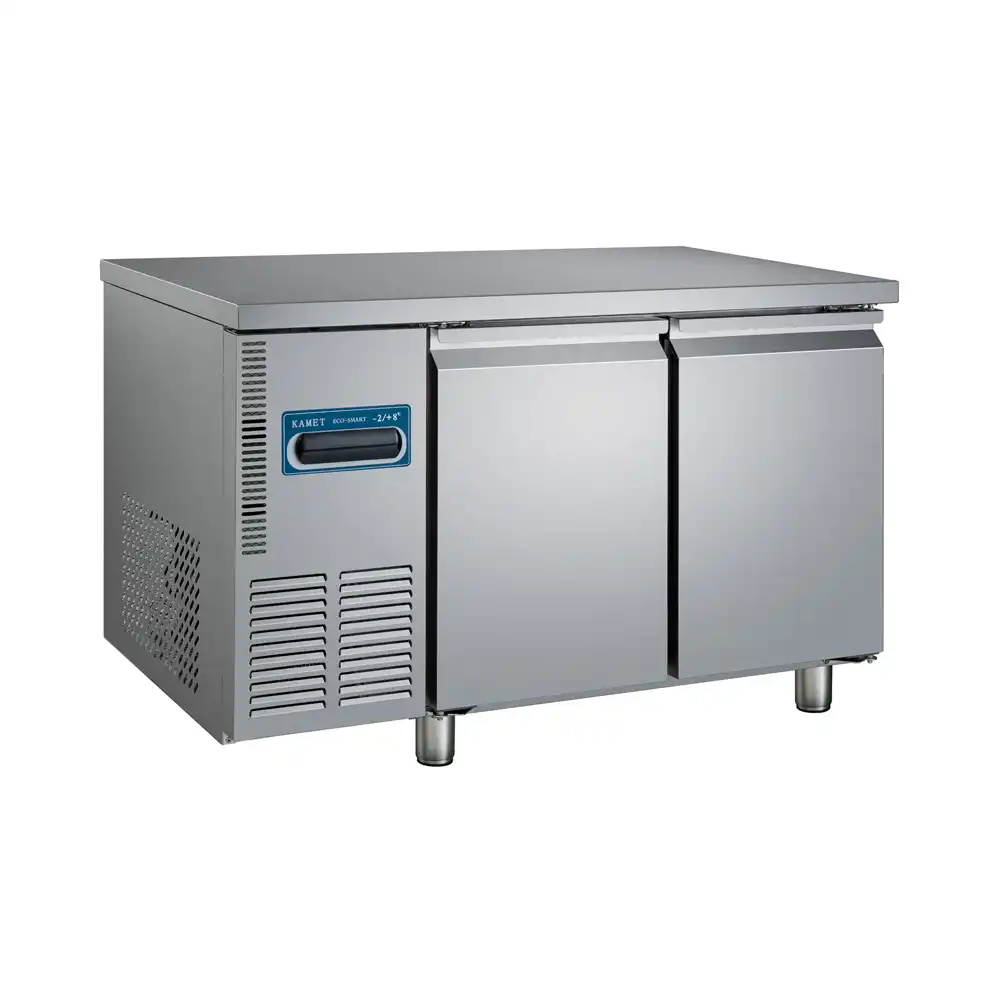
If you’re interested, check 《Optimizing Kitchen Efficiency with Integrated Worktop Refrigeration》.
The Benefits of Investing in High-Quality, Durable Ice Machines
A high-quality, durable ice machine represents a strategic asset for any commercial kitchen. We emphasize that initial cost should not be the sole determinant in your purchasing decision. Longevity, reliability, and ease of maintenance are equally crucial.
1. The importance of stainless steel construction for longevity and hygiene
Food-grade 304 stainless steel delivers durability and hygiene in equal measure. It resists corrosion, rust, and bacterial growth—critical in foodservice. It also stands up to the daily rigors of a commercial kitchen, extending useful life.
2. Reduced maintenance and extended service life of robust units
Well-built machines with quality components demand fewer service calls, reducing downtime and repair spend. Over years of operation, that reliability lowers total cost of ownership. In our experience, solid units consistently outperform bargain options.
3. The value of comprehensive after-sales support and warranty
Strong after-sales support and a robust warranty protect your investment. A confident warranty signals a manufacturer that stands behind its product. Ready access to tech support and spare parts means issues are resolved quickly, minimizing disruptions.
Integrating Energy-Efficient Ice Machines into Your Commercial Kitchen
Proper integration of energy-efficient ice machines into your kitchen workflow maximizes their benefits. Strategic planning ensures optimal performance and efficiency.
1. Strategic placement for optimal heat dissipation and performance
Place machines where airflow is ample and away from heat sources like ovens and griddles. Good ventilation prevents overheating and improves heat dissipation, which lowers energy use and extends equipment life. We’ve seen poor placement erase expected efficiency gains.
2. Best practices for regular cleaning and maintenance to preserve efficiency
Routine cleaning and maintenance safeguard performance. Follow manufacturer instructions for descaling and sanitizing. Keep air filters clean to maintain condenser airflow. Skipping maintenance reduces output and drives up energy consumption.
We regularly share insights on maintaining kitchen equipment, and you might find our article on 《Essential Maintenance Tips for Commercial Reach In Refrigerators》 helpful for broader context.
3. Maximizing ROI through operational efficiency and reduced waste
Efficiency and reliability go hand in hand with ROI. A dependable, energy-efficient machine delivers consistent ice without expensive emergency purchases. Fewer breakdowns mean steadier service—and costs that stay predictable.
Featured Energy-Efficient Ice Machine: Camay Cube Ice Making Machine FB210A
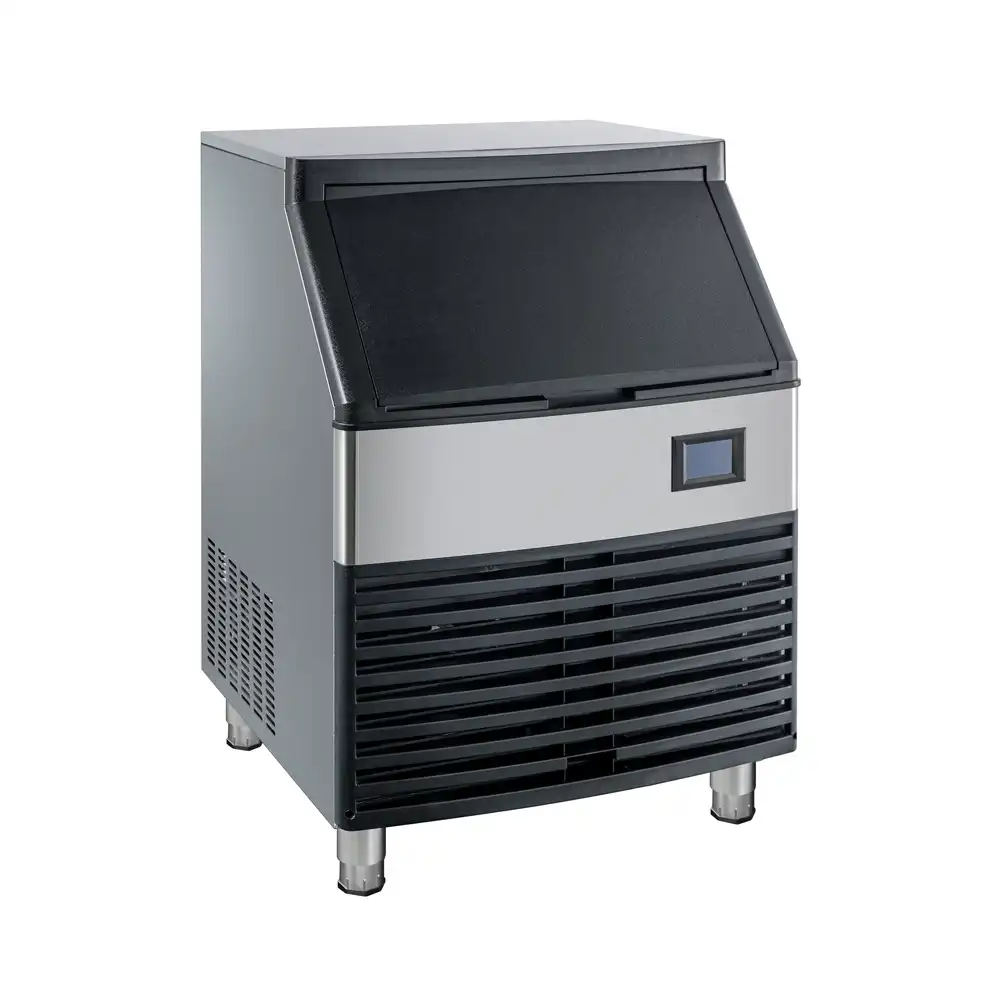
We proudly present the Camay Cube Ice Making Machine FB210A as an exemplary model of energy efficiency and performance. This machine embodies our commitment to sustainable and cost-effective solutions for commercial kitchens.
1. Overview of the FB210A’s energy-saving features, including R290 refrigerant and advanced evaporator
The FB210A brings together multiple efficiency-focused technologies. It uses R290, a natural hydrocarbon with minimal environmental impact, and a high-performance copper-nickel evaporator that speeds freezing and harvesting cycles. The result is strong production with lower energy draw. A water-flow ice-making system boosts capacity by 10% versus comparable units, while self-cleaning and advanced noise-reduction features enhance usability and day-to-day efficiency.
2. Technical specifications highlighting its efficiency and performance
The FB210A delivers robust performance while maintaining energy efficiency.
| Specification | Details |
|---|---|
| Model No. | FB210A |
| Voltage/Frequency/Power | 220V / 50Hz / 700W |
| Cooling Way | Air cooling |
| Refrigerant | R290 |
| Compressor | CUBIGEL |
| Max Ice Output | 100 kg / 24 hours |
| Max Ice Storage | 45 kg |
| Ice Shape | Cube ice |
| Ice Cube Quantity | 6×18 pcs per tray |
| Ice Size | 22×22×22 mm |
| Main Material | Food-grade 304 stainless steel / ABS & PE |
3. Application scenarios for various commercial settings
The FB210A fits a wide range of operations. Restaurants, cafes, and bars benefit from its steady, efficient ice production; hotels and convenience stores appreciate its reliability and capacity. It’s a smart choice for any commercial kitchen focused on dependable output and controlled operating costs.
Partner with ZHEJIANG KAIMEI for Sustainable Refrigeration Solutions
We invite you to explore our range of energy-efficient commercial refrigeration equipment. Our team is ready to assist you in selecting the ideal ice machine or other refrigeration solutions tailored to your business needs. Contact us today to discuss how our innovative products can enhance your operational efficiency and profitability. Reach out via email at Sales@hzcamay.com or call us at +8618157202219.
FAQs
1. What makes an ice machine ‘energy-efficient’?
An energy-efficient machine produces the same volume of ice using less electricity and water than standard units. This typically comes from technologies like R290 refrigerants, superior insulation, smart digital controls, and high-performance evaporators—all of which lower operating costs and environmental impact.
2. How much can I save on electricity with an energy-efficient ice machine?
While savings depend on usage, rates, and model, many businesses see electricity costs drop by roughly 15–30% compared with conventional machines. Over the equipment’s lifespan, that difference compounds into a substantial ROI.
3. What certifications should I look for when buying an energy-efficient ice machine?
Prioritize ENERGY STAR, ETL, and CE. ENERGY STAR confirms the unit meets strict EPA efficiency standards. ETL indicates compliance with North American safety requirements. CE marks conformity with European health, safety, and environmental protections.
4. How often should I clean my energy-efficient ice machine to maintain its efficiency?
Regular cleaning is essential. We recommend cleaning and sanitizing at least every six months—and more often in high-volume operations. This prevents mineral deposits and bacterial growth that can hinder performance and increase energy use.
5. Can energy-efficient ice machines produce different types of ice?
Yes. You’ll find efficient models that produce cube, flake, nugget, and other ice types while still adhering to high efficiency standards. Choose based on your specific application.
About the Author
David Qian is the founder of ZHEJIANG KAIMEI CATERING EQUIPMENT CO., LTD. With 28 years in the refrigeration industry, he brings deep expertise in commercial equipment—from product development and manufacturing to market needs—driving the company’s focus on high-quality, energy-efficient, and sustainable solutions for the global catering sector.
Keywords
energy-efficient commercial ice machines, R290 refrigerant, advanced insulation, smart digital temperature controls, high-performance evaporators, self-cleaning functions, ice production capacity, ENERGY STAR, ETL certification, cube ice, flake ice, nugget ice, stainless steel construction, operational efficiency, reduced utility bills, environmental benefits, ZHEJIANG KAIMEI CATERING EQUIPMENT CO., LTD