

The Real Difference Between Freezing and Blast Chilling
A standard freezer is primarily a holding cabinet. Once food is already chilled or frozen, it maintains a stable storage temperature — commonly around -18°C (0°F) — by removing modest amounts of heat over time. The compressor, evaporator, and airflow are sized for stability, not for pulling down hot product.
A blast chiller is a heat-removal workhorse. It forces high-velocity cold air across shallow pans, uses probe-based or time-based cycles, and drives food through the danger zone quickly enough to meet food-safety cooling requirements. It rarely replaces long-term storage; it handles the thermal shock before food enters storage.
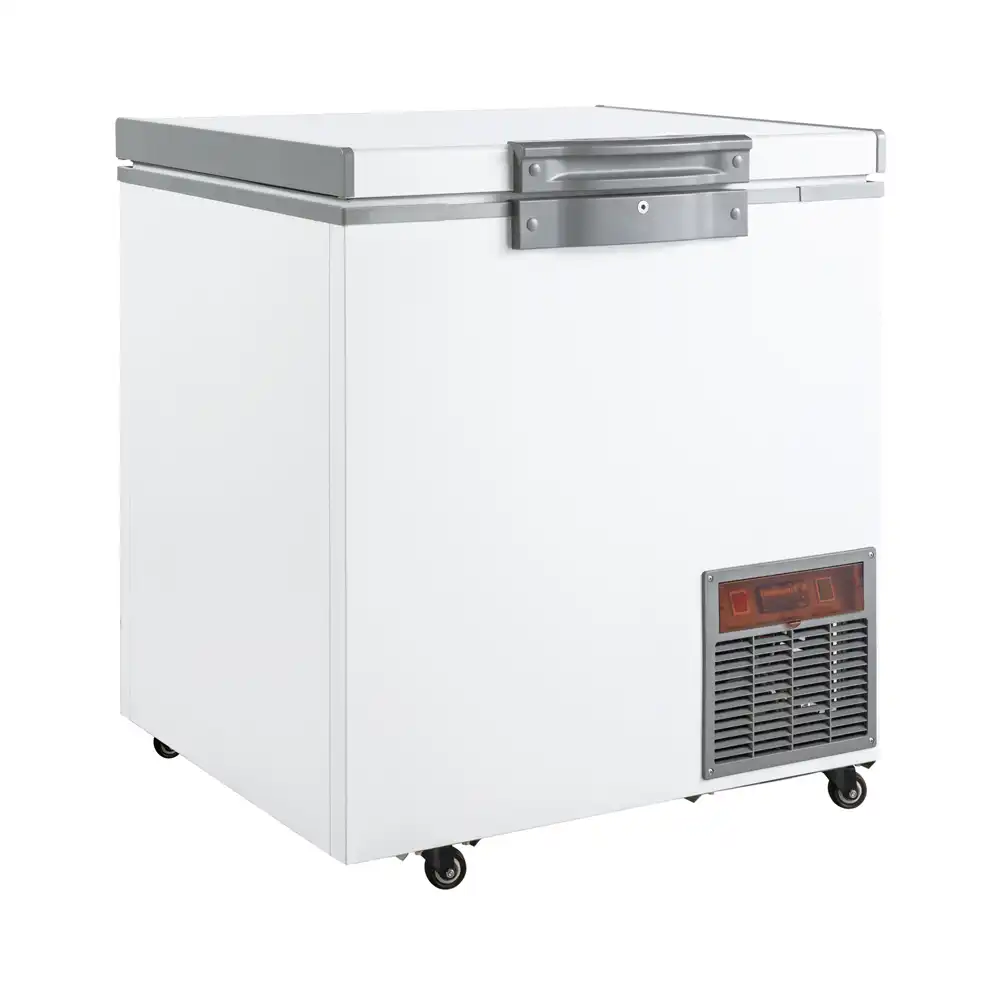
Storage-only equipment choices are a separate decision. <Upright Freezer vs Refrigerator Key Differences Explained> covers the separate operating roles of upright freezers and refrigerators.
This distinction matters because buying the wrong unit creates two common failures: a standard freezer packed with hot food runs long cycles and may not pull the core temperature down quickly enough, while a blast chiller used as a storage freezer wastes compressor life and floor space.
Pull-Down, Airflow, and Moisture Control
The performance gap is not only about lower temperature. Blast chillers depend on directed airflow across thin product layers. Standard freezers usually rely on static coil or gentler fan circulation; they are not designed to strip heat efficiently from a deep pan of cooked rice, sauce, or stock.
Rapid pull-down also affects ice crystal formation and moisture retention. In high-moisture products, slower cooling often produces larger ice crystals and more purge after thawing. Faster chilling helps preserve texture and yield, which is especially important for sauces, cooked proteins, doughs, and custards where appearance and water-holding capacity affect menu quality.
Food Safety, HACCP, and Shelf Life
Food safety rules focus on time and temperature, not on the name of the equipment. Under the U.S. FDA Food Code, cooked time/temperature control for safety food should cool from 57°C (135°F) to 21°C (70°F) within 2 hours, then from 21°C to 5°C (41°F) or below within a total of 6 hours [1]. Dense or large-batch products in a standard freezer can fail the first stage of that range because heat cannot leave the core quickly enough, even if the air temperature is low [1][2].
A blast chiller supports HACCP-based production because it makes the cooling step repeatable. The same tray load, probe placement, and cycle setting can produce a documented pull-down curve. Codex HACCP guidance treats process control and verification as central to managing biological hazards, and a recorded chilling cycle is easier to verify than a passive overnight hold [3].
Energy, Cost, and Batch Planning
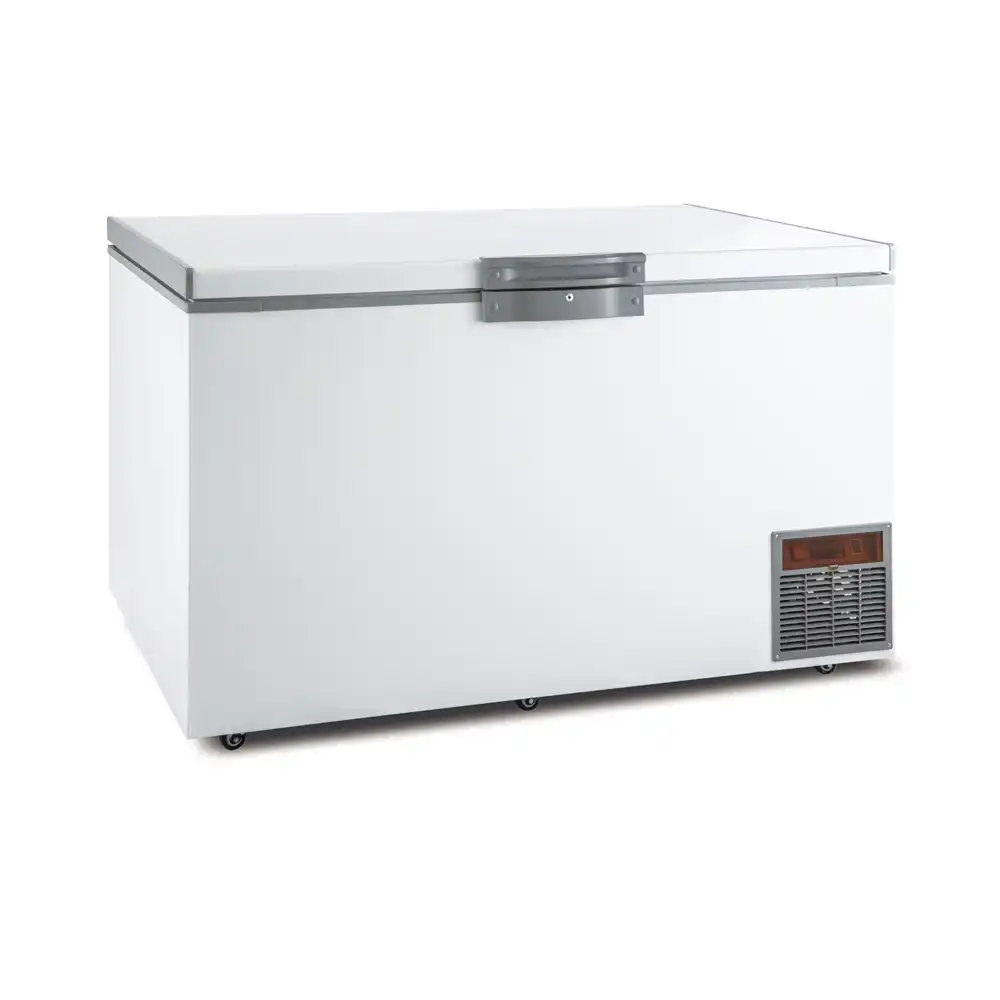
Blast chillers draw more instantaneous power than storage freezers because they move more heat in a shorter window. A storage freezer uses less peak power but may run long cycles when it is repeatedly asked to cool warm product. Direct energy comparison requires local utility rates, batch schedules, and actual daily loads.
When comparing equipment, look at peak electrical load, daily kWh at design ambient, defrost behavior, and condenser cleaning access — not only the cabinet price. If you are mid-selection, email Sales@hzcamay.com with four data points: batch size, desired pull-down time, voltage, and door configuration. That short list leads to a faster specification conversation than a product name alone.
How to Decide Which Unit Fits Your Operation
This decision is workflow-dependent. Start with the temperature of the product when it enters the unit:
- If food is already chilled or frozen and only needs stable storage, a standard freezer or reach-in freezer is generally the right fit.
- If the operation cooks large batches of sauces, proteins, rice, or plated meals and must cool them for later service, a blast chiller should be evaluated first.
- If the kitchen needs both rapid pull-down and long-term frozen holding, plan for both units rather than forcing one machine to do both jobs.
Operations that handle bakery or pastry production often use blast chilling for dough and custard stabilization, while seafood and protein processors may pair blast chilling with ultra-low storage.
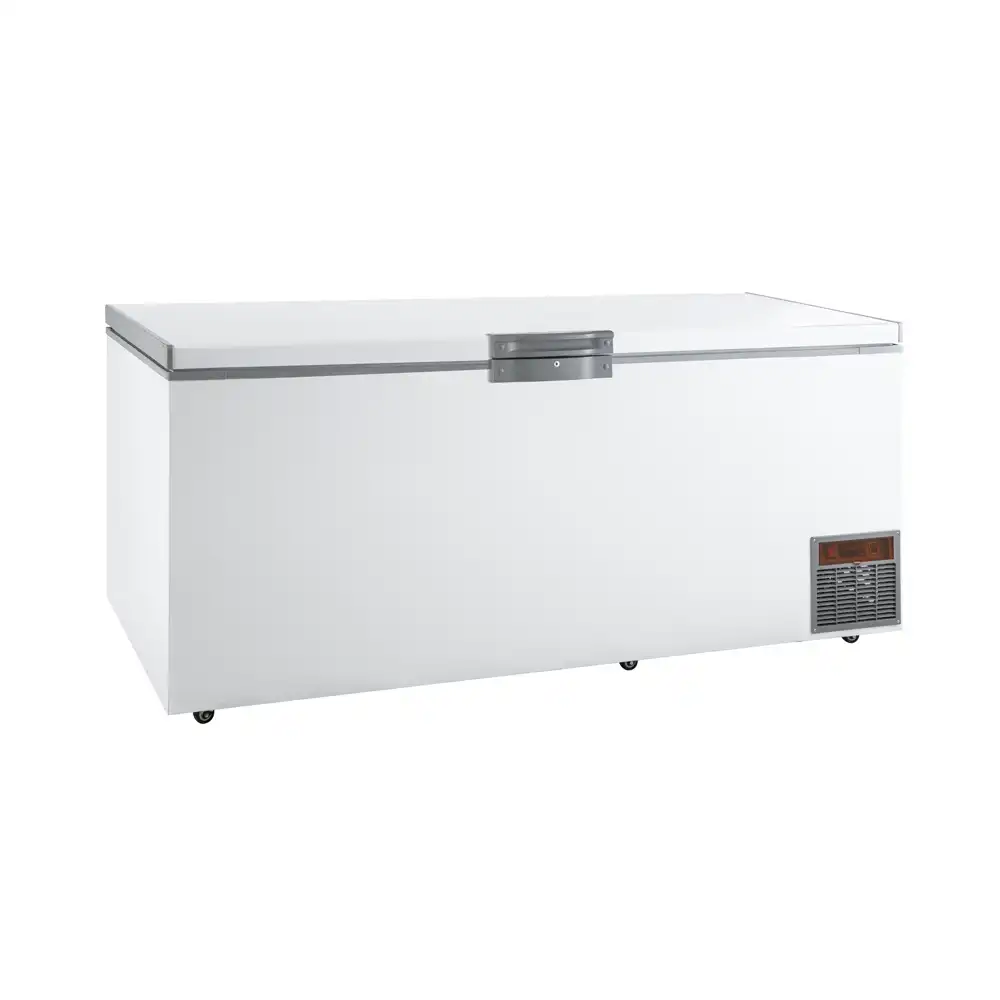
Long-term frozen storage planning belongs in the equipment comparison. <Boost Savings with Energy Efficient Commercial Upright Freezers> covers the efficiency factors to evaluate in storage freezers.
Request a Configuration Review
Send Zhejiang Kaimei Catering Equipment Co., Ltd the following for a direct equipment comparison:
- Product type and batch size
- Desired pull-down time or target process cycle
- Voltage and phase availability
- Door configuration and available floor space
Phone: +86 181 5720 2219
Email: Sales@hzcamay.com
FAQ
Does a blast chiller replace a standard freezer?
Not in most operations. A blast chiller removes heat quickly, while a standard freezer holds already-frozen food at a stable temperature. Many high-volume kitchens use both.
Can a standard freezer be used to blast chill cooked food?
A standard freezer is not designed for rapid core-temperature pull-down of hot, dense food. The product can remain too long in the danger zone.
What cooling times do food safety guidelines require?
The U.S. FDA Food Code recommends two-stage cooling: from 57°C (135°F) to 21°C (70°F) within 2 hours, then to 5°C (41°F) or below within 6 hours total [1].
What details do I need for a blast chiller quotation?
Typically batch size and pan/GN configuration, product inlet temperature, target pull-down time, voltage and phase, condenser location, and available floor space.
References
[1] U.S. Food and Drug Administration. Food Code 2022, Section 3-501.14 (Cooling). U.S. Department of Health and Human Services.
[2] U.S. Food and Drug Administration. Food Code 2022, Section 3-501.16 (Time/Temperature Control for Safety Food — Hot and Cold Holding).
[3] Codex Alimentarius Commission. General Principles of Food Hygiene, CXC 1-1969 (rev. 2022). FAO/WHO.
If you’re interested, check out these related articles:
Boost Efficiency Energy Efficient Chef Base Units for Commercial Kitchens
Essential Commercial Chef Base Fridge Installation Tips
Essential Maintenance Tips for Your Commercial Chef Base Refrigerator
Boost Kitchen Efficiency Workflow Optimization with Chef Base Fridges