

Blast chiller HACCP compliance turns on one measured event: how fast cooked food passes through the temperature danger zone. After reviewing production lines, export specifications, and audit failures across 26 years, I have found that most compliance gaps are not caused by weak compressors. They come from buying the wrong capacity for the batch, loading the cabinet badly, or logging temperatures that were never taken at the core. This article explains the pull-down benchmarks, load limits, and documentation habits an auditor actually checks, so your kitchen can pass without buying more blast chiller than the menu requires.
Blast Chiller Pull-Down Times Auditors Check for HACCP
A HACCP auditor starts with elapsed time in the danger zone, not the cabinet controller reading. The U.S. FDA Food Code standard for cooked food is two-stage cooling: from 135°F to 70°F within two hours, then from 70°F to 41°F within four additional hours. Some group contracts and local codes compress the first stage to 90 minutes. A blast chiller satisfies that requirement only when the product core reaches the benchmark, not when the air around the pan reaches it.
Core temperature matters because dense food stores heat far longer than the surrounding air. I have seen kitchens record the cabinet display at 38°F while a hotel pan of sauce at the center remained above 70°F. The correct procedure is to place a probe in the center of the thickest container, keep that probe in place for the full cycle, and write down the time when the product crosses 70°F and then 41°F. If the unit has a multi-point probe, select the point with the heaviest load, not the probe nearest the fan.
| Cooling method | Expected product path for a deep pan | HACCP result |
|---|---|---|
| Covered pan in a walk-in cooler | Usually misses the two-hour first stage | Record fails unless the batch is very shallow |
| Ice bath with manual stirring | Can reach 70°F but depends on labor | Workable but hard to verify time and core |
| Blast chiller with core probe | Reaches 70°F in 60 to 90 minutes when load matches capacity | Passes first stage if probe data is logged |
| Countertop cooling at room temperature | Fails for thick portions | Unusable under HACCP |
Blast Chiller Sizing and Load Limits for a Real Compliance Margin
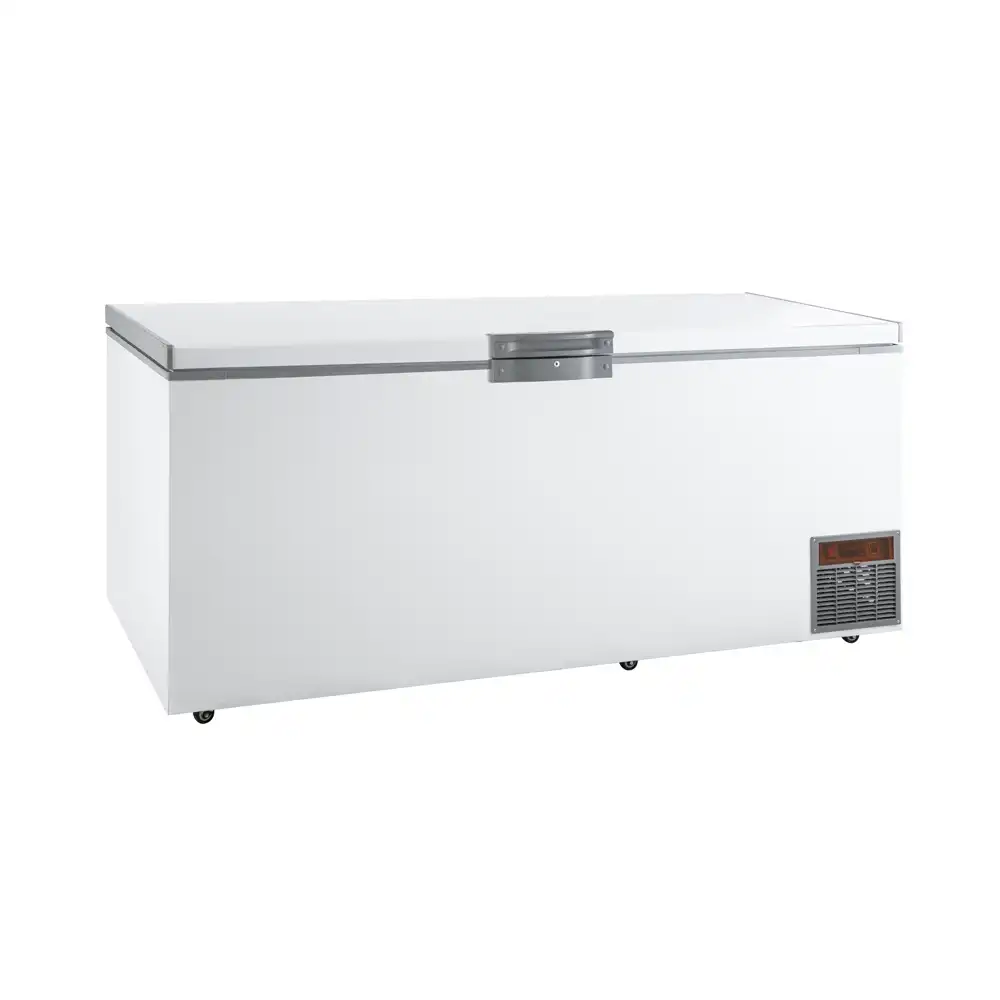
A chiller’s rated capacity means little unless the batch load matches the test conditions. A model rated for 30 kg may be tested with shallow 65 mm pans, while the production kitchen runs deep casserole dishes or tightly spaced hotel pans. When the load blocks airflow return, the compressor may run correctly and still fail to pull the center of the batch below 70°F in two hours. That is not a mechanical defect. It is a size-and-load mismatch that the auditor will still count against the kitchen.
Loading rules matter as much as the purchase decision. Keep pans shallow enough for the cycle time. Leave the air gap that the manufacturer specifies between trays. Put the densest product in the sensor zone, and do not stack pans or cover them with film that traps heat. If the kitchen changes from one menu category to another, recalculate the batch. The same unit that handled 20 kg of shredded chicken may not handle 20 kg of thick rice or meat sauce.
If your operation runs a 90-minute first-stage benchmark, check the specification against the hardest batch rather than the average. Send pan depth, batch weight, and target cooling time to Sales@hzcamay.com, and request a pull-down estimate for that specific load.
Operational Habits That Undermine Blast Chiller HACCP Compliance
The best equipment loses to poor staging. The HACCP cooling clock begins when the product leaves final cooking temperature, not when the operator finally closes the blast chiller door. If the batch waits 15 minutes on a prep table while another cycle finishes, that time still counts against the two-hour limit. I have seen this happen with stews and thick proteins: the chiller was tested and certified, the probe was working, and the record still failed because the product entered the cabinet too late.
Frequent door opening, tight pan packing, and probe placement in the thinnest part of the load are the other common process failures. A probe in a 25 mm layer of sauce does not tell you anything about the 65 mm hotel pan behind it. Once the cycle starts, keep the door closed. Let the probe stay in the slowest point of the load, and do not move pans until the first-stage temperature appears.
Rapid chilling only closes the first half of the cold chain; frozen storage conditions after chilling determine whether the original quality survives. <Boost Savings with Energy Efficient Commercial Upright Freezers> covers how insulation and compressor cycling affect storage economics when high-throughput blast chilling feeds a busy frozen holding program.
A Blast Chiller HACCP Log That Survives Inspection
The HACCP audit is a documentation review as much as an equipment check. A log that only says “cooled to 41°F” does not survive scrutiny; the auditor wants to see the path. Record the product name, batch number, cooking completion time and temperature, chilling start time, core temperature at the end of stage one and stage two, and the corrective action if any benchmark was missed. If a correction is missing, the auditor will treat the batch as uncontrolled, even when the final temperature eventually fell into the cold-holding range.
A reliable sequence reduces the chance of a missing entry:
- Mark cooking completion time and core temperature.
- Record chilling start time and probe position.
- Note the first-stage time and temperature at 70°F.
- Note the second-stage time and temperature at 41°F.
- Record the receiving cabinet or freezer location.
- Log corrective action and the responsible shift if the cycle missed a limit.
Digital controllers with multi-point probe recording make this simpler, but the discipline is still human. A written log started at the same time every batch creates a habit the auditor can follow.
When the blast chiller log ends at 41°F, the next holding cabinet must keep that temperature stable without undoing the work. <Essential Maintenance Tips for Commercial Reach In Refrigerators> covers gasket, condenser, and airflow checks that prevent temperature drift in daily cold storage.
Choosing a Blast Chiller for HACCP Compliance Without Overbuying
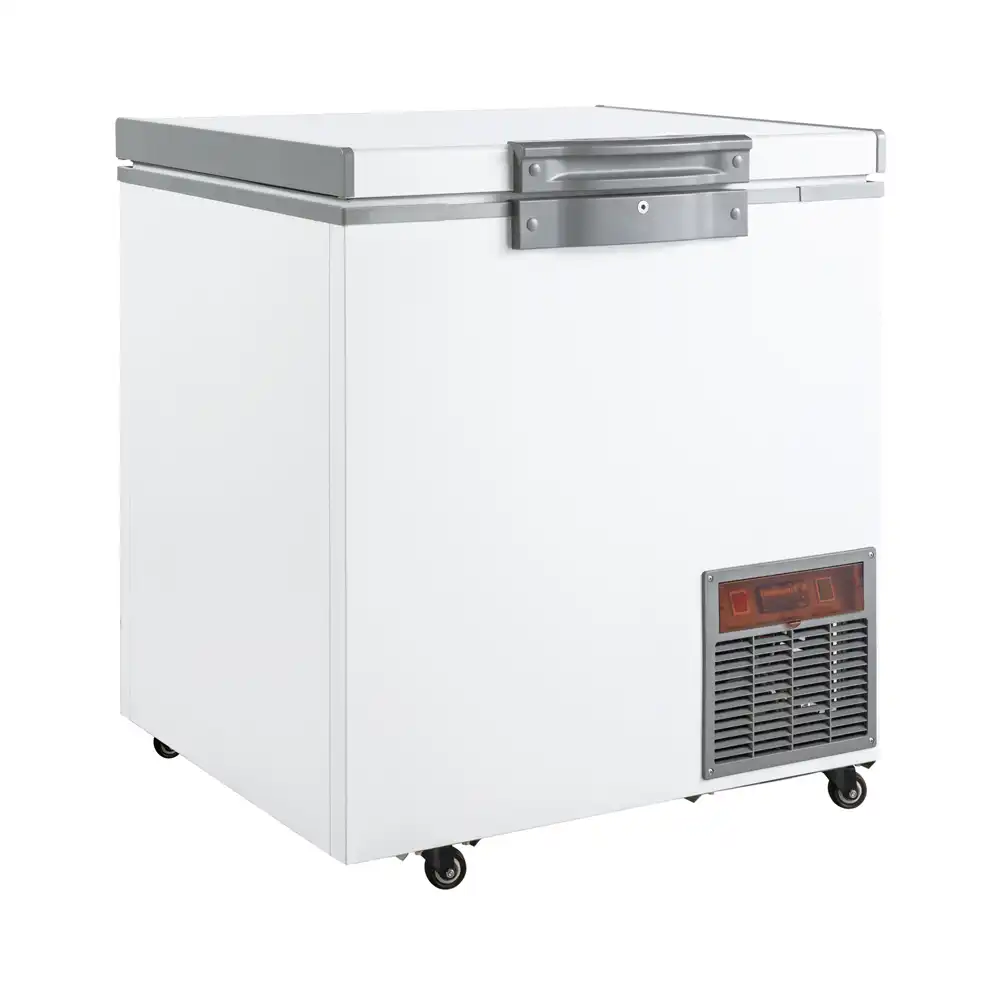
After an audit failure, many kitchens ask for the largest blast chiller they can fit. That can be the wrong correction. An oversized unit costs more, takes more floor space, and may still fail if the real problem was staging or probe placement. The better purchase is based on the largest single batch that must pass the first cooling stage, plus 15 to 20 percent headroom for menu variation. If the kitchen runs several incompatible batch types, two smaller units often work better than one large unit because they let the line stagger cycles and keep one cooling process running while the other finishes.
The specification should include pan depth, load weight, product density, electrical supply, and the audit standard your market follows. In Camay OEM and ODM projects, we start with those factors before choosing compressor size or door configuration. The goal is a blast chiller that matches a real HACCP process, not a larger cabinet with extra capacity that the kitchen never uses.
An audit failure usually comes from a missing record or a load that did not chill on time. If your kitchen is preparing for a regulatory review or group contract inspection, send the menu batch sizes, pan depths, and the cooling time standard you must meet. Our engineers will confirm the blast chiller configuration and probe arrangement against that production data. Email Sales@hzcamay.com or call +8618157202219.
Common Questions About Blast Chiller HACCP Compliance
Does HACCP require a blast chiller for every commercial kitchen?
No, HACCP does not require a blast chiller for every kitchen. The standard requires that food pass through the danger zone within defined time and temperature limits. Some operations can document that with shallow pans, ice baths, or low-volume cooling. A blast chiller becomes the better choice when batch sizes are large, menus change daily, or a client audit demands verifiable pull-down times. If the kitchen cannot prove the two-stage path with manual methods, a blast chiller is often the simplest way to close that documentation gap.
What is the fastest blast chiller temperature setting for HACCP compliance?
Many kitchens assume the coldest cabinet setting is always the safest setting. That assumption can damage thin items through surface ice while the core remains warm. The correct setting depends on product type and pan depth. Dense sauces and proteins need more time and airflow; thin items can use a faster cycle. Start with the manufacturer preprogrammed cycle, then test the slowest point in the load. The objective is not the coldest air temperature. It is a verified core temperature of 70°F and then 41°F within the required windows.
How long should a blast chiller HACCP log be kept?
It depends on the authority and the client contract. Some local health departments ask for 90 days, while chain operators and group purchasing contracts often require cold chain records for one year or longer. Keep the log for the longest period any of your compliance documents require. A missing historical log can become a finding even when current records look clean. If the kitchen moves to digital records, keep an offline export of the same batch details so a network outage does not erase the audit trail.
What should I send when requesting a compliance-ready blast chiller quotation?
In projects I have reviewed, the fastest quotation starts with production details rather than a model number. Send daily batch weights, pan depth, product temperature after cooking, available electrical supply, and the cooling time standard your market applies. If the kitchen runs multiple menus, include the heaviest batch and the toughest product density. Those numbers let the manufacturer confirm compressor size, probe arrangement, and cycle programming. Share your requirements with Sales@hzcamay.com and we will confirm which blast chiller configuration matches your HACCP process.
If you’re interested, check out these related articles:
Essential Commercial Chef Base Fridge Installation Tips
Upright Freezer vs Refrigerator Key Differences Explained
Chef Base Fridge vs Undercounter Fridge Which Is Best for Your Kitchen
Ultimate Buyers Guide for Commercial Reach In Refrigerators