

Beverage coolers for gyms, spas, and fitness centers look like simple purchases, but they operate in one of the most demanding light-commercial environments: long hours, heavy door openings, humid air, and constant traffic. A unit chosen only by cabinet volume often struggles with recovery, frost, gasket wear, and energy cost. This guide covers the engineering criteria that matter when selecting and maintaining beverage refrigeration for health and fitness facilities.
Why Beverage Coolers in Gym, Spa, and Fitness Settings Fail Faster Than Expected
Unlike a convenience store cooler, a gym-floor cooler faces demand spikes after classes and irregular use overnight. Door-open time is higher, and ambient conditions near pools, saunas, and south-facing front desks can push a small refrigeration system harder. The result is that ordinary residential units or light-duty beverage merchandisers may cycle too long and fail to recover.
Any cooler holding protein shakes, dairy-based drinks, cold-pressed juices, or other potentially hazardous beverages should hold product at 41°F (5°C) or below, consistent with U.S. Food Code cold-holding guidance [1]. This is not only a food-safety issue; it is also the operating point where refrigerated beverages feel cold enough to serve.
Temperature Range, Recovery, and Sensing First
Specify a commercial unit with a digital controller and a sensor placed in the product zone, not only in the evaporator. For gym and spa service, a refrigeration range of about 0.5°C to 5°C (33°F to 41°F) is practical for most bottled and canned beverages while still supporting dairy or plant-based drinks.
Forced-air cooling distributes temperature more evenly than static cooling. Automatic defrost prevents frost buildup from humid air, which is especially important near pools and spa treatment rooms. Look for sanitation certification such as NSF/ANSI 7, which addresses construction and cleanability for commercial food equipment [2].
Capacity and Bottle/Can Mix: Planning for Peak Occupancy
The right size depends less on square footage and more on peak draw. Count the beverages sold or consumed in the busiest two-hour window, then add room for restocking and cold-air circulation. Tightly packed rows block return air and make the compressor run longer; leaving open space on each shelf shortens recovery time.
Adjustable or removable shelves help adapt to bottle shape changes, while interior lighting and visible rows can speed selection. If the cooler is paired with an ice machine for smoothies or recovery drinks, coordinate peak recovery with the cooler load so both systems are not competing for the same hot-air space.
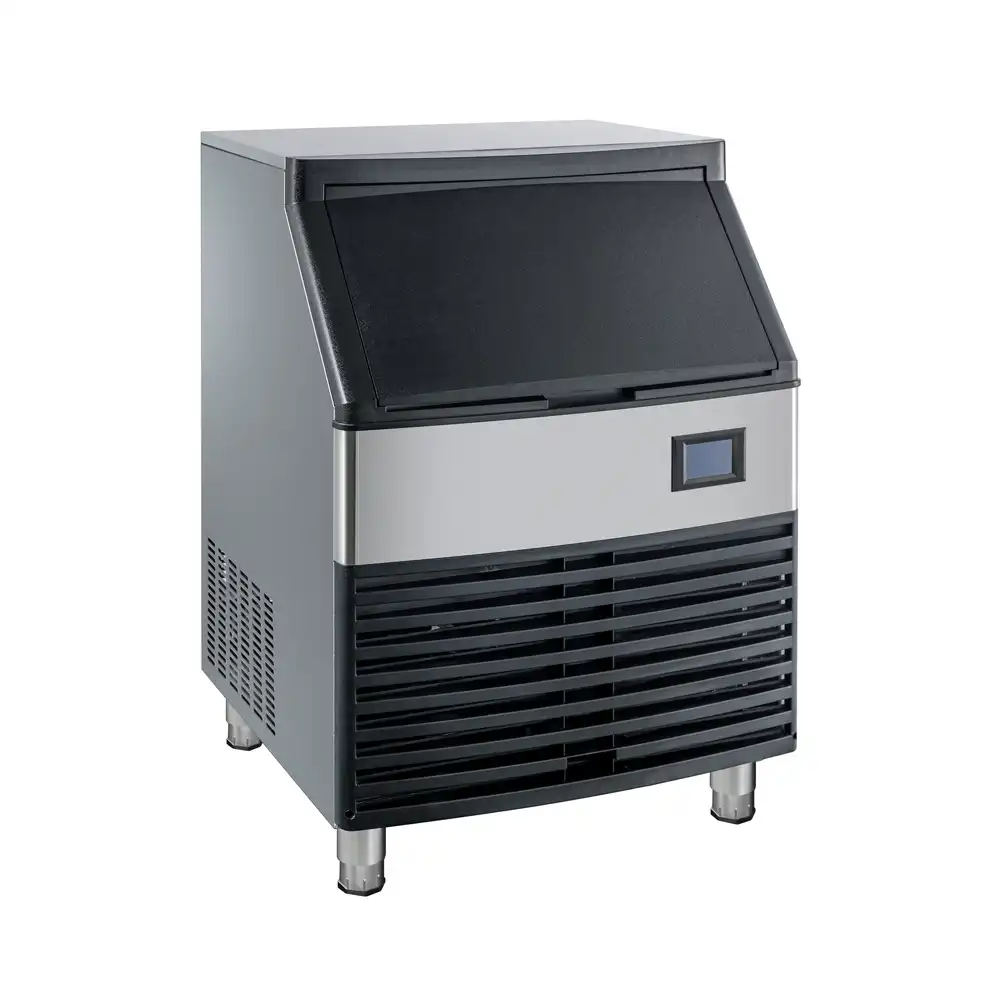
For an accurate size plan, send the peak-hour beverage count, bottle/can mix, and available floor dimensions to Sales@hzcamay.com. Camay engineering can recommend a cabinet from standard undercounter and worktop refrigeration lines rather than forcing a generic catalog unit into the space.
Sized for the Space: Footprint, Airflow, and Front-of-House Placement
Measure the clearance not just for the cabinet body, but for the door swing and ventilation. Most commercial beverage coolers need a few inches of side and rear clearance to reject heat. Blocking the condenser grille is a common cause of high energy use and compressor failure.
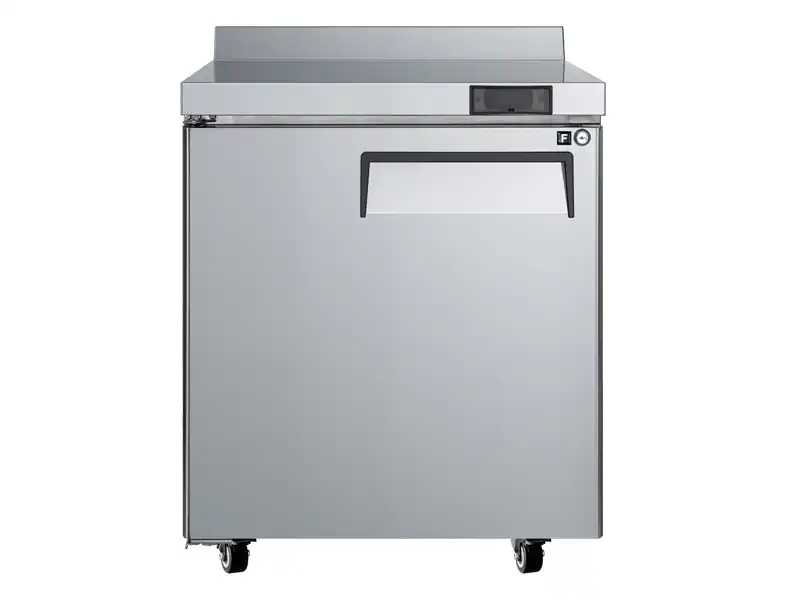
If the unit sits inside a reception desk or against a wall, verify that air can enter and exit the condenser side. Glass-door units improve visibility but require stronger interior lighting and more frequent cleaning than solid-door units. Compact undercounter or worktop-height coolers can fit below a cafe counter or smoothie station, combining storage with serving access.
Construction Details That Matter in Humid, High-Traffic Areas
Stainless steel interior and exterior panels, rounded inner corners, removable door gaskets, and a self-closing door reduce the operational problems common in health clubs. In poolside or spa settings, humid air accelerates corrosion on painted or plastic surfaces. Stainless and well-sealed electrical controls are more durable over a typical 10-year equipment life.
Avoid units with exposed fasteners or sharp corners in customer-visible zones. Equipment that is easy to wipe down daily will also be easier to keep clean during maintenance inspections.
For health and wellness spaces where a cabinet doubles as a prep counter or where low-profile undercounter storage is needed, the door access and top-work surface trade-off matters. <Chef Base Fridge vs Undercounter Fridge Which Is Best for Your Kitchen covers how cabinet configuration affects workflow access and usable top space.
Energy Efficiency and Electrical Considerations
Choose equipment that matches the available voltage and amperage. A 115V/60Hz specification may be standard, but the available circuit capacity at the installation point still matters. Hydrocarbon refrigerant R290 is common in current light-commercial cabinets and offers low global warming potential compared with older refrigerants.
ENERGY STAR certification is a useful independent efficiency benchmark for commercial refrigerators and freezers [3]. Camay beverage-compatible refrigeration in the undercounter and worktop range uses R290 and polyurethane/cyclopentane insulation to reduce heat gain through the cabinet walls.
Energy-efficiency decisions should account for cabinet size, ambient conditions, and door type. <Boost Savings with Energy Efficient Commercial Upright Freezers covers efficiency factors that also affect beverage cooler operating cost.
If your facility is replacing an existing cooler or comparing operating costs, provide current utility rates and daily hours to Sales@hzcamay.com or call +86 181 5720 2219 for a direct configuration review.
Maintenance Plan That Protects Reliability
The main service tasks are condenser cleaning, gasket inspection, door alignment, defrost verification, and temperature logging. Condenser coils should be cleaned before the cooling season and more often in dusty or heavily trafficked areas. Door gaskets need to be wiped weekly and inspected for gaps; a worn gasket causes excess frost and longer compressor run time.
Keep a simple log of cabinet temperature at opening and after peak occupancy. A trend that drifts upward usually signals a deeper issue than a thermostat adjustment.
Maintenance routines for commercial coolers and freezers share many of the same failure points, from condenser coils to door gaskets. <Essential Maintenance Tips for Commercial Reach In Refrigerators covers a practical cleaning and inspection sequence that can be adapted to beverage coolers.
How to Specify a Beverage Cooler for Your Facility
Before finalizing a purchase, prepare this short specification list:
- Required holding temperature and intended beverage types
- NSF/ANSI or local sanitation acceptance
- Cabinet dimensions plus clearance for door swing and condenser airflow
- Electrical supply: voltage, frequency, amperage, and circuit headroom
- Door type, shelf count, and interior lighting
- Ambient conditions including humidity and temperature near the site
- Maintenance access and spare parts availability
Send this short list to Camay’s engineering team, and we can map it to current certified refrigeration platforms before you commit to a floor plan.
Specify Beverage Coolers with Camay
Zhejiang Kaimei Catering Equipment Co., Ltd. manufactures commercial refrigeration under the Camay brand with 26 years of industry experience. For health and wellness facilities, our team supports specification, OEM/ODM customization, and after-sales service.
To get a working recommendation or quote, prepare the following inquiry list:
- Installation country and available voltage
- Approximate daily beverage volume during peak hours
- Bottle, can, or mixed SKU dimensions
- Space constraints and door swing preference
- Ambient temperature and humidity conditions
Contact us at Sales@hzcamay.com or +86 181 5720 2219 with these details, and a sales engineer will respond with configuration options.
Frequently Asked Questions
What temperature should a gym beverage cooler maintain?
Most refrigerated beverages should be held between 33°F and 41°F (0.5°C to 5°C). Dairy-based drinks, cold-pressed juice, and other potentially hazardous beverages require cold-holding at 41°F (5°C) or below in the U.S. market [1].
Should I choose a glass door or solid door cooler?
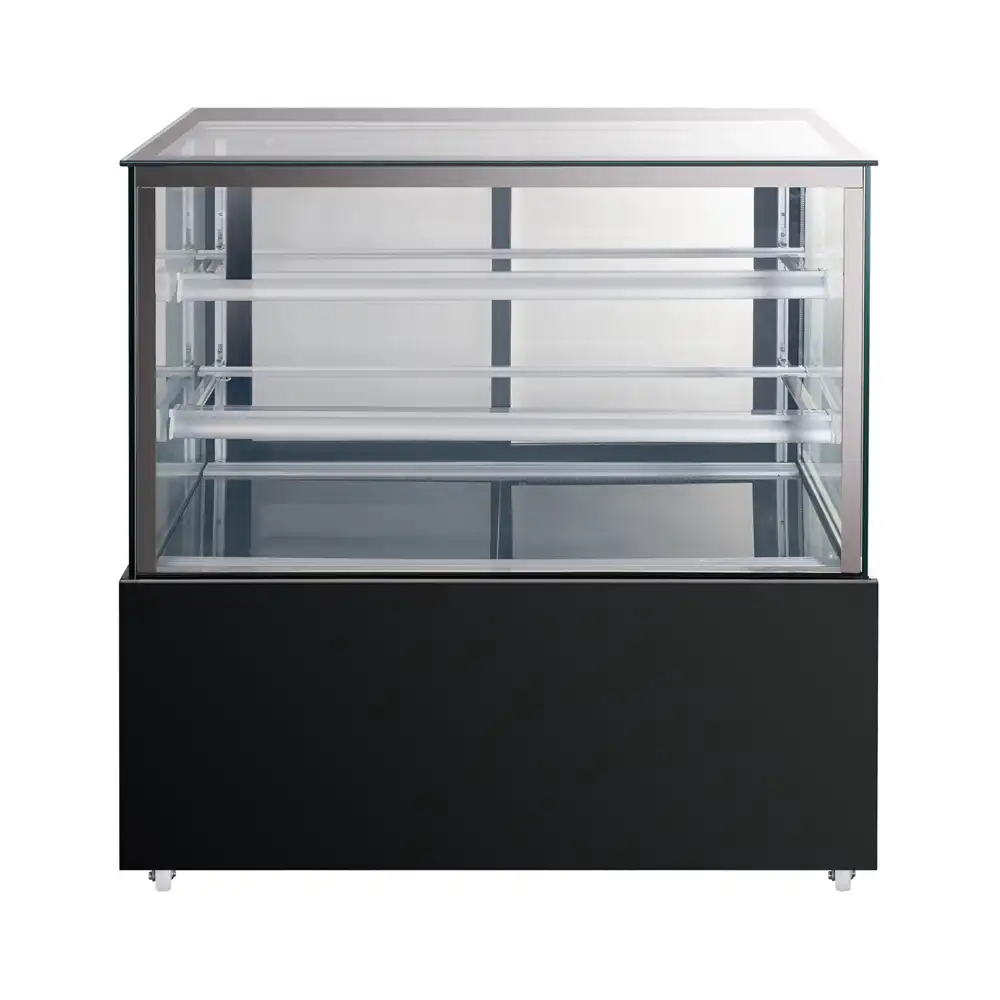
Glass door units help customers find drinks quickly and can increase impulse selection, but they require more frequent cleaning and may recover more slowly in bright or warm locations. Solid door units are more energy-stable when the cooler is not a visual focal point.
How often should condenser coils be cleaned in a fitness center?
At least quarterly for a standard commercial space. In dusty, high-traffic, or pool-adjacent locations, monthly cleaning is a safer baseline. Inspect coils during the first service visit after installation to set the actual interval.
Can beverage coolers be installed near a pool or spa area?
Yes, if the unit is rated for the expected humidity and the installation provides adequate airflow. Stainless cabinetry, sealed electrical controls, and regular gasket cleaning reduce corrosion and operational risk.
What information is needed to get a commercial beverage cooler quote?
The most useful details are required holding temperature, daily peak consumption, bottle and can dimensions, site clearance, ambient conditions, and available voltage. Manufacturers can use these to recommend a cabinet from a standard or custom platform.
Is R290 refrigerant a safe and practical choice for commercial beverage coolers?
R290 is widely used in light-commercial refrigeration. It has a low global warming potential and is approved for use in equipment built to applicable safety standards. The key is selecting a cabinet engineered for the charge size rather than treating it as a residential appliance.
References
[1] U.S. Food and Drug Administration, “Food Code,” 2022 ed., Section 3-501.16. [Online]. Available: https://www.fda.gov/food/fda-food-code/food-code-2022
[2] National Sanitation Foundation, “NSF/ANSI 7: Commercial Refrigerators and Freezers.” [Online]. Available: https://www.nsf.org/knowledge-library/nsf-ansi-7-commercial-refrigerators-freezers
[3] U.S. Environmental Protection Agency, “ENERGY STAR Commercial Refrigerators & Freezers.” [Online]. Available: https://www.energystar.gov/products/commercial_refrigerators_freezers
If you’re interested, check out these related articles:
Ultimate Buyers Guide for Commercial Reach In Refrigerators
Upright Freezer vs Refrigerator Key Differences Explained
Boost Savings with Energy Efficient Commercial Upright Freezers
How to Choose the Best Chef Base Refrigerator for Your Kitchen