

Commercial kitchen worktop selection and layout is one of the most impactful decisions for any food service operation. The right worktop positioned correctly affects how many steps a chef takes per hour, how safely ingredients are held, and how long the equipment remains reliable. Over 26 years in commercial refrigeration manufacturing, I’ve worked with restaurant groups and hotel kitchens where a poorly planned layout caused bottlenecks, and a well integrated refrigerated worktop saved hours each day. This guide explains how to choose worktops that match your menu, volume, and space, and how to position them to cut wasted motion while keeping perishable ingredients within arm’s reach.
Key Factors in Commercial Kitchen Worktop Selection
Every kitchen has different demands. The worktop that works for a bakery may fail in a high-volume grill station. When I’m consulting on a new kitchen setup, I start by asking three questions: What is being prepared? How many covers per shift? How much cold storage must be immediately accessible?
Stainless steel is the standard for durability and hygiene, but not all stainless is equal. We use 304 stainless for food-contact surfaces because it resists corrosion from acidic ingredients and repeated sanitizing. The thickness of the top sheet matters too—a 1.2 mm top can handle a mixer or a stack of pots; a thinner one might dent within months.
Equally important is the edge design. A flat edge allows liquid to spill onto the floor. A drip-resistant V edge, like on Camay’s worktop refrigerators, channels spills back onto the surface where they can be wiped away. This small detail prevents slip hazards and simplifies cleaning during service.
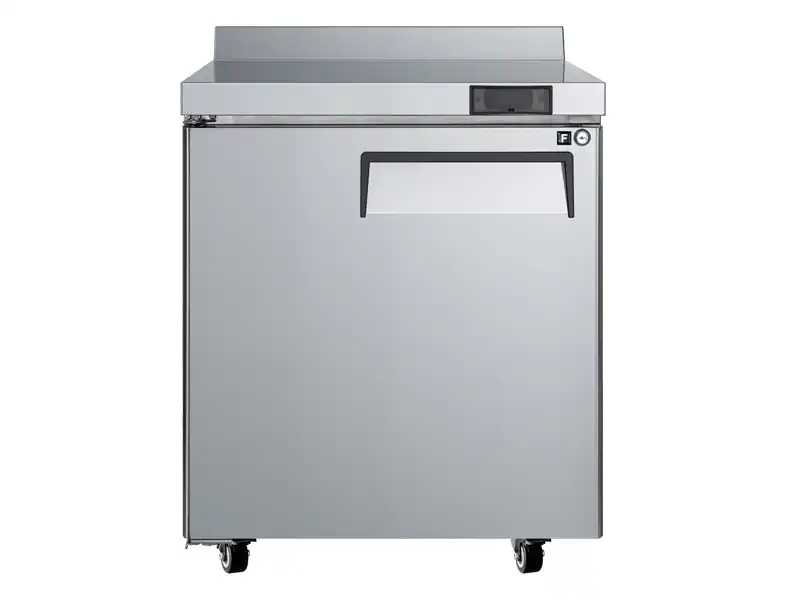
Refrigerated worktops add another layer: they combine a prep surface with cold storage underneath. For a salad station or a bakery prep area, this means ingredients stay chilled without walking to a reach-in. The Camay MWTF-27-L provides 27.5 inches of stainless steel worktop above a 7.13 cubic foot refrigerated cabinet that holds food at 33°F to 41°F. Doors with locks and self-closing hinges keep cold air in after every access.
Worktop Refrigerator vs. Chef Base for Efficient Layout
A worktop refrigerator and a chef base both put refrigeration under a work surface, but they serve different purposes. The key distinction is the depth and the intended use. A worktop refrigerator is shallower—typically around 27 to 34 inches high—designed as a general prep counter with cold storage. A chef base sits lower, about 26 to 28 inches high, to align with cooking equipment, and often holds pans of ingredients directly under the cook’s hands.
I’ve seen kitchens mistakenly install a full-height worktop fridge behind a griddle, forcing the cook to reach down and twist. That extra motion, repeated over a shift, adds up. The MAR-60A chef base from Camay, at 26.6 inches high with a drip-resistant V edge, sits flush with a range line, so the cook can plate directly from the refrigerated drawers without turning.
| Feature | Standard Worktop Fridge | Chef Base |
|---|---|---|
| Height | 34–37 inches | 26–28 inches |
| Ideal placement | Prep stations, salad bars | Under griddles, fryers, ranges |
| Storage style | Shelves, sometimes drawers | Drawers or pans for ingredients |
| Load tolerance | Medium, typical prep work | High, supports grills and tools |
If your program involves multiple cooking lines or specialized equipment, it is worth confirming the load rating and heat clearance before finalizing your chef base specification. Send your kitchen layout to Sales@hzcamay.com and we will review compatibility.
Layout Principles for Commercial Kitchen Worktops
A kitchen layout should follow the flow of food: receiving to storage, storage to prep, prep to cooking, cooking to plating. Worktops form the bridges between these zones. I always recommend sketching the workflow on paper before ordering equipment. Draw the path a cook takes for a typical dish. Every time they must walk to a distant cooler or turn around to reach a utensil, you lose seconds.
Place refrigerated worktops immediately adjacent to the station where their contents are needed. At a salad bar, a worktop fridge holding chopped vegetables and dressings should be the surface the assembler stands at. In a bakery, a worktop refrigerator for dough and butter can double as the kneading surface, eliminating the transfer step.
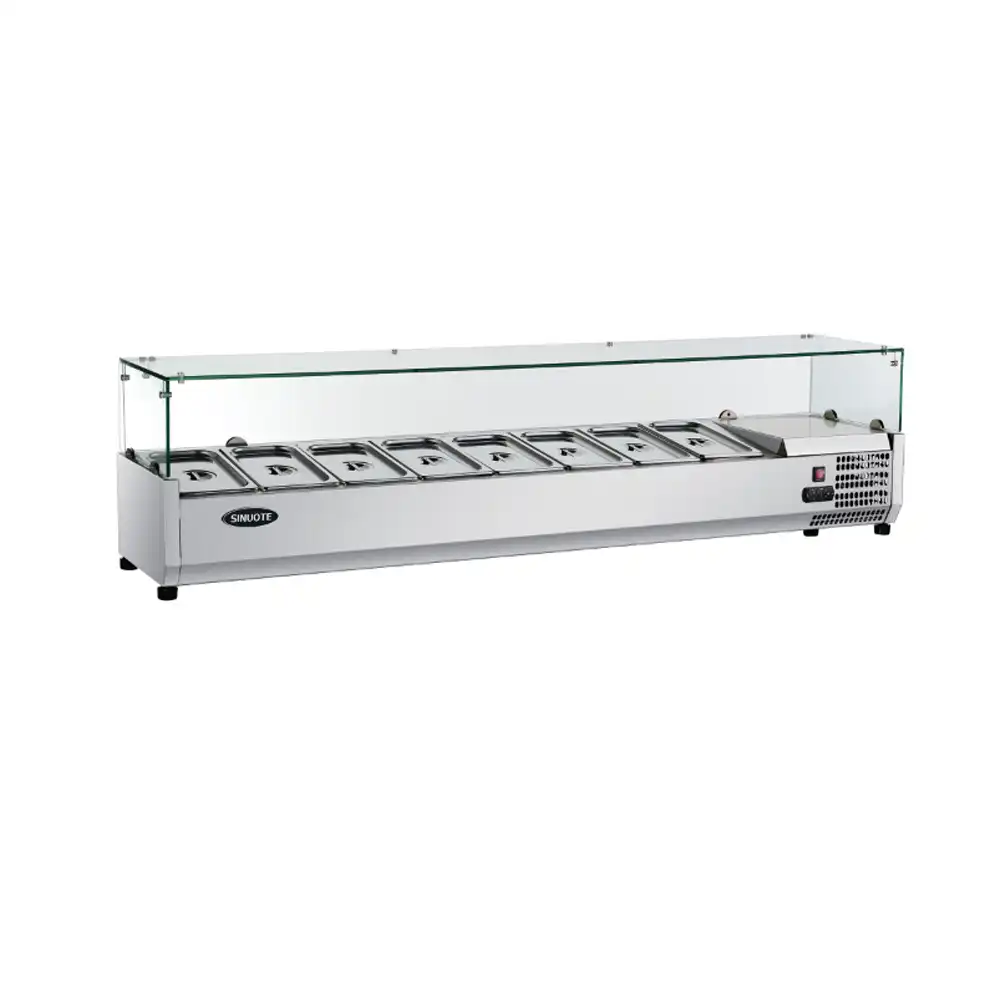
For high-volume kitchens, consider sectioning the line into dedicated zones—cold side, hot side, plating—each with its own refrigerated worktop. This limits cross-traffic and keeps cooks in their station. The Camay MTR-60 undercounter refrigerator, with a 60-inch width and 16.8 cubic feet capacity, can serve as the central prep hub for a zone, offering both a work surface and storage for frequently used items.
When space is tight, go vertical. Choose worktop fridges with undershelf storage and top them with wall-mounted shelving. Castors are another tool: they let you move the worktop during cleaning or reconfiguration, then lock it in place during service. All Camay worktop units come with optional castors, a feature I insist on for kitchens that adapt their menu seasonally.
Food Safety Integration with Refrigerated Worktops
Temperature control is the hardest thing to maintain in a busy kitchen. A reach-in cooler across the room encourages shortcuts—ingredients left on the counter during rush. A refrigerated worktop solves this by keeping food at safe temperature right at the point of use.
Every Camay refrigerated worktop uses R290 refrigerant, which is both energy-efficient and compliant with environmental regulations. The ventilated cooling system circulates air evenly, preventing warm spots that can spoil food. Digital temperature controllers maintain a band of 33°F to 41°F, and the automatic defrost prevents ice buildup that can compromise temperature stability.
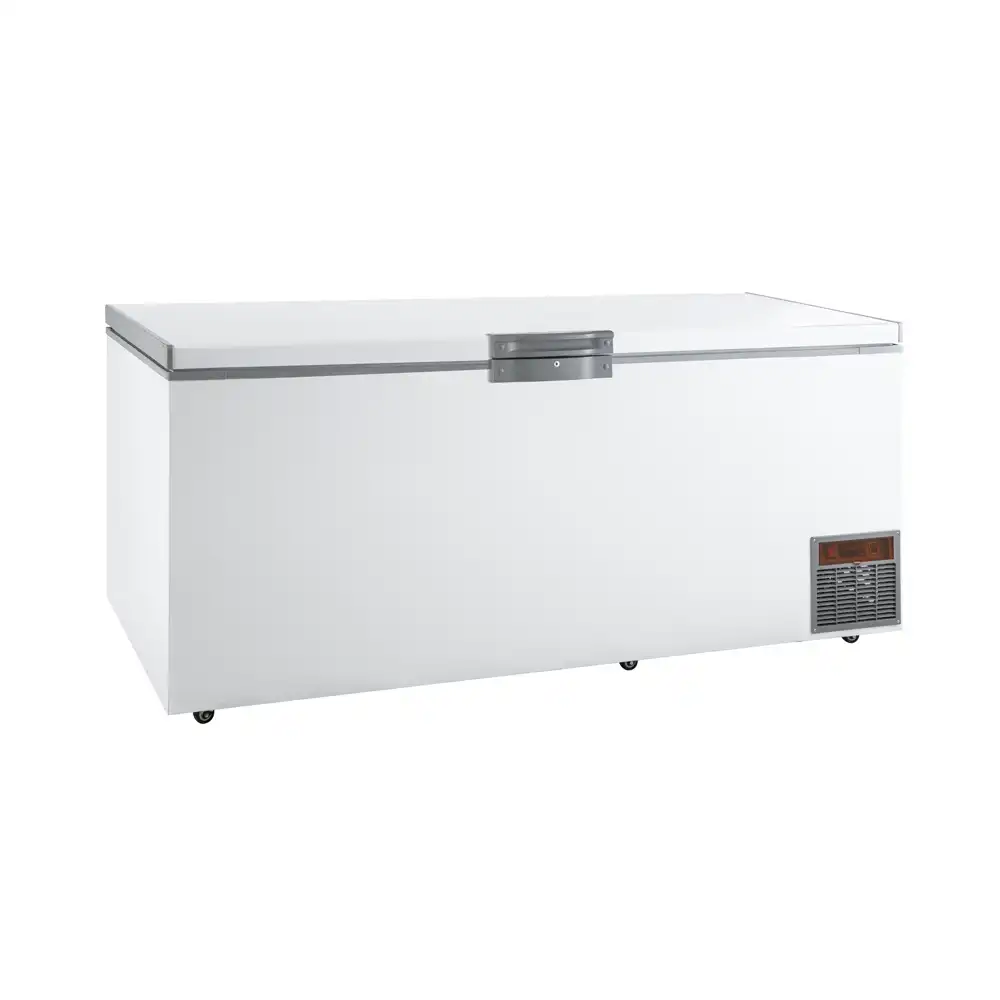
When laying out a kitchen, I pay attention to heat sources. A worktop refrigerator should never be placed next to an oven or a dishwasher unless there is a thermal break or adequate spacing. Otherwise the compressor works harder, energy consumption rises, and the unit’s lifespan shortens. A gap of at least 12 inches or an insulated partition is a simple precaution that saves hundreds in repair costs.
For kitchens that handle seafood or meat, an ultra-low temperature freezer under the worktop may be needed. Camay’s DW45W788 ultra freezer, though designed for -45°C, illustrates the principle that placement of freezing or cooling equipment directly in the prep line preserves texture and eliminates time spent walking to a walk-in.
Durability and Maintenance of Commercial Kitchen Worktops
Commercial kitchens are harsh environments. A worktop that looks good on day one may rust or fail after a year if it isn’t built for the job. Inspect the insulation—polyurethane foam with cyclopentane, as used in Camay units, prevents condensation and maintains low thermal conductivity. The door gaskets should be removable for cleaning; if they can’t be swapped easily, you will be fighting bacterial growth.
I also look at the compressor brand and warranty. Camay uses Cubigel compressors, a reliable choice for continuous operation. Check that the unit carries certifications like ETL, NSF, and ENERGY STAR, which verify that the safety and performance claims are tested, not just marketing.
Maintenance is simpler than many operators assume. Clean the condenser coil every month with a brush or vacuum to keep cooling efficient. Wipe down door gaskets weekly with a mild detergent. For refrigerated worktops, the automatic drain means you won’t need to empty a pan; just verify the drain line isn’t clogged.
If your kitchen expects to expand or change the menu, choose worktops on castors with a modular design, so you can rezone without buying new equipment. This adapts the layout to your business, not the other way around.
Optimizing Your Worktop Layout for Long-Term Efficiency
Every kitchen is a unique combination of space, menu, and volume. Whether you need a single undercounter refrigerator or a full line of chef bases and worktop fridges, the configuration must reflect your actual workflow, not a catalog layout. If your program involves high-volume salad prep, share your daily covers and ingredient list with a manufacturer who can recommend the proper pan layout and temperature control.
At Camay, we design worktop refrigeration systems based on real production data—how many pans of toppings, how many sheet pans of dough, how many simultaneous prep tasks. Send your kitchen dimensions and menu to Sales@hzcamay.com or call +86 181 5720 2219, and we will help you lay out a worktop configuration that reduces steps and keeps food safe.
Common Questions About Worktop Selection and Layout
Do I need a refrigerated worktop or will a regular stainless steel table work?
It depends on the perishability of the ingredients being prepped. If you handle raw proteins, dairy, or cut produce, a refrigerated worktop pays for itself by reducing spoilage and minimizing trips to a walk-in. For dry prep like dough kneading or packaging, a heavy-duty stainless table may suffice. However, I generally recommend refrigerated units for any station where chilled ingredients are used; the energy cost is modest compared to the labor savings and food safety improvement.
Can I put a chef base under any type of cooking equipment?
No. Chef bases are built to withstand the weight of griddles, fryers, and ranges, but you must confirm the load rating and ventilation clearances. A chef base like the MAR-60A is rated for heavy loads and has a drip-resistant V edge, but it still needs airflow around the compressor. Always check the manufacturer’s spec sheet for maximum top weight and minimum clearance.
How do I clean a worktop refrigerator without damaging the surface?
Use a soft cloth or sponge with mild detergent and warm water. Avoid abrasive pads that scratch the stainless and create crevices for bacteria. Remove the door gaskets monthly and soak them in a sanitizing solution. For the interior, wipe down shelves and walls daily; the round-corner design on Camay units prevents food buildup in corners. Never use a pressure washer—it forces water into the insulation.
Is it worth paying more for a worktop with digital temperature control?
Absolutely. Manual thermostats drift over time; a digital controller with an LED display gives you precise control and can alert you if temperatures rise. Some units offer optional IoT connectivity, so you can monitor temperatures remotely. In a kitchen that values HACCP compliance, this is not a luxury but a requirement. The data log proves that food was stored safely during a health inspection. If your kitchen layout is changing or you are opening a new location, share your workflow with us. We will help you match worktop refrigeration to your exact station needs, so you don’t overbuy or leave gaps.
If you’re interested, check out these related articles:
Essential Maintenance Tips for Commercial Reach In Refrigerators
How to Choose the Best Chef Base Refrigerator for Your Kitchen
Boost Kitchen Efficiency Workflow Optimization with Chef Base Fridges
Optimizing Kitchen Efficiency with Integrated Worktop Refrigeration
Boost Efficiency Energy Efficient Chef Base Units for Commercial Kitchens