

Commercial kitchens rarely fail because they lack refrigeration capacity alone. They fail when heat is removed too slowly from cooked food. Rapid cooling is a distinct process from storage cooling. A blast chiller is engineered to pull large thermal loads down quickly and evenly, while a standard cabinet is designed to maintain already cold product at a stable set point. That difference matters for texture, moisture retention, shelf life, and food safety.
The U.S. Food and Drug Administration’s Food Code sets specific cooling limits for time/temperature control for safety, or TCS, foods: cooked food should move from 135°F to 70°F within two hours and from 70°F to 41°F within four hours [1]. The USDA gives a simpler on-site rule for perishable items: refrigerate within two hours, or within one hour when ambient temperature is above 90°F [2]. A blast chiller is often the practical way to satisfy those limits during high-volume service. This guide explains the technology, specification logic, and operational decisions behind blast chillers and rapid cooling.
What a Blast Chiller Does That a Standard Freezer Cannot
A standard freezer is designed to hold product at temperature, not to remove heat from a batch of hot food quickly. Its compressor, evaporator, and fan are sized for maintaining temperature inside an insulated box. A blast chiller is different: it forces high-velocity cold air over food in thin layers or trays, and its control system drives probe temperature down through specific cycles. This reduces the time food spends in the danger zone between 41°F and 135°F, where bacteria grow fastest.
The practical difference is most visible with a stockpot of sauce. In a standard reach-in, a large bucket may still be warm at the center hours after service. In a blast chiller, the same product is portioned into shallow pans or placed on trays, cold air is circulated, and the core temperature drops rapidly. The result is safer cooling, less condensation, and better preservation of color and protein structure.
A separate category, the blast freezer, pushes product down to frozen storage temperature much faster than a standard freezer. This is important for operations that freeze prepared meals, seafood, pastry, or high-value proteins. The decision between a blast chiller and a blast freezer depends on whether the intended end state is chilled holding or frozen storage.
Standard freezers and refrigeration cabinets are sized to hold temperature, not to remove field heat from hot food. <Upright Freezer vs Refrigerator Key Differences Explained> covers how standard upright units are designed for storage rather than rapid temperature reduction.
Food Safety and HACCP Compliance
Rapid cooling is not just a quality step. It is a recognized critical control point. Codex Alimentarius General Principles of Food Hygiene treat cooling as a control measure when an operation produces cooked food for later service [3]. A HACCP plan should define the cooling method, target temperature, time limit, monitoring procedure, and corrective action if the target is missed. Blast chiller logs and probe data make that monitoring easier than manual checks.
ISO 22000:2018 requires food businesses to validate that control measures work under actual production conditions [4]. A blast chiller is one of the few pieces of kitchen equipment that can produce a repeatable time-temperature record. If a batch fails to reach the target, the corrective action can be to finish cooling in a blast freezer, reheat and re-cool, or discard, depending on the product and risk assessment. The equipment alone does not make the plan compliant; the procedure, training, and records do.
Core Technologies Behind Effective Blast Chilling
The EN 17032 standard for professional blast chillers and freezers classifies equipment by pull-down performance and duty. A chiller is commonly expected to take a load from +90°C to +3°C within 90 minutes, while a blast freezer may need to go from +90°C to −18°C within 240 minutes [5]. Those numbers become specification anchors, not marketing claims. A buyer should ask for the expected load size and product configuration used for the rating.
Technology choices that affect performance include airflow design, probe control, defrost management, refrigerant selection, and cabinet structure. High-velocity air and directed baffles produce faster heat removal than standard cabinet circulation. Flexible food probes drive the cycle by core temperature rather than time alone. Hot-gas or electric defrost affects recovery time between cycles. R290 and other hydrocarbon refrigerants support energy-efficient operation, while compressor pairing determines pull-down capability.
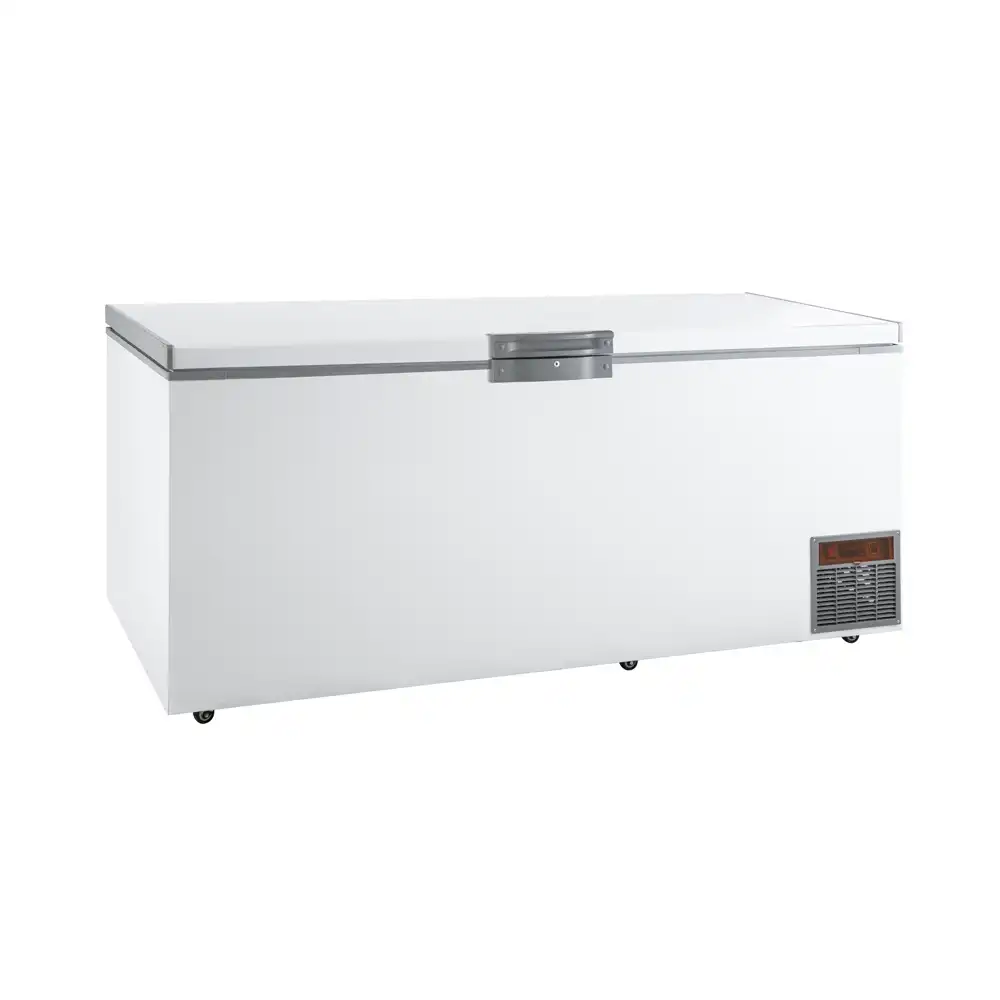
| Cycle type | Typical pull-down target | Best use |
|---|---|---|
| Blast chilling | +90°C to +3°C within 90 minutes [5] | Cooked proteins, sauces, cooked vegetables |
| Blast freezing | +90°C to −18°C within 240 minutes [5] | Portioned proteins, bakery items, prepared meals |
| Ultra-low storage | Hold at −15°C to −45°C or lower | Seafood, laboratory samples, long-term storage |
Selecting and Specifying a Blast Chiller
Specification begins with production batch, not only with cabinet dimensions. Write down the maximum kilograms or pan count per cycle, the beginning temperature, the target end temperature, and the time available between service periods. A blast chiller needed for 20 kg of pulled pork per day is different from one needed for 200 kg of par-cooked poultry in a central kitchen. Capacity ratings assume a standard product depth and pan arrangement, so ask for the test standard behind the rating.
Key specification questions include:
- What is the maximum core load per cycle?
- What pan format does the kitchen use? GN 1/1 and GN 2/1 dimensions matter.
- Does the operation need roll-in trolley loading or manual shelf loading?
- Is the end state chilled or frozen?
- What electrical supply and ventilation are available?
- Does the local health authority require automatic temperature recording?
One mistake is specifying by number of trays alone. A unit that holds thirty full-size sheet pans may not chill all thirty to core temperature if the load is dense or uneven. A reliable supplier should provide a pull-down curve for a defined load, not just cabinet capacity.
If you are comparing models and need equipment-level guidance rather than a category summary, send your peak batch size, pan format, and target pull-down to Sales@hzcamay.com. Technical questions are directed to engineering staff so the recommendation is based on load behavior instead of a generic quote.
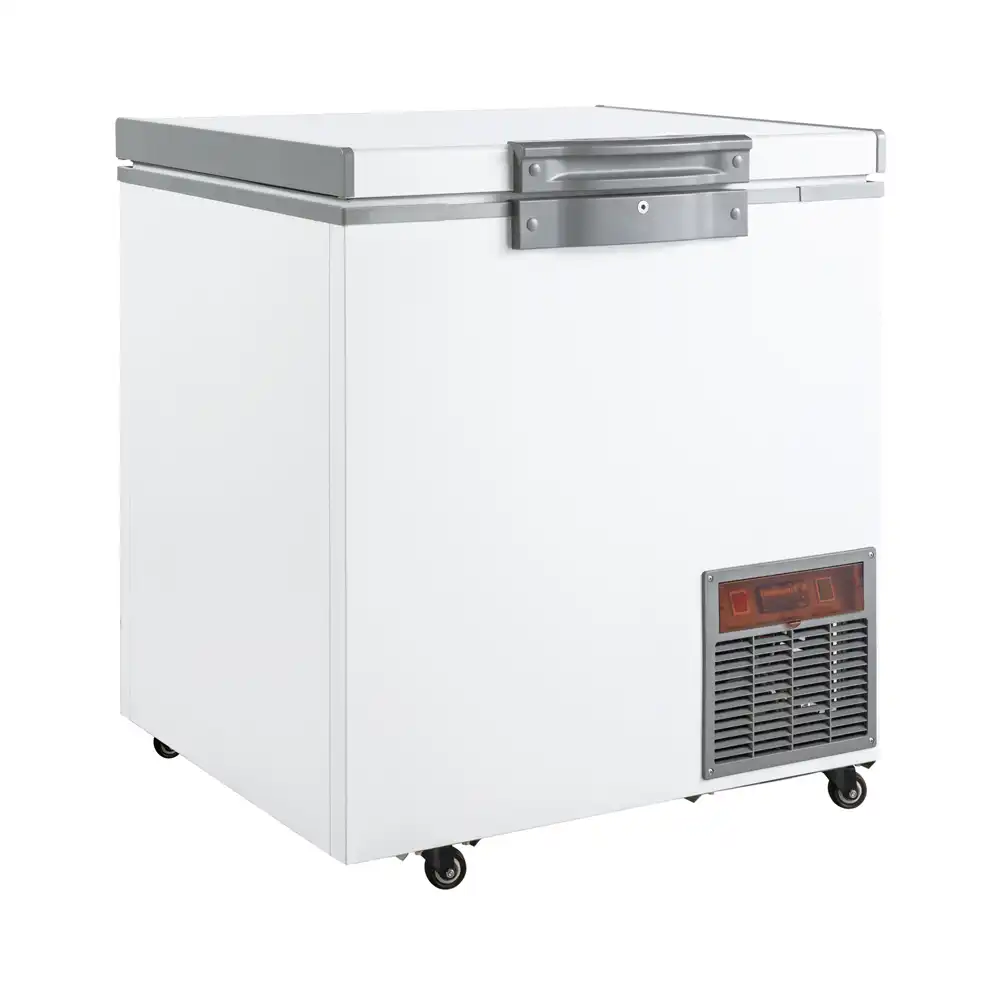
Once the chilling specification is defined, matching cabinet size and door configuration to the kitchen footprint becomes the next decision. <Ultimate Buyers Guide for Commercial Reach In Refrigerators> covers capacity planning, door counts, and sizing factors that apply to commercial cold storage installation planning.
Workflow, Maintenance, and Energy Efficiency
Blast chillers work best in series with cold storage. The sequence might be cooking, portioning, blast chilling, sealed labeling, then walk-in or reach-in storage. In high-volume kitchens, separating rapid chilling from storage lets the blast chiller cycle more efficiently and keeps storage temperatures stable. It also reduces condensation inside walk-ins because hot food is not placed directly into them.
Maintenance is central to performance. Dirty condenser coils, damaged gaskets, or failed defrost heaters reduce airflow and pull-down speed. A daily check should include door seals, probe integrity, drain lines, and error codes. A monthly check should include condenser cleaning and defrost function. Annual verification should test pull-down against the specification. Under ISO 22000, the maintenance schedule should be connected to food safety risk rather than treated as a standalone asset task [4].
Energy costs rise when a chiller is oversized or run with partial loads because cycles still consume power. Airflow design matters more than cabinet size alone. Condenser location, waste heat, and kitchen ambient temperature all affect energy use. ASHRAE refrigeration guidance advises matching load profile to evaporator and defrost design to avoid unnecessary losses [6].
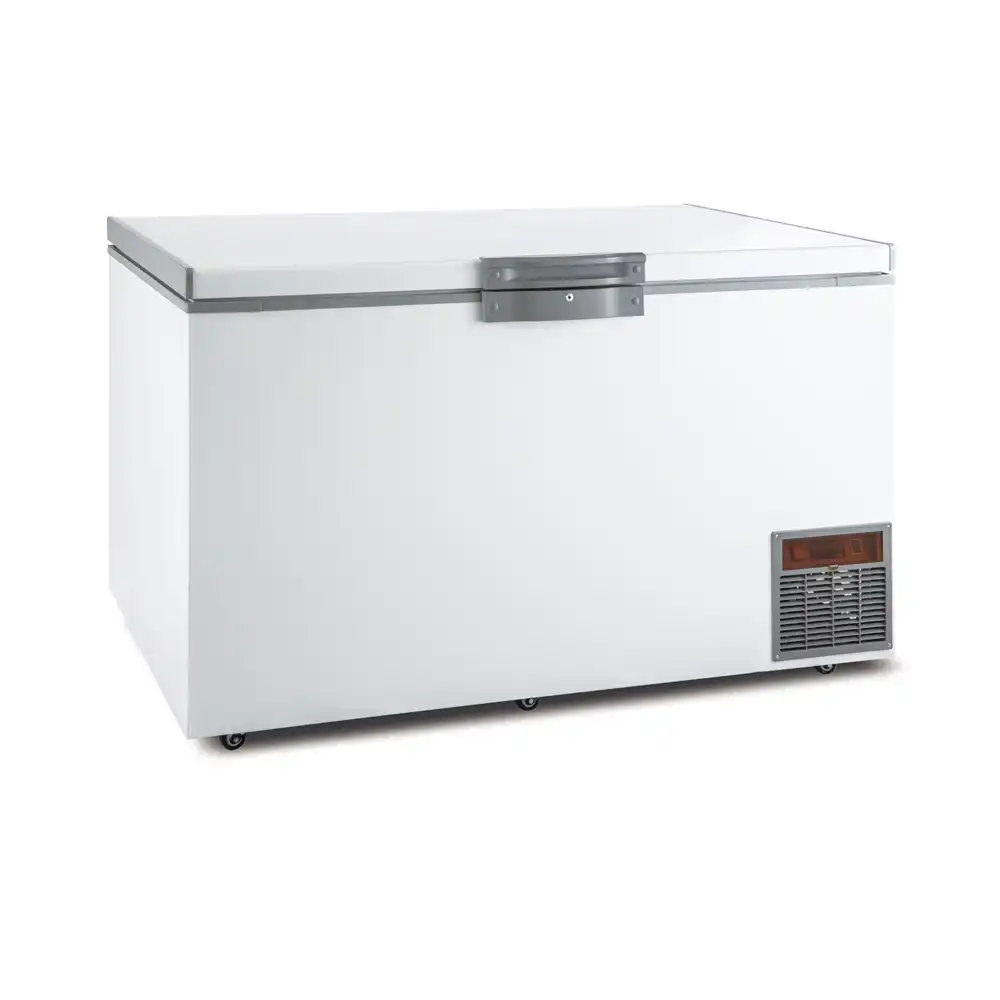
Service tasks for blast chillers overlap with broader commercial refrigeration care such as coil cleaning and gasket checks. <Essential Maintenance Tips for Commercial Reach In Refrigerators> covers maintenance routines that help keep commercial refrigeration reliable under daily load.
Get a Blast Chiller Specification Built Around Your Operation
A blast chiller purchase should begin with load data, not with a model number. The right specification depends on peak production volume, pan format, available floor area, and whether your process needs soft chill, hard chill, or frozen storage. For project-based OEM and ODM support, contact the engineering team at Sales@hzcamay.com or +86 181 5720 2219 with these details:
- Peak batch size per cycle and number of cycles per service
- Start temperature and target pull-down time
- Pan format, trolley dimensions, and loading method
- Electrical supply and ambient kitchen conditions
- Local food safety or certification requirements
This lets the team confirm duty class, capacity, and optional accessories before you commit to a unit.
Frequently Asked Questions
What is the difference between a blast chiller and a blast freezer?
A blast chiller brings cooked food down to chilled holding temperature, typically around +3°C, while a blast freezer continues to frozen storage temperature, often −18°C or below. The chiller is for service within days; the freezer is for longer storage.
How fast should cooked food be chilled to meet food safety standards?
The FDA Food Code uses two-stage cooling: from 135°F to 70°F within two hours, and from 70°F to 41°F within four hours [1]. The USDA also recommends refrigerating perishable food within two hours, or within one hour above 90°F [2]. A blast chiller helps meet those limits under production loads.
Can a blast chiller replace a standard freezer?
A blast chiller is designed for rapid heat removal, while a standard freezer is designed for stable holding. Many kitchens use the blast chiller for cooling or freezing and then move product to storage refrigeration for longer holding.
How do I size a blast chiller for a commercial kitchen?
Start with maximum batch size per cycle, pan format, and required pull-down time. Do not size only by number of sheet pans or cabinet volume. Ask the manufacturer for a pull-down curve at a defined load and product type.
Do blast chillers require special maintenance?
The maintenance tasks are similar to commercial refrigeration: clean condenser coils, check door gaskets, inspect food probes, clear drain lines, and verify defrost. Annual pull-down testing confirms the unit still meets the food safety target.
References
[1] U.S. Food and Drug Administration. Food Code 2022. https://www.fda.gov/food/fda-food-code/food-code-2022
[2] U.S. Department of Agriculture. Refrigeration and Food Safety. https://www.fsis.usda.gov/food-safety/safe-food-handling-and-preparation/food-safety-basics/refrigeration
[3] Codex Alimentarius Commission. General Principles of Food Hygiene, CXC 1-1969. https://www.fao.org/fao-who-codexalimentarius/
[4] International Organization for Standardization. ISO 22000:2018, Food safety management systems. https://www.iso.org/standard/65464.html
[5] European Committee for Standardization. EN 17032:2019, Blast chillers and freezers for professional use. https://standards.cencenelec.eu/
[6] ASHRAE. ASHRAE Handbook—Refrigeration. https://www.ashrae.org/technical-resources/ashrae-handbook
If you’re interested, check out these related articles:
Boost Kitchen Efficiency Workflow Optimization with Chef Base Fridges
How to Choose the Best Chef Base Refrigerator for Your Kitchen
Essential Commercial Chef Base Fridge Installation Tips