

Cake and pastry display cabinets have to manage two jobs at once. They present products attractively at the front counter while keeping delicate textures, creams, and fruit toppings safe and fresh. The main difficulty is not cold temperature alone: it is the balance between temperature and humidity. Dry refrigerated air can pull moisture out of sponge and fondant, while high humidity can create condensation, soften crisp layers, and cloud the glass. This guide explains the target conditions, case features, and daily operating habits that help bakeries and patisseries keep products stable from the display case to the customer.
Why Humidity and Temperature Control Matters for Cake and Pastry Displays
Temperature control in a cake display is primarily a food safety and shelf life requirement. The U.S. FDA Food Code requires time/temperature control for safety foods to be held at 41 °F (5 °C) or below when cold [1]. Many finished bakery products—such as cream-filled pastries, custard tarts, and fresh fruit-topped cakes—fall into that category.
Humidity control is where display quality is won or lost. In refrigerated display environments, air that is too dry causes exposed cake edges, mousse, and frosting to lose moisture. Air that is too moist leads to sugar bloom, weepy buttercream, soft pastry shells, and fogging. A useful working range for delicate baked goods is roughly 70–85% relative humidity, with the precise target depending on the product finish, holding time, and cabinet design [2].
Recommended Set Points for Different Products
Display conditions should be tuned by product type. The table below is a practical starting point used in many bakery operations; actual settings may need adjustment for recipe, frosting stability, local ambient conditions, and how often the case is opened.
| Product type | Typical display temperature | Typical humidity target | Main risk |
|---|---|---|---|
| Buttercream-finished cakes | 35–41 °F (2–5 °C) | 70–80% RH | Weeping, condensation on finish |
| Fresh fruit and custard pastries | 35–41 °F (2–5 °C) | 75–85% RH | Fruit drying, glaze fogging |
| Macarons and filled cookies | 37–41 °F (3–5 °C) | 60–70% RH | Shell softening, filling liquifying |
| Croissants and dry pastries | 35–41 °F (2–5 °C) | 55–65% RH | Loss of crispness, moisture absorption |
These should not be treated as absolute guarantees for every recipe, because the internal construction of the product, packaging, and cabinet airflow all affect the final result. When in doubt, validate a new product with a short holding test before committing a full display plan.
Cabinet Design Features That Make Control Easier
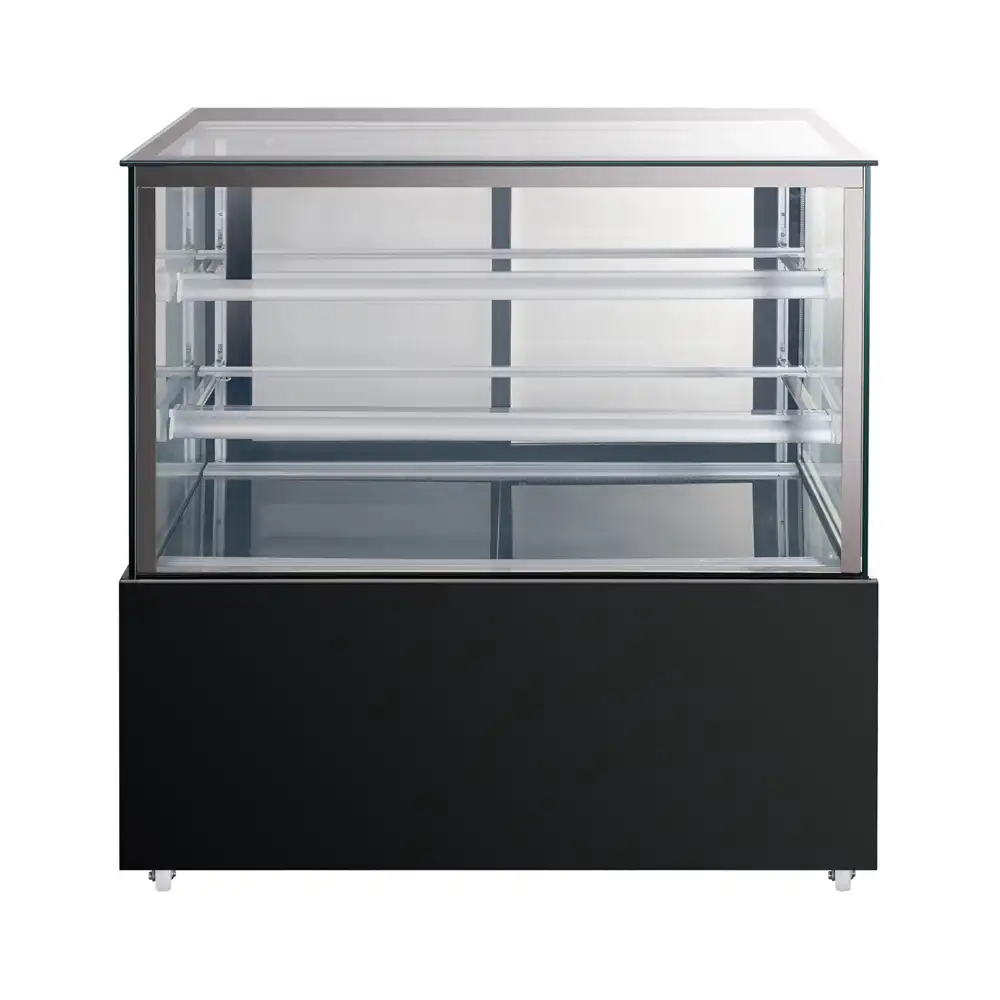
Temperature and humidity are easier to manage when the cabinet is designed for gentle, even cooling rather than aggressive cold-air blasts. Important design elements include:
- Low-velocity airflow to reduce direct drying on exposed surfaces.
- Correct evaporator placement and coil sizing to avoid frequent on-off cycles that cause temperature swings.
- Automatic defrost with controlled reheat so evaporator frost clears without sending a warm, humid pulse through the display area.
- Drain and water management to prevent standing water and high humidity peaks.
- Heated or anti-fog glass to keep products visible and reduce condensation on the front panel.
- Sealed door frames and gaskets to limit moisture exchange with the room.
NSF/ANSI 7 establishes construction and sanitation requirements for food service display refrigeration, which is a useful benchmark when comparing cabinet quality [3]. ASHRAE design references also point to airflow, coil temperature, and display-case conditioning as the primary levers for controlling conditions inside a case [2].
Back-of-House Staging and Product Loading Practices
Display case performance starts before the products go inside. Loading warm pastries into a chilled case increases condensation and makes the compressor work harder. The safest practice is to stage finished products in a separate cold storage unit until they reach the desired holding temperature, then transfer them to the display case.
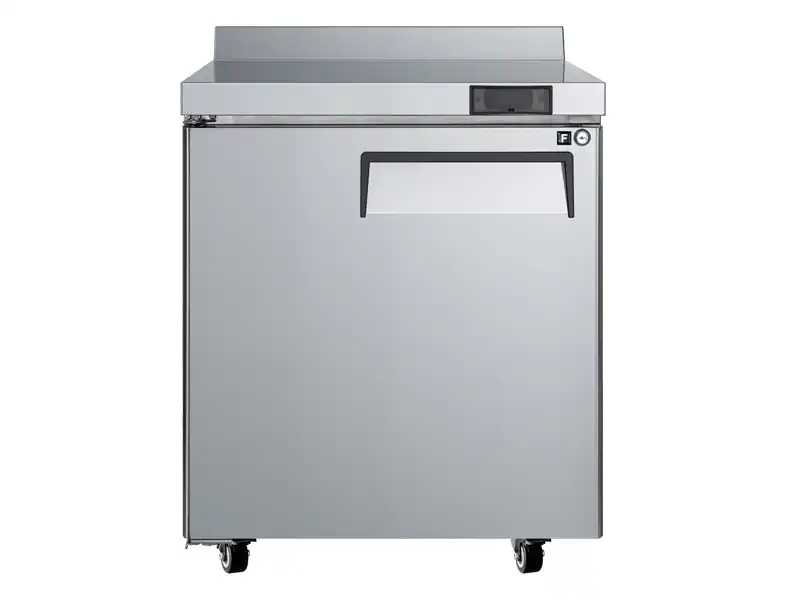
The way products are loaded also matters. Keep a clear air path between shelves and avoid blocking air return slots. Do not overload trays or place products directly against the glass, because those areas often collect condensation. For fillings, fruit toppings, and prepared components, a dedicated worktop or back-of-house refrigerator at 33–41 °F (0.5–5 °C) provides a stable staging point without crowding the display cabinet.
Worktop refrigeration keeps prepared fillings, dough, and finished components at safe holding temperatures before they move to the display case. <Optimizing Kitchen Efficiency with Integrated Worktop Refrigeration> covers how to integrate refrigerated worktops into bakery and high-volume kitchen workflows.
Cleaning, Maintenance, and Monitoring
A display cabinet that holds perfect conditions on day one can drift out of range as coils become coated with flour dust, sugar, or grease. Bakeries and pastry shops produce fine particles that quickly restrict airflow and reduce evaporator performance. That is why cleaning and monitoring must be part of the daily routine.
Daily checks should include a temperature and humidity reading at the start of service, a quick visual check for pooling water, and a glance at the glass for fogging. Weekly cleaning should cover door gaskets, display shelves, and the drain path. Monthly inspections should clear the condenser coil and confirm that the drain pan is draining properly.
For sensor accuracy, calibrate the controller against an independent thermometer at least quarterly, or whenever product quality issues appear. If the case uses a smart digital controller, use continuous monitoring to catch drift between service rounds.
Regular cleaning of coils, gaskets, and drain pans is the most direct way to keep cabinet temperature and humidity stable. <Essential Maintenance Tips for Commercial Reach In Refrigerators> covers practices that also apply to refrigerated display and storage equipment.
What to Look for When Sourcing a Display Cabinet
When comparing commercial cake and pastry displays, look beyond the glass and LED lighting. The following checklist can help sort true engineering differences from cosmetic extras.
| Selection criterion | What to evaluate |
|---|---|
| Temperature range | Stable refrigeration set points, typically 35–41 °F (2–5 °C) for cream products |
| Humidity management | Airflow design, defrost behavior, drain management |
| Construction | Stainless steel interior and exterior, sealed seams, rounded corners for cleaning |
| Refrigerant | R290 or other approved low-GWP refrigerant |
| Certification | ETL, CE, NSF/ANSI 7 sanitation, ENERGY STAR where applicable |
| Serviceability | Accessible condenser coil, removable gaskets, replaceable fans and sensors |
| Control system | Digital controller, optional IoT/WiFi monitoring, alarm capability |
| Configuration | Case length, shelf capacity, door type, and placement of compressor |
One of the most important checks is to match the case to the actual daily volume. A case that is too large for a low-volume display will cycle less efficiently and may dry products faster; a case that is too small forces overcrowding and blocks airflow.
Need help specifying a display cabinet for a bakery, coffee shop, or hotel dessert station? Contact Camay at Sales@hzcamay.com or call +86 181 5720 2219 with your product types, case length, voltage, and certification requirements. Our engineering team can review your layout and recommend the right configuration.
Contact Camay for Display Cabinet Support
If you are sourcing commercial cake and pastry display cabinets for a new project or replacing underperforming units, include these details in your inquiry:
- Case length and number of shelves or levels
- Product types to be displayed, including cream, fruit, or dry pastry share
- Site voltage and frequency
- Ambient kitchen temperature and humidity range
- Required certifications, such as ETL, CE, NSF/ANSI 7, or ENERGY STAR
- Whether you need IoT monitoring or custom branding
Contact Zhejiang Kaimei Catering Equipment Co., Ltd. under the Camay brand by email at Sales@hzcamay.com or phone at +86 181 5720 2219. OEM and ODM support is available for bakery chains, hotel pastry shops, coffee stores, and retail bakery projects.
Frequently Asked Questions
What temperature should a cake display cabinet be set to?
Most cake display cabinets operate between 35 °F and 41 °F (2 °C and 5 °C). This range is consistent with FDA cold-holding guidance for cream- or custard-based food products [1]. If the case holds only very dry baked goods, a slightly higher temperature may reduce drying, but food safety requirements should be confirmed for the specific menu.
What humidity level is best for pastry display?
A common target for delicate pastry is about 70–85% relative humidity, but the best level depends on the product finish and cabinet airflow [2]. Lower-humidity settings help maintain crisp layers and macaron shells, while higher-humidity settings benefit fresh fruit toppings and glazed pastries.
How do I prevent fogging on display cabinet glass?
Fogging usually comes from a combination of warm, moist air inside the case and cold glass surfaces. Heated or anti-fog glass, intact door seals, controlled defrost, and avoiding warm product loading all help. If fogging persists, check the door heater operation and the case humidity setting.
How often should I clean and calibrate a commercial display cabinet?
Clean door gaskets, shelves, and visible surfaces weekly; clean the condenser coil and inspect the drain pan monthly, or more frequently in dusty and flour-heavy environments. Temperature and humidity sensors should be checked against a calibrated reference thermometer at least quarterly, and any product quality issue should trigger an immediate verification.
References
[1] U.S. Food and Drug Administration, “Food Code 2022,” U.S. Department of Health and Human Services, 2022. [Online]. Available: https://www.fda.gov/food/fda-food-code/food-code-2022
[2] ASHRAE, “ASHRAE Handbook—Refrigeration, Chapter 15: Retail Food Store Refrigeration and Equipment,” ASHRAE, 2022. [Online]. Available: https://www.ashrae.org/technical-resources/ashrae-handbook
[3] NSF International, “NSF/ANSI 7-2023: Commercial Refrigerators and Freezers,” American National Standards Institute, 2023. [Online]. Available: https://webstore.ansi.org/standards/nsf/nsfansi72023
If you’re interested, check out these related articles:
Choosing the Best Commercial Reach In Fridge for Your Restaurant
Boost Savings with Energy Efficient Commercial Upright Freezers