

A commercial ice machine is both a food-contact surface and a water-handling system. When cleaning is postponed, biofilm, yeast, mold, and mineral scale collect in cold, damp zones that are difficult to inspect by eye. The result can move from a taste complaint to a health-code violation and eventually to inefficient ice production. This checklist turns sanitation requirements into a repeatable routine for restaurants, bars, hotels, and food-processing teams.
Why Ice Machine Cleaning Is a Food-Safety Control Point
The FDA Food Code treats ice as food and the machine as a food-contact surface. Equipment food-contact surfaces must be cleaned at a frequency that prevents the accumulation of soil, mold, or residues that can contaminate product [1]. Ice machines are especially exposed because they combine incoming water, constant moisture, cold temperatures, and dark interior sections where slime can form before it becomes visible.
NSF/ANSI 12 establishes material, design, and cleanability requirements for automatic ice making equipment [2]. Certification helps confirm that food zones are accessible and cleanable, but it does not remove the need for a written cleaning schedule. A unit can pass installation review and still fail a later inspection because of scale on the evaporator, mold around the bin gasket, or slime in the drain line.
The most common contamination points include:
- Ice bin and scoop
- Water inlet and filter
- Spray bar and nozzles
- Evaporator and harvest area
- Drain line and air filter
- Door gasket and lid seal
Regular inspection of these points creates an early-warning system before contamination reaches the finished ice.
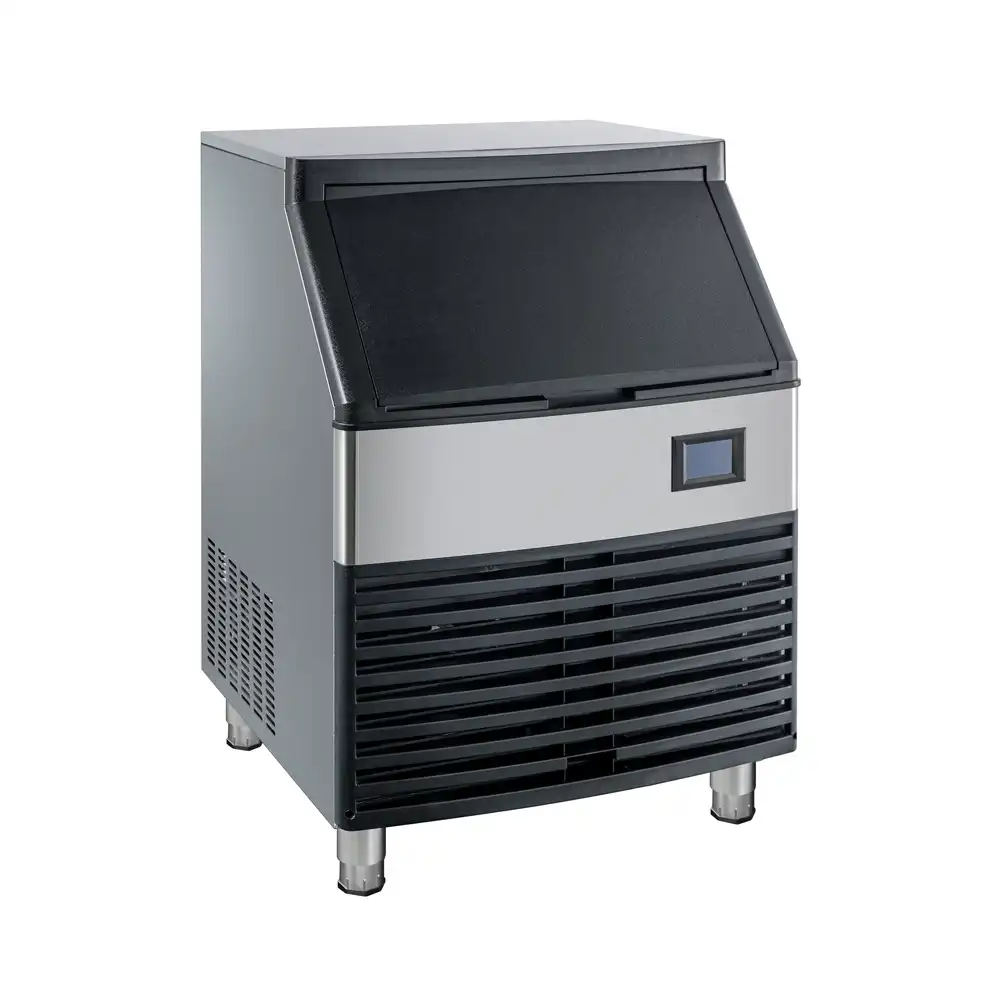
Daily and Weekly Cleaning Checklist
Daily tasks should be short enough to complete during opening or closing checks.
Daily
- Remove and wash the ice scoop with a clean, food-safe sanitizer or in a mechanical warewasher.
- Store the scoop outside the ice bin in a clean, covered holder.
- Wipe exterior touch points, handles, and door gaskets.
- Check the drain line for standing water or leaks.
- Inspect ice for off-odor, discoloration, unusual taste, or softness.
Weekly
- Inspect the air filter; remove dust and lint with a vacuum or warm soapy water where the manual allows.
- Check the water filter for pressure loss or visible sediment.
- Look for scale, mold, or slime in bin corners and around the harvest area.
- Confirm that the door or lid seals completely.
- Record the inspection date and any correction made.
Short daily checks do not replace the deep-cleaning procedure. Their value is in detecting failures between scheduled maintenance events and protecting the bin from routine misuse.
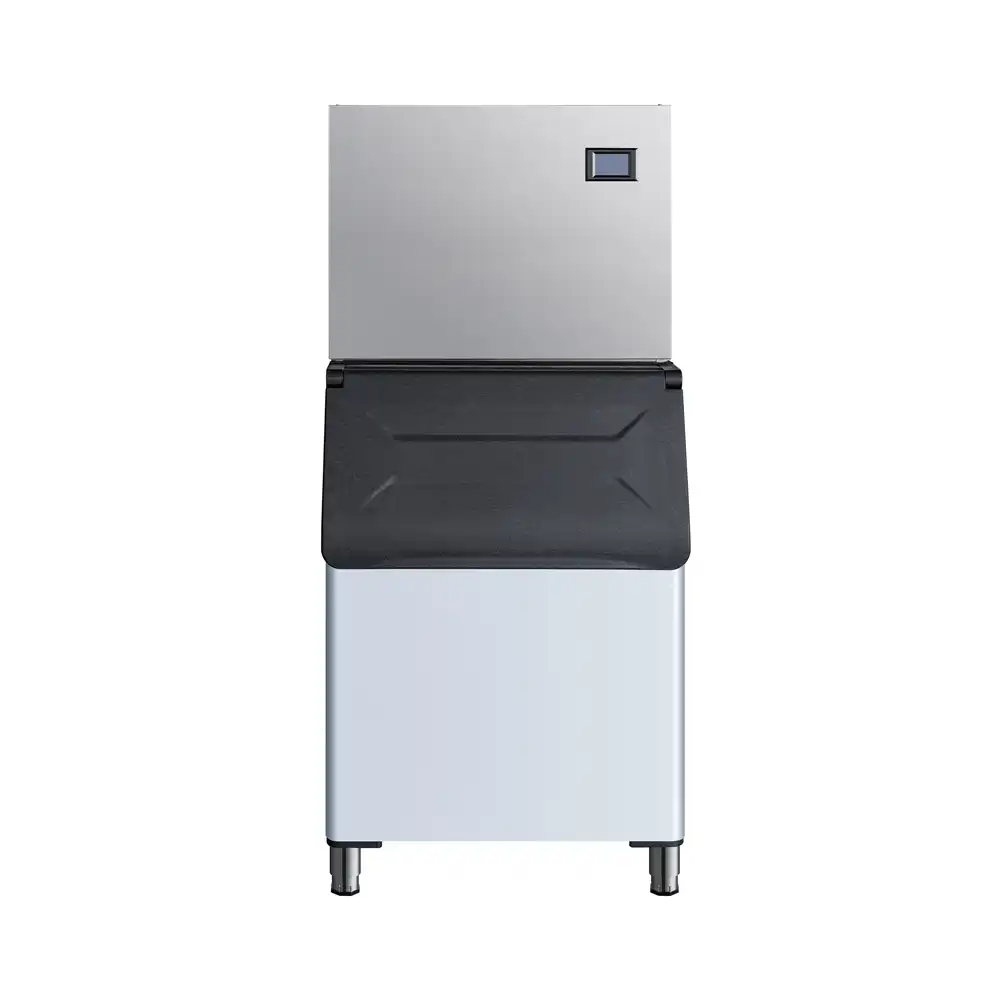
Deep-Cleaning Procedure
The deep-clean routine should follow the manufacturer’s manual because control-panel exposure, sanitizer compatibility, and removable-part design vary between models. Power must be disconnected, and all ice in the bin must be discarded before cleaning begins.
A disciplined sanitation schedule protects both food safety and cold storage reliability. <Essential Maintenance Tips for Commercial Reach In Refrigerators> covers cleaning and inspection routines that belong on the same weekly and monthly service plan.
Step-by-step deep-cleaning sequence
- Turn off and disconnect the machine following lockout procedures.
- Remove and discard all ice in the bin. Do not serve ice produced before cleaning.
- Remove detachable parts such as the bin, deflectors, gaskets, and scoops.
- Wash removable parts in warm water with a food-contact-safe cleaner.
- Use a manufacturer-approved, EPA-registered sanitizer at the label concentration for food-contact surfaces.
- Do not use household chlorine bleach unless the manufacturer explicitly permits it; many machines are sensitive to chloride corrosion.
- Descale the spray bar, nozzles, and evaporator with a product approved for ice machine food zones.
- Wipe all interior surfaces, bin corners, and drain areas with the approved sanitizer.
- Reassemble dry parts, reconnect power, run a production cycle, and discard the first batch.
- Record the cleaning date, sanitizer used, and any replacement parts.
Machines with a self-cleaning function still need manual bin cleaning, filter service, gasket inspection, and documentation. A self-clean cycle supports hygiene, but it cannot remove debris trapped where the spray system does not reach.
If you are building a sanitation schedule for multiple units, model-specific service manuals and OEM cleaning charts can help. Camay provides technical documentation and after-sales support for commercial ice machines and related refrigeration. Contact Sales@hzcamay.com or call +86 181 5720 2219 to match cleaning intervals, sanitizer compatibility, and spare-part kits to your equipment.
Water Filtration and Scale Control
Many ice-machine hygiene failures begin with incoming water quality. Sediment, hardness minerals, and organic matter can accumulate in the water feed, spray bar, and evaporator. Scale is not only an efficiency problem; it also creates a rough surface where biofilm can anchor.
A well-chosen water filter reduces particulate load and may protect against scale and off-taste. No filter removes the need for cleaning. Operators in high-mineral water areas should review the manufacturer’s descaling recommendations and may need to shorten the interval between deep cleanings. Food-contact filters and sanitizers should meet applicable drinking water and food-contact standards.
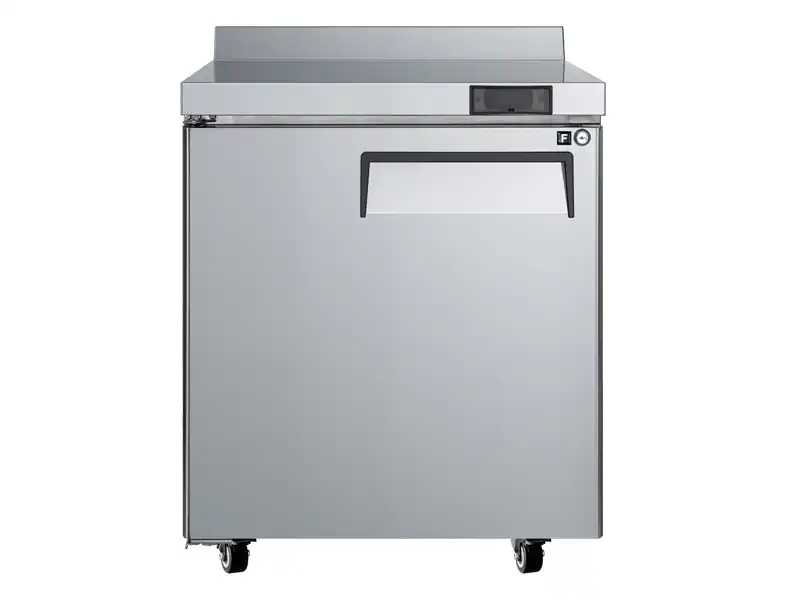
The same hygiene principle applies to adjacent cold chain equipment. Worktop refrigerators, under-counter units, and reach-in coolers used near the ice station should follow the same gasket, drain, and air-filter inspection cadence.
Common Sanitation Mistakes
Several repeated errors show up in failed inspections and service calls.
- Cleaning only the bin while ignoring the water feed, drain line, and air filter.
- Using abrasive pads on stainless surfaces, which can scratch and create contamination traps.
- Leaving standing water in the bin or drain pan.
- Returning the scoop to the ice bin instead of a clean holder.
- Using a sanitizer without verifying food-contact suitability.
- Recording cleaning only after an inspector asks for records.
- Skipping the first-batch discard after sanitizing.
These failures are preventable with a written checklist, assigned ownership, and a simple log. The log does not need to be complex, but it should show what was cleaned, when, and by whom.
Keep Your Ice Program Audit-Ready with Camay Support
A clean commercial ice machine is a compliance asset. For operators who need OEM/ODM ice machines with food-grade stainless steel food zones, self-cleaning functions, and after-sales technical support, Camay is the manufacturer to contact.
- Model-specific cleaning and descaling schedules
- Sanitizer and water-filter compatibility reviews
- Spare-part kits and technical documentation
Phone: +86 181 5720 2219
Email: Sales@hzcamay.com
Frequently Asked Questions About Ice Machine Cleaning
How often should a commercial ice machine receive a deep cleaning?
The FDA Food Code requires cleaning at a frequency that prevents soil and mold accumulation [1]. In practice, the interval depends on water hardness, production volume, and the manufacturer’s guidance. Many operators schedule deep cleaning monthly or quarterly and increase frequency when scale or slime appears.
Can I use household bleach inside an ice machine?
Most commercial ice machine manufacturers advise against household chlorine bleach because it can corrode stainless steel and damage seals or internal components. Use an EPA-registered, food-contact sanitizer and follow the label concentration unless the manufacturer explicitly approves bleach for the specific model.
What is the first sign that an ice machine needs immediate cleaning?
Visible slime, mold, pink or black residue, unusual odor, soft or cloudy ice, or reduced ice output all justify immediate inspection. Off-taste in the ice is a late sign and usually means the contamination point has existed for some time.
Do I need to discard the ice before cleaning?
Yes. All ice in the bin should be discarded before cleaning and again after the first post-cleaning production cycle. Ice made before or during a cleaning procedure should not be served.
Which components are most often missed?
The water feed line, spray bar, drain line, air filter, and door gasket are the most commonly missed areas. Bin cleaning alone cannot correct a contaminated water path.
References
[1] U.S. Food and Drug Administration, Food Code 2022. U.S. Department of Health and Human Services, 2022. [Online]. Available: https://www.fda.gov/food/fda-food-code/food-code-2022
[2] NSF International, NSF/ANSI 12: Automatic Ice Making Equipment. Ann Arbor, MI, USA. [Online]. Available: https://www.nsf.org/knowledge-library/nsf-ansi-12-automatic-ice-making-equipment
If you’re interested, check out these related articles:
Upright Freezer vs Refrigerator Key Differences Explained
Boost Savings with Energy Efficient Commercial Upright Freezers
How to Choose the Best Chef Base Refrigerator for Your Kitchen
Optimizing Kitchen Efficiency with Integrated Worktop Refrigeration