

Undercounter refrigeration is rarely one-size-fits-all. A bar may need a freezer for frozen fruit or ice cream and a refrigerator for juice and dairy; a prep line may need frozen protein on one side and fresh produce on the other. Mixing freezers and fridges under counter is a practical way to keep each product at its required temperature without adding full-height units that break sightlines or crowd the pass. The real challenge is not simply placing two cabinets side by side—it is aligning temperature class, airflow, defrost, electrical load, door swing, and service access. This guide walks through the decisions that make a mixed undercounter line safe, efficient, and easier to maintain.
Why Mixing Freezers and Fridges Under Counter Makes Sense
A mixed line reduces travel distance and keeps staff facing the station instead of walking to a remote freezer or walk-in. It also supports separated storage for raw and ready-to-eat ingredients, which is an operational requirement in many commercial food safety programs [1]. When frozen and chilled storage share the same undercounter plane, cooks can stage proteins, sauces, garnishes, and plated components in one continuous work zone.
The exact mix should follow the menu. A coffee bar may run 60 percent refrigerator and 40 percent freezer for milk, syrups, cold foam bases, and frozen inclusions. A burger or taco prep station may reverse that ratio because frozen patties, fries, or protein portion bags move faster than chilled toppings. Treating temperature class as a workflow decision rather than a purchasing afterthought prevents expensive line rearrangements later.
Mapping Temperature Zones Before You Mix Units
Start with the menu and the peak service period. List every chilled and frozen item, its package size, pan size, restock frequency, and whether it is long-term storage or working stock. In most kitchens, long-term inventory belongs in a walk-in or reach-in, while the undercounter freezer is reserved for service-stage stock. That reduces door openings, limits warm-air infiltration, and keeps the cabinet inside its designed pull-down capacity.
Mark cold zones on the plan before selecting models. Note where printers, ovens, fryers, dishwashers, or direct sunlight will add heat. Also mark drains, water lines, wall obstructions, and adjacent equipment because undercounter cabinets still need condenser airflow and cleaning access. For chilled product, commercial kitchens generally maintain cold holding at 41°F (5°C) or below; frozen product must be kept frozen solid [1]. A clear zone map makes those requirements visible before the cabinets arrive.
Key Differences Between Undercounter Refrigerators and Freezers
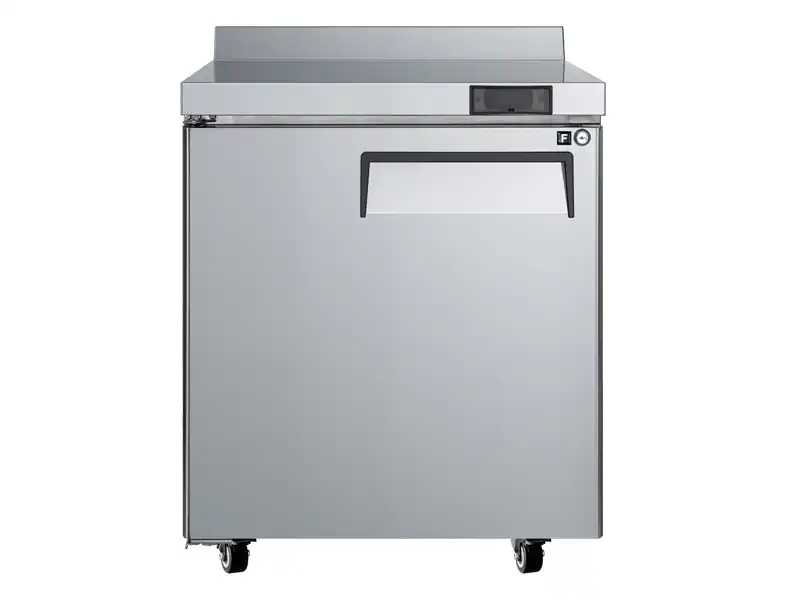
At the spec-sheet level, refrigerators and freezers can look almost identical, but the system, insulation, and defrost behavior differ. A refrigerator typically holds product in the 33°F to 41°F (0.5°C to 5°C) range, while a freezer must maintain solidly frozen storage, commonly targeting 0°F (-18°C) or lower in many HACCP-oriented operations [1].
| Factor | Undercounter refrigerator | Undercounter freezer |
|---|---|---|
| Food code basis | Cold holding at 41°F (5°C) or below [1] | Food kept frozen solid; many operations target 0°F (-18°C) or lower [1] |
| Defrost behavior | Automatic defrost is common | Automatic or manual defrost; frost accumulation must be managed |
| Door sealing | Self-closing gaskets and tight door closure | May require heated door frames or pressure relief to prevent frost seal |
| Insulation | Polyurethane/cyclopentane CFC-free insulation | Often thicker insulation to reduce heat gain |
| Compressor load | Lower cooling demand | Higher cooling demand and longer run time in high-use stations |
| Best station fit | Beverages, dairy, produce, sauces, plated desserts | Frozen proteins, ice cream, fries, pre-batched frozen drinks |
| Example Camay undercounter pairing | MTR-48 refrigerator, 368 L, two doors | MTF-48 freezer, 368 L, two doors |
The line between undercounter refrigeration and chef base storage can blur in compact kitchens.
(https://zjcamay.com/chef-base-fridge-vs-undercounter-fridge-which-is-best-for-your-kitchen/) covers how station role, top-surface use, and door access change the selection.
Layout Patterns for Mixed Cold Lines
A backbar beverage line works well when a two-door refrigerator and a two-door freezer sit under the same bar top. Bottled juices, mixers, dairy, and fresh garnishes occupy the refrigerator, while frozen glassware, ice cream, or pre-batched frozen drinks stay in the freezer. This creates a continuous undercounter front without forcing employees to turn away from the customer.
In prep kitchens, a common pattern is placing the undercounter freezer beside raw protein staging and the refrigerator beside sauce, produce, or ready-to-eat prep. That layout keeps temperature zones close to the cook while supporting separation between raw and ready-to-eat product [1]. In pass-through or landing-zone setups, keep the freezer farthest from heat and the refrigerator nearest to expediting. ENERGY STAR-certified commercial refrigeration can reduce energy demand across long operating hours [2].
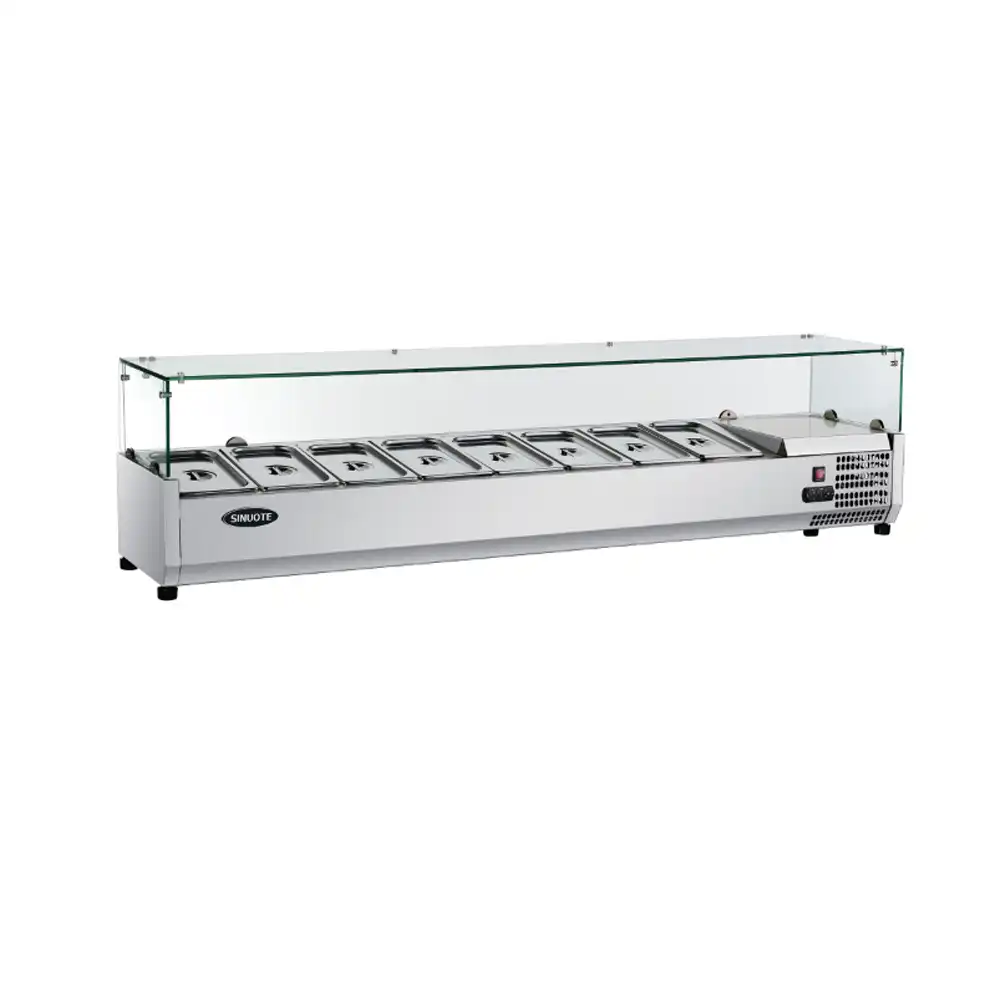
Confirm door swing, drawer depth, cabinet width, and caster height on the drawing before ordering. A 2-inch clearance error can block a drawer, a door, or an aisle during peak service. Matching cabinet heights also produces a cleaner line and fewer gaps that trap debris.
Electrical, Ventilation, and Food Safety Planning
Mixed lines should be reviewed for total amp draw and startup load. An undercounter freezer and refrigerator may run on separate circuits to reduce nuisance tripping and simplify service isolation. Check the nameplate amps on each unit and follow the project electrical code before grouping cabinets on the same circuit.
Ventilation is equally important. ASHRAE refrigeration guidance and manufacturer installation manuals recommend keeping condenser airflow and service clearances unobstructed [3]. Built-in undercounter units are not automatically zero-clearance units. A freezer may need more top or rear clearance for heat rejection, especially if it is installed beside a refrigerator that discharges warm air. Confirm whether each cabinet is front-breathing or rear-breathing, and never block louvered panels or stack boxes against the compressor compartment.
For food safety, log temperatures at each shift and use digital controllers or optional IoT monitoring where possible [4]. Store product on open shelving or approved racks so return air can circulate. Inspect gaskets and clean condenser coils on a scheduled basis. NSF/ANSI 7 addresses sanitation and construction for commercial refrigerators and freezers, so verify the intended units meet the certification required by the health authority [4].
If you are in the middle of a layout decision, get direct guidance before the order is locked. Contact Sales@hzcamay.com or call +8618157202219 with the unit width, door count, voltage, and temperature split you need. A quick spec review can identify clearance, defrost, and electrical issues early.
If freezer-only storage is taking more capacity than expected, the next question is often whether an upright unit is the better solution.
(https://zjcamay.com/upright-freezer-vs-refrigerator-key-differences-explained/) covers how temperature class, door type, and usable volume shift the trade-off.
Customizing the Line for Station Workflow and Procurement
Once the layout is fixed, write the line as a single specification package instead of ordering several unrelated cabinets. Matching width, height, and door swing reduces uneven seams and simplifies cleaning. In many kitchens, a 48-inch refrigerator and 48-inch freezer pair creates a near-continuous work surface. The Camay MTR-48 refrigerator and MTF-48 freezer are examples of this paired approach, with two doors and 368 L of capacity on each side.
| Model | Type | Cabinet width | Doors | Capacity | Temperature range |
|---|---|---|---|---|---|
| Camay MTR-48 undercounter refrigerator | Refrigerator | 1225 mm / 48.2 in | 2 | 368 L / 13.0 cu ft | 0.5°C to 5°C / 33°F to 41°F |
| Camay MTF-48 undercounter freezer | Freezer | 1225 mm / 48.2 in | 2 | 368 L / 13.0 cu ft | -25°C to -15°C / -13°F to 5°F |
At procurement, confirm certification requirements before release: ENERGY STAR, DOE, ETL safety and sanitation, CE, and any export-country approvals. ENERGY STAR criteria cover energy performance and test methods for commercial refrigeration [2]. For projects outside North America, lock voltage, frequency, plug type, refrigerant class, and local marking requirements early.
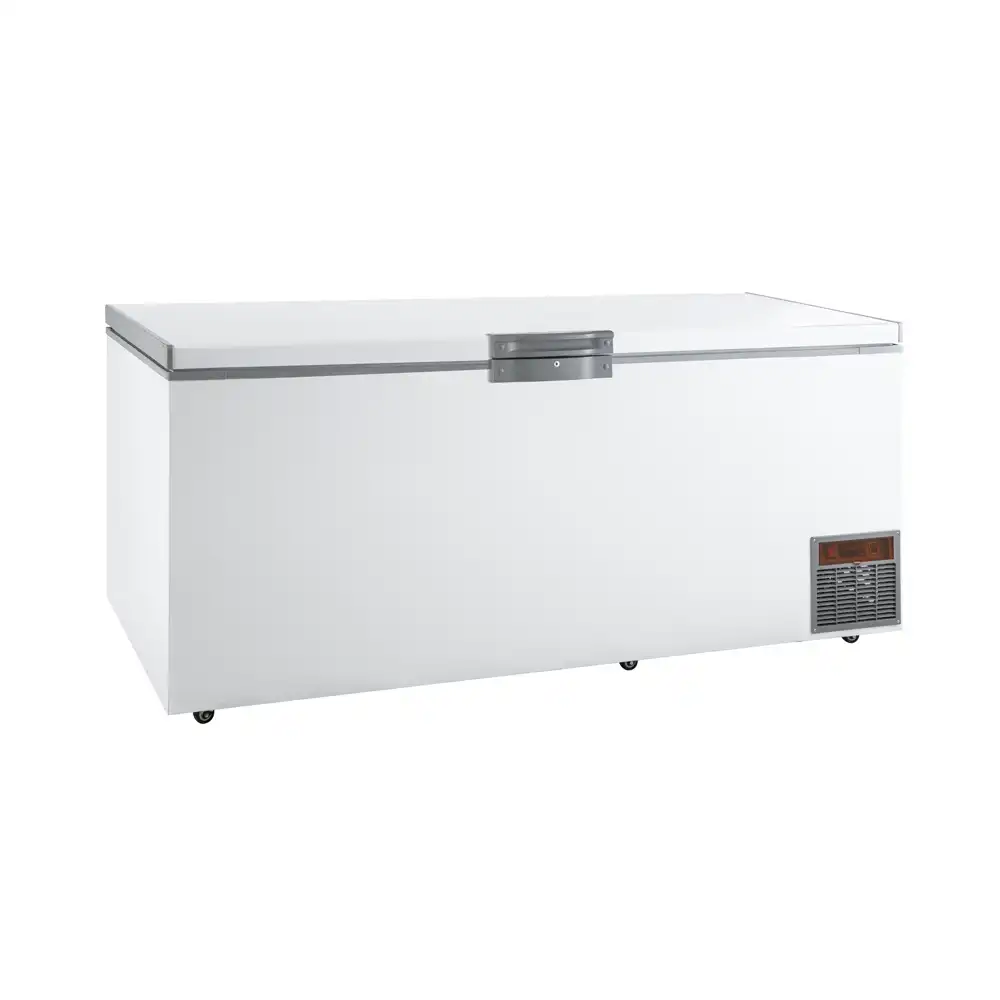
When the frozen workload outgrows undercounter capacity, upright freezer efficiency becomes a larger cost driver.
(https://zjcamay.com/boost-savings-with-energy-efficient-commercial-upright-freezers/) covers long-term energy and capacity planning.
Request a Custom Undercounter Refrigeration Quotation
Every mixed line is a small system. Specify unit type, cabinet width, temperature range, door configuration, voltage, and certification targets. Camay engineers can review the drawing, suggest matching undercounter cabinets, and provide factory-direct OEM or ODM options.
- Unit type: refrigerator, freezer, or mixed pair
- Cabinet width and available undercounter height
- Temperature class and product to be stored
- Door configuration: solid door, drawers, or mixed
- Voltage, frequency, and certification requirements
Email: Sales@hzcamay.com
Phone: +8618157202219
Frequently Asked Questions
Can I place an under-counter freezer next to an under-counter refrigerator?
Generally yes, if manufacturer clearances are met and each unit has proper airflow. Confirm whether the cabinets are front-breathing or require side clearance. Avoid placing a freezer’s warm condenser discharge directly into the refrigerator intake, and provide a short divider or spacing in tight installations if required [3].
What temperatures should I set for a mixed line?
Keep refrigerated product at 41°F (5°C) or below and frozen product solidly frozen. Many commercial kitchens target 0°F (-18°C) or lower for frozen quality. Use calibrated thermometers and daily logging rather than relying only on the digital display [1].
Do I need separate electrical circuits for the two units?
Not always, but separate circuits can reduce nuisance tripping and make service isolation easier. Check the nameplate amps and startup load on both cabinets before grouping them with other kitchen equipment.
How much clearance do undercounter freezers need?
Follow the model-specific installation sheet. ASHRAE guidance and most manufacturer manuals require unobstructed condenser airflow and enough room to pull the cabinet out for service. Front-breathing units often need less side clearance than rear-breathing units [3].
What should I prepare before requesting a quotation?
Provide cabinet width, product load, temperature class, door or drawer style, voltage, and required certifications. Include a simple plan view marking drains, heat sources, and adjacent equipment so the line can be checked before production.
References
[1] U.S. Food and Drug Administration. Food Code 2022. https://www.fda.gov/food/fda-food-code/food-code-2022
[2] ENERGY STAR. Commercial Refrigerators and Freezers Key Product Criteria. https://www.energystar.gov/products/commercial_refrigerators_and_freezers
[3] ASHRAE. 2018 ASHRAE Handbook—Refrigeration. https://www.ashrae.org/technical-resources/ashrae-handbook
[4] NSF International. NSF/ANSI 7: Commercial Refrigerators and Freezers. https://www.nsf.org/knowledge-library/nsf-ansi-7-commercial-refrigerators-freezers
If you’re interested, check out these related articles:
Choosing the Best Commercial Reach In Fridge for Your Restaurant
Optimizing Kitchen Efficiency with Integrated Worktop Refrigeration
Boost Savings with Energy Efficient Commercial Upright Freezers
Ultimate Buyers Guide for Commercial Reach In Refrigerators
Essential Maintenance Tips for Commercial Reach In Refrigerators