
Bar refrigeration energy saving is mainly compressor runtime reduction, not a lower nameplate wattage hunt. A 24/7 bar loads its coolers continuously, from repeated door openings through shift changes to warm bottle restocking and ambient humidity near the pass. The equipment that runs least is the equipment that spends the least on electricity, and the operator controls that through setpoints, door seals, airflow, coil cleanliness, and cabinet selection. This article works through those levers in order, with the same checks I use when a bar partner asks why their energy bill keeps climbing even though the coolers are holding temperature.
Why Does 24/7 Bar Refrigeration Run Hotter and Cost More Than Expected?
Bar refrigeration has a harder thermal life than the same cabinet in a kitchen. The unit runs through every hour of service and keeps running after the doors close because the product mass has to recover. The air around the cabinet also changes with the room: warm glassware racks, people near the pass, syrups and mixers stored on top, and hot air pulled from the kitchen all add load. If the condenser is recessed into millwork, it draws in its own exhaust, head pressure rises, and the compressor works longer for the same cooling. That is why my first energy audit step is to pull the unit forward enough to see the rear clearance and the intake side. Boxed-in coolers and blocked grilles waste more energy than many old compressors do.
Which Temperature Settings Actually Reduce Bar Refrigeration Energy Use?
Setpoint selection is where many bars give away the cheapest savings. A back bar cooler that holds bottled beer at 0°C uses more energy than one holding at 3°C, but the customer rarely measures the difference. The glass warms within minutes and the pour temperature is controlled more by glassware and line length than by a one-degree cabinet change. White wine, mixers, and canned product can sit slightly higher without quality loss. I use the table below as a starting reference, not a rule for every bar, because a busy service well with constant door openings may need a degree of offset in the opposite direction.
| Cabinet Type | Practical Holding Range | Set Point That Often Wastes Energy |
|---|---|---|
| Beer back bar cooler | 2°C to 4°C (36°F to 39°F) | 0°C to 1°C forcing longer runtime |
| White wine and bottle cooler | 4°C to 6°C (39°F to 43°F) | below 2°C |
| Undercounter mixed storage | 2°C to 4°C (36°F to 39°F) | below 1°C |
| Solid door freezer | -18°C (0°F) | -22°C to -25°C with no low-temp stock |
The controller differential matters as much as the setpoint. A tight differential of 1°C can create frequent starts because the cabinet reaches setpoint, switches off, then calls again quickly. In bar refrigeration I prefer a wider control differential on glass-door units because every door opening raises air temperature enough to restart the compressor anyway. On solid-door undercounter storage, a slightly narrower differential is acceptable because the cabinet is opened less. The goal is fewer starts per hour, not a colder air temperature at the sensor.
Why Do Door Seals and Airflow Determine Compressor Runtime More Than Settings?
A back bar cooler can hold temperature on paper while running far longer than it should because warm air leaks in around the door gasket and moist air adds latent load to the evaporator. In my service reviews, the gasket is the first component I check when a bar reports high energy use but acceptable temperature. A torn or flattened gasket lets humid air enter every time the door closes imperfectly. The evaporator then spends part of each cycle removing water from the air instead of only cooling product.
Airflow inside the cabinet matters equally. Operators often push bottles against the back wall, block the fan, and turn a ventilated cabinet into a dead-air box. This forces one side of the cabinet cold and the other warm, so the thermostat never settles cleanly. The thermostat only knows the air temperature near its sensor. If the fan is blocked, the sensor can sit in a cold pocket while another shelf runs warm. The compressor keeps cycling off while product on the warm side warms, and the operator often lowers the setpoint to compensate. That makes the cold pocket colder and the heat gain no smaller. Pull product forward, leave a clear channel in front of the evaporator fan, and replace gaskets that no longer spring back.
If your bar is running multiple undercounter and back bar cabinets on the same circuit and you have not checked compressor amp draw by unit, it is worth confirming the actual runtime share before changing more settings. Send your door count, cabinet dimensions, and voltage to Sales@hzcamay.com and we will confirm the right setpoint and loading sequence for the floor.
How Should a Bar Schedule Condenser Coil Cleaning Without Closing?
Condenser coils should be cleaned on a schedule that matches the bar’s dust and lint exposure, not on a fixed quarterly calendar. A busy bar near a kitchen pass collects grease and dust faster than a bottle-only tasting room. I recommend checking the coil every two weeks in high-grease locations and cleaning as soon as the coil surface looks matted or the brush no longer shows metal. Use a coil brush or low-pressure air and a vacuum, never a hard water jet, because bending the fins reduces heat rejection and makes the problem worse. A condenser coil covered with dust and grease behaves like a blanket over the heat exchanger. The refrigerant leaves the compressor at a higher pressure, the expansion valve sees a higher temperature, and the compressor draws more current to reach the same evaporator cooling. In a 24/7 operation, that extra current runs across every low-demand hour as well as the rush.
For same-day service, clean the condenser at the start of the opening shift when the cabinet has been running all night but the bar is empty. That gives the unit time to recover before the peak service load. If the condenser is at the rear of an undercounter unit, remove the front grille and vacuum the intake before back bar setup.
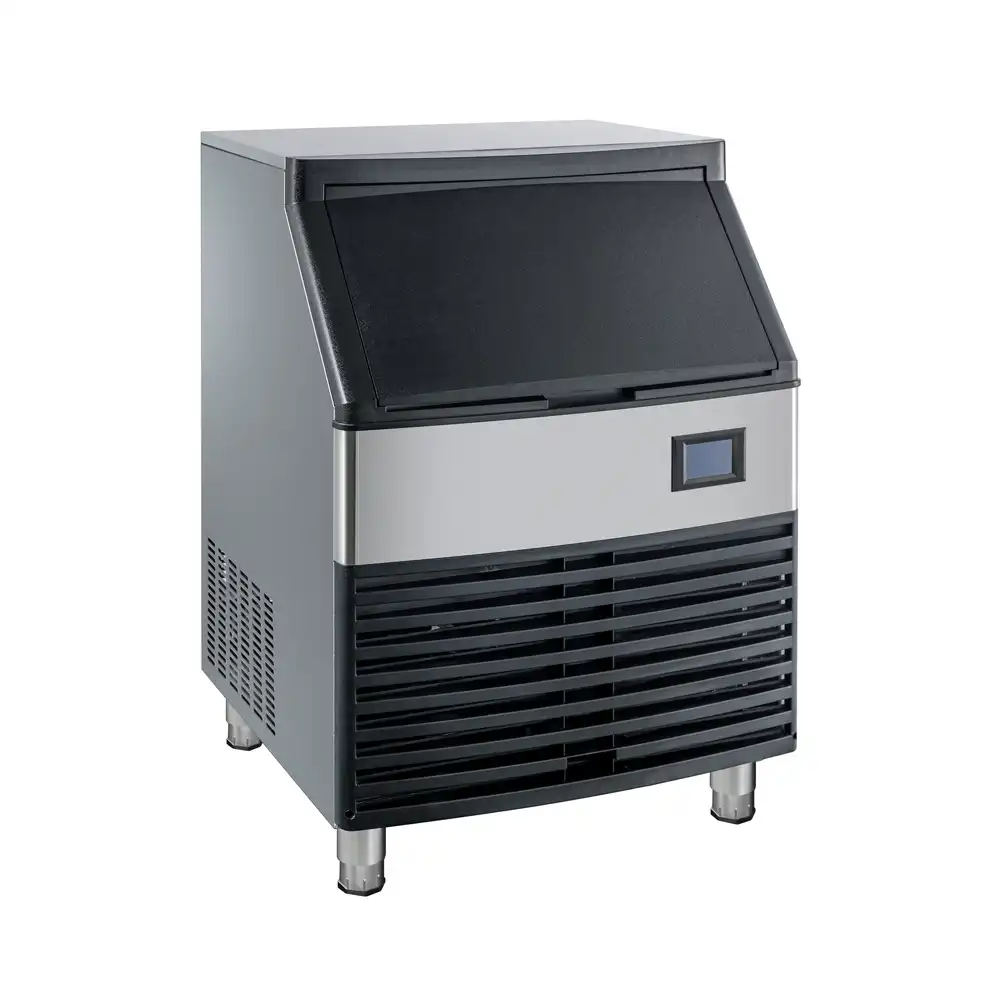
Ice machines are part of the same 24/7 load. Their condensers and water circuits pick up scale and dust even when the ice bin looks clean. I treat their air intake mesh as part of the bar refrigeration energy walk because a blocked mesh raises head pressure the same way it does on a bottle cooler.
Condenser cleaning has the biggest payback when the cabinet was specified with accessible ventilation. <Choosing the Best Commercial Reach In Fridge for Your Restaurant> covers how front grille placement and door orientation change the cleaning routine and the long-term coil access.
What Equipment Configuration Keeps Bar Refrigeration Energy Use Down Over Time?
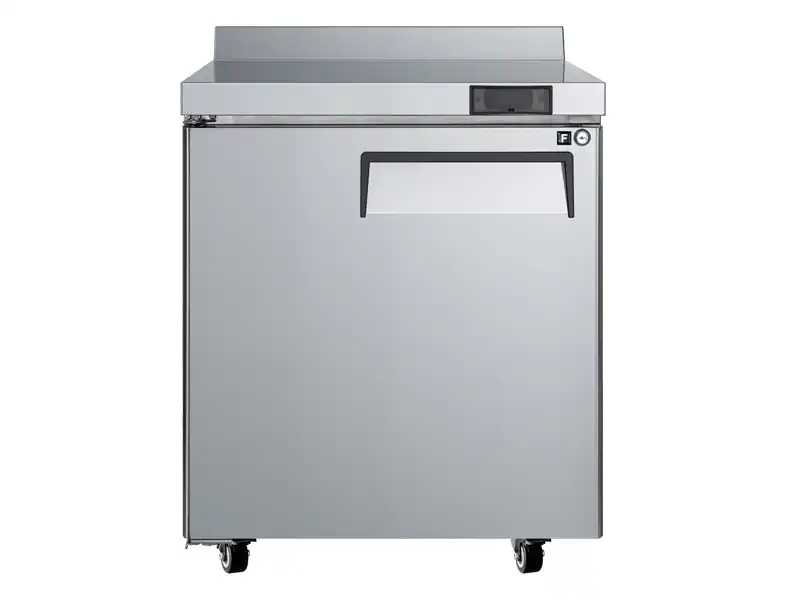
Solid-door cabinets should be the default behind the bar and under the counter. Glass doors add heat gain and often carry lighting that runs every hour the venue is open. If the product is not sold directly from the cabinet, the glass is a display expense, not a revenue tool. Our Camay MTR-60 undercounter refrigerator illustrates the configuration I specify most often for bars: 476 L of storage, 0.5°C to 5°C internal temperature, a 1.9 A draw on 115 V, and polyurethane and cyclopentane insulation. R290 refrigerant and a ventilated cooling system keep heat rejection steady without the cabinet fighting itself.
The key is matching the cabinet to the station. A long multi-door reach-in serves an entire bar when one person opens it repeatedly, but a high-volume service well may do better with two undercounter units at separate positions so each bartender opens only the needed section. Avoid specifying one large cabinet where two smaller undercounter units can sit at separate stations. Two smaller units let each bar station open only its own door, which cuts the shared cold loss of a long reach-in during a rush.
When bar space is tight and every station needs both storage and a work surface, <Optimizing Kitchen Efficiency with Integrated Worktop Refrigeration> covers how a refrigerated worktop replaces a separate prep table and cooler without adding a second compressor.
For bars that stock frozen fruit or pre-batched cocktail ingredients, the freezer load also belongs in the same review. The unit may run only part of the day, but its defrost mode and door type still shape total consumption.
<Boost Savings with Energy Efficient Commercial Upright Freezers> details how defrost mode and door type change the energy draw on a unit that often runs only part of the day.
Energy savings should show up as lower compressor runtime, not as a colder display that still burns the same hours. If you are setting up a new bar or auditing an existing one, send the cabinet count, current setpoints, voltage, and door orientation to Sales@hzcamay.com or call +8618157202219. We will go through the load pattern and specify the cabinet configuration that matches your service flow, so the equipment you run is not larger or colder than the room actually needs.
What Questions Come Up Most When Bar Operators Review Energy-Saving Refrigeration Choices?
Does a lower setpoint keep beer colder for longer?
No. Once the beer mass reaches the holding temperature, a lower setpoint does not keep it colder at the glass; it only lengthens compressor cycles and increases defrost load. The cabinet walls, door gaskets, and air temperature do not change just because the controller is set colder. If guests complain that bottles are not cold enough, check airflow, shelf crowding, and door seal gaps before lowering the setpoint any further.
Should the back bar cooler be turned off overnight?
Operators sometimes assume that switching off the unit during closed hours saves money. In a 24/7 bar, shutting down is rarely practical because the next open starts before the cabinet can pull down safely. For bars that do close and restock early, shifting to a night setback mode with a 3°C to 4°C rise can reduce runtime if the controller supports it, but the product type and health code requirements must be checked first.
Is a glass-door cabinet worth the display value?
It depends on where the cabinet sits. At the front bar, glass-door back bar coolers drive impulse sales and the heat gain is part of the merchandising cost. In the stockroom or under the counter, glass doors add heat gain without adding revenue, so a solid-door cabinet is the better energy choice. The same logic applies to lighting: keep display lighting off in back-of-house units and use LED only where the product needs to be seen.
How often should a bar refrigeration system be serviced?
In bar projects I review, service intervals should follow compressor runtime and traffic more than the calendar alone. A high-volume bar with heavy door traffic needs condenser cleaning and gasket inspection every two to four weeks, while a quiet tasting room can often run eight weeks between checks. The signal to shorten the interval is not a higher energy bill alone; it is a dirty coil, a gasket that no longer springs back, or a door that no longer closes without being pushed. If you are setting up or auditing multiple bar cabinets, send your cabinet list and preferred service schedule to Sales@hzcamay.com and we will confirm the maintenance intervals that match the bar’s actual load.
If you’re interested, check out these related articles:
Heavy Duty Chef Base Refrigeration for Efficient Commercial Kitchens
Ultimate Buyers Guide for Commercial Reach In Refrigerators
Boost Savings with Energy Efficient Commercial Upright Freezers
Essential Maintenance Tips for Your Commercial Chef Base Refrigerator
Boost Efficiency Energy Efficient Chef Base Units for Commercial Kitchens