
Banquet hall kitchens fail most often because equipment is selected as individual units rather than as one load-matched system. Heavy-duty equipment for catering and banquet halls has to absorb sharp service peaks, long holding times, and frequent door openings without drifting out of safe temperature. I have spent twenty-six years in commercial refrigeration manufacturing, and the specification mistakes I see repeatedly are clearance, ventilation, and load planning issues, not the refrigeration itself. This guide covers the equipment categories, capacity decisions, and site requirements that matter before you place a purchase order for a banquet production kitchen.
Heavy-Duty Equipment Categories and Capacity Planning
Banquet kitchens combine refrigerated prep, frozen buffer storage, plating line support, and display or bar backup into one continuous cold chain. The first specification step is to assign each station to equipment built for that load, not to place a single reach-in where a worktop or chef base belongs.
| Banquet station | Recommended Camay equipment | Key specification to check |
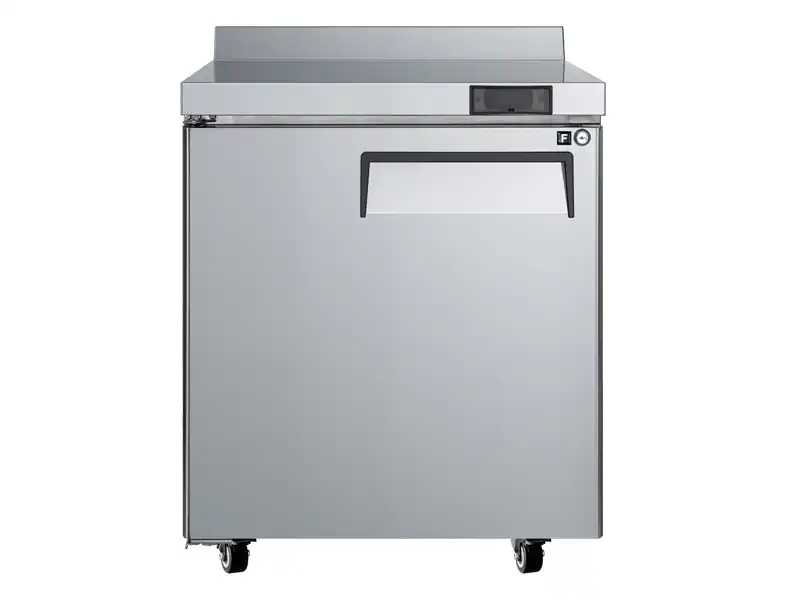
| Plating line | Refrigerated chef base or worktop fridge | MAR-60A: 117 L, 0.5°C to 5°C, R290, 4-inch casters |
| Back-of-house storage | Solid door undercounter or upright | MTR-48: 368 L, 0.5°C to 5°C; MR-49: 1252 L |
| Frozen reserve | Solid door freezer | MF-23: 547 L, -25°C to -15°C |
| Dessert and bar | Reach-in display cabinet | DBG0.6L1A: 610 L, 0°C to +10°C |
The table is a starting point. Heavy-duty banquet equipment is distinguished less by size than by how the compressor, insulation, and hinges respond to sustained use. A cabinet that holds temperature with one door cycle per hour in a cafe behaves differently under twenty cycles during a plated service.
Capacity planning starts with the menu, not the floor area. A banquet kitchen needs enough cold holding between production and service, and that number changes by covers, plate counts, and whether service is plated or buffet. I ask for peak covers first, then the number of cold components per plate, then the longest holding window. Three hundred plated covers with four cold components each can require more staged refrigeration than eight hundred buffet covers, because plated service concentrates staging into a shorter window.
High-volume banquet bars add an ice load that should not share a circuit with food refrigeration without checking startup current. The Camay FB210A cube ice machine produces 100 kg per 24 hours with 45 kg storage, which suits a serving station if drainage and clearance are present.
Chef base and worktop refrigeration only performs when the load and placement match the production rhythm. <Heavy-Duty Chef Base Refrigeration for Efficient Commercial Kitchens> covers how heavy-duty chef bases support continuous plating without pulling kitchen staff away from the line.
Worktop and Chef Base Layouts for High-Volume Plating
A worktop refrigerator or chef base earns its place by reducing movement. At the plating line, staff need pans, proteins, and dressings within arm’s reach. The Camay MAR-60A chef base holds 117 L at 0.5°C to 5°C and provides a one-piece stainless worktop with a drip-resistant V edge. That detail matters when banquet staff are plating hundreds of identical covers under time pressure.
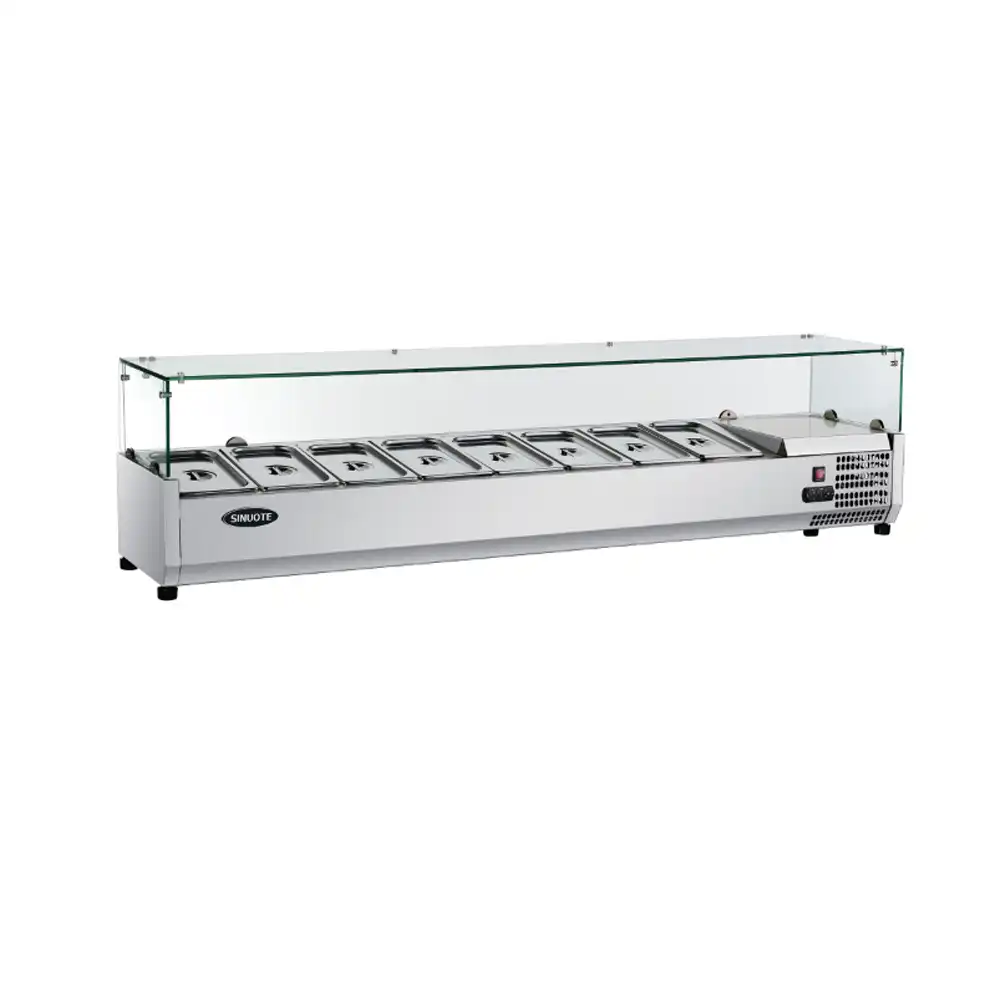
Undercounter refrigeration under the line should follow the same logic. MTR-60 and MTR-72 units keep 476 L and 576 L respectively in reach, but the real specification question is door swing and drawer access. In banquet plating, top access or drawers save more time than a larger cabinet across the aisle.
Worktop refrigeration doubles as prep surface and cold storage, but its value depends on how the unit is placed within the line. <Optimizing Kitchen Efficiency with Integrated Worktop Refrigeration> covers how integrated worktop units reduce movement between walk-in storage and plating stations.
If your banquet program includes alternating refrigerated and freezer storage under the same worktop line, confirm compressor and defrost configuration before finalizing the layout. Send your station list and peak covers to Sales@hzcamay.com or call +8618157202219 and we will check the thermal load and door clearance against your floor plan.
Cold Storage and Freezing Buffers for Multi-Day Events
Multi-day banquets create a different cold storage problem: receiving peaks may be days before service. A solid door upright refrigerator such as the MR-49 provides 1252 L, enough for bulk produce and dairy staging, but it should be placed near receiving, not next to the hot line. Long holding times reward cabinets with polyurethane/cyclopentane insulation and automatic defrost, because both reduce temperature recovery time after deliveries.
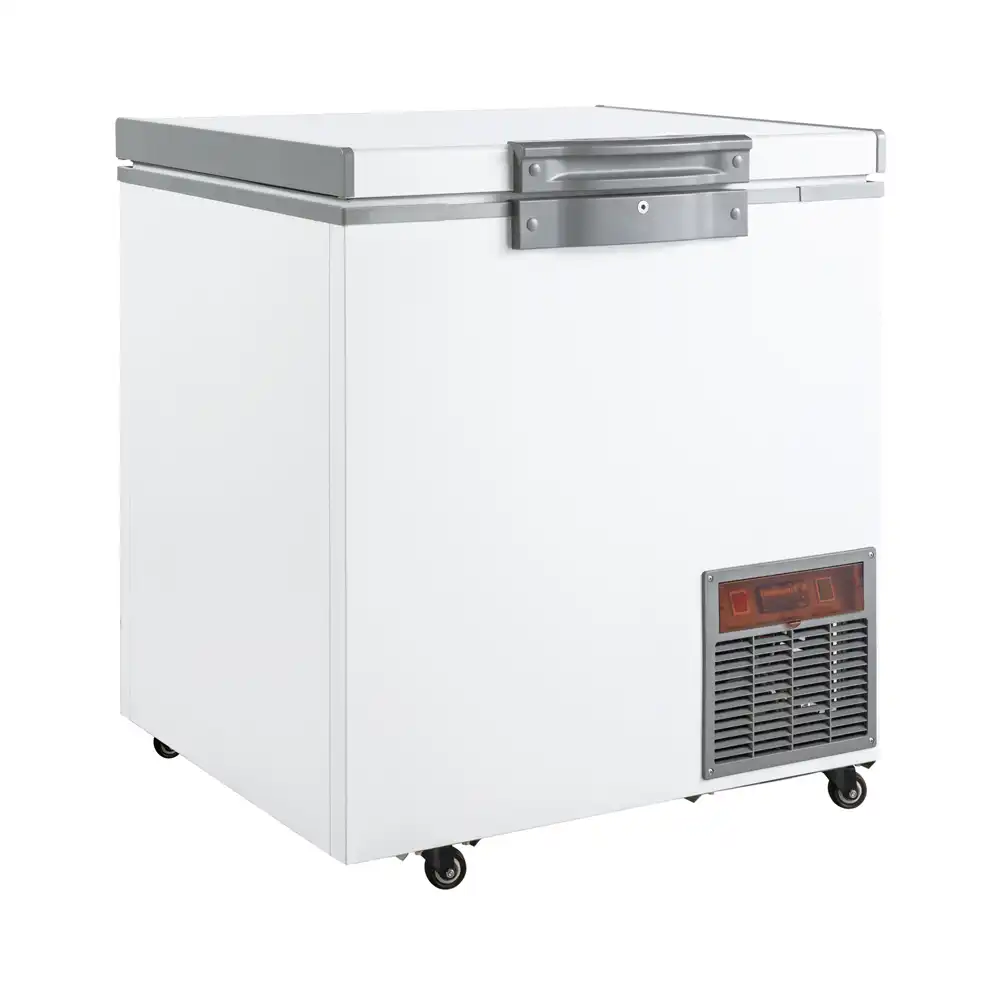
For high-value frozen items and banquet production that must hold texture, standard freezers are not always enough. Camay ultra freezers reach lower temperatures for seafood, dough, or specialty desserts. The decision to specify one depends on whether the kitchen receives product already frozen or freezes it in house. If product arrives frozen and movement is fast, a solid door freezer remains the lower-complexity choice.
Power, Ventilation, and Clearance Requirements in Banquet Kitchens
The mechanical room is rarely the first thing a banquet operator reviews, but it determines whether the equipment stays reliable. Camay units use R290 refrigerant and Cubigel compressors across the range. R290 systems require ventilation that avoids refrigerant accumulation near ignition sources, which is normal in commercial kitchens but still must be part of the installation review.
Clearance is the most common failure point. A worktop fridge pushed flush against a wall may starve the condenser, raise discharge pressure, and shorten compressor life. Each model has a specified airflow clearance. Door swing, aisle width, and caster locking are not convenience items; they determine whether staff can restock without blocking the pass.
Installation errors around door swing and condenser airflow account for many preventable service calls. <Essential Commercial Chef Base Fridge Installation Tips> covers clearance values, leveling, and first-start checks that should be part of any banquet kitchen handover.
Camay units carry ETL Safety, DOE, ENERGY STAR, CE, and related market certifications, and the factory operates under QES-ISO 9001:2015, ISO 14001:2015, and ISO 45001:2018 management systems. Those credentials are useful references when the kitchen must pass a health inspection or an operator insurance review.
A Sourcing Checklist for Heavy-Duty Banquet Equipment
Selecting heavy-duty equipment for catering and banquet halls becomes slower when equipment is specified unit by unit from a catalog. The kitchens that hold up are the ones where the refrigeration scheme, station layout, and electrical load are reviewed together before ordering. Camay manufactures the worktop fridges, chef bases, undercounter units, and freezers in house, with OEM and ODM production for global partners. Send your peak covers, floor plan, and voltage to Sales@hzcamay.com or call +8618157202219. We will return a station-by-station equipment and clearance review so the order matches the service, not the other way around.
Common Questions About Heavy-Duty Banquet Equipment
Does heavy-duty banquet equipment cost more to maintain if it runs only during events?
It usually costs less per event if the equipment is specified for the load. Light-duty units used for banquet peaks cycle more often and accumulate door gasket and compressor wear. Heavy-duty cabinets recover temperature faster after a service rush, which shortens the time the compressor runs at high load. Maintenance should focus on condenser cleaning and gasket inspection after every event cycle, because those two items fail first in intermittent kitchens.
What is the difference between banquet refrigeration and standard restaurant refrigeration?
Many buyers assume a bigger restaurant fridge is enough. The difference is duty cycle and thermal shock. Banquet service concentrates hundreds of covers into a two-hour window, so doors stay open longer and hot trays enter the pass repeatedly. Commercial refrigeration for banquets needs thicker insulation, heavier hinges, and enough compressor reserve to recover quickly. The stainless interior and automatic defrost are not cosmetic; they keep recovery time short between waves of service.
When should a banquet kitchen choose a chef base instead of a worktop refrigerator?
It depends on the station. If staff plate directly above the unit and need cold pans within arm’s reach, a chef base is the better choice because the worktop and pan access are one surface. If the station needs open worktop space for cutting or assembly and cold storage can live below, a worktop refrigerator works well. We often mix both on the same line. Confirm pan depth and GN compatibility before ordering, because not every cold rail fits every pan system.
Where do banquet kitchens most often under-specify equipment?
In projects we have supported, the most common change after handover is adding more refrigerated staging near the plating line. The original plan usually covers walk-ins and bulk storage, but the line still trips over itself during service because cold components sit across the room. Under-counter and chef base capacity at the pass matters more than total kitchen refrigeration volume. Share your menu and peak covers with Sales@hzcamay.com or call +8618157202219 and we will check cold-holding capacity against your service timeline.
If you’re interested, check out these related articles:
Choosing the Best Commercial Reach In Fridge for Your Restaurant
Upright Freezer vs Refrigerator Key Differences Explained
Chef Base Fridge vs Undercounter Fridge Which Is Best for Your Kitchen
Heavy Duty Chef Base Refrigeration for Efficient Commercial Kitchens