
A lunch line stalls when cooks step away from the make line to fetch toppings from a walk-in. Mega salad tables remove that walk-away step by holding pans of prepped produce, proteins, and dressings directly at the assembly point. But the cabinet alone does not fix throughput. The real gain comes from treating pan layout, restocking sequence, and cold recovery as one operating system. In this article, I work through the failure points most operators see during the 11:30 to 1:30 rush and what to check before specifying a mega salad table.
Why Mega Salad Tables Reduce Lunch Rush Bottlenecks
The walk from the salad station to a walk-in is not neutral. A cook making fourteen salads in fifteen minutes may leave the line four or five times unless every topping is within arm’s reach. Mega salad tables place those toppings in refrigerated pan wells on top of the cabinet, with backup pans stored below. That layout keeps the cook in place while keeping ingredients at 33°F to 41°F. From a manufacturing standpoint, the important part is not only the cold rail. A mega salad table has to recover quickly after the top is opened, or the ingredients in the rail absorb warm kitchen air and drift out of safe range during repeated service.
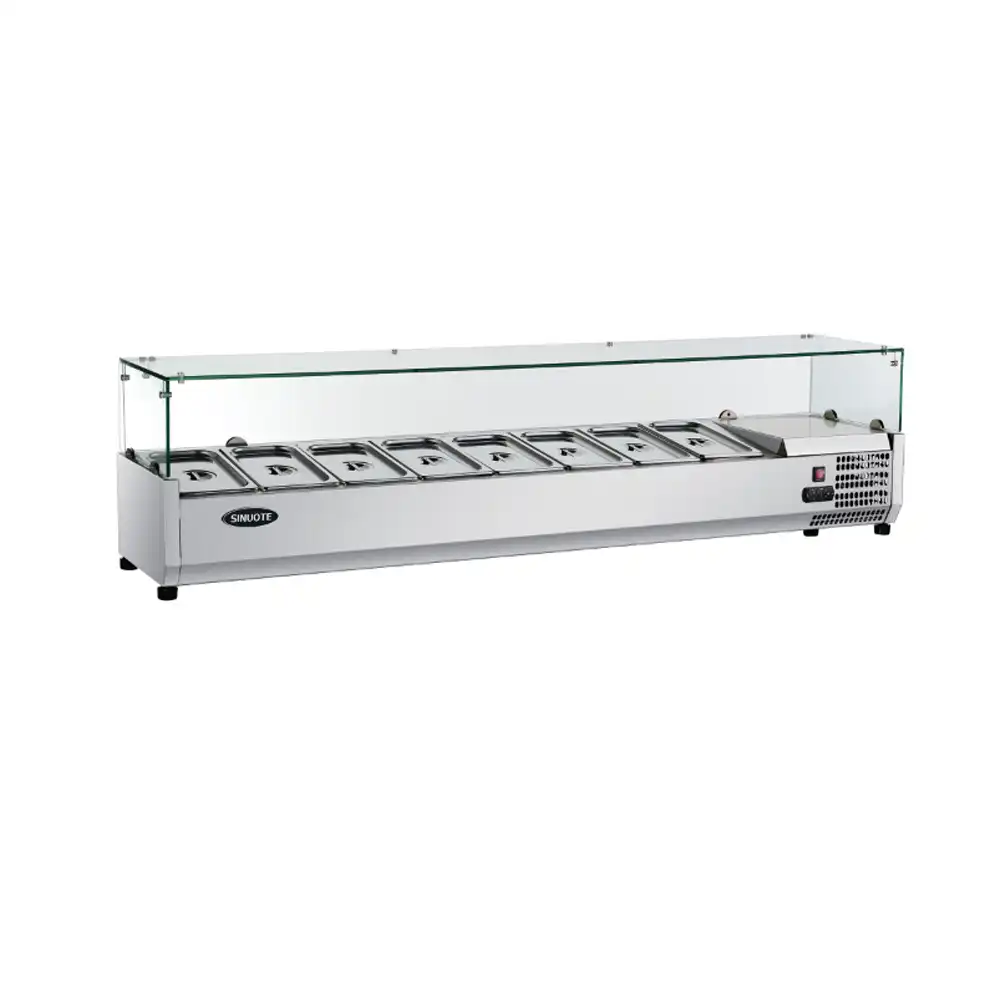
I have seen operators treat a mega salad table as a service counter and ignore how the refrigeration system interacts with the open top. A ventilated cooling system with foamed insulation matters, but the larger operational win is having backup product close enough to restock without leaving the station. That is why these tables work in high-volume sandwich and salad shops: they reduce non-assembly movements, not just keep ingredients cold.
Moving refrigerated storage under the make line changes how a station behaves during peak service. <Optimizing Kitchen Efficiency with Integrated Worktop Refrigeration> covers why integrated worktop refrigeration shortens reach and replenishment paths, and why that matters more than total cabinet count in a compact line.
Which Pan Layouts Speed Up the Salad Make Line
The quickest mega salad table layouts put the three highest-velocity ingredients closest to the ticket rail. Lettuce mix, grilled chicken, and dressing usually come first. Cucumbers, peppers, and specialty items go farther out. This is not cosmetic. If a cook stretches across four pans for the most common topping, each ticket adds seconds and one more chance to drop product between wells.
Backup pans belong below the rail in reverse order of use, not in the order they came from the walk-in. When a rail pan runs low, the cook opens the door, swaps in the backup, and returns the empty to dish. If the backup order does not match the rail order, the cook has to shuffle several pans with one hand while the line waits. In high-volume programs we work with, this restocking order causes more slowdown than the mega salad table itself.
Does pan order actually change ticket time?
Yes, because each reach across an empty well adds a second or two, and a cook making sixty salads multiplies those small movements. The wrong order forces the cook to change direction repeatedly. A left-to-right sequence matched to the ticket build order keeps one hand moving down the line without returning to a previous pan.
How Cold Recovery Keeps a Mega Salad Table Productive
Cold recovery is the difference between a mega salad table that works for the first ten minutes and one that holds up through a two-hour rush. Open-rail tables expose product to ambient air each time a lid is lifted, especially with top access. The compressor and airflow design must pull the rail back toward setpoint quickly, not just hold the cabinet below. A unit that only maintains cabinet temperature while the rail sits warm will pass a morning check and fail the lunch test.
In our manufacturing work, we size the compressor and cooling circuit for the open-rail duty cycle, not for a sealed cabinet. That is why the Camay MSR-48M salad table uses a heavy-duty compressor with R290 and an air cooling system. The technical spec that matters in this context is the operating range of 33°F to 41°F, not just the rated capacity. When hot product or room-temperature prep enters the rail, recovery time determines how many tickets pass before the mega salad table is back in range.
If the same station also needs hot-side equipment beside it, the interaction between refrigeration load and surrounding heat matters. <Boost Kitchen Efficiency Workflow Optimization with [Chef Base](https://zjcamay.com/category/service/product-catalogue/chef-base/) Fridges> covers how chef base refrigeration handles adjacent equipment heat while keeping cold storage in the line.
If your lunch line has self-service wells, multiple pan sizes, or a narrow aisle, it is worth confirming the rail configuration and door swing before you finalize the cabinet layout. Send the line drawing and peak covers to Sales@hzcamay.com.
What Buyers Should Check on a Mega Salad Table
Before a purchase, check the pan well dimensions against the pans your line already uses. GN compatibility avoids buying a mega salad table that only fits a proprietary pan set. If the line runs on GN 1/3 or 1/6 pans, confirm the rail accepts those without adapters. Next, check the cabinet access pattern. One door on a 48-inch table means a cook may need to open a wide door in a narrow aisle; two doors make a smaller opening possible and shorten the reach. The table should also have casters or leveling legs to fit the existing serving line height.
| Check | Why it matters | Camay MSR-48M baseline |
|---|---|---|
| Pan size and rail depth | Shallow rail pans can run empty faster than expected | Confirm GN pan fractions with the factory |
| Interior temperature range | Product needs to stay below 41°F through service | 0.5°C to 5°C (33°F to 41°F) |
| Door count and swing | A large door can block a narrow aisle | Two doors |
| Refrigerant and compressor | Recovery and energy depend on the cooling circuit | R290 with Cubigel compressor |
| Sanitation listing | A missing listing can slow inspection approval | ETL Safety and ETL Sanitation |
Do refrigerated prep tables need NSF certification?
For a US line, yes in practice. ETL Sanitation referenced to NSF standards covers cleanability and food-zone materials. A table without that listing may still keep product cold, but it can create friction during a health inspection. When we export to markets outside North America, required marks change, so confirm which certification the unit carries for the country where a mega salad table will operate.
If you are deciding between a salad table and an undercounter fridge for the same line, <Chef Base Fridge vs Undercounter Fridge Which Is Best for Your Kitchen> compares how an open prep top and a cabinet access pattern each affect a compact station.
What Should You Send Us Before You Order a Mega Salad Table?
A lunch rush fix starts with matching the table to your line, not just choosing a width. Send your pan count, the number of salads or bowls you serve between 11:30 and 1:30, and your available aisle width. We will confirm the rail configuration, door swing, and temperature recovery for your menu. Email Sales@hzcamay.com or call +8618157202219 with your service window and we will specify against that demand.
What Else Do Operators Ask About Mega Salad Tables?
What is the difference between a mega salad table and a standard prep table?
A mega salad table is a refrigerated prep table with pan wells on top, while a standard prep table is only a work surface. The refrigerated rail holds prepped salad components at service temperature, and the cabinet below stores backup product. For lunch service, that distinction matters because the top becomes the working inventory. A standard table still forces staff to bring pans from another cold source, so it does not create the same one-stop station.
Do I need water and drainage for a mega salad table?
Many operators assume a salad table needs a floor drain, but most air-cooled cabinets with automatic defrost can be installed without one. Condensate is evaporated by the unit instead of being discharged to a floor trap. Drainage matters only if the operator chooses a different defrost method or if local code requires a spill pan. Check the installation manual and local plumbing requirements before setting the line.
How often should the cold rail be cleaned during lunch service?
It depends on the menu. If the rail holds leafy greens and proteins for more than a few hours, wipe the rail edges and check pan temperatures before the lunch push and after the peak. If the station is self-service, inspect every two hours because customer use opens the rail more often than a make line. For a standard 11:30 to 1:30 service, a before-rush check and an after-rush wipe down usually hold the line. Wet dressings and cheese still need more frequent edge cleanup.
Can a mega salad table run all day without recovery problems?
In the projects I review, all-day operation works when the menu and the rail depth are matched before service starts. A shallow pan with highly perishable toppings can hold safely if the cabinet recovers quickly, but restocking an already warm rail with room-temperature backup will push product out of range. Share your expected lunch volume and pan list with Sales@hzcamay.com and we will confirm the recovery load for your lineup.
If you’re interested, check out these related articles:
Ultimate Buyers Guide for Commercial Reach In Refrigerators
How to Choose the Best Chef Base Refrigerator for Your Kitchen
Essential Commercial Chef Base Fridge Installation Tips