

Dirty condenser coils do not fail loudly. They raise discharge pressure, lengthen compressor run times, and gradually push a freezer toward a thermal alarm while the box still feels cold. In more than twenty-six years of commercial refrigeration work, I have seen coil neglect turn a 20-minute service call into a compressor replacement. The cleaning procedure is simple, but the sequence matters. Rushing a vacuum across the fins, using the wrong brush, or spraying water into a powered unit creates more risk than the dust it removes. The sequence below covers the cleaning steps, the tools that avoid fin collapse, and the inspection points that tell you whether the problem is maintenance or something deeper.
Why Do Upright Freezer Condenser Coils Get Dirty?
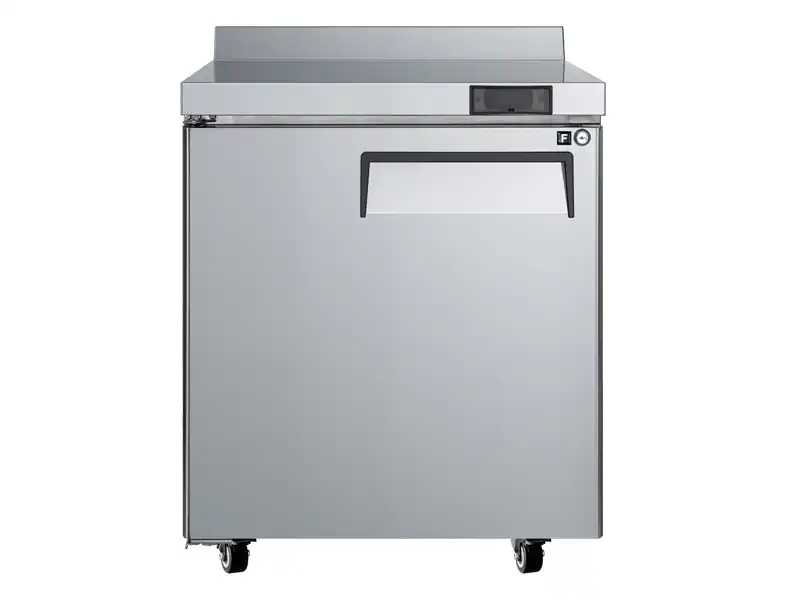
The condenser coil sits on the high-pressure side of the refrigeration circuit. On most upright freezers, it is mounted at the bottom rear or in a ventilated compartment behind a removable panel. A fan pulls ambient air across the coil, and whatever is in that air settles on the fins. Commercial kitchens add flour dust, grease vapor, cardboard fibers, and plastic film, all of which stick faster in humid air. The front of the kitchen may look clean while the air path behind the unit stays coated. On a Camay MF-23 solid door freezer, the fan-assisted cold air circulation moves warm air out of the cabinet, but the condensing unit can only reject heat if the coil surface remains open. I have opened panels in bakery prep areas where the coil looked like felt after six months.
What Happens When Condenser Coils Stay Blocked?
A blocked coil first changes pressures, not temperatures. Condensing temperature climbs, the compressor works against a higher head pressure, and run time extends. The freezer may still maintain setpoint, which is why operators miss the problem. The compressor dome runs hotter, oil thins, and winding insulation ages faster. Eventually the box temperature drifts upward during the afternoon heat load, and the control may show an alarm that looks like a refrigerant issue. The real cause is often a layer of dust.
| Warning level | Observed condition | Compressor effect | Action |
|---|---|---|---|
| Low airflow | Light dust on coil face | Slightly longer run time | Vacuum within 30 days |
| Moderate blockage | Dust mat plus grease film | Noticeable run time increase | Clean immediately |
| Heavy blockage | Coil face packed, fins bent | High discharge pressure, hot dome | Shut down and clean |
| Repeat blockage | Heavy debris returns weekly | System stress, possible oil damage | Inspect air path and add filter |
Blocked condenser coils change the energy equation before they change the box temperature. <Boost Savings with Energy Efficient Commercial Upright Freezers> covers how higher condensing pressure increases compressor power draw and where that cost appears in a busy kitchen.
How Do You Clean an Upright Freezer’s Condenser Coils?
Run the cleaning in this order. If the unit is hardwired, switch off the breaker and lock it out.
- Unplug the freezer and wait five minutes. If it is hardwired, switch off the breaker and lock it out.
- Remove the access panel. Most upright freezers place the condenser coil behind the lower front or rear panel. Keep the screws in a cup.
- Vacuum the coil face first with a soft brush attachment. Move the nozzle along the fin direction, not across it. Across-fin passes collapse the fins and close the air path.
- Use a nylon fin brush or a clean paintbrush to work loose any remaining dust. Work the same direction as the fins and let the vacuum catch the debris.
- Wipe the surrounding cabinet, fan guard, and floor before reinstalling the panel. Trapped debris will be drawn right back onto the coil.
- Reinstall the panel, restore power, and listen through a full cycle. The compressor should sound smooth and the fan should start without scraping.
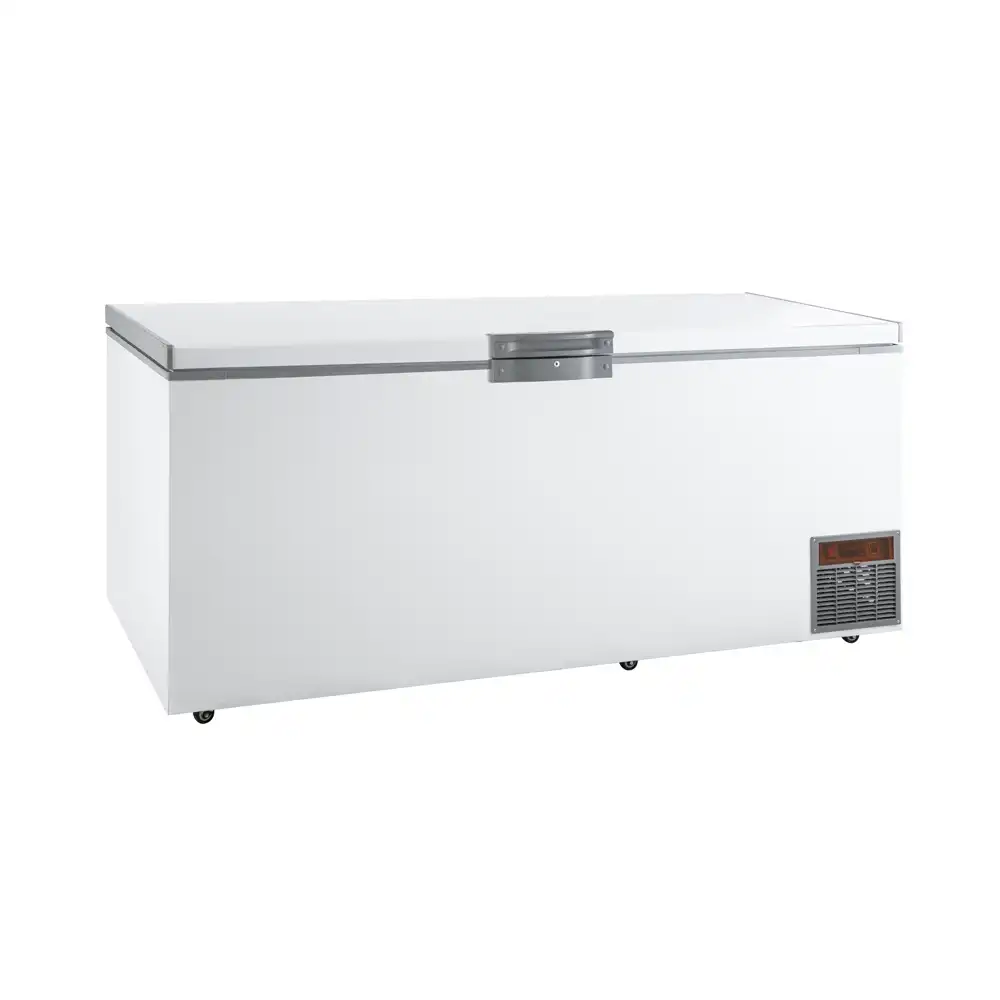
If the condenser is mounted in a sealed compartment, around a corner, or behind a fixed cabinet, the standard brush sequence may not reach it. On custom service placements, the coil access method differs by model. Before forcing a panel or changing a cleaning schedule, confirm the condenser location and clearance for your specific upright freezer with a photo and model number at Sales@hzcamay.com.
What Tools Prevent Fin Damage During Cleaning?
The difference between a clean coil and a damaged one is usually one wrong tool. A screwdriver, a stiff wire brush, or a pressure washer will fold the aluminum fins and create a bigger problem than dust. Use a vacuum with a crevice tool, a soft nylon brush, a fin comb if the fins are already bent, a flashlight, and a microfiber cloth. A fin comb costs little and straightens the fins after an accidental across-fin pass. I do not use compressed air as a first step in a kitchen. It blows debris into the control compartment, the fan motor, and the surrounding food areas. If compressed air is the only option, use low pressure from the inside face outward with the panel off, and keep the nozzle away from wiring.
When Should You Schedule Condenser Coil Cleaning?
In a standard restaurant, clean the condenser coil every 30 days. In a bakery, pizzeria, or near a fryer, inspect every two weeks and clean when dust is visible, because grease turns dust into a mat quickly. A convenience store or light commercial location can often go 60 to 90 days, but the first few inspections should verify the pattern. Write the date on a maintenance tag inside the cabinet. Tagging seems routine, but it is the only way to see whether the interval is actually keeping the coil open. If the dust returns before the next scheduled cleaning, the interval is too long or the air path needs a filter or relocation.
Condenser coil cleaning is part of a broader maintenance routine that also covers gaskets, doors, and drains. <Essential Maintenance Tips for Commercial Reach In Refrigerators> covers how a scheduled maintenance pass reduces emergency calls and what else should be checked while the unit is open.
A freezer that looks frozen may still be running too hot inside the condensing unit. If the box runs in flour dust, grease vapor, or around the clock, use the manufacturer interval as a floor, not a ceiling. Before the busy season, confirm the correct cleaning interval and coil configuration for your model. Send the model number, a photo of the condenser area, and the kitchen environment to Sales@hzcamay.com or call +8618157202219, and I will confirm the coil access method and a service interval that fits the site.
Which Condenser Coil Cleaning Questions Come Up Most?
Can I Clean the Coils While the Freezer Is Running?
No. Cleaning a live refrigeration unit mixes electrical risk with moving parts. Even if the coil is on the low-voltage side of the compartment, a vacuum or brush can contact fan blades, wiring, or a start capacitor. The compressor may also cycle on while the panel is off, changing airflow and pulling loose debris into the control area. Unplug the freezer or lock out the breaker first, then wait five minutes for capacitors to discharge. For hardwired commercial units, use the site electrical lockout procedure and keep the breaker control in your pocket, not on a counter across the kitchen.
Will a Blocked Coil Always Trigger an Error Code?
Many operators assume the controller will alarm before a dirty coil becomes a problem. In practice, an upright freezer can run for months with a partially blocked coil because the cabinet temperature stays near setpoint while condensing pressure rises. The first visible sign is often something else: a warm corner at the top of the box, longer compressor sound, or an intermittent door alarm after a busy service period. By the time the controller shows a high-temperature alarm, the condensing unit has already been stressed. Visual inspection is the early warning system, not the alarm.
Should I Use a Pressure Washer on the Condenser Coil?
It depends on the coil location and type, but the answer is almost always no for an upright freezer in a kitchen. A pressure washer pushes water into fan motors, control boards, and insulation joints. It also folds the fins. Outdoor condensing units are different. A packaged condensing unit outside may tolerate low-pressure coil cleaning with the power off and electrical components covered, but indoor upright freezers should stay with dry cleaning. If the coil has a heavy grease layer, use a degreaser made for coil cleaning, apply it sparingly, and vacuum away the residue. Do not saturate the cabinet.
How Soon After Cleaning Should the Freezer Pull Down?
After a proper cleaning in a commercial setting, the compressor head pressure drops and the freezer should return to the setpoint faster than before the service, especially under afternoon heat load. If the box was at temperature before cleaning, you may not see a dramatic temperature change immediately. What changes is run time and compressor temperature. If the box does not hold temperature after the coil is clean, stop looking at the coil and start checking the gaskets, the refrigerant charge, and the fan. Share your model, condenser location, and current pull-down time, and we can confirm whether the behavior is normal or worth a service call at Sales@hzcamay.com or +8618157202219.
If you’re interested, check out these related articles:
How to Choose the Best Chef Base Refrigerator for Your Kitchen
Essential Commercial Chef Base Fridge Installation Tips
Essential Maintenance Tips for Your Commercial Chef Base Refrigerator
Optimizing Kitchen Efficiency with Integrated Worktop Refrigeration
Boost Savings with Energy Efficient Commercial Upright Freezers