
Low-profile back bar coolers fail in under-counter installations for reasons that rarely appear on a cut sheet. Most buyers check width and bottle capacity first, then discover after delivery that warm condenser air has nowhere to go. I approach these units from compressor position, airflow, and service access first. The decision that matters is not how many bottles fit. It is whether the cabinet can reject heat inside a closed counter, stay level under the countertop, and remain serviceable without pulling the bar apart. This article covers the checks that prevent that failure.
Low Profile Back Bar Cooler Sizing and Counter Clearance
Under-counter installation starts with the cabinet opening, not the cooler’s nominal size. A low-profile back bar cooler may be listed as low profile, but the only dimensions that matter are the outside cabinet height and the condenser intake position. Standard back bar counters usually sit around 900 mm to 950 mm high. A unit with a cabinet height of 872 mm leaves clearance for leveling feet and drawer rails, but side clearance is not optional. I have seen compact heat rejection margins cause cycling problems when the installer leaves 5 mm of side clearance because the unit “fit.” The condenser then re-breathes warm air and the controller runs longer to hold the same set point.
What clearance does a low-profile back bar cooler actually need?
At least 25 mm on each side is workable for most ventilated under-counter units, but 50 mm is safer when the cabinet is enclosed on three sides. The front toe kick grille also needs open air. If a bar front panel blocks that grille, the air intake path changes and the manufacturer’s ambient temperature rating no longer applies.
| Installation check | Requirement | MTR-48 reference |
|---|---|---|
| Cabinet height | Clear counter and leveling feet | 872 mm |
| Side clearance | At least 25 mm per side | 1225 mm cabinet width |
| Front air path | Keep toe kick grille open | Front-mounted digital control |
| Counter load | Verify top can bear unit | 79.5 kg net weight |
Undercounter refrigeration and chef base refrigeration are not interchangeable in a back bar lineup. <Chef Base Fridge vs Undercounter Fridge Which Is Best for Your Kitchen> covers how worktop height and compressor position change the installation decision when a countertop prep surface sits above the cooler.
Compressor Position and Under-Counter Service Access
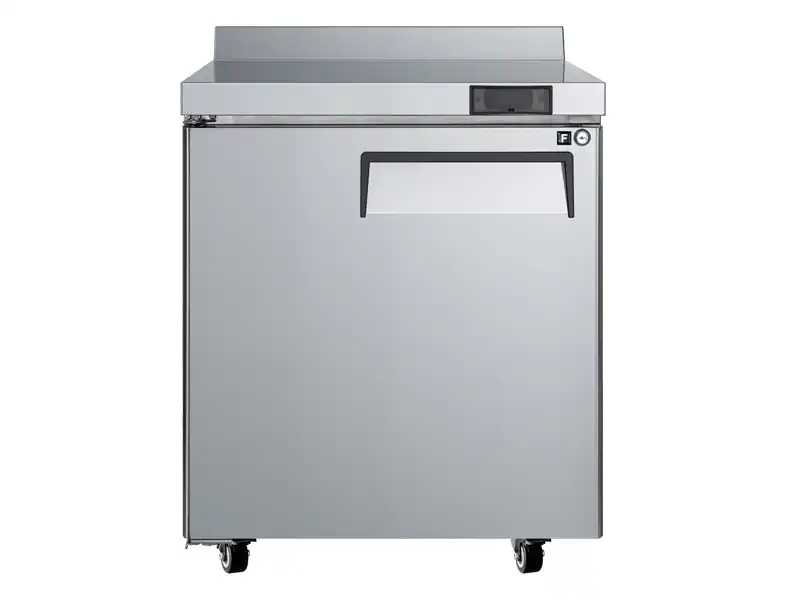
Compressor position decides whether a low-profile back bar cooler can be serviced without being pulled from a fixed counter. Rear-mounted compressors keep the front clean but make condenser cleaning difficult when the counter sits against a wall. Front-mounted compressors are easier to reach through a removable toe kick, but they add heat near the bartender’s feet and need a clear front air path. I prefer front service for permanently installed bar counters. A technician can reach the compressor, start components, and drain pan without moving the unit. Rear service works when the counter rides on casters or when a removable back panel is part of the millwork. For bars with fixed cabinetry, rear service is a maintenance problem that the opening team will meet again after the first condenser cleaning.
On a low-profile back bar cooler, compressor compartment compactness creates a second issue. The compressor, condenser fan, and defrost water tray share the same narrow space. If the unit sits too close to the counter back, hot air recirculates into the condenser. A 25 mm side gap is not enough when the discharge louver faces a solid wall. The buyer should confirm discharge direction before selecting the cabinet orientation, especially when left or right hinge doors are specified.
For back-of-house layouts that combine a back bar cooler with a refrigerated chef base, the equipment footprint must be planned as one line. <Boost Kitchen Efficiency Workflow Optimization with Chef Base Fridges> covers how worktop-height refrigeration reduces walking distance and changes undercounter storage planning.
Temperature Recovery, Airflow, and Condensate Control
The difficult part of under-counter installation is not reaching temperature. It is recovering after the door opens. Back bar service opens doors frequently, and every opening pulls warm air into the cabinet. A low-profile back bar cooler with a small evaporator may hold 33°F in an empty cabinet and still fail during service because recovery time stretches beyond the compressor’s duty cycle. Buyers should ask about compressor and evaporator sizing compared with door count. In undercounter platforms, Camay uses R290 refrigerant, automatic defrost, and ventilated cooling, which keeps air moving behind the storage shelf. Ventilated cooling is less forgiving of blocked side vents than static cooling because the fan moves air over the coil. If the intake is blocked, the evaporator ices and the controller may read a false cabinet temperature until the fan cycles too often.
Why does door gasket sealing matter in an under-counter cavity?
A gasket that seals in a free-standing cooler can leak in an under-counter cavity. The cabinet frame can twist slightly when countertop weight is uneven. I have seen installations where the door still closed but the bottom corner lifted just enough to pull moist air in. That leads to frost around the door opening and extra condensate inside the cabinet. Level the unit after the countertop is set, then check the gasket with a paper strip test before the front panel closes the space.
If your under-counter cavity has less than 25 mm side clearance or the toe kick is sealed for aesthetic reasons, confirm the condenser intake layout before finalizing the purchase. Send your cabinet drawing and target model to Sales@hzcamay.com and our team will check the airflow margin against the unit’s specification.
Installation Checks Before Setting the Low Profile Back Bar Cooler
Before the countertop goes on, three checks take less than ten minutes and prevent most warranty disputes. Verify the electrical supply is within the unit’s rated voltage and that the plug will remain accessible, not hidden behind the cabinet. Set the unit on leveling feet or casters before the countertop load is added; leveling after the counter is in place changes door alignment. Record the interior temperature after the unit has cycled for one hour without product. If it cannot reach the set point while empty, adding bottles will not make the situation easier. Ambient temperature also matters. A back bar cooler rated for 38°C ambient at 53% humidity will behave differently when the bar faces a kitchen pass or a west window. For hot climate projects, specify the higher ambient rating rather than assuming the standard cabinet will perform.
Which electrical checks are necessary before the counter is closed in?
Confirm the supply voltage matches the nameplate, the circuit is large enough to avoid compressor start dips, and the outlet is front-accessible. If the controller offers IoT or WiFi options, test the connection before the unit is surrounded by metal panels, because signal drops once the panel is sealed.
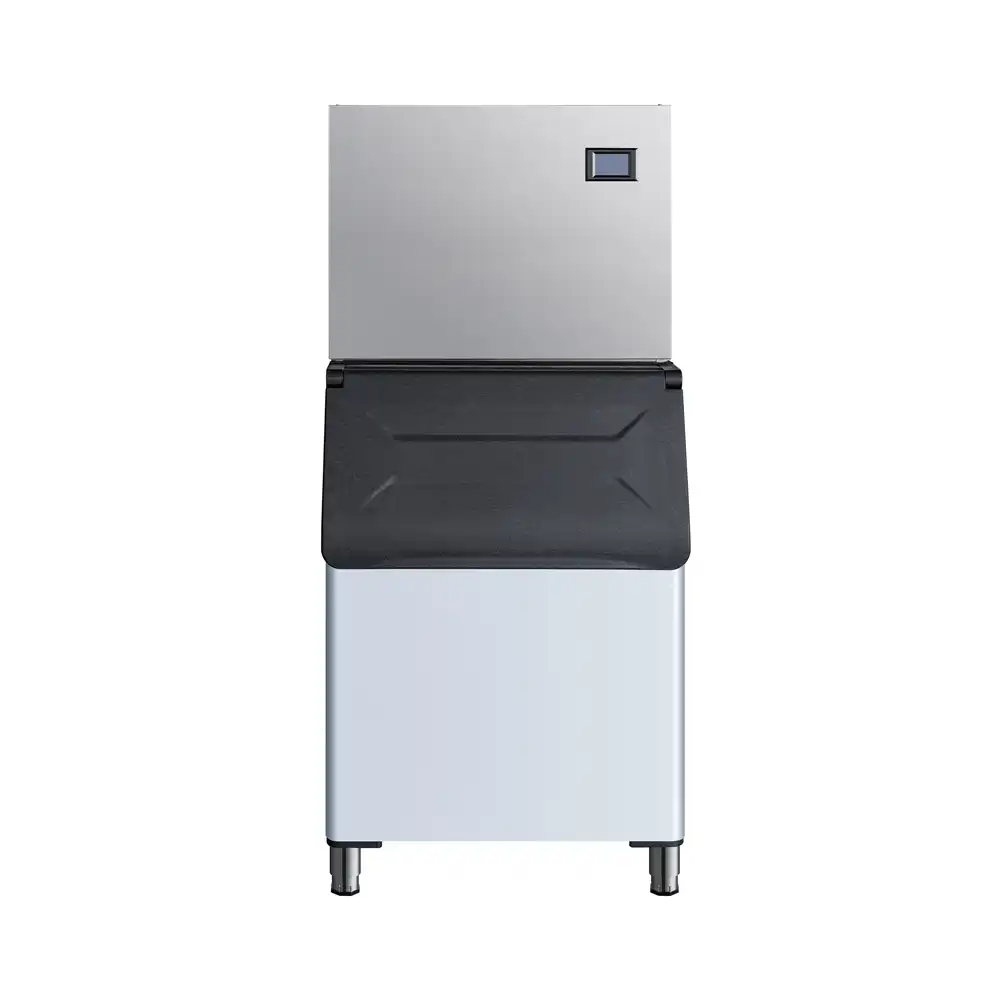
Integrated worktop refrigeration shares the same clearance and airflow constraints as an under-counter back bar cooler. <Optimizing Kitchen Efficiency with Integrated Worktop Refrigeration> covers how vented cooling and countertop loads interact in a continuous equipment run.
Confirming Your Low Profile Back Bar Cooler Order
Low-profile back bar coolers are rarely returnable after the counter is built. The cutout, intake grille, and electrical connection are fixed before delivery, so the specification needs to be correct on the first order. Zhejiang Kaimei Catering Equipment Co., Ltd works with OEM and ODM buyers to confirm dimensional data, airflow direction, and model configuration before production. Send your cabinet opening dimensions, preferred model, and order quantity to Sales@hzcamay.com or call +8618157202219. Our engineering team will check the specification against your site conditions rather than shipping a standard unit into a custom counter.
Common Questions About Low Profile Back Bar Coolers
Can a low-profile back bar cooler sit directly under a sealed countertop?
No, unless the condenser receives fresh air from the front or an open toe kick space. A sealed under-counter cavity blocks the heat rejection path, and the compressor runs hotter until it cycles on thermal protection. If the design calls for a fully closed front, specify a front-breathing model with a louvered panel or add a vent opening in the millwork. The cabinet can still look clean, but the air path must be part of the drawing.
What is the biggest measurement mistake buyers make before installation?
Most buyers measure only the visible cabinet width and forget the counter frame and hinge swing. The unit may be 48 inches wide, but the opening must also clear the hinge side, the drawer rail, and the countertop overhang. I have seen orders returned when the cabinet passed the rough opening but the door could not open without hitting the bar die. Measure the opening, the door swing arc, and the height with leveling feet extended.
How much side clearance is enough for an under-counter back bar cooler?
It depends on the condenser location and how many sides are enclosed. A front-breathing unit can tolerate tighter sides if the front toe kick stays open. A rear-discharge unit needs at least 25 mm on each side and 50 mm at the back when the counter sits against a wall. Three-sided enclosures with a sealed front almost always need additional ventilation, so I would not go below 50 mm on the discharge side.
Why does the same cooler perform differently in two bar setups?
In installations I have reviewed, the difference usually comes back to airflow, not the compressor. One bar had open casters and a 75 mm toe kick gap, and the cabinet cycled normally. Another bar sealed the front panel and pushed the unit tight to the wall, and the same model ran continuously. Ambient heat from glass washers or underbar ice bins also changes the cabinet’s effective ambient temperature. The cooler’s rating assumes a specific heat environment, and the bar layout can break that assumption.
Do I need a low-profile back bar cooler with front or rear compressor access?
The question is less about the compressor and more about how the bar will be serviced. If the counter is fixed to the wall, front access usually saves labor because the technician does not need to pull the unit. If the counter is mobile and the back panel removes, rear access can keep the front face cleaner. Specify the service path before the millwork is finished. If your cabinet opening differs from standard dimensions, share the drawing and we can confirm whether a modified undercounter base is available without changing the compressor layout.
If you’re interested, check out these related articles:
Boost Kitchen Efficiency Workflow Optimization with Chef Base Fridges
Chef Base Fridge vs Undercounter Fridge Which Is Best for Your Kitchen
Choosing the Best Commercial Reach In Fridge for Your Restaurant