

Most operators think of a display fridge as a merchandising tool first and a security risk second. That ordering gets expensive fast when high-value stock—small-batch craft beverages, premium cosmetics, sealed pharmaceuticals, or age-restricted products—sits behind nothing more than a standard magnetic gasket and a self-closing hinge. In more than twenty-six years of working with commercial refrigeration manufacturing, I have seen the same pattern repeat: a well-placed lock that costs less than a single restocking order prevents a problem that a camera alone can’t solve. What makes a display fridge lock actually work, however, is not the lock itself. It is how the locking point integrates with the door frame, the gasket compression, and the insulation seal without creating a thermal short or a condensation trap. Most lock failures we investigate during manufacturing audits trace back to installation choices that ignored the refrigeration envelope, not to the lock mechanism breaking.
Why an Unlocked Display Fridge Costs More Than a Break-In
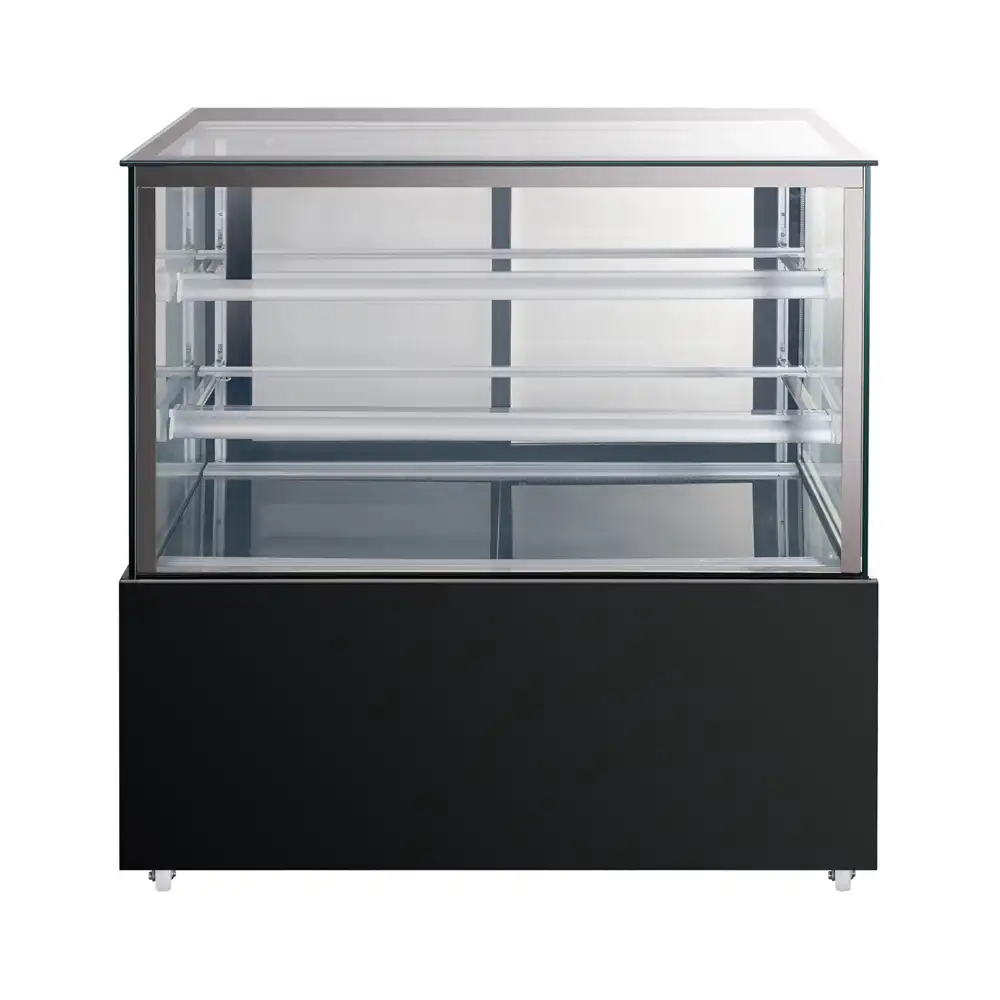
Stock loss from unlocked display units falls into three buckets that are rarely measured together: direct theft, temperature excursion spoilage because a door was left ajar after an unauthorised access, and accelerated compressor cycling that shortens equipment life. A reach-in display in a busy convenience store might cycle its compressor 20 percent more often when the door seal is repeatedly broken without proper re-closure. Over three years, that extra runtime translates into a compressor replacement that could have been funded by the price of a quality lock ten times over.
There is another cost that procurement teams miss: insurance liability. Carriers that cover high-value refrigerated inventory increasingly ask whether doors incorporate mechanical locking as a condition of the policy, particularly for units accessible to the public. In one OEM project we supported for a Southeast Asian pharmacy chain, the insurer required barrel-lock-equipped display fridges with documented key control procedures before they would extend theft coverage to refrigerated vaccines. That requirement alone shifted the specification conversation from optional to mandatory, and it came directly from the loss-adjuster’s risk model, not from a security consultant.
Procurement decisions that weigh door hardware against total cost of ownership benefit from a wider view of refrigeration performance. <Ultimate Buyers Guide for Commercial Reach In Refrigerators> covers how construction quality, insulation thickness, and door engineering combine to affect energy consumption and long-term reliability, which directly impacts the financial case for specifying integrated locks from the factory.
Lock Types That Hold Up Under Commercial Refrigeration Conditions
Not every lock that works on a filing cabinet works on a refrigerated cabinet. The three categories that survive repeated cold-warm cycling and moisture exposure are mechanical barrel locks, push-to-close cam locks with a compression strike plate, and electronic keypad or RFID locks that are rated for condensation. Barrel locks remain the most common because they are compact, corrosion-resistant when the cylinder body is brass or 316 stainless, and they can be keyed-alike across a fleet of units without re-engineering the door handle. The weak point is not the lock body but the strike plate: if the plate does not pull the door tight enough to compress the gasket, cold air leaks around the lock point and a thin frost line forms, which will eventually rust even a stainless plate.
Cam locks with a spring-loaded strike are the middle ground. They engage automatically when the door closes, so they remove the human error of forgetting to lock up, but they require a door frame rigid enough to hold the strike alignment after repeated slamming. On display fridges with a lightweight door skin, we have seen strike deformation within six months that makes the lock catch unreliable. The third category, electronic locks, introduces features like audit trails and time-based access, but they need a sealed wiring pass-through into the refrigerated compartment. Without a factory-installed conduit that prevents moisture migration into the insulation, that pass-through becomes a condensation point that saturates the foam after two or three humid seasons. Our design team routes these conduits at a slight downward angle and seals them with closed-cell silicone grommets at both ends, which is a detail that is almost invisible to the buyer until the insulation fails on a cheaper installation.
| Lock Type | Security Level | Relative Cost | Cold-Environment Durability | Best Application |
|---|---|---|---|---|
| Barrel lock with brass cylinder | Moderate | Low | High | Multi-unit fleets needing keyed-alike management |
| Cam lock with compression strike | Moderate to High | Medium | Medium | Self-service retail where staff may forget to lock |
| RFID/digital lock with sealed conduit | High | High | Medium to High (requires factory routing) | Pharmacies, labs, age-restricted retail requiring audit trails |
Where You Place a Lock Changes the Cold Chain
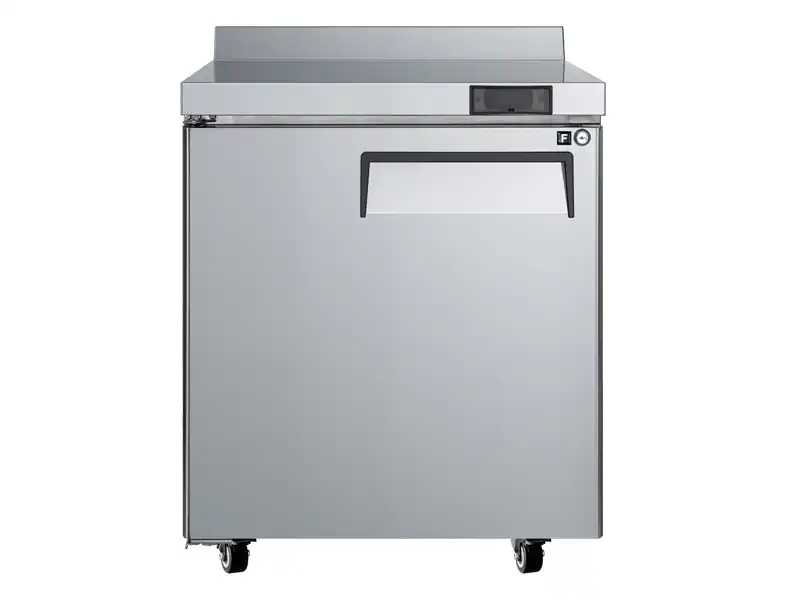
The most common installation error I see is mounting a lock near the top corner of a glass door without checking what lies directly behind the strike plate on the cabinet body. If the strike anchors through the inner liner into the foam insulation only, the first time someone leans on the locked door, the strike flexes enough to separate the gasket by half a millimetre. Half a millimetre is enough to create a persistent air leak that raises cabinet humidity and causes frost accumulation on the evaporator coil. Over a few weeks, that frost reduces airflow, the thermostat cycles more frequently, and the stored product experiences temperature swings of 2-3 degrees.
The fix is straightforward during manufacturing and awkward after the cabinet is assembled: the strike plate must tie into the structural frame, not just the liner, and the lock point must be positioned so that the closing force pulls the door evenly against the full gasket perimeter. On our display cases, we set the lock point at the mid-height of the door handle side, with a reinforcing bracket that transfers the pull force into the cabinet’s structural rail. When a buyer is retrofitting locks onto an existing unit, this is the first place I tell them to check—open the door, press lightly against the gasket where the lock will go, and see if the liner flexes independently of the outer cabinet. If it does, the lock will never maintain a reliable seal without adding an external strike bracket that bridges to the frame.
Specifying Display Fridge Locks That Your Kitchen Won’t Outgrow
Buyers usually ask about lock strength first. They should ask about gasket compression force, key management, and corrosion resistance instead. A display fridge lock that cannot maintain uniform gasket pressure after 100,000 cycles is a maintenance liability, not a security asset. When I review specifications with our OEM partners, we work through three criteria in sequence:
- Compression force consistency: the lock mechanism must pull the door against the gasket with the same force at cycle 80,000 as it does at cycle 1. Cam-action locks with an internal spring tend to hold this better than simple deadbolt latches that rely on the door’s own weight to compress the seal.
- Key material and plating: in a refrigerated cavity, condensation forms whenever the door is opened in a humid ambient environment. A zinc-alloy lock body with nickel plating will pit within two years. We specify 304 stainless or marine-grade brass for any lock component that sits on the cold side of the door.
- Integration with the control system: if the display fridge uses a smart thermostat, a door-ajar alarm triggered by the lock status can alert staff before product temperature rises. That connection is inexpensive when planned at the factory, because it taps into the existing controller I/O. Adding it to a unit already in the field means running a new sensor harness and potentially compromising the wire routing that was sealed during foaming.
Smart temperature monitoring adds a layer of accountability that a mechanical lock alone cannot provide. <Boost Kitchen Efficiency Workflow Optimization with [Chef Base](https://zjcamay.com/category/service/product-catalogue/chef-base/) Fridges> discusses how digital controllers and sensor integration in refrigeration equipment reduce labour waste and improve stock management, a principle that applies equally to display units when lock status feeds into the same monitoring platform.
Retrofitting Locks Without Damaging the Refrigeration Envelope
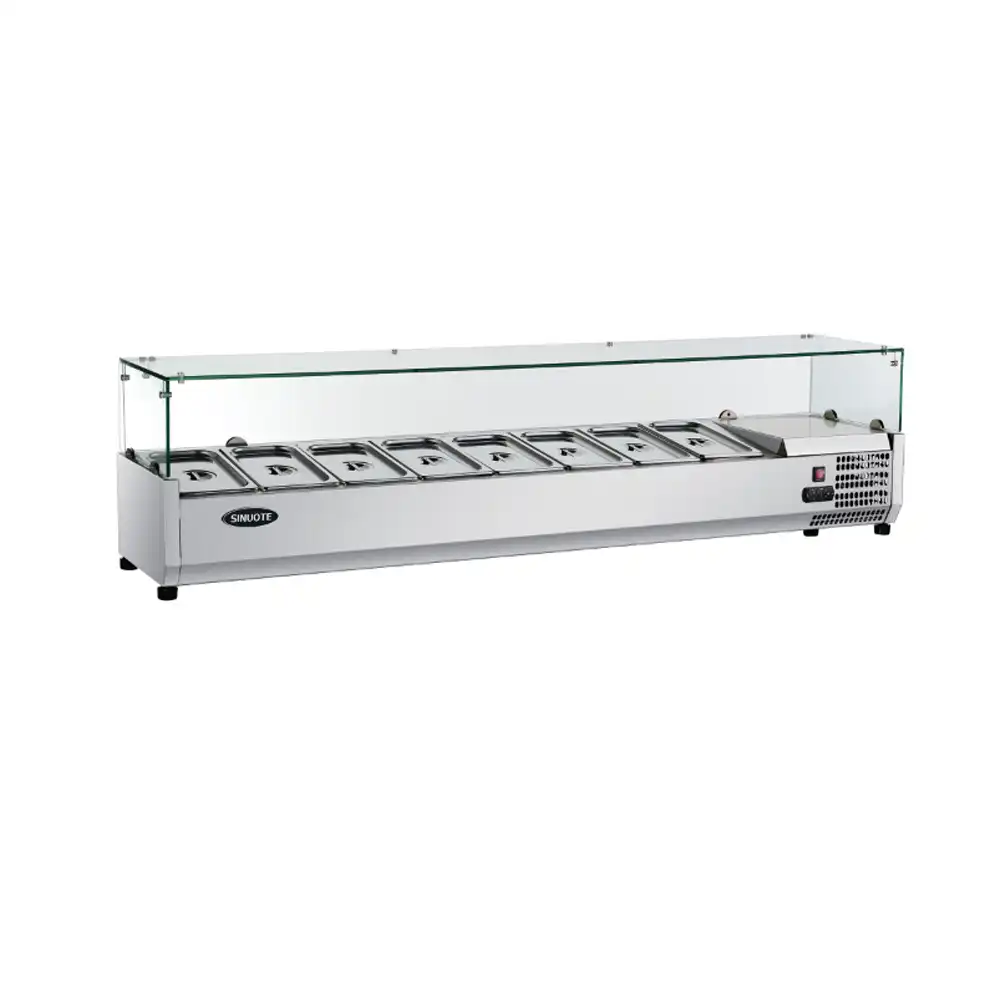
Retrofitting a lock on an existing display fridge is possible, but it demands a different approach than fitting one at the factory. The factory installs the strike plate before the foaming process, so the anchor points are embedded in rigid insulation. A retrofitter is drilling through a finished cabinet, and any hole that goes deeper than the liner risks piercing the vapour barrier and starting a moisture path into the insulation. I have seen retrofit lock installations that worked perfectly for six months and then caused the door frame to rust from the inside because a single screw penetrated the outer vapour barrier and allowed humid air into the foam.
The procedure we recommend to our service partners uses surface-mount strike plates with structural adhesive in combination with short fasteners that engage only the liner thickness. On cabinets with a stainless liner at least 0.6 mm thick, a surface-mount plate bonded with high-shear acrylic adhesive and secured with four M4 screws tapped into the liner only can hold over 800 Newtons of pull force without penetrating the insulation. It is critical to abrade the liner surface, clean it with isopropyl alcohol, and apply the adhesive at above 15 degrees Celsius. If the ambient temperature is colder, the adhesive curing time stretches and the bond strength drops. For glass-door units with a thin plastic liner, this method is not reliable, and I would recommend replacing the door with a factory-locked version rather than risking the cabinet integrity.
Maintaining Lock Function and Cabinet Hygiene Together
A display fridge lock that works in a showroom will eventually gum up in a kitchen that runs high-volume food prep nearby. Flour dust, cooking-oil aerosol, and sugar syrup settle into keyways and strike recesses within weeks. The maintenance protocol that keeps locks functional is the same one that protects the gasket and the door hinge: weekly cleaning of the lock face with a damp cloth and a non-corrosive cleaner, followed by a dry wipe to prevent residual moisture from freezing on the strike. For keyed locks, a light graphite lubricant applied to the keyway every three months prevents binding without attracting dust the way an oil-based lubricant would. Electronic locks need an inspection of the cable gland seal every six months; any crack or separation in the gland body will let humidity into the wiring cavity and corrode the connector pins within one cooling season.
The intersection between lock hygiene and food safety is the strike plate itself. On a dairy or meat display, the strike recess can harbour debris that sits in the cold-air stream and blows directly onto unwrapped product. A strike design with a smooth, sloped catch surface and no screw-head recesses makes a measurable difference in swab-test results. Our standard lock hardware uses an angled strike with countersunk fasteners and a self-draining recess that does not pool water, which is a detail that carries weight with health inspectors who are already paying attention to display-case sanitation.
How Locking Display Fridges Fit Into an Overall Store Security Plan
A lock on a display fridge is not a standalone security solution. It works best as part of a layered approach that includes staff training about end-of-day lock-up checks, camera positioning, and inventory procedures that flag high-value items for locked storage after hours. The real value of the lock is that it converts an opportunistic grab into a deliberate act that requires a tool and leaves evidence. In retail environments where we have tracked loss data, display units with visible locks experienced roughly 60 percent fewer theft incidents than identical units without locks placed in the same store, even when cameras were present. The lock signals that the contents are monitored, and that signal alone shifts petty theft toward easier targets.
For operations that stock items requiring regulatory security, such as certain pharmaceutical products or high-proof alcohol in some jurisdictions, the lock also provides documentation that the storage condition met access-control requirements. Having a key log and lock-status data from the controller is often the difference between passing a compliance audit with a checklist and failing it with a fine.
Across a multi-site operation, even small improvements in equipment specification and maintenance practices add up. <Essential Maintenance Tips for Commercial Reach In Refrigerators> details a preventative maintenance routine that includes door alignment, gasket cleaning, and condenser care, all of which directly support the long-term reliability of locking mechanisms and the thermal integrity of the cabinet.
What Buyers Ask About Display Fridge Security
Why can’t I use a standard padlock on a glass door display fridge?
Standard padlocks hang loose and create a lever point that stresses the door glass and frame differently than an integrated lock. The swinging shackle also prevents the door from closing flush against the gasket. We have tested padlock add-ons in our lab, and they typically increase door-gasket leakage by 15 to 20 percent because the shackle prevents full compression, which drives up energy use and risks frost buildup at the lock point.
How much does a factory-installed lock add to the cost of a display fridge?
When specified during the original build, a barrel lock with a stainless strike and keyed-alike cylinder typically adds between 3 and 6 percent to the ex-factory unit price, depending on volume. That figure includes the reinforcing bracket, seal routing, and the extra assembly step. Retrofitting the same functionality after delivery frequently costs double that amount due to labour and the risk of insulation damage, and it rarely achieves the same seal quality.
Does a lock make the door harder for elderly or disabled staff to open?
A well-designed push-to-close cam lock can be opened with an ADA-compliant lever handle or even a shoulder push if the release mechanism is positioned correctly. Electronic locks with a fob or wristband also remove the need for a tight grip. The key is to select the lock and handle as a paired set, not to bolt a heavy-duty lock onto a lightweight door handle that was designed for fingertip pull only. Our product engineering team specifies handle-lever force below 5 pounds for all lockable display units.
Will a lock affect the condensation-free performance of my display fridge door?
Only if the strike plate creates a thermal bridge or the installation breaches the door’s hot-gas loop. Factory-installed locks avoid this because the strike plate sits within the heated door-frame area, and the mounting fasteners are sized to not extend past the frame into the cold insulation. A retrofit lock that uses screws long enough to pierce the frame’s thermal break will create a cold spot where condensation forms, and that cold spot will spread outward as the screw conducts heat away. It takes a thermal camera survey or a painstaking installation protocol to avoid this, which is why I always recommend factory integration whenever possible.
What documentation should I keep for a lockable display fridge to satisfy health and insurance audits?
At minimum, keep a key control log showing who has access and when keys were issued or returned, a monthly inspection record for door seal integrity including the lock area, and a log of any lock-related maintenance. If the fridge includes a digital lock with access tracking, export that data quarterly and store it alongside the unit’s temperature logs. This package usually satisfies both an insurer’s theft-prevention requirements and a health inspector’s concern about equipment that could trap moisture. If your operation involves regulated product, send the full specification sheet including lock type, gasket material, and installation date to your compliance officer so the unit is documented in the facility’s HACCP plan. For custom configurations or OEM-locked units built to your security specification, email your door-lock and keying requirements to Sales@hzcamay.com or call +8618157202219, and our engineering team can confirm how the lock integrates with the cabinet’s thermal design before production begins.
If you’re interested, check out these related articles:
Essential Maintenance Tips for Your Commercial Chef Base Refrigerator
Ultimate Buyers Guide for Commercial Reach In Refrigerators
Boost Savings with Energy Efficient Commercial Upright Freezers
Boost Kitchen Efficiency Workflow Optimization with Chef Base Fridges