

For any restaurant operator or kitchen planner, specifying materials for refrigeration equipment goes far beyond a line on a spec sheet. It directly shapes maintenance burdens, food safety compliance, and how many years that unit will survive the daily abuse of a professional kitchen. Over twenty-six years in commercial refrigeration engineering, I have seen lower-grade stainless steel cabinets rust through, warp, and lose structural integrity within two to three years. 304 stainless steel became the industry’s default for a reason: its balanced alloy composition delivers exactly the corrosion resistance, formability, and long-term reliability that commercial kitchen equipment demands. The following explains why that grade matters, not just in theory but in the real conditions your equipment will face every shift.
How Stainless Steel Grades Are Classified
Stainless steel grades are defined by their metallurgical structure and alloy content, particularly the percentages of chromium, nickel, and carbon. The three-digit numbering system, created by the American Iron and Steel Institute, groups stainless steels into families. For kitchen equipment, the relevant families are austenitic (300-series), ferritic (400-series), and the lower-cost 200-series alternatives.
The key element in any stainless steel is chromium. A minimum of 10.5% chromium content is required for the material to be called stainless, because chromium reacts with oxygen to form a thin, passive oxide layer that prevents rust. Nickel, when added at sufficient levels, stabilizes the austenitic crystal structure and dramatically improves ductility, weldability, and resistance to acidic attack. This is precisely where grades like 304 separate themselves from cheaper options.
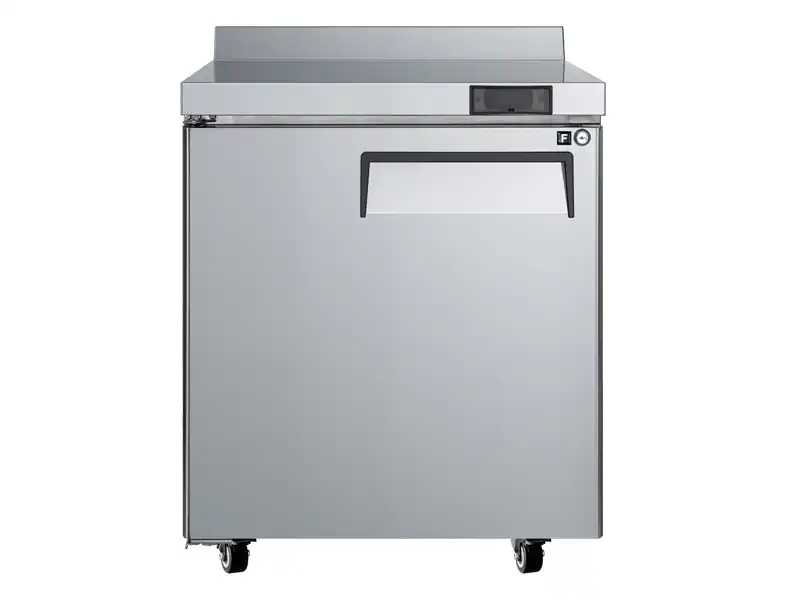
The table below compares the most common stainless steel grades found in commercial kitchen equipment:
| Grade | Chromium % | Nickel % | Crystal Structure | Corrosion Resistance | Typical Kitchen Use |
|---|---|---|---|---|---|
| 304 | 18-20 | 8-10.5 | Austenitic | High | Refrigeration cabinets, prep tables, sinks |
| 430 | 16-18 | 0-0.75 | Ferritic | Moderate | Budget worktops, interior panels |
| 201 | 16-18 | 3.5-5.5 | Austenitic (lean) | Moderate-low | Imported low-cost equipment, decorative trim |
Each family behaves differently under the thermal, chemical, and mechanical stresses present in a commercial kitchen. Understanding those differences is where equipment buyers can make or break a long-term investment.
Why 304 Stainless Steel Excels in Commercial Kitchen Refrigeration
A refrigeration cabinet lives in a uniquely aggressive microclimate. Internal temperatures cycle between 33°F and 41°F, condensation forms continuously, and the exterior faces ambient heat, overspray from cleaning chemicals, and occasional impact from carts or pans. 304 stainless steel handles this combination because its 8-10.5% nickel content gives it a fully austenitic structure that is non-magnetic, highly ductile, and resistant to chloride-induced pitting corrosion at normal kitchen cleaning concentrations.
What often goes unmentioned in basic material guides is the welding factor. Commercial refrigeration cabinets are fabricated from multiple sheets joined by both continuous welds and intermittent spot welding. 304 welds cleanly without needing post-weld annealing in most gauge thicknesses used for cabinet skins (typically 0.6–0.8 mm). Ferritic grades like 430 suffer grain growth in the heat-affected zone, leading to brittleness and reduced corrosion resistance adjacent to welds—exactly where condensation will sit. In a service environment, those weld lines on cheaper cabinets become the first points of failure.
Food-contact safety adds another layer. 304 stainless steel meets the material requirements of NSF/ANSI 51 and 3-A sanitary standards for food zone surfaces without any special surface treatment. The alloy is stable, non-reactive with acidic foods, and its passive layer reforms instantly after cleaning. When I review OEM specifications for export refrigeration units heading into North American and European markets, 304 is always the baseline for any surface that will touch food or condensate that could drip onto food.
304 vs 430 and 201: The Performance Gap That Matters
When a restaurant owner sees a price difference between two undercounter refrigerators, the material grade is often where the cost was cut. 430 stainless steel contains essentially no nickel. It is magnetic, harder to form into deep-drawn parts, and its corrosion resistance in chloride environments is significantly weaker than 304. In a busy kitchen where chlorine-based sanitizers are standard, 430 can develop surface rust within months, particularly around fasteners and door edges where mechanical action breaks the passive film.
The 201 grade has become common in low-price imports. It uses manganese and nitrogen to partially replace nickel, so it is still austenitic in structure. However, the chromium content is at the lower end and nickel is typically under 5%. The result is a material that looks like 304 when new but has substantially less resistance to intergranular corrosion and sensitization. I have inspected used equipment made from 201 where the interior seams showed rust trails after less than one year in a coastal restaurant environment, because airborne salt combined with moisture to attack the lean alloy.
This difference in grade performance is not subtle over a five-year ownership period. A 304 stainless steel cabinet will typically need only routine cleaning to maintain its appearance and structural integrity. A 430 or 201 cabinet in the same kitchen may require replacement of door skins or whole units due to perforation at stress points. The upfront savings rarely survive the first major corrosion incident.
If your kitchen operates in a high-humidity coastal area or uses aggressive sanitizing protocols, it is worth confirming the exact material specification of the equipment you are evaluating before issuing a purchase order. Reach out to our engineering team at Sales@hzcamay.com and we can help you verify the grade claims on any datasheet.
Manufacturing with 304: Welding, Forming, and Quality Control
From a production standpoint, 304 offers advantages that go beyond its service performance. The same nickel content that provides corrosion resistance also makes the material highly formable. Complex cabinet profiles with deep corner folds, integrated drain channels, and tight-radius bends can be produced consistently without micro-cracking. On our fabrication floor at Camay, we process 304 stainless steel coils for refrigerator cabinet shells, laser-cut blanks, and brake-formed panels with repeatable precision across thousands of units.
Welding quality control becomes easier with 304 because the alloy tolerates a wider heat input range without developing the chromium carbide precipitation that causes sensitization. We use automatic TIG and MIG processes from leading suppliers, and every weld line on a finished cabinet is visually inspected for color, penetration, and surface continuity. Because 304’s composition is consistent from mill heats, the welding parameters stay stable across production batches. That consistency feeds directly into the certification trail required by ETL, NSF, and ISO audits.
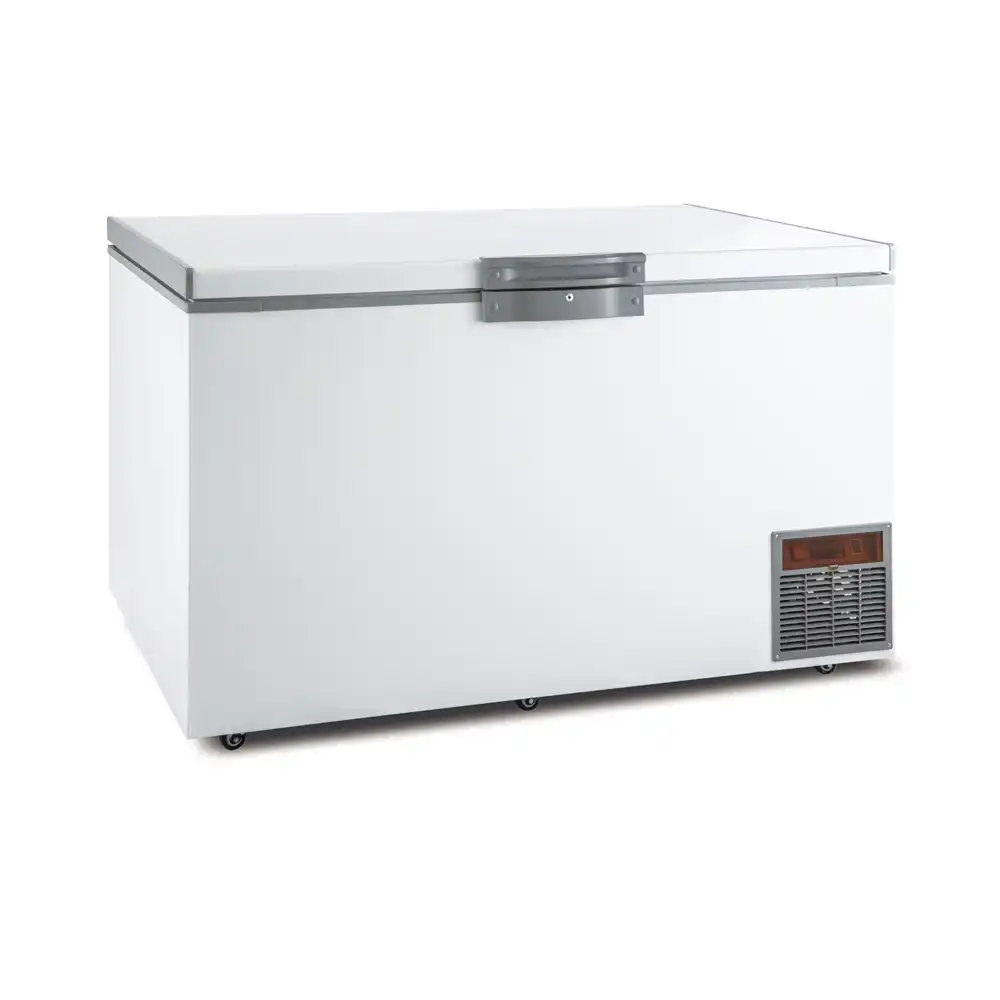
Camay’s product portfolio includes worktop refrigerators, chef bases, and undercounter units that are built with 304 stainless steel interior and exterior panels. The same material specification runs through the door skins, internal racks, and fastening hardware where corrosion matters most. This is not a premium option for us; it is the standard construction. When I discuss custom OEM projects with international partners, the first technical question I ask is not about capacity or voltage but about the intended cleaning regime, because that dictates whether 304 is sufficient or whether we need to discuss surface passivation or even 316L for extreme environments.
Cost vs. Longevity: The Real Economics of Grade Selection
A common argument for choosing 430 or 201 is acquisition cost. Raw 304 stainless steel coil typically carries a price premium of 15–25% over the same gauge of 430, depending on the nickel market. On a single undercounter unit, that might translate to a $50–$100 difference in material cost. Spread across a twenty-unit kitchen rollout, that becomes a noticeable budget line.
But the economics shift when you look at the total cost of ownership over ten years. A 304 cabinet that maintains its structure, appearance, and corrosion resistance for a decade represents a single purchase. A lower-grade unit that needs replacement after three to four years represents two or three purchases in the same period, plus the labor cost of installation, downtime, and disposal. In every full life-cycle analysis I have run for restaurant groups, the 304-based equipment produced a lower total cost even without factoring in the reputational risk of a failed health inspection triggered by corroded surfaces.
Another overlooked factor is the value of a stable interior surface. In a refrigeration unit, interior pitting or rust becomes a bacterial harborage point that no cleaning schedule can reliably address. Health inspectors in most jurisdictions will flag any corrosion on food-contact or non-food-contact surfaces that could contaminate food. Replacing a failed cabinet costs far more than its invoice price if it occurs during a busy season or triggers a violation.
Selecting Equipment That Holds Up: Practical Verification Tips
When you are reviewing equipment specifications, do not assume that “stainless steel” alone means 304. Many distributors list “stainless steel construction” without disclosing the grade. Ask for the mill certificate or the manufacturer’s declaration that identifies the AISI grade used for the cabinet exterior, interior, and structural components. If the supplier cannot produce a grade specification, treat the unit as uncertain.
A simple field test helps: 304 stainless steel is non-magnetic in its annealed state (though cold working can introduce slight magnetism). A strong magnet will not stick to a 304 surface but will attach firmly to 430. This is not a definitive test—cold-formed 304 corners may show weak magnetic attraction—but it provides an immediate check on whether the unit is primarily ferritic steel.
Look for third-party certifications. Equipment bearing ETL Sanitation or NSF marks has undergone material review as part of the listing. At Camay, our units that use 304 stainless steel are listed under those marks, and the certification file includes the grade confirmation. That provides an independent verification that a purchasing manager can rely on.
What Kitchen Operators Ask About Stainless Steel Grades
Can 304 stainless steel rust?
Yes, under certain conditions 304 can develop surface rust. If the passive chromium oxide layer is damaged by embedded iron particles from steel tools, or if prolonged contact with concentrated chlorides occurs, reddish staining can appear. This is not the same as full-thickness corrosion through the steel, and it is usually reversible through passivation or mild acid cleaning. The real difference is that 304 reforms its passive layer after cleaning; a grade without sufficient chromium and nickel will continue to corrode.
Does 316 stainless steel make sense for refrigeration equipment?
For most commercial kitchen refrigeration, 316 is over-specifying. It contains 2–3% molybdenum, which significantly improves resistance to pitting in high-chloride environments like saltwater exposure or aggressive acid streams. Standard kitchen cleaning routines do not require that level of protection. I recommend 316 only for special cases: seafood processing rooms, marine galley installations, or areas with continuous chemical washdown. In a typical restaurant kitchen, the cost premium for 316 over 304 rarely translates into longer service life.
Why do some cheap refrigerators still look good after a few years?
Visual inspection alone is not a reliable measure. Surface finish can mask early-stage pitting. Lower-grade stainless steels with a high-quality mechanical polish can look impressive in a showroom, and they may survive light use in a low-humidity, low-chemical environment. The failures I have seen typically begin at hidden zones—weld seams, door hinge pockets, and the bottom of the interior compartment where standing water accumulates. The real test is what the unit looks like inside the cabinet after three years of heavy use.
How often should I clean my 304 stainless steel equipment?
Daily wiping with a pH-neutral detergent and soft cloth is sufficient to maintain the passive layer and remove food residues. Avoid abrasive pads that can embed ferrous particles. Every quarter, I recommend inspecting door gaskets, hinge areas, and the interior floor for any signs of discoloration or pitting. If you operate in a hard-water area, a citric acid-based cleaner applied every few months helps remove mineral deposits that can trap moisture against the surface.
If your kitchen presents specific conditions such as heavy chlorine sanitizer use or constant temperature cycling, share your requirements and we will help you confirm the material specification that will keep your equipment performing for the long term, backed by real manufacturing data, at Sales@hzcamay.com or by phone at +8618157202219.
If you’re interested, check out these related articles:
Boost Efficiency Energy Efficient Chef Base Units for Commercial Kitchens
Essential Maintenance Tips for Commercial Reach In Refrigerators
Optimizing Kitchen Efficiency with Integrated Worktop Refrigeration