
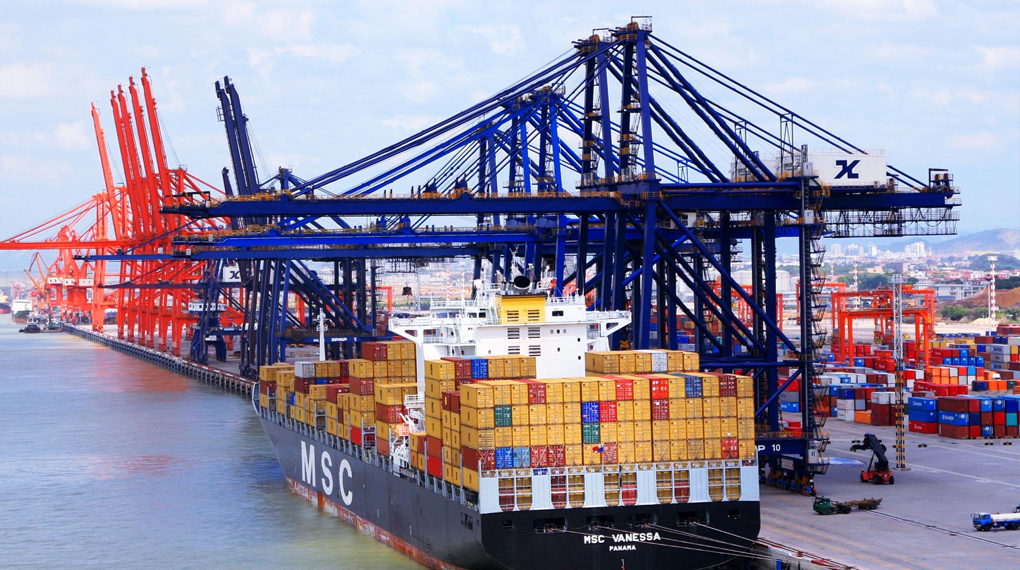
For anyone handling premium seafood, the moment a fish leaves the water, a countdown begins. Enzymatic activity, bacterial growth, and oxidative processes work against quality, rapidly degrading the texture and color that command top prices. Standard commercial freezers can slow that clock, but they cannot stop the microscopic damage that separates sashimi-grade tuna from an ordinary fillet. An ultra freezer, operating at temperatures between -45°C and -86°C, changes the preservation equation entirely. By locking the cellular structure of high-value seafood in a near-instant glass-like state, it preserves the original weight, texture, and market grade that standard equipment cannot. At our manufacturing facility, we have spent over two decades engineering the refrigeration systems that make this level of preservation reliable and cost-effective for commercial operations.
What Sets an Ultra Freezer Apart from a Standard Commercial Freezer
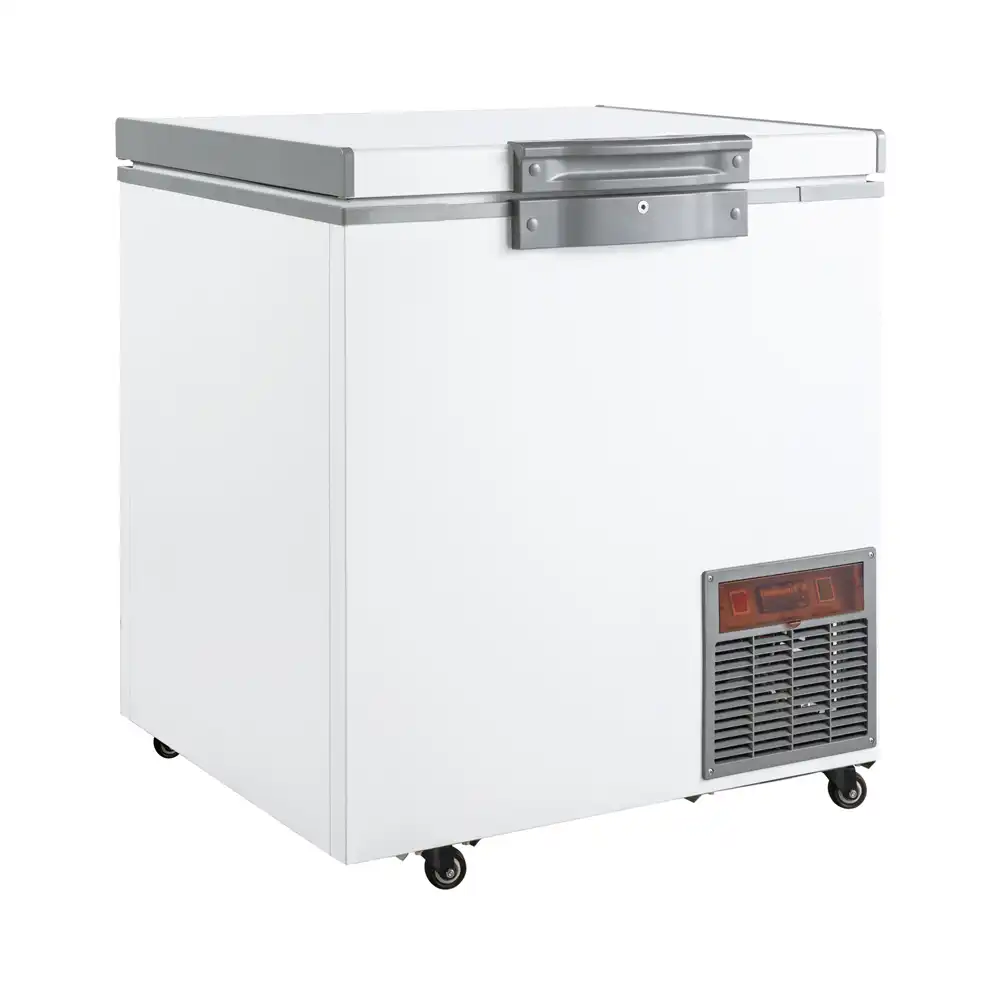
A standard walk-in or reach-in freezer typically maintains -18°C to -22°C. That is cold enough to meet basic food safety codes and keep product frozen solid, but not cold enough to prevent slow chemical changes inside the flesh. The difference lies in the rate of freezing and the final storage temperature. An ultra freezer uses a single-stage or cascade refrigeration system to push cabinet temperatures well below -40°C, and in some configurations down to -86°C. This is not just a matter of cranking up compressor power. The entire architecture changes.
The insulation in a standard freezer is usually a few centimeters of polyurethane foam. In an ultra freezer, insulation thickness increases dramatically, often 100mm or more, with high-density cyclopentane-blown foam to minimize thermal bridging. Door seals are multi-layered, sometimes with an additional pressure-balancing port to prevent vacuum lock after a cold door is opened and closed. Even the inner liner matters. Food-grade 304 stainless steel is not just for hygiene; it also contributes to thermal reflectivity inside the cabinet.
The compressor itself is a critical differentiator. A standard single-stage compressor cannot achieve -45°C efficiently. Ultra freezers rely on either a cascade system, where two compressors work in series to progressively lower the temperature, or a single-stage system using a specialized low-temperature refrigerant and a compressor engineered for high compression ratios. The compressors we integrate, from brands like SECOP and Cubigel, are selected specifically for low-temperature stability and long run life under continuous load. This is not a residential appliance that cycles on and off a few times a day. A commercial ultra freezer in a seafood processing room may run under heavy load 20 hours a day, and the compressor must handle that without thermal shutdown or oil degradation.
The Science: How Ultra-Low Temperatures Preserve Seafood Texture and Grade
Seafood muscle tissue is more sensitive to freezing damage than beef or poultry. The water inside the cells contains dissolved proteins, minerals, and fats that freeze at different temperatures. In a slow freezer, water migrates out of cells into extracellular spaces and forms large, sharp ice crystals. These crystals physically puncture cell membranes and protein structures. Upon thawing, the punctured cells leak fluid, carrying away the water-soluble proteins and flavor compounds. This is the drip loss you see as a pool of liquid around a thawed fillet. It is weight you paid for, and quality you cannot recover.
At ultra-low temperatures, the freezing front moves through the tissue so rapidly that ice crystals have no time to grow. They remain microscopic and largely confined within the cells, preserving the original cellular architecture. This minimizes drip loss and retains the intact texture that buyers of sushi-grade tuna, hamachi, or premium salmon demand. Moreover, at temperatures below -40°C, enzymatic activity and lipid oxidation are virtually stopped. The bright red color of tuna, caused by oxygen-binding myoglobin, tends to turn brown over time in a standard freezer because of slow oxidation. In an ultra freezer, that color degradation can be delayed by months, protecting the visual appeal that determines market price.
There is also a specific temperature threshold worth understanding: the glass transition temperature. Like a sugar solution that turns into hard candy when cooled fast enough, seafood tissue can enter a glassy state where molecular mobility is essentially zero. This state prevents recrystallization — the slow growth of small ice crystals into larger ones over time due to temperature fluctuations. In high-value seafood, recrystallization during storage creates the same kind of quality loss as slow initial freezing. An ultra freezer that maintains a steady -60°C keeps the product in that glass-like immobilized state. This is not an academic distinction; it directly affects the grade and resale value of the product when it reaches the end market.
Critical Specifications for Seafood Storage: Insulation, Compressor, and Temperature Control
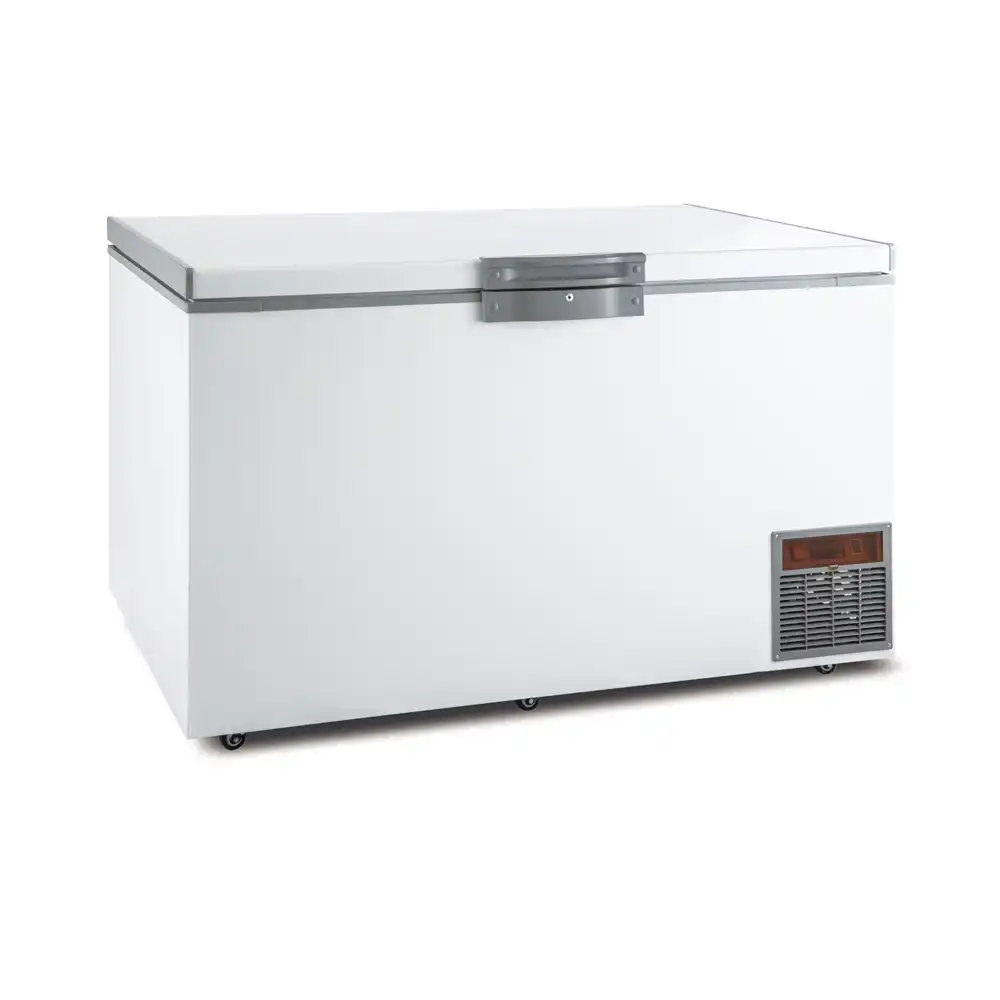
When evaluating an ultra freezer for seafood preservation, three specifications have outsized impact on real-world performance: insulation integrity, compressor reliability, and temperature control accuracy.
Insulation is not a passive feature. In a busy seafood facility, the freezer door opens dozens of times per shift, each time admitting ambient heat and humidity. The insulation must resist heat transfer during steady state and also limit temperature recovery time after door openings. We use polyurethane foam with cyclopentane as the blowing agent, achieving a fine, closed-cell structure with low thermal conductivity. Full-foam insulation — where the foam is poured and expands to fill every cavity between the inner and outer walls — eliminates the gaps that can occur with panel-based insulation. This is a manufacturing choice that affects long-term energy consumption and temperature stability more than most buyers realize.
Compressor selection is equally important. A compressor rated for low-temperature use has a different oil viscosity, valve design, and cooling strategy than a standard unit. We specify compressors from manufacturers with proven low-temperature track records, such as SECOP for cascade systems and Cubigel for certain single-stage designs. Critically, the compressor must be matched to the refrigerant. Hydrocarbon-based mixed refrigerants, which we use in our ultra-low-temperature lines, offer efficient heat transfer and low global warming potential. But they require a compressor engineered for that specific refrigerant chemistry and operating pressure range. Substituting a standard R404A compressor into a hydrocarbon system will result in inadequate cooling and premature failure.
Temperature control is the final piece. A digital controller with 0.1°C resolution and multi-sensor averaging is not a luxury; it is necessary to prevent the temperature swings that cause recrystallization. Look for a controller that logs minimum and maximum temperatures over time, because the average temperature tells you little about what happens during a defrost cycle or after a loading event. Some systems now offer IoT connectivity that allows remote monitoring of cabinet temperature and door-open events, which is particularly valuable for processors with multiple storage rooms or locations.
| Specification | Standard Freezer | Ultra Freezer |
|---|---|---|
| Operating Temperature | -18°C to -22°C | -45°C to -86°C |
| Typical Insulation Thickness | 40-60mm | 80-120mm |
| Compressor Type | Single-stage | Cascade or specialized single-stage |
| Ice Crystal Size (approx.) | Large (extracellular) | Microscopic (intracellular) |
| Drip Loss After Thawing | 5-12% | 1-3% |
| Color Retention (tuna) | Weeks | Months |
If your operation handles species that generate significant capital per kilogram, it is worth confirming the exact temperature recovery time after door opening with the manufacturer before finalizing your equipment list. A freezer that looks right on a spec sheet may still fail under real kitchen or processing-plant conditions. This is the point where engineering support from the manufacturer becomes critical. Share your throughput and ambient conditions with our team at Sales@hzcamay.com, and we can confirm whether the unit you are considering will hold the necessary temperature profile under your actual load.
The Manufacturing Difference: Why Build Quality Determines Freezer Reliability
Not all ultra freezers are built to the same standard, even if they share similar temperature ratings on paper. The difference becomes clear after 12 to 18 months of continuous commercial use. A freezer assembled from thin-gauge stainless steel with minimal internal bracing will develop door alignment issues as the structure works under thermal expansion and contraction. A cabinet that skips full-foaming in favor of pre-cut insulation panels will develop cold spots at the seams. Condensation will form inside the enclosure, leading to ice buildup on fan guards and evaporator coils. The compressor will work harder to compensate, energy consumption will rise, and eventually a coil will ice over and trigger a service call.
We design and manufacture our ultra freezers from the ground up in a facility certified to ISO 9001, ISO 14001, and ISO 45001 standards. The inner and outer shells are fabricated from 304 stainless steel, with robotic welding to maintain consistent seam integrity. Foaming is done in-house using high-pressure injection to achieve complete cavity fill with no voids. Every unit undergoes a 24-hour run test at target temperature before it leaves the production line, with temperature logs recorded and archived. This is standard automotive or medical-equipment manufacturing discipline applied to commercial refrigeration, and it is one reason our equipment sustains multi-year performance in high-usage environments like seafood processing plants and central kitchens.
From a sourcing perspective, working directly with the manufacturer matters. When you buy through a distributor, the technical feedback loop is slow. If your loading pattern causes a temperature deviation, you need someone who can interpret the controller log and identify whether the issue is insulation, door seal, or compressor sizing — not someone who needs to forward an email to a factory contact. As an engineer with over 26 years in this field, I have seen the difference in service life and total cost of ownership that comes from a factory-direct relationship with the actual production team. It is not about cutting out the middleman to save a few dollars on the unit price. It is about having access to the people who designed the refrigeration circuit when something needs adjustment.
Calculating ROI: When an Ultra Freezer Pays for Itself
The upfront cost of a commercial ultra freezer is higher than a standard unit, often substantially. A 700-liter ultra freezer might run five to ten times the price of a same-capacity standard freezer. That number makes many seafood buyers hesitate. But the unit cost is the wrong number to focus on. The metric that matters is the retained value of the product stored inside.
Consider a mid-size seafood wholesaler handling 500 kilograms of premium tuna per month, with a wholesale price of $40 per kilogram. At standard freezer temperatures, drip loss and color degradation might reduce the saleable weight by 6-10% and force a downgrade from sashimi grade to cooked grade, cutting the price per kilo by 30% or more. On 500 kilograms, that is a monthly loss of $6,000-9,000 in revenue. Over a year, the lost revenue exceeds the cost of a well-engineered ultra freezer several times over. This does not yet account for the business you lose when a regular customer receives inconsistent-quality product and quietly shifts volume to a competitor.
Maintenance costs also differ. A properly built ultra freezer with an automatic defrost system and robust compressor should not require major service for the first three to five years. Compare that to a budget freezer running at its thermal limits, where the compressor operates near its maximum duty cycle and the defrost timer may not fully clear the evaporator before the refrigeration cycle restarts. Those units accumulate frost, lose efficiency, and eventually need a service call that costs both repair labor and downtime in a critical storage area.
For operations that handle premium seafood species, the question is not whether you can afford an ultra freezer. It is whether you can afford to keep storing high-value stock in equipment that guarantees a slow decline in grade. If you are evaluating this for your facility, send your typical species, monthly throughput, and required storage capacity to Sales@hzcamay.com or call us at +8618157202219. We can provide a tailored analysis of the unit configuration that fits your production flow and the estimated payback period based on your specific product margins.
Common Questions About Commercial Ultra Freezers and Seafood
How cold does a freezer need to be to safely store sashimi-grade tuna?
For sashimi-grade tuna, the target storage temperature is typically -40°C or colder. At -18°C to -22°C, the color and texture degrade within weeks because of slow oxidation and ice recrystallization. At -40°C, the enzymatic activity that breaks down myoglobin and the lipid oxidation that causes off-flavors are dramatically slowed. For long-term storage beyond six months, -60°C or lower is recommended to maintain the original quality parameters that buyers use to assign a market grade.
What is the difference between a blast chiller and an ultra freezer?
A blast chiller is designed for rapid cooling of hot or warm food from cooking temperatures down to safe storage temperatures, typically reaching -18°C within a few hours. It is about speed of pull-down, and the product is often then transferred to a holding freezer. An ultra freezer is designed for long-term storage at much lower temperatures, maintaining a stable deep-frozen state to preserve quality for weeks or months. The compressor systems, insulation, and airflow patterns are different. In a seafood operation, blast chillers are used for initial rapid freezing of fresh catch, while ultra freezers hold the already-frozen product at sub-zero temperatures that prevent degradation.
How long can I store high-value seafood in an ultra freezer?
At -45°C, premium seafood such as fatty tuna or salmon can retain sashimi-grade quality for 9 to 12 months. At -60°C to -86°C, storage life can extend to 18-24 months or longer, provided the temperature is consistently maintained and the packaging prevents surface dehydration. The limiting factor becomes not spoilage but gradual changes in fatty acid profiles that affect subtle taste notes. For most commercial operations, 12 to 18 months is the practical window before a new season’s catch arrives.
What maintenance does an ultra freezer require to stay reliable?
Routine maintenance includes cleaning the condenser coil every three to six months, checking door seals for cracks or compression set, and verifying that the defrost cycle fully clears the evaporator. Condenser coil blockage is the most common cause of reduced performance, because a dirty coil increases head pressure and forces the compressor to run hotter. On cascade systems, both compressors should be monitored for oil level and quality during annual service. A unit with IoT monitoring simplifies this by alerting the operator when coil temperature or door-open frequency deviates from baseline, before it becomes a product-quality issue.
Is a -45°C ultra freezer sufficient, or do I need -86°C for seafood?
For most commercial seafood, -45°C is sufficient to preserve texture and color for storage periods of up to one year. The deeper cold of -86°C is primarily used for specific applications like pharmaceutical storage, laboratory samples, or long-term archival storage. However, for extremely high-value species and long distribution chains where product may be stored for 18 months or more, the additional cold provides a margin of safety against temperature abuse events and slows every degradation pathway to near-zero. Share your target storage duration and species profile with our team, and we can confirm the appropriate temperature range for your operational needs at Sales@hzcamay.com.
If you’re interested, check out these related articles:
How to Choose the Best Chef Base Refrigerator for Your Kitchen
Optimizing Kitchen Efficiency with Integrated Worktop Refrigeration