
The truth about pizza prep stations is that the difference between a chaotic service and a smooth one often comes down to the physical layout of chilled ingredient access tucked under the worktop. A pizza prep station is not just a refrigerated cabinet with a cutting board on top—it is the command center of the pizza line. In my twenty-six years engineering commercial refrigeration at Camay, I have seen kitchens where a properly specified prep station shaved seconds off every pizza, and others where poor design caused bottlenecks that no amount of staffing could fix. The angle worth focusing on, and one that most equipment guides skip, is how the manufacturing quality of the cabinet and the layout of the refrigerated pan rail directly determine whether the station holds its temperature under the relentless heat of a pizza oven and the pace of a Friday night.
What a Pizza Prep Station Needs to Do Under Real Conditions
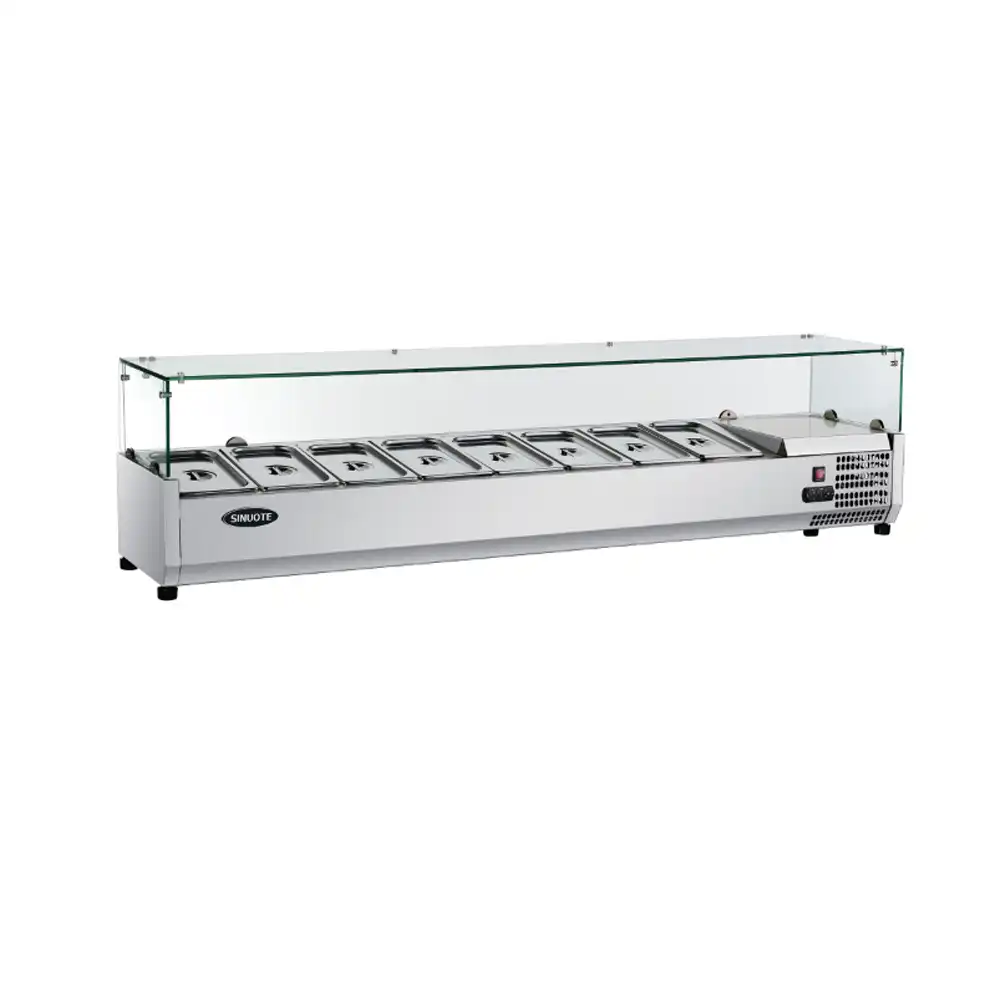
A pizza prep station combines cold storage with a work surface that houses ingredient pans within arm’s reach. In a commercial setting, it is expected to keep cheese, sauce, and toppings at 33°F to 41°F while the cooktop is exposed to ambient temperatures that can spike above 100°F from a nearby deck oven. That thermal differential is what separates a station built with a heavy-duty compressor and dense polyurethane insulation from a standard refrigerated cabinet that will struggle. At Camay, our pizza prep tables, such as the VRX395 series, use a CFC-free polyurethane and cyclopentane insulation with door panel thickness of at least 60mm. That insulation thickness is not arbitrary—it is the minimum we have found necessary to maintain consistent pan temperature without the compressor cycling excessively when the kitchen gets hot. Less-expensive units often cut insulation thickness, and the result is a compressor that runs longer and fails earlier.
For a pizzeria doing high volume, the pan capacity matters as much as the cabinet footprint. Our 1.6-meter model holds six 1/3 GN pans inside the rail, which suits a classic setup: one pan for mozzarella, one for sauce, one for pepperoni, and three for vegetables or specialty toppings. The capacity is not huge, but it forces a disciplined mise en place. In practice, you refill pans from backup containers stored below in the cabinet, which is a rhythm line cooks adapt to quickly. That lower cabinet also runs on a ventilated cooling system with automatic defrost, so the compressor’s evaporator coils management is hands-off for the staff.
Manufacturing Details That Predict Long-Term Reliability
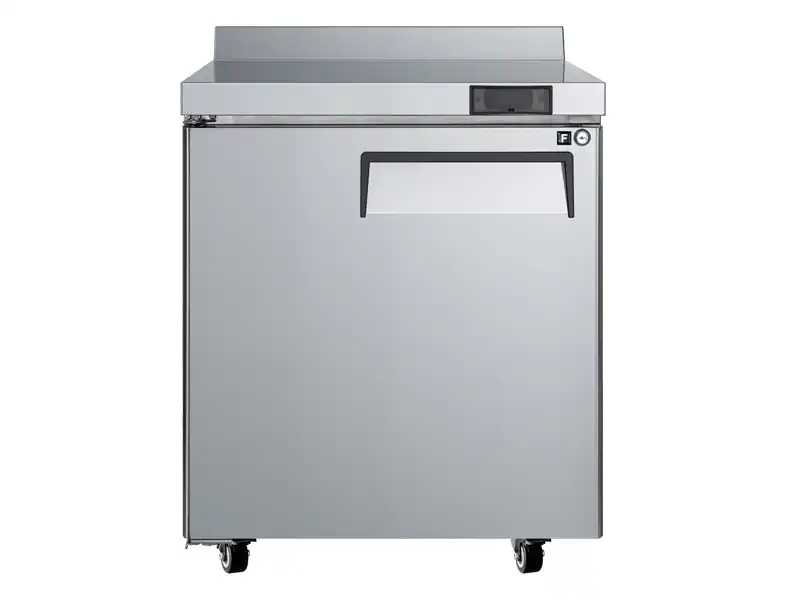
The material choice is the first thing I inspect when evaluating a prep station for a client. The worktop and interior must be stainless steel, preferably 304 grade, because of the constant contact with acidic sauces and the cleaning chemicals used in commercial kitchens. A 201 or 430 grade stainless might look similar out of the crate, but it lacks the corrosion resistance for daily exposure to tomato sauce and sanitizer. The drip-resistant V-edge on the worktop, a feature standard on our chef base models and pizza tables, prevents spills from running down the front panel—a small detail that keeps the kitchen cleaner and reduces slip hazards.
The compressor brand and refrigerant type are pragmatic indicators of how long the unit will run without service. I recommend specifying a compressor from a known manufacturer like Cubigel or Embraco, paired with R290 refrigerant. R290 is a hydrocarbon with low global warming potential and excellent thermodynamic efficiency, but it requires precision in the sealed system assembly. Factories that have been building with R290 for over a decade—as we have—have solved the early production challenges that led to leaks in inexperienced lines. The payback is a unit that pulls fewer amps to hold the same temperature, which lowers the electrical load and operating cost. For a pizza prep table that runs 24/7, that energy difference compounds over the equipment’s lifespan.
Key Specification Comparison for a Pizzeria
To show how specifications translate into kitchen performance, here is a side-by-side look at two Camay pizza prep table models commonly deployed in different volume scenarios:
| Model | Pan Capacity | Total Capacity | Temperature Range | Dimensions (WxDxH) | Best Fit |
|---|---|---|---|---|---|
| VRX395-1600 | 6 x GN1/3 | 58 L | +2°C to +8°C | 1600×395×435 mm | Medium-volume pizzerias, compact kitchens |
| VRX395-1800 | 8 x GN1/3 | 65 L | +2°C to +8°C | 1800×395×435 mm | High-volume lines requiring more pan variety |
The width difference of 200mm may seem minor, but it adds two extra pan slots that allow separating mild sausage from spicy without blending flavors in a shared pan. The decision between these two models often comes down to the pizza menu complexity. If you offer a dozen specialty pizzas with distinct topping combinations, the extra pan capacity on the 1800 model prevents bottlenecks caused by constant pan swapping.
How to Lay Out a Pizza Prep Line for Flow
The prep station should sit at the start of the assembly line, positioned so the dough station is immediately to its right (or left, depending on the make-line direction), and the oven follows. The cook stretches dough, places it on a peel, then slides the peel along the prep rail to add toppings before launching into the oven. The depth of the worktop needs to accommodate a standard pizza peel width, which is typically between 14 and 18 inches. A station that is too shallow forces the cook to hold the peel at an angle, which risks toppings sliding off. The worktop surface must also be flat and continuous; any seam or lip becomes a catching point for the peel edge.
Below the worktop, the refrigerated cabinet doors should swing in a direction that does not obstruct the flow. In a tight line, sliding doors may be worth the additional cost because they allow access without the cook stepping back. We have built custom configurations where the door openings face the back of the station, accessible from a separate alley, so the pizza line cook never has to turn around. That layout is more common in high-volume commissary kitchens, but it illustrates the point: the station is not an island; it is a node in a production line, and its placement and door configuration must respect that.
Maintenance Habits That Keep the Station Running
The maintenance demands of a pizza prep station are modest, but the consequences of neglecting them are steep. The condenser coil sits at the bottom rear or front, and in a pizzeria it collects flour dust faster than in any other kitchen. A coil coated with flour cannot reject heat efficiently, which raises the head pressure and shortens the compressor’s life. In our installation guides, we recommend cleaning the condenser coil weekly with a soft brush or vacuum, more often if the kitchen uses high-gluten flour that lingers in the air. The removable gasket on the pan rail door should be wiped down at the end of each shift—sauce buildup here hardens and will eventually prevent the door from sealing tightly, causing temperature creep.
The pan rail itself requires attention to the evaporator fan guard. If the fan intake gets blocked by a stray piece of parchment or a clump of cheese, the rail temperature will drift upward while the cabinet temperature remains normal, a diagnostic pattern that often goes unnoticed until a health inspection flags it. Train the closing staff to lift the pans and visually check the rail for obstructions as part of the nightly closing checklist.
Temperature zoning for ingredients
A single-temperature zone works for most pizzerias because all toppings are held at the same refrigeration temperature. However, if the make line also handles salad ingredients or fresh mozzarella in water, a dual-zone table where the rail operates slightly colder than the cabinet can be beneficial. In those cases, specifying a unit with an independent rail thermostat and a separate evaporator for the rail allows that tuning. This is not a mass-market feature—it is a custom request that requires the manufacturing line to split the refrigeration circuit. It adds cost but solves a real problem for kitchens that cannot afford a second dedicated salad prep table.
Questions Buyers Ask About Pizza Prep Stations
What size pizza prep station do I need for my restaurant?
The answer starts with your peak-hour pizza volume and menu variety. A medium-volume shop producing 80–120 pizzas on a Friday night can operate with six 1/3 GN pans and occasional refills from the cabinet. If you run multiple specialty pizzas with distinct toppings, eight pans prevent cross-contamination and extra steps. For a small delivery-only operation, a four-pan table paired with a reach-in cooler for backup may suffice.
How important is the worktop material for a pizza prep station?
It is one of the most critical choices. A 304 stainless steel worktop with a thickness of at least 1.5mm resists warping from the heat of a nearby oven and does not pit under acidic tomato sauce. A thinner gauge or a 201 stainless will dent and corrode faster, creating hygiene risks and making the station look worn before its time.
What is the difference between a pizza prep table and a refrigerated chef base?
A pizza prep table is designed with a refrigerated pan rail for topping ingredients and a cutting board or stainless top, while a refrigerated chef base is a heavy-duty worktop refrigerator used as a griddle or sauté station base. Chef bases can support heavier equipment and hold larger pans of mise en place but lack the open pan rail for quick-access topping work. Many kitchens pair the two: a pizza prep table for pizza assembly and a chef base under the grill or fry station.
How do I maintain safe food temperatures during a rush?
The prep station’s compressor and insulation are your primary defense, but staff behavior matters. Keep the pan lids closed when not actively topping a pizza, and avoid filling the rail with warm ingredients straight from the walk-in—let them pre-chill. If the rail temperature climbs, the first check is whether the fan is blocked or the lid is being left open. Persistent problems usually point to an undersized compressor or insulation that has lost its integrity and is not recoverable without a refrigerant circuit service.
Can I use a pizza prep table for dough fermentation?
Some operators slow-ferment dough balls in the lower cabinet of a prep table, but the typical 2°C–8°C range is too cold for active fermentation. Dough labs and dedicated retarder-proofers are built for that purpose. You can store dough balls in the prep table cabinet overnight to retard them if you are using a direct-dough method, but expect limited rise compared to a dedicated retarder set at 4°C—the difference is the humidity control. If your volume supports it, a separate cabinet just for dough, set slightly warmer, yields better crumb structure.
The upfront specification of a pizza prep station has a direct line to the daily reality of the kitchen. The pan layout determines how many steps a cook takes during a shift. The compressor’s ability to hold temperature under oven heat determines whether the health inspector will find a violation. If your kitchen is planning a new line or upgrading an existing one, it is worth confirming the pan configuration, insulation thickness, and compressor specifications against your actual pizza volume before finalizing the order. Reach out at Sales@hzcamay.com or call +8618157202219 to share your menu and daily volume—we will confirm which configuration matches your production line and ensure the thermal capacity will hold under your kitchen’s ambient conditions.
If you’re interested, check out these related articles:
Chef Base Fridge vs Undercounter Fridge Which Is Best for Your Kitchen
Upright Freezer vs Refrigerator Key Differences Explained
Essential Commercial Chef Base Fridge Installation Tips