
In busy bars, restaurants, and hotel kitchens, serving a perfectly chilled beverage is a baseline expectation. Yet many operators underestimate the engineering that goes into achieving consistent rapid cooling of beverages under constant demand. When cooling is too slow, drinks warm up during peak service, customer complaints rise, and in the case of dairy-based or fresh juice beverages, safety risks increase. Over twenty-six years of manufacturing commercial refrigeration, I’ve seen firsthand how the right equipment transforms a struggling bar into a smooth operation, while the wrong choice leads to chronic complaints and early replacement. This article lays out the key technical factors that determine cooling speed and long-term reliability, so you can choose equipment that performs and lasts.
The Role of Rapid Cooling in Beverage Quality and Safety
A lukewarm beer or flat soda is more than a service failure. Slow cooling allows dairy-based drinks, fresh juices, and other perishable beverages to linger in the temperature danger zone where bacteria multiply. Standards like HACCP emphasize keeping cold foods below 5°C (41°F), and achieving that quickly improves both safety and shelf life. Rapid cooling also preserves carbonation. When a carbonated drink is chilled slowly, the dissolved CO₂ becomes less stable as the beverage temperature fluctuates, leading to a flat taste by the time it reaches the customer. In bars with high turnover, I’ve seen the difference a well-engineered unit makes. At one hotel bar, replacing an underpowered wine cooler with a commercial rapid-cooling undercounter cut customer complaints about warm drinks by nearly half in the first month. The unit maintained a steady 3°C even during weekend rushes, and the staff stopped wasting open bottles.
How Rapid Cooling Equipment Achieves Fast Temperature Reduction
Speed depends on three interconnected systems inside the unit. The compressor is the heart. High-torque compressors designed for commercial use—like the Cubigel model we specify in Camay units—can move more refrigerant per revolution, pulling heat out of the cabinet faster. Next, the evaporator coil inside the cabinet must have enough surface area and airflow to transfer heat efficiently. Ventilated cooling, which uses a fan to circulate cold air, drops temperature much faster than static cold-wall systems in domestic fridges. Finally, the refrigerant itself matters. R290 (propane) offers better heat transfer properties than older HFC refrigerants while using less energy. When these three components are matched correctly, a commercial rapid-cooling unit can pull a fully loaded cabinet of drinks from room temperature to below 5°C in under ninety minutes. In our testing at the factory, we measure pull-down time as a key performance indicator before any unit ships.
Essential Features of High-Performance Rapid Cooling Units
Speed means nothing if the unit can’t sustain performance over years of hard use. The construction details make the difference.
Insulation is the first line of defense. We use polyurethane foam blown with cyclopentane, which gives a dense, closed-cell structure that minimizes heat gain through the walls. Cheaper units often use thinner insulation or lower-density foam, and the compressor runs continuously just to overcome that leakage. Digital temperature control matters too. A precision thermostat with a 0.1°C display keeps the cabinet within a tight band, avoiding the wide swings that wear out compressors and compromise beverage quality. Stainless steel interiors and exteriors stand up to daily cleaning chemicals and the accidental bump of a keg, and they don’t corrode in humid bar environments. Finally, look for third-party certifications. They are a fast way to separate engineering claims from marketing. Our units carry ETL Safety, ETL Sanitation (to NSF standards), DOE, and ENERGY STAR. The factory itself is certified to ISO 9001 for quality management, ISO 14001 for environmental management, and ISO 45001 for occupational health and safety—something that matters when you rely on a unit to keep your service running smoothly.
| Model | Compressor | Refrigerant | Insulation | Temperature Range | Certifications |
|---|---|---|---|---|---|
| MWTF-27-L | Cubigel | R290 | Polyurethane/Cyclopentane | 0.5°C to 5°C | ETL, DOE, ENERGY STAR |
| MTR-48 | Cubigel | R290 | Polyurethane/Cyclopentane | 0.5°C to 5°C | ETL, DOE, ENERGY STAR |
Key Factors in Selecting Rapid Cooling Refrigeration
Choosing the right unit starts with two numbers: the ambient temperature where the unit will sit and the volume of drinks you need to chill during peak hour. Most commercial units list their climate class—for hot kitchen environments, you need class T (tropical) capability. If the spec sheet doesn’t mention it, ask. Energy efficiency is the next filter. An ENERGY STAR model costs more upfront but can pay back the difference in lower utility bills within two years when you’re running it 24/7. Capacity is not just about cubic feet; consider door configuration. A single large door loses more cold air on each opening than two smaller doors on a divided cabinet, so a split-door floor plan can improve temperature recovery. I always advise buyers to check whether the door hinges are ambidextrous and whether the unit can sit on casters. Those details affect where you can put it in a tight bar layout. And any supplier should be able to provide test reports, not just a glossy brochure.
If your installation site has a high ambient temperature or limited ventilation, confirm the unit’s climate class and cooling capacity before committing. A call to our team at Sales@hzcamay.com will clarify whether a particular model suits your environment.
Integrating Rapid Cooling Refrigeration into Bar Operations
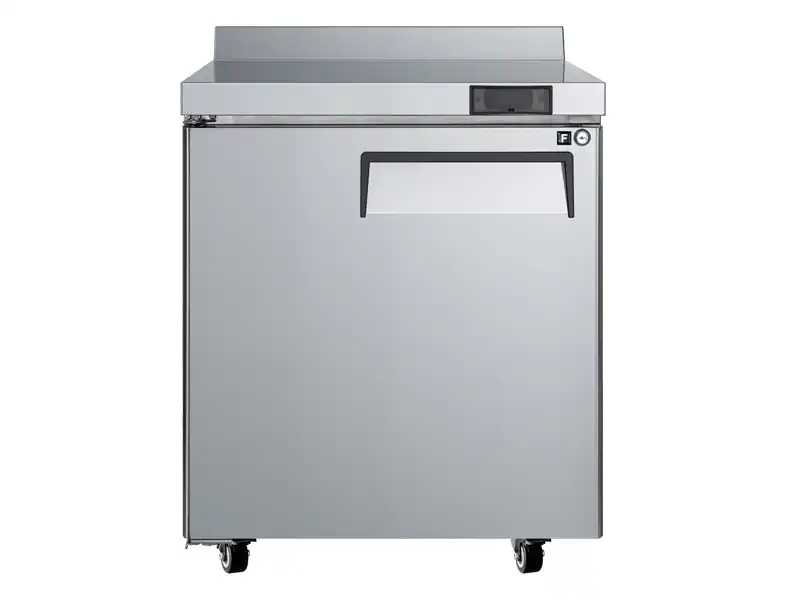
Placement matters as much as the specs. Keep the unit away from heat sources like dishwashers and ice machines that exhaust hot air. Undercounter models work well beneath the bar top, giving bartenders immediate access to chilled bottles and cans without leaving their station. Worktop units serve double duty as a prep surface and refrigerated storage—ideal for garnish stations or satellite bars. All Camay undercounter and worktop refrigerators come with 2-inch casters optional, so you can roll the unit aside for cleaning or reconfigure the layout between seasons. I’ve worked with nightclub operators who switch their front bar layout every quarter based on event schedules; having mobile refrigeration cuts downtime to a few minutes. The key is to think of the cooling unit as part of the workflow, not an afterthought pushed against the wall.
Choosing a Dependable Rapid Cooling Partner
If slow, inconsistent cooling is hurting your drink quality and driving customer complaints, investing in proper commercial-grade equipment resolves the root cause rather than patching it. At Camay, we have spent twenty-six years engineering refrigeration that holds its temperature through the busiest services. Our units combine high-torque Cubigel compressors, cyclopentane-blown polyurethane insulation, and R290 refrigerant to deliver the rapid cooling performance that bars and restaurants rely on. Each model ships with international certifications that verify its safety and energy performance, and our factory operates under ISO 9001, 14001, and 45001 management systems. To discuss your layout, required capacities, and to receive a customized solution proposal, call +86 181 5720 2219 or email Sales@hzcamay.com.
Common Questions About Rapid Cooling for Beverages
How fast can a commercial rapid cooling fridge chill drinks?
It depends on the unit’s capacity and the starting temperature of the load, but in general a properly engineered unit can bring a full cabinet of beverages from room temperature to below 5°C in 60 to 90 minutes. The pull-down time is faster when the cabinet is partially loaded, and models with forced-air evaporator fans outperform static cold-wall designs by moving chilled air around every bottle. Check the manufacturer’s published pull-down time at full load to make a fair comparison.
Can I use a regular domestic cooler for rapid cooling?
No. Domestic refrigerators are designed for light, intermittent use and lack the compressor power, insulation thickness, and forced-air circulation that commercial cooling demands. Once the door is opened in a busy bar, a domestic unit takes far longer to recover and may never bring a full load down to safe serving temperature. Over time, the continuous strain shortens compressor life. Commercial rapid cooling units are purpose-built to cycle multiple times per hour without losing temperature.
Does rapid cooling affect the taste or carbonation of beverages?
Proper rapid cooling preserves both flavor and carbonation more effectively than slow cooling. Slow temperature swings can weaken carbonation stability in canned and bottled drinks and may allow some oxidation in fresh ingredients. A rapid, stable cooldown locks in the intended flavor profile. The benefit comes from the steady low temperature after cooling, not just the speed of the initial drop.
How much energy do rapid cooling units use compared to standard fridges?
The initial pull-down phase may draw more power for the first hour or so, but over a full 24-hour cycle a well-insulated commercial unit often uses similar total energy to a standard fridge because the compressor runs far less frequently once at set-point. Models with ENERGY STAR certification and R290 refrigerant are designed to minimize power consumption. If you are evaluating units for a specific installation, share your ambient conditions and daily door opening pattern. The right match saves money over the years. For a direct comparison of energy use in your setting, contact us at Sales@hzcamay.com.
If you’re interested, check out these related articles:
Boost Efficiency Energy Efficient Chef Base Units for Commercial Kitchens
Chef Base Fridge vs Undercounter Fridge Which Is Best for Your Kitchen
Essential Commercial Chef Base Fridge Installation Tips
Essential Maintenance Tips for Commercial Reach In Refrigerators