
I’ve spent over two decades engineering commercial refrigeration systems, and one recurring request from small cafe owners is for ice makers that don’t dominate their limited counter space. Many operators initially consider large modular units, but those require substantial floor space and often exceed the daily ice needs of a typical coffee shop serving a few hundred customers. An undercounter ice maker, by design, tucks neatly under a standard counter while delivering enough ice for drink service and occasional food preparation. But getting the right unit involves more than just measuring the cutout — you need to align production capacity, ice type, and installation requirements with the realities of a cramped cafe environment.
Matching Ice Production to Your Cafe’s Rhythm
Estimating your daily ice usage is the first step. A coffee shop serving espresso-based drinks, iced lattes, and smoothies typically uses 1.5 to 3 pounds of ice per customer, depending on the drink mix and cup size. If you serve 100 customers a day, that’s 150 to 300 pounds of ice. But you rarely need to produce all of it at once; an undercounter ice maker with a 24-hour production rating of 80 to 120 pounds is often sufficient because the machine continuously replenishes during the day while you draw from its storage bin. I’ve seen cafes overinvest in high-output machines only to find the storage bin overflows, creating mess and wasting energy. A machine that produces around 100 pounds a day with a 25-pound storage bin usually balances demand well for a small establishment. Factor in your peak hours — if you sell many iced drinks between 10 a.m. and 2 p.m., a slightly higher storage capacity helps, but you can also pre-bag ice and store it in a freezer.
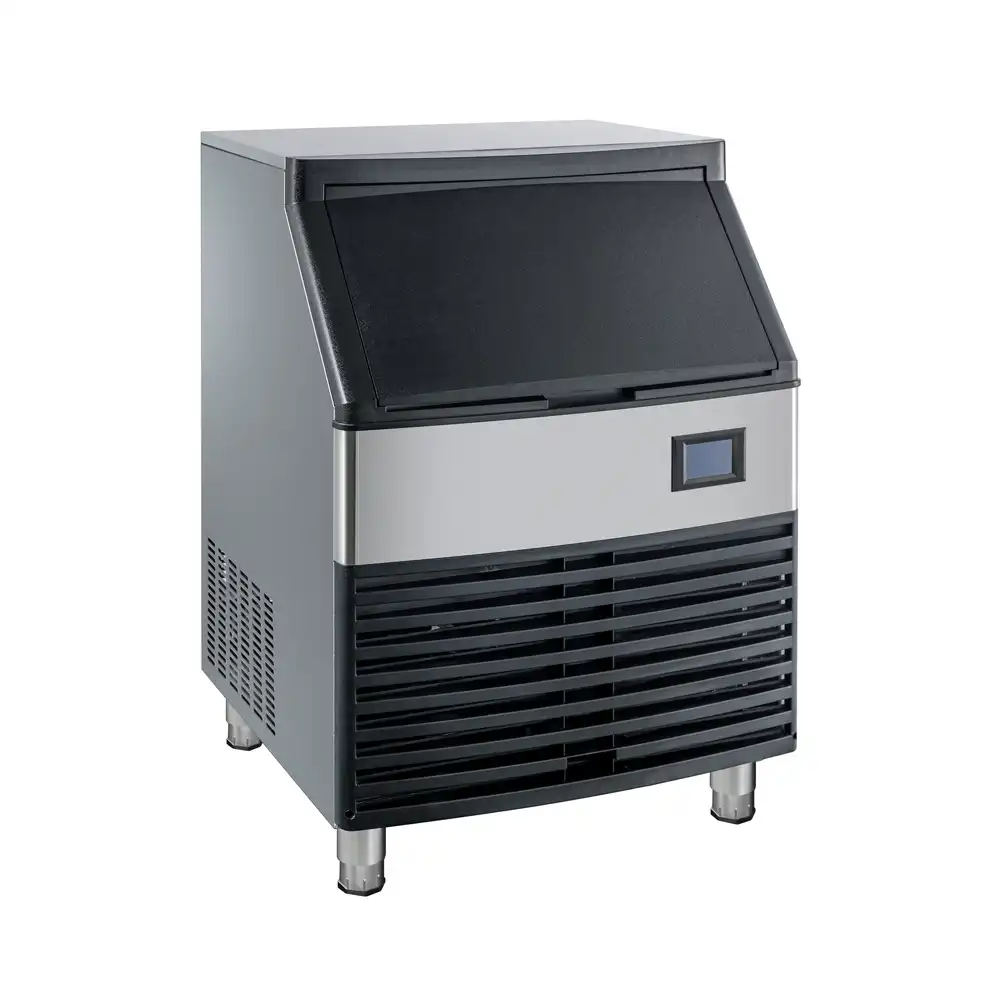
The Camay FB210A, as an example, produces up to 220 pounds of ice per day in a 24-hour cycle — that’s overkill for a small cafe, but highlights the importance of matching output to your menu volume. Some undercounter models are designed with lower output, around 80 pounds, which suits small cafes perfectly.
Why Undercounter Design Matters in Tight Spaces
A typical undercounter ice maker is roughly 26 to 30 inches wide, 26 to 30 inches deep, and 34 to 35 inches high — the height being critical to slide under a standard bar counter. Unlike freestanding units, undercounter machines are built with front-facing ventilation, so they can be installed flush against the wall without overheating. That alone saves precious aisle space. Many models also offer a reversible door and adjustable levels, making it easier to fit into an existing cut-out. In my experience, cafe owners often overlook the clearance for the door swing; you need at least a few inches on the side for the door to open fully. Measure twice, order once.
The machine’s weight is another consideration. A full undercounter ice maker can weigh over 200 pounds when loaded. Ensure your counter and floor can support that, especially if you’re installing on an upper floor or on a wheeled cart. A strong, level surface is essential for proper operation of the compressor and ice maker mechanism.
Key Performance Factors: Ice Type and Cooling Method
Cube ice is the standard for most cafes — it melts slowly, looks appealing, and chills drinks effectively. Small undercounter cube ice makers produce clear, hard cubes, typically half-dice or full-dice shapes around 22mm. Flake ice is soft and chewable, ideal for blended drinks or display cases, but it melts faster and requires more storage space. Nugget ice, popular in some regions, has a soft texture but is less common in standard undercounter units. I generally advise cube ice for consistent beverage quality unless your menu specifically relies on blended drinks.
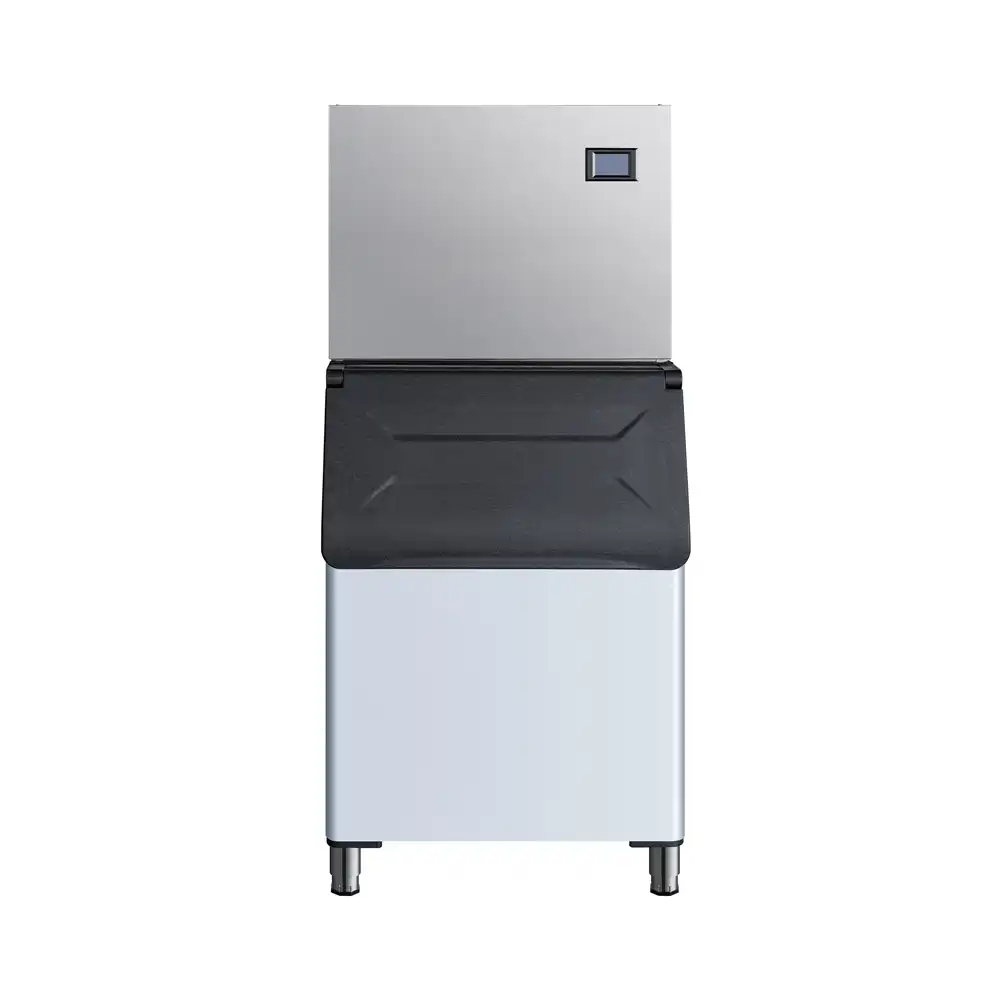
Cooling method: air-cooled condensers are standard in small undercounter ice makers. They use a fan to dissipate heat, so they need adequate airflow around the machine — don’t block the front grille. Water-cooled units are quieter and slightly more efficient, but they require a separate water line and typically cost more to operate due to water usage. For most small cafes, air-cooled is fine, provided the ambient temperature stays within the spec (ideally below 100°F). If your kitchen gets hot, the machine may struggle to hit its rated capacity, so check the maximum ambient temperature rating.
The FB210A uses air cooling and a high-performance copper-nickel evaporator, which helps speed up the freeze cycle. That matters because a faster cycle means more ice per hour, reducing the need for a larger storage bin.
Installation Essentials: Water, Drainage, and Power
Undercounter ice makers need a cold water supply line with a shut-off valve, a drain connection, and a dedicated electrical outlet. Many models come with a built-in drain pump, which is a blessing if your floor drain isn’t directly below the machine — you can pump wastewater up to several feet vertically. If yours doesn’t have a pump, you’ll need a gravity drain, so plan the plumbing accordingly. Water filtration is non-negotiable. Hard water clogs the ice maker’s evaporator and reduces ice clarity. Install a high-quality water filter on the supply line, and replace it every six months. I’ve had customers who ignored this and faced costly service calls.
Electrical requirements are usually a standard 115V, 15-amp dedicated circuit. Make sure you don’t share the circuit with high-draw appliances like espresso machines or blenders — voltage drops can damage the compressor over time. Also, consider a surge protector.
If your cafe has unique plumbing challenges or operates in a high-humidity environment, it’s worth discussing your specific site conditions with a refrigeration engineer before finalizing your purchase — contact us at Sales@hzcamay.com for a customized recommendation.
Keeping Your Machine Clean and Reliable
A dirty ice maker is a health hazard and an operational headache. Most modern undercounter units include a self-cleaning cycle — you add a cleaning solution, press a button, and the machine flushes itself. Still, you need to manually clean the ice bin, scoop, and air filters at least weekly. Remove and wash the ice scoop, wipe down the bin interior with a sanitizing solution, and vacuum the front air filter to keep the compressor cool. In my experience, shops that follow a simple weekly cleaning log have far fewer service issues and produce ice that tastes fresh.
If you live in a humid climate, condensation can form inside the machine, leading to mold. Look for models with a moisture-resistant interior and a removable gasket on the door. The gasket should be wiped down monthly to prevent mold buildup.
Warranty and Long-Term Support
Given the investment — a quality undercounter ice maker runs $1,200 to $2,500 — it’s worth checking the warranty. Most commercial units come with a 1-year parts and labor warranty, and some manufacturers like Camay offer a 13-month extended warranty with spare parts support. That extra coverage can make a real difference, especially when you rely on your ice maker every hot summer day.
When selecting an undercounter ice maker for your small cafe, the right unit integrates smoothly into your limited space, delivers the precise amount of ice your menu demands, and stands up to daily use with minimal maintenance. If you’re uncertain about capacity planning or which model suits your plumbing setup, our engineering team at ZHEJIANG KAIMEI CATERING EQUIPMENT CO., LTD is ready to help. Simply share your daily ice needs, available floor dimensions, and any special requirements via email at Sales@hzcamay.com or call +8618157202219, and we’ll recommend the ideal undercounter ice maker from our Camay product line.
Common Questions Cafe Owners Ask About Undercounter Ice Makers
How much ice does a small cafe need each day?
Most small cafes need between 80 and 150 pounds of ice per day. This depends on your menu — an espresso-only shop may use 50 pounds, while a smoothie-heavy menu might push 200 pounds. Start by tracking your usage for a week; multiply the number of drinks sold by the ice per serving. Then select an undercounter ice maker with a 24-hour production rating slightly above your peak daily demand to allow for busy weekends and summer heat. Machines with a 25-pound storage bin can handle surges if you also store backup ice in a freezer.
Do undercounter ice makers require a drain?
Yes, all undercounter ice makers need a way to get rid of melt-water and cleaning solution. Many include a built-in drain pump that can pump water up to 10 feet high or 100 feet horizontally, so you don’t need a floor drain directly under the unit. If your model lacks a pump, you must position it above a gravity drain. Always install an air gap or backflow preventer to avoid contamination of your potable water.
What is the difference between air-cooled and water-cooled ice machines?
Air-cooled ice makers use a fan to blow ambient air across the condenser coils. They’re simple to install and cost less, but they produce more heat and noise in the room. Water-cooled models use water to remove heat, making them quieter and more efficient in hot kitchens, but they require a continuous water supply and a drain, increasing water consumption. For a small cafe, an air-cooled machine is usually sufficient unless your kitchen regularly exceeds 90°F. Just ensure there’s enough clearance around the machine for airflow.
How often should I clean my undercounter ice maker?
At a minimum, clean the ice bin and scoop weekly with a mild sanitizer. Many machines have a self-cleaning cycle — run it monthly or per the manufacturer’s instructions, using an approved nickel-safe cleaner. Change the water filter every six months. Cleaning not only ensures food safety but also maintains ice production efficiency; a scaled-up evaporator can cut output by 20% or more. Keep a maintenance log, and schedule a professional service annually to check the compressor and refrigerant charge.
Can I use a water filter with my undercounter ice maker?
Absolutely, and you should. A high-quality water filter removes sediment, chlorine, and scale-forming minerals that cause cloudy ice and reduced machine performance. It also improves ice taste. Most manufacturers recommend filters rated for 5 microns or less. Install it on the cold water supply line before it enters the machine, and replace the cartridge every six months. If you notice white scale on the ice or in the bin, your filter may need more frequent replacement, or you may need a water softener. If you’re unsure which filter fits your unit, we can help — simply email us your model details and water quality report, and we’ll recommend the right filter and spare parts. Reach us at Sales@hzcamay.com or call +8618157202219.
If you’re interested, check out these related articles:
Upright Freezer vs Refrigerator Key Differences Explained
Ultimate Buyers Guide for Commercial Reach In Refrigerators
Boost Efficiency Energy Efficient Chef Base Units for Commercial Kitchens
Heavy Duty Chef Base Refrigeration for Efficient Commercial Kitchens
How to Choose the Best Chef Base Refrigerator for Your Kitchen