

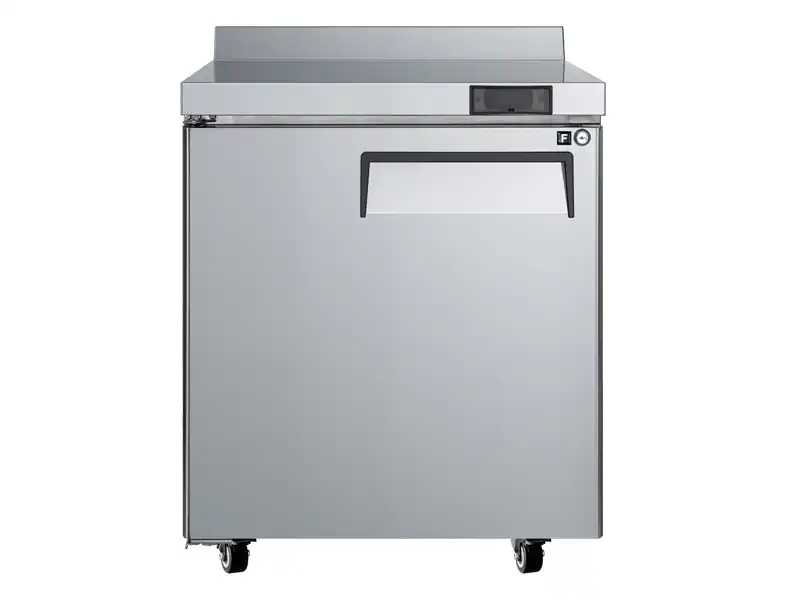
When sourcing catering equipment for a commercial kitchen, an Energy Star rating often sits high on the checklist. It signals energy efficiency and potential savings on utility bills. But after 26 years engineering commercial refrigeration, I’ve learned that the sticker alone doesn’t guarantee reliable performance. The real value of an Energy Star rating lies in what it reveals about a manufacturer’s engineering discipline: the testing, component choices, and quality control that went into earning that certification. This guide explains how Energy Star ratings apply to catering equipment, what they mean for long-term durability, and how to use them as one reliable data point in a broader sourcing decision.
What Energy Star Certification Means for Commercial Catering Equipment
Energy Star is a voluntary program run by the U.S. Environmental Protection Agency (EPA) and the Department of Energy (DOE). For commercial catering equipment, it identifies products that meet strict energy efficiency criteria. The label covers a range of appliances used in food service: refrigerators, freezers, ice machines, heated holding cabinets, and more. To earn the Energy Star, a product must demonstrate that it uses significantly less energy than standard models without sacrificing performance.
For buyers, the promise is lower electricity bills and a reduced environmental footprint. A certified commercial refrigerator, for instance, must run its compressor and fans more efficiently while maintaining consistent temperatures under demanding kitchen conditions. The certification process is not just about the final kilowatt-hour rating. It involves a series of tests that stress the entire system: insulation, door seals, compressor cycling, and defrost cycles. When a model passes, it’s evidence that the engineering team solved a lot of small problems that, in an uncertified unit, often lead to early failures.
How Energy Star Ratings Are Earned in Refrigeration Manufacturing
Achieving Energy Star certification is not a one-time design check. It requires a manufacturing process that can consistently replicate efficient performance. I’ve been involved in bringing dozens of models through this testing, and the gap between a prototype that passes and a production unit that passes every time is where many manufacturers stumble.
Our approach at Camay illustrates the point. Take the MTR-72 commercial solid-door undercounter refrigerator. This model is ENERGY STAR certified, and that starts with component selection. We use a Cubigel compressor known for efficient cooling and pair it with a ventilated system and polyurethane/cyclopentane insulation that is CFC-free and dense. The insulation thickness, the door gasket design, and the automatic defrost logic are all tuned so the unit draws only 2 amps at 115V while maintaining 0.5°C to 5°C. It’s not rocket science, but it takes a factory culture that tests every batch, not just the samples sent to the lab.
For buyers who need to confirm that a product line can deliver certified performance consistently, request the test documentation early. Send an email to Sales@hzcamay.com with the model numbers you’re considering, and we can provide sample reports.
The Connection Between Energy Star Ratings and Equipment Durability
Energy-efficient design and longevity are often the same thing. A refrigerator that uses less energy per cycle does so because it cools quickly and holds temperature without frequent compressor starts. That means the compressor sees less wear, the defrost heater runs less often, and the overall thermal stress on components is lower.
In my experience, the energy-saving technologies that help a product earn Energy Star also predict a longer service life. Polyurethane insulation does not degrade as quickly as older foam types. Digital temperature controllers, now standard on certified units, prevent needless cooling spikes. Automatic defrost systems that activate only when needed keep coils cleaner and reduce frost buildup, which directly reduces service calls.
We’ve seen this in the field. Our MAR-60A chef base, also ENERGY STAR rated, has a heavy-duty compressor and a drip-resistant stainless-steel worktop. The insulation and cooling system are designed not just to meet the energy benchmark but to survive a 16-hour shift in a hot kitchen. Over time, the reduction in compressor cycling adds up to lower maintenance costs. While I can’t claim every certified product will outlast a non-certified one, the engineering discipline that gets the rating is the same discipline that builds a reliable appliance.
Verifying Energy Star Claims and International Certifications
If you’re importing catering equipment, verifying that a product truly carries an active Energy Star certification is essential. The quickest way is to search the model number on the EPA’s Energy Star Product Finder. If it’s not there, it’s not certified, and a brochure alone isn’t proof.
Beyond Energy Star, many commercial products carry additional certifications: ETL for safety, DOE for energy performance, NSF for sanitation, and CE for the European market. These are not interchangeable, but a manufacturer that holds multiple certifications shows a systematic approach to compliance. Look for factory-level certifications like ISO 9001:2015 (quality management) and ISO 14001:2015 (environmental management). They indicate that the production environment itself is audited.
At Camay, our products are certified to ETL, DOE, Energy Star, CE, and others, and our factory is ISO 9001, ISO 14001, and ISO 45001 certified. For OEM and ODM partners, we make test reports and certification documents available during the evaluation phase, not just after the order.
| Certification | What It Covers | Why It Matters |
|---|---|---|
| Energy Star | Energy efficiency | Verifiable via EPA database; indicates high performance and likely durability |
| ETL/ETL Sanitation | Electrical safety and sanitation (to NSF standards) | Required for many U.S. jurisdictions |
| DOE | Energy consumption limits | Federal compliance for commercial refrigeration |
| CE | European health, safety, and environmental standards | Mandatory for EU market access |
| ISO 9001 | Quality management system | Consistent manufacturing quality |
Integrating Energy Star Requirements into Your Sourcing Process
When you’re building a procurement specification for a new restaurant or hotel kitchen, Energy Star should be one filter, not the whole sieve. I recommend three steps. First, confirm the model’s current Energy Star listing on the EPA website, the database updates frequently and models do not always keep certification after component changes. Second, request a sample test report that shows the unit’s energy consumption under load, not just steady-state. Third, examine the warranty terms and the availability of spare parts for components like compressors and control boards.
A certified unit that saves 15% on energy but breaks down twice a year costs more in kitchen downtime than the electricity it saves. The best combination is a product that is Energy Star certified and backed by a manufacturer with in-house production and quality control. Over the years, I’ve seen too many kitchens settle for a cheap certified import only to discover that the certification was expired or the performance degraded after six months. Spend the time upfront to verify the manufacturer’s credentials.
If your project involves a mix of refrigeration, prep tables, and display units, consolidating with one supplier who can provide certification documentation for the entire range simplifies the process and avoids gaps in compliance. To discuss your equipment requirements and ensure every unit meets Energy Star standards, contact us at Sales@hzcamay.com or call +8618157202219.
Common Questions About Energy Star Ratings for Catering Equipment
Does Energy Star certification apply to all types of catering equipment?
No, Energy Star covers specific commercial food service equipment categories. The program includes commercial refrigerators and freezers, ice machines, dishwashers, ovens, fryers, griddles, heated holding cabinets, and steam cookers. Walk-in coolers and freezers are also eligible. Many smaller specialty appliances, like toasters or blenders, are not part of the program. For broad kitchen projects, we typically recommend focusing Energy Star requirements on the highest-energy-consuming equipment, refrigeration and ice machines, where the savings are most significant.
How much can Energy Star equipment actually save on energy bills?
The savings vary by equipment type and usage volume. For commercial refrigerators, Energy Star certified models use about 15-20% less energy than standard models, according to the EPA. In a busy restaurant that runs 24/7, that can translate to hundreds of dollars per unit per year. An ice machine that is Energy Star certified can save even more because ice production is energy-intensive. The actual dollar savings depend on local utility rates and how well the kitchen layout minimizes heat gain. The bigger financial benefit often comes from reduced maintenance and extended equipment life, a factor most energy-cost calculators miss.
How do I verify that an overseas manufacturer’s Energy Star claim is genuine?
Start with the EPA’s Energy Star Product Finder online. Enter the exact model number and check that the certification is active. Request a copy of the test report from a recognized lab (such as Intertek or UL) that shows the product met the efficiency criteria. Cross-reference the manufacturer’s name and factory location with the model listing. Also, ask for the factory’s quality management certification, like ISO 9001, as a sign that production is audited. Reputable manufacturers will provide this documentation willingly. If there is hesitation, treat it as a red flag.
What’s the difference between Energy Star and DOE certification?
DOE (Department of Energy) sets minimum energy efficiency standards for many appliances sold in the U.S. Those are mandatory legal requirements. Energy Star is a voluntary program that goes beyond the DOE minimums to recognize the top performers. A product that is DOE-compliant meets the bar to be sold; a product that is Energy Star certified exceeds that bar by a meaningful margin. For commercial catering equipment, Energy Star certification often signals a design that is optimized not just for energy but for reduced heat output and better insulation: details that affect kitchen comfort and equipment longevity.
When sourcing equipment for international projects, confirm that the Energy Star model also meets DOE requirements and any local codes. If you need help evaluating certification documents for a specific product range, send us your part number and quantity to Sales@hzcamay.com, and we can assist with verification.
If you’re interested, check out these related articles:
Chef Base Fridge vs Undercounter Fridge Which Is Best for Your Kitchen
Heavy Duty Chef Base Refrigeration for Efficient Commercial Kitchens