
When we supply equipment to global partners, one of the most frequent questions is whether an ultra low temperature freezer is necessary. The answer depends on your menu and production volume, but in many cases the investment pays for itself by preventing texture loss and reducing waste. After twenty-six years in commercial refrigeration, I have seen how the right freezing technology makes a measurable difference in food quality. This article will help you decide when an ultra low temperature freezer belongs in your kitchen, using practical criteria drawn from real-world manufacturing and service experience.
What Is an Ultra Low Temperature Freezer and How Low Does It Go?
An ultra low temperature freezer, often called an ultra freezer or ULT freezer, is designed to maintain temperatures far below the -18°C standard of a typical commercial freezer. Many food-grade models reach -45°C, and specialized units can go even lower when required for laboratory or industrial applications. The goal is to freeze contents rapidly and keep them at a stable deep freeze that minimizes the formation of large ice crystals, which damage cell structure and degrade texture upon thawing.
These freezers achieve their performance through a combination of heavy-duty components. A single-machine self-cascading refrigeration system, often paired with a SECOP or Embraco compressor, pulls the cabinet temperature down quickly. Thick polyurethane insulation, CFC-free and foamed in place, reduces heat exchange. Double door seals and safety locks maintain internal conditions even in a busy kitchen where doors are opened frequently.
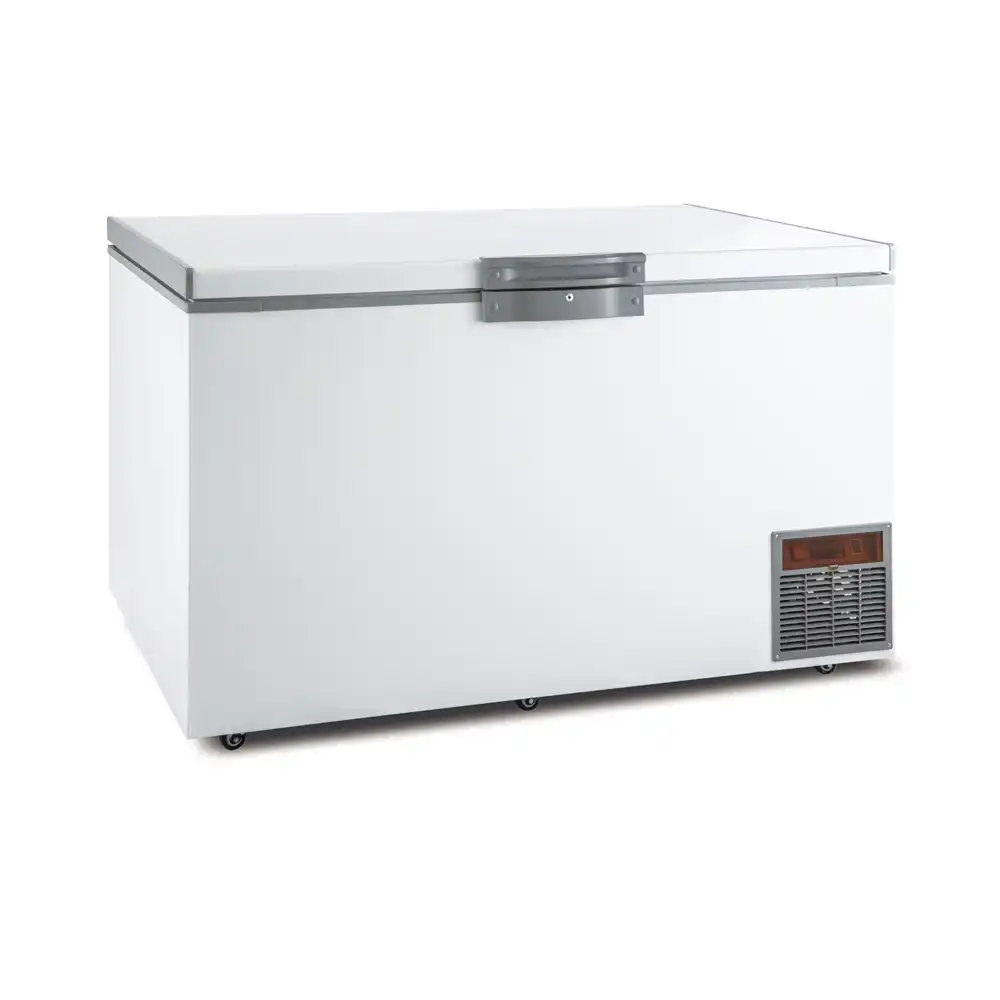
Below are the core specifications of a representative Camay ultra low temperature freezer used in commercial food settings:
| Model | Capacity | Inner Temperature | Compressor | Doors |
|---|---|---|---|---|
| DW45W788 | 768 L | -15 to -45℃ | SECOP | 1 |
The stainless steel interior, digital controller with 0.1°C accuracy, and air pressure balance port are all features that contribute to consistent performance over years of daily use.
Which Food Products Require Ultra Low Temperature Storage?
Not every ingredient benefits from a deep freeze. Standard commercial freezers are adequate for general inventory like frozen vegetables, par-cooked items, or goods with short holding times. The case for an ultra low temperature freezer strengthens when you regularly handle high-value products where texture, moisture retention, and enzymatic stability determine customer satisfaction and waste rates.
Sashimi-grade tuna, hamachi, and other premium seafood are classic examples. At -18°C, water inside muscle fiber forms jagged ice crystals that rupture cell walls. When thawed, the flesh loses its firm bite and leaks moisture. At -40°C or lower, freezing occurs fast enough to produce much smaller crystals, preserving the original mouthfeel. Similarly, wagyu and other highly marbled beef cuts benefit from ultra low storage because fat oxidation slows dramatically at colder temperatures, extending shelf life without rancidity.
Pastry and gelato production also reward ultra low storage. Laminated doughs retain their butter layers better when frozen quickly, and gelato stays smooth because large ice crystals never get a chance to form. Central kitchens that supply multiple outlets can use ultra low temperature freezers as a quality buffer: finished products hold their just-made character longer, giving distribution more flexibility.
Key Differences Between Ultra Freezers and Standard Commercial Freezers
A standard reach-in freezer and an ultra freezer may sit side by side in the same kitchen, but they are built to different tolerances. The most obvious difference is the temperature range, but the practical gaps run deeper.
Compressor and refrigerant circuit: Standard freezers use a single-stage compressor; ULT models rely on cascade or self-cascading circuits with more robust compressors and mixed refrigerants to reach and hold extreme lows. Insulation thickness and door seal design also scale up. Where a typical solid-door freezer might have 60 mm of insulation, an ultra freezer often uses thicker panels and multi-layer gaskets to prevent frost buildup and cold air loss.
Control electronics matter too. The digital microcomputer controller in a ULT freezer monitors cabinet conditions with tight precision and can trigger alarms if the temperature drifts. Many units include an air pressure balance valve to equalize internal and external pressure after door openings, a detail that prevents vacuum-locked doors and helps the compressor recover faster.
Energy consumption is higher, but the gap narrows when comparing efficient models with cyclopentane-blown insulation and high-efficiency compressors. For a restaurant or processing facility where food waste from freezer burn is a significant cost, the extra electricity can be a fraction of the value preserved.
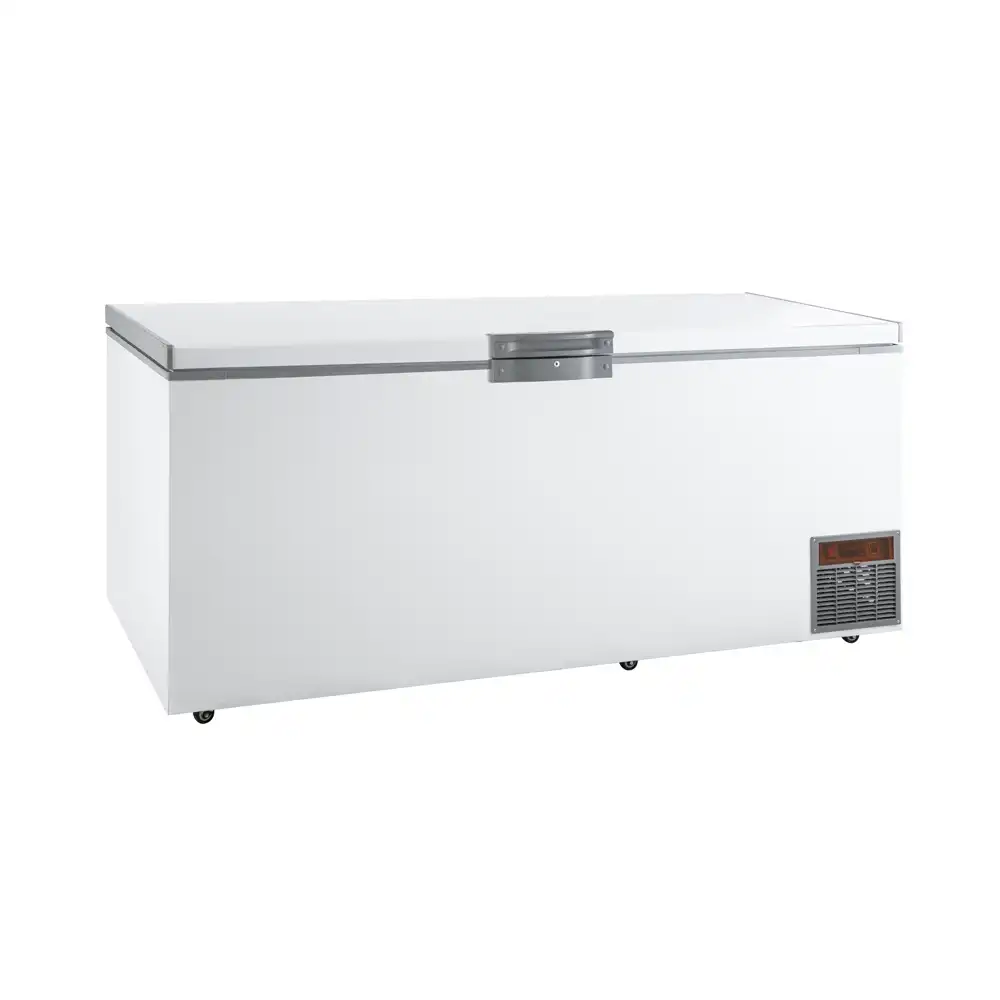
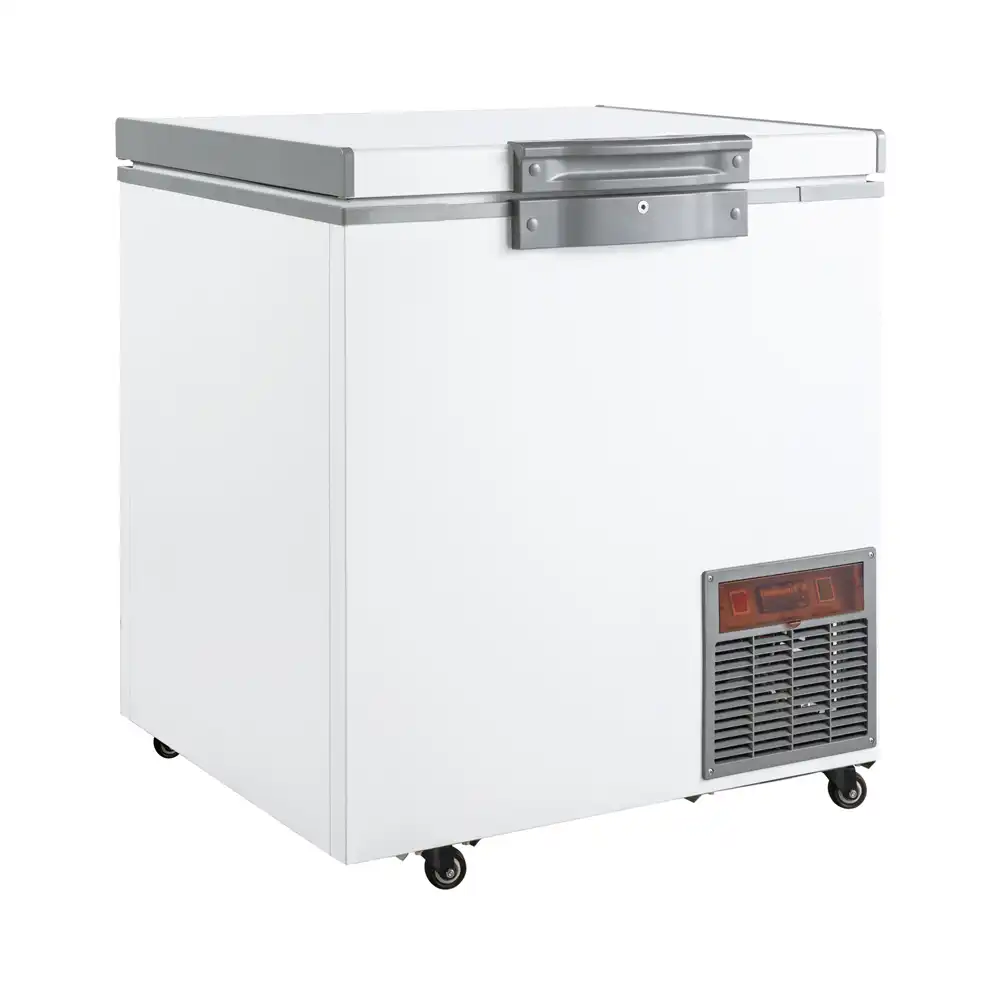
If your kitchen processes products that require ultra low temperatures regularly, it is worth confirming the exact temperature band your recipes need and matching it to a unit’s steady-state performance. A manufacturer with deep experience in this segment can help you avoid overspending on capacity you do not use, or underspecifying and compromising quality. Reach out at Sales@hzcamay.com to discuss your specific requirements.
Calculating the Return on Investment for an Ultra Low Temperature Freezer
The upfront cost of a quality ultra low temperature freezer exceeds that of a standard unit by a wide margin. The question procurement teams and kitchen managers should ask is not “how much does it cost?” but “what does it save?”
Start with waste reduction. A high-end restaurant that loses even 5% of its premium seafood inventory to freezer burn each month recoups the price difference in less than a year if the ULT freezer cuts that loss to near zero. Bulk purchasing becomes viable too: when you can store 200 kg of tuna at optimal conditions for months, you can negotiate better pricing and insulate against market fluctuations.
Quality premiums show up in the dining room as well. A sashimi plate that retains its translucence and firmness justifies a higher menu price and drives repeat visits. In central kitchen operations, ultra low temperature freezers allow produce from a single production run to supply multiple outlets over a longer period without perceptible quality drop, reducing the need for small-batch runs.
Maintenance and energy costs should be factored in, but modern ULT freezers from manufacturers who control design and production in-house tend to have longer service intervals and competitive energy ratings due to integrated insulation and digital monitoring. Over a 7–10 year lifespan, the numbers often favor the higher initial investment.
Engineering Features That Affect Performance in a Busy Kitchen
Twenty-six years of working with commercial refrigeration equipment has taught me that a freezer’s datasheet temperature is only one part of the story. Real-world reliability in a kitchen where ambient temperatures spike, doors open dozens of times per shift, and the unit runs around the clock depends on small engineering decisions.
The inner tank material matters. Food-grade 304 stainless steel resists corrosion from acidic ingredients and aggressive cleaning agents far better than standard grades. The door seal should be a double design with a magnetic strip and a flexible gasket that compensates for any slight misalignment over time. I have seen kitchens where a poorly sealed door caused frost accumulation within weeks, forcing the compressor to run almost continuously and spiking energy bills.
The compressor itself needs to handle hot pull-down after cleaning cycles or restocking. SECOP compressors, used in many Camay ULT models, are designed for high-back-pressure applications and tolerate frequent cycling better than general-purpose alternatives. The condenser fan should be a high-static model that keeps refrigerant temperatures stable even when the unit is pushed against a wall with limited airflow.
Safety features like a door lock and temperature alarm add peace of mind, but they are also practical when multiple staff members access the freezer. A digital display that shows real-time cabinet temperature to one-tenth of a degree lets staff catch a door left ajar before product suffers.
Common Questions About Ultra Low Temperature Freezers
What is the difference between a blast chiller and an ultra low temperature freezer?
A blast chiller is designed for rapid cooling of hot food through the danger zone, bringing cooked items from +70°C to +3°C in under 90 minutes. It then switches to holding mode. An ultra low temperature freezer is a storage unit that maintains a constant deep freeze for already-frozen goods. They solve different problems and often work together in a well-designed kitchen: blast chill first, then transfer to ultra freezer for long-term preservation.
Can you store frozen food in an ultra low temperature freezer without affecting taste?
Yes, and in many cases taste improves relative to standard freezer storage because ice crystal formation is dramatically reduced. The catch is packaging. Air exposure over weeks or months will still cause freezer burn regardless of temperature. Vacuum sealing or tight wrapping with oxygen-barrier film prevents surface dehydration. When packaging is done correctly, products held at -40°C can taste nearly indistinguishable from fresh for six months or more.
How much more energy does a ULT freezer use compared to a standard commercial freezer?
Energy consumption is higher, but not proportionally as high as the temperature difference suggests. A well-insulated ULT freezer with an efficient compressor might draw two to three times the power of a similar-sized standard freezer. The actual cost impact depends on local electricity rates and door-opening patterns. In facilities where the alternative is throwing away expensive product, the energy premium often represents a small fraction of the total value preserved.
What routine maintenance does an ultra low temperature freezer require?
Monthly cleaning of the condenser coil is the most important task. Dust buildup acts as an insulator and forces the compressor to work harder, raising energy consumption and shortening component life. Door gaskets should be inspected for cracks or deformation and replaced promptly if the seal weakens. The defrost drain should be checked for blockages to prevent water accumulation. With these simple steps, a quality ULT freezer will typically run ten years or more before needing major service. If you need guidance on selecting a model that fits your kitchen’s layout and production demands, send your requirements and expected product types to Sales@hzcamay.com.
Planning Your Ultra Low Temperature Freezer Purchase
Deciding to invest in an ultra low temperature freezer comes down to the specific demands of your product and your long-term production plan. When the menu includes ingredients that lose value the moment ice crystals grow too large, a standard freezer becomes a liability. The key is matching the machine to your operation, not buying more capacity than you need or settling for a unit that fails to maintain its rated temperature under real kitchen conditions.
I have worked with partners across many markets to spec the right freezing solutions, and the best outcomes always start with a clear picture of what you are storing, at what volume, and for how long. If you want to discuss your requirements with someone who understands the equipment from the manufacturing side, our team is available. Share your intended usage and volume with us at Sales@hzcamay.com or call +8618157202219, and we will confirm the right model and configuration for your kitchen.
If you’re interested, check out these related articles:
Essential Maintenance Tips for Your Commercial Chef Base Refrigerator
Essential Commercial Chef Base Fridge Installation Tips
Essential Maintenance Tips for Commercial Reach In Refrigerators