

Energy-saving small refrigerators are not a passing industry topic; they represent a practical choice for restaurants that need to control electricity costs while keeping food at precise, safe temperatures. Over 26 years of manufacturing commercial refrigeration at Kaimei, I have seen that a correctly sized undercounter or chef base unit, built with high-efficiency components and proper insulation, can reduce a kitchen’s cooling energy consumption by 20 to 30 percent compared to older equipment. This article presents real restaurant application cases where compact, energy-saving refrigerators delivered measurable operational and financial improvements, drawn from our engineering work and global partner feedback.
How Do Small Refrigerators Achieve Energy Savings?
Compressor and Refrigerant Efficiency
Modern small refrigerators use variable-speed or high-efficiency hermetic compressors that draw less current while maintaining stable cooling. The switch to R290 hydrocarbon refrigerant, used in Camay’s worktop and undercounter lines, reduces both direct and indirect global warming potential while improving heat transfer. A typical 115V undercounter model running a Cubigel compressor on R290 can consume 30 percent less electricity than an older R134a unit of comparable capacity.
Insulation and Temperature Stability
Polyurethane/cyclopentane foam insulation, foamed in place without CFCs, limits heat ingress and reduces the compressor’s cycling frequency. When the cabinet maintains a 33°F to 41°F internal range without frequent pull-downs, daily kWh consumption drops noticeably. In kitchens with ambient temperatures reaching 100°F, a 60mm-thick insulated door and body prevent cold loss that would otherwise force the compressor to run continuously during peak hours.
Smart Controls and Energy Management
Digital temperature controllers with optional IoT connectivity allow operators to set precise cut-in and cut-out points, log performance data, and detect door-open events. Automatic defrost and fan-off cycles further reduce unnecessary energy draw. On a three-door solid-door undercounter like the Camay MTR-72, the ventilated cooling system pairs with gas-charged door seals to maintain temperature with a modest 2 amp draw, which directly lowers the monthly electric bill.
What Real Restaurant Cases Demonstrate Energy-Saving Small Refrigerators?
Undercounter Refrigerators in Pubs and Bars
A sports bar in Southeast Asia replaced two 15-year-old reach-in coolers with a single Camay MTR-48 two-door undercounter refrigerator and a matching solid-door freezer. The combined amperage dropped from 4.8A to 3.4A. Staff reported that the undercounter’s top work surface doubled as a pouring station, eliminating the need for a separate back bar cabinet. Over twelve months, electricity monitoring showed a 26 percent reduction in the refrigeration circuit’s load.
Chef Base Units in Small Restaurant Kitchens
A 60-seat bistro with limited prep space installed a Camay MAR-60A chef base beneath the hot line. The unit’s 4.13-cubic-foot drawer compartment held mise en place at 35°F while the stainless steel top supported a countertop griddle. Because the chef base operated on a heavy-duty compressor with R290, it pulled 1.6A on 115V and maintained temperature even when ambient heat from the broiler exceeded 90°F. The owner calculated that swapping the previous separate prep table and reach-in cooler for this integrated unit saved roughly 2,500 kWh per year.
Worktop Refrigerators in Cafes and Bakeries
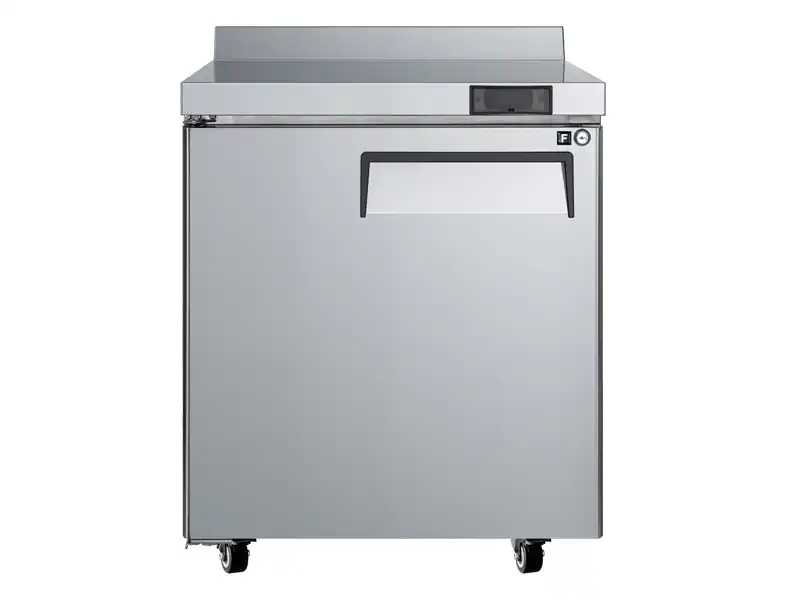
A bakery café in a high-rent urban location needed maximum refrigeration within a 27-inch-wide footprint. The Camay MWTF-27-L worktop refrigerator provided 7.13 cubic feet of storage beneath a stainless worktop, running at 33°F to 41°F with automatic defrost. The ventilated cooling system managed heat rejection through a front intake and rear exhaust, letting the technician place it flush against a side wall. The café’s energy log showed the unit averaging 1.1 kWh per day, less than half the consumption of the previous full-height reach-in it replaced.
How to Select the Right Energy-Saving Small Refrigerator for Your Kitchen
Sizing for Your Kitchen Volume
Match the refrigerator’s internal capacity to your actual pan and tray storage needs, not to a number that feels safe. An over-spec’d unit cycles less efficiently because the compressor short-cycles against a light load, wasting energy. Measure your busiest shift’s ingredient volume, then select a model with 10 to 15 percent surplus capacity. For example, a 13-cubic-foot undercounter like the Camay MTR-48 suits a kitchen preparing 100 to 150 covers per service.
Certifications and Energy Star Ratings
Look for ENERGY STAR certification, DOE compliance, and ETL Sanitation marks. These indicate that the refrigerator has passed standardized testing for energy consumption and temperature performance. Camay’s undercounter and chef base models carry ETL, DOE, and ENERGY STAR certifications, which means the listed power draw is verified, not estimated. When comparing models across brands, use the annual kWh figure on the EnergyGuide label rather than the compressor’s nameplate amps.
Comparing Model Specs
Create a shortlist based on refrigerant type, insulation thickness, door gasket material, and compressor brand. A unit with a Cubigel or Embraco compressor, 50–60mm polyurethane insulation, and self-closing doors with magnetic gaskets will outperform a cheaper alternative over five years. Pay attention to climate class; a fridge rated ST~T (38°C ambient) will handle hot kitchen conditions without losing suction pressure, whereas an N-rated unit will struggle.
How to Integrate Small Refrigerators into Restaurant Workflow
Placement for Optimal Access and Ventilation
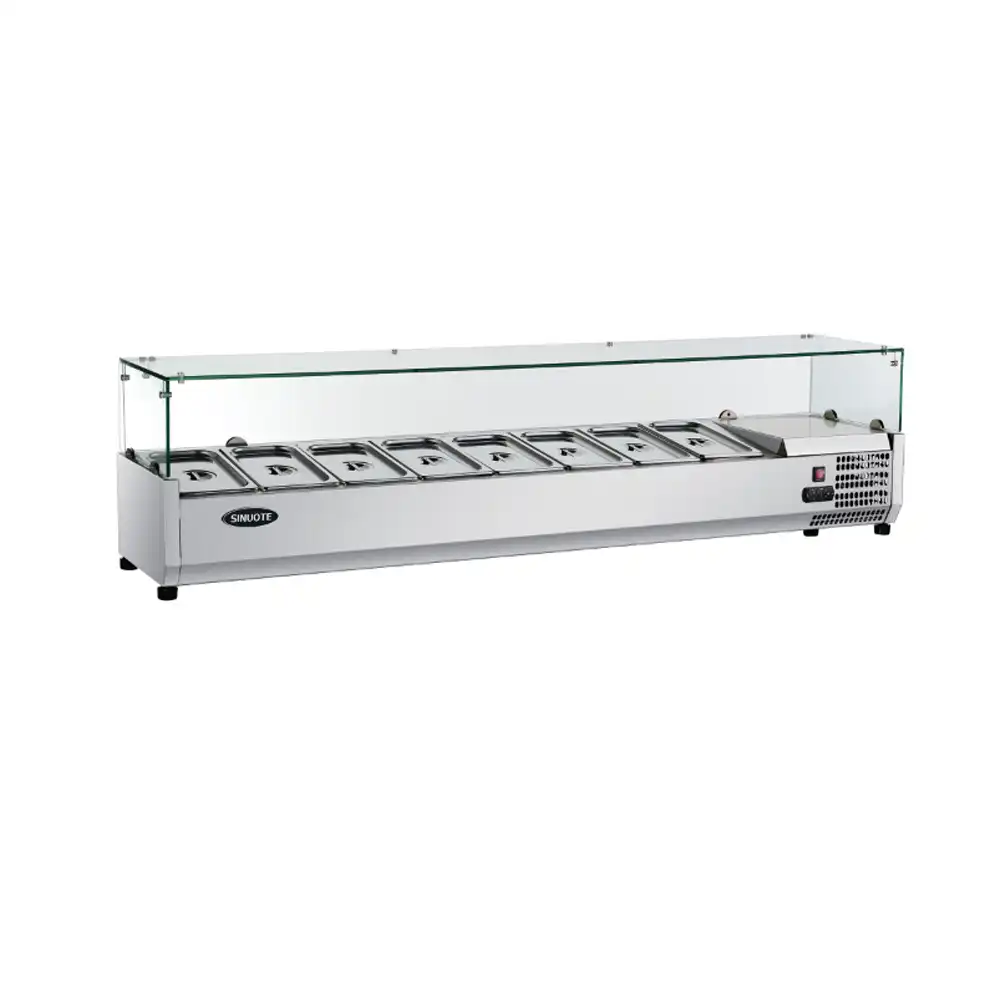
Position undercounter refrigerators directly beneath preparation surfaces, ensuring the door swing does not block foot traffic. Leave at least 4 inches of clearance at the rear and 8 inches above for compressor heat dissipation. In a busy pizza kitchen, placing a refrigerated pizza prep table like the Camay VRX395-1600 at the make-line lets one person top pies without stepping away, cutting travel time and reducing door openings on the main walk-in.
Combining Refrigeration with Prep Surfaces
Worktop refrigerators and chef bases turn a cooling appliance into a dual-function workstation. The one-piece stainless top with a drip-resistant V-edge can support small countertop equipment. In a café, a 27-inch worktop fridge serves as both a storage unit and a pastry finishing station, eliminating the need for a separate table. This integration saves floor area and reduces the number of electrical circuits, because one appliance replaces two.
What Long-Term Savings Can Energy-Saving Small Refrigerators Provide?
Payback Period Calculation
Assume an energy-saving small refrigerator costs $200 more upfront than a non-certified model, but consumes 900 kWh less per year. At an electricity rate of $0.12 per kWh, the saving is $108 annually. The payback occurs in less than two years. After that, the reduced energy bill directly improves the restaurant’s net margin. Over a typical 10-year service life, the cumulative saving exceeds $1,000 in energy alone, not counting reduced maintenance and avoided downtime.
Maintenance and Longevity
Clean the condenser coil every 90 days to maintain heat exchange efficiency. Check door gaskets for cracks; a leaking gasket can increase energy consumption by 10 to 15 percent. With proper care, a well-built stainless steel undercounter fridge can operate for 10 to 12 years. Camay’s removable gasket design and rounded inner corners make cleaning straightforward, and replacement parts are available directly from the manufacturer, which keeps units serviceable rather than disposable.
Impact on Total Energy Budget
Refrigeration can account for 15 to 25 percent of a restaurant’s total electricity use. Replacing two aging reach-in coolers with modern energy-saving small refrigerators can cut that share by a third. For a restaurant spending $2,000 per month on electricity, that translates to roughly $800 to $1,200 in annual savings—enough to offset other operational costs or fund menu upgrades.
Small decisions about refrigeration equipment add up over time. If you are planning a new kitchen or replacing tired units, sharing your layout and cooling requirements with us will let our team recommend the most energy-efficient configuration for your space and volume. Reach Zhao Ming and the Camay engineering team at Sales@hzcamay.com or by phone at +8618157202219.
Common Questions About Energy-Saving Small Refrigerators
What exactly qualifies a small refrigerator as “energy-saving”?
Look at the annual kWh consumption on the EnergyGuide label, not the nameplate current. A unit that uses 3 to 4 kWh per day for a 10-cubic-foot storage volume, while holding 33°F to 41°F in a 38°C ambient, qualifies as energy-saving in my experience. Key indicators include R290 refrigerant, polyurethane foam insulation of at least 50mm, and an electronically controlled defrost cycle.
Will the upfront cost of an energy-saving model ever pay back?
Yes, often within two years. The price difference between a basic and an efficient small refrigerator is typically $150 to $300. With electricity savings of $80 to $120 per year, the premium is recovered before the third year. And because the compressor runs fewer hours, the unit’s service life extends, adding indirect savings from delayed replacement.
Do energy-saving small refrigerators need special ventilation?
They need standard clearance as specified by the manufacturer—usually 4 inches at the back and 8 inches above—but nothing beyond that. The ventilated cooling system moves air through a front intake and rear exhaust, so blocking the rear will raise head pressure and increase energy use. In cramped kitchens, I always check that the exhaust path remains unobstructed.
Can one small refrigerator serve both refrigeration and freezing?
No. Combination fridge-freezer units with a single compressor are rare in commercial kitchens and tend to compromise temperature control. It is better to use a separate dedicated undercounter refrigerator and a matching undercounter freezer. This configuration lets each unit run at its optimum setpoint without cycling between modes.
What is the most common mistake when installing a small refrigerator in a restaurant?
Putting it too close to cooking equipment without a thermal barrier. Radiant heat from a grill or oven raises the ambient temperature around the condenser, forcing the compressor to work harder. In several kitchens I have worked with, adding a simple stainless steel heat shield between the hot line and the refrigerator reduced compressor run time by 15 percent, with no other changes. If your kitchen layout has unavoidable heat sources, discuss your configuration with our technical team—we can recommend the best placement and ventilation setup. Send your floor plan to Sales@hzcamay.com and we will confirm a layout that preserves energy efficiency.
If you’re interested, check out these related articles:
How to Choose the Best Chef Base Refrigerator for Your Kitchen
Chef Base Fridge vs Undercounter Fridge Which Is Best for Your Kitchen
Essential Maintenance Tips for Your Commercial Chef Base Refrigerator
Upright Freezer vs Refrigerator Key Differences Explained