

In a busy professional kitchen, every step a cook takes away from the line to retrieve ingredients costs time and risks breaking the cold chain. High-efficiency chef base applications solve this by combining a refrigerated cabinet with a sturdy work surface exactly where perishable food is handled — at the grill, the sauté station, or the prep counter. After spending more than two decades on the manufacturing side of commercial refrigeration, I have seen kitchens transform their throughput simply by putting the right type of cold storage under the right worktop. The value is not just in the box itself; it is in the steps it removes and the food safety span it adds during a dinner rush.
What a Chef Base Brings to a Kitchen
A chef base is not a standard undercounter refrigerator with a flimsy top. It is a purpose-built unit where the upper work surface is integrated into the cabinet structure, designed to hold ingredients at safe temperatures while supporting heavy pans, cutting boards, or small appliances right on top. Most restaurant operators first consider a chef base when a prep table alone cannot keep up with throughput, or when cooks have to walk to a remote cooler dozens of times per shift.
The core advantage is proximity. When diced chicken, fresh herbs, and sauces sit inside a refrigerated drawer directly beneath the sauté range, the cook opens a drawer, reaches down, and closes it — all without leaving the station. This reduces cross-traffic in the kitchen and keeps ingredients between 0.5°C and 5°C (33°F to 41°F), the range we maintain in our ventilated refrigeration systems with Cubigel compressors and R290 refrigerant. For compact kitchens, the combination of storage and work surface in one footprint eliminates the need for separate prep tables, recovering square footage that matters when real estate is tight.
Station-by-Station Chef Base Applications
Where a chef base delivers the most impact depends on the volume and type of cooking happening at each station. Over years of OEM and ODM cooperation with restaurant groups, we have observed a few patterns that consistently work.
At the grill station, a chef base loaded with marinated proteins, butter, and portioned vegetables means the grill cook never steps away during peak service. The worktop must handle hot sheet pans straight off the pass — stainless steel construction with a drip-resistant V edge prevents liquids from running into the cabinet. We manufacture units with a one-piece top and polyurethane insulation to keep the cold inside even when a hot pan sits directly above.
For pizza and prep tables, a refrigerated base with a raised rail holding GN 1/3 or 1/6 pans lets staff assemble pies or salads without bending into a low cooler. The Camay VRX395 series, for instance, provides +2°C to +8°C pan storage with a ventilation system that does not dry out toppings during service — a common failure mode I have seen in underperforming prep tables.
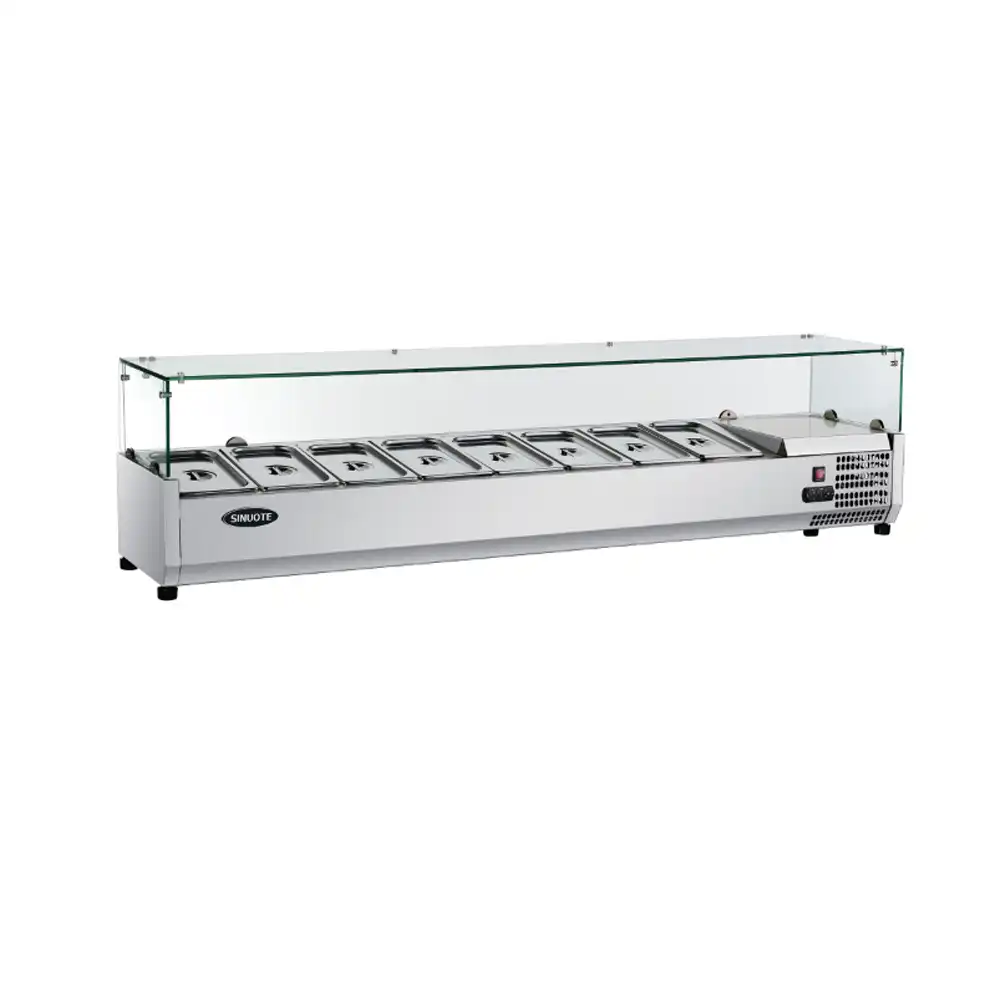
Salad and cold-prep lines benefit from undercounter refrigeration that keeps greens and dressings within arm’s reach while leaving the top clear for mixing bowls and cutting boards. In buffet and hotel kitchens, semi-mega salad tables with multiple pan wells and refrigerated storage underneath reduce refilling trips during long service periods — the kind of workflow detail a chef notices immediately once it is in place.
What to Look for in a High-Efficiency Chef Base
Not every refrigerated cabinet with a flat top qualifies as a high-efficiency chef base. Through our factory’s product development, there are a few specifications we do not compromise on because they directly affect kitchen performance and total cost of ownership.
Compressor quality sets the baseline. We specify Cubigel compressors paired with ventilated cooling, because that combination holds temperature setpoint reliably even at 38°C ambient conditions — common near cooking lines. The refrigerant choice matters too. R290 (propane) offers lower global warming potential than older refrigerants and runs more efficiently, which aligns with the DOE and ENERGY STAR standards our products meet. Insulation is another invisible differentiator. Foamed-in-place polyurethane enclosed in stainless steel prevents cold loss and reduces compressor cycling; we use CFC-free cyclopentane as the blowing agent, which I recommend confirming when evaluating specs from any supplier.
The worktop gauge and edge design cannot be overlooked. A top that warps under hot sheet pans or pools water from condensation becomes a hygiene issue within weeks. A drip-resistant V edge and heavy-gauge stainless top, welded into the body, is what separates a tool from a temporary fix.
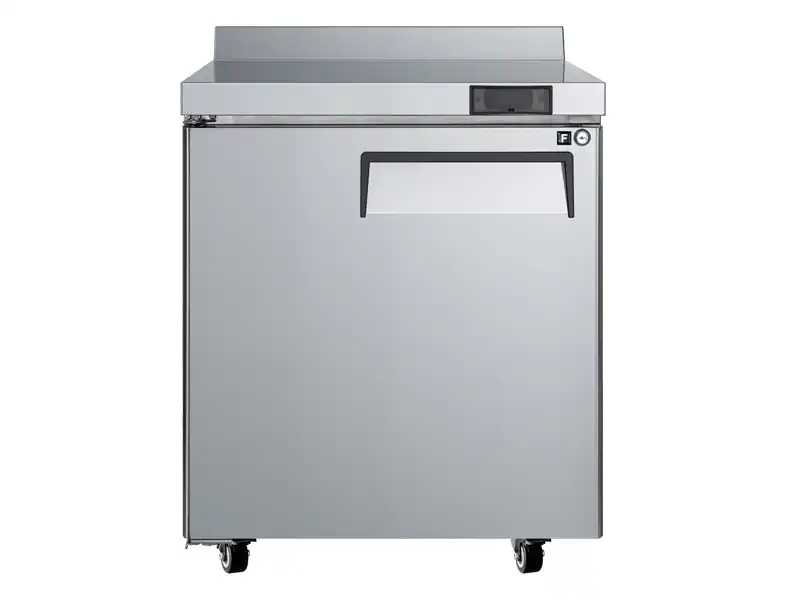
Lastly, mobility on casters allows a kitchen brigade to reposition the unit for cleaning or reconfiguration. In our experience with QSR and hotel kitchens, locking 4-inch casters have prevented more injuries and equipment rearrangements than fixed legs ever did.
Energy Performance and Certification Standards
Restaurant utility budgets feel the constant draw of refrigeration, so any equipment that cuts compressor run time without sacrificing food safety pays back quickly. A chef base with a high insulation factor and an automatic defrost that only activates when needed reduces kWh consumption measurably. We have found that a well-built ventilated system, combined with a digital thermostat that holds ±1°C accuracy, avoids the temperature swings that force compressors to overwork.
Third-party certifications validate these claims. Our chef base units carry ETL Safety, ETL Sanitation (NSF Standard), DOE compliance, and ENERGY STAR ratings. For international buyers, CE, IEC-CB, and others provide assurance that the unit meets local safety and efficiency requirements. When selecting a chef base, looking past the marketing sheet to the actual certification marks and the ambient temperature rating (ST~T class, meaning up to 38°C) is the most direct way to compare apples to apples.
If your kitchen is in a tropical climate or operates with limited HVAC, I suggest starting any sourcing conversation with the ambient temperature specification and the compressor’s continuous duty rating. Those two numbers often predict long-term utility costs better than any nominal energy efficiency ratio.
Installation and Layout Integration Tips
A chef base that fits on paper can still frustrate a kitchen team if installation and airflow are ignored. Ventilated units need a few inches of clearance behind and above for condenser air discharge; tucking a unit tight against a wall or under a low pass-through shelf is a common mistake that overheats the compressor and shortens service life. We always recommend confirming the installation drawings before finalizing a kitchen layout.
Weighted casters matter more than they appear. A 60-inch chef base loaded with ingredients can exceed 200 kg, and if the casters are too small or lack locking mechanisms, the unit shifts during service — a safety risk and an annoyance. In some restaurant layouts we have worked on, integrating the chef base with an adjacent undercounter refrigerator via a bridging plate created a continuous work surface of 2.5 meters or more, effectively doubling the prep area without adding square footage.
Power supply should be dedicated and protected by the right breaker; we have seen nuisance tripping when induction tops and refrigeration share the same circuit. This is a small electrical planning point that saves a lot of troubleshooting later.
Maintaining Your Chef Base for Long-Term Reliability
Most chef base failures I encounter start with neglected coil cleaning. Grease-laden air from the cooking line deposits on condenser fins, the unit overheats, and cooling performance degrades. A quarterly cleaning schedule with a soft brush and vacuum — not high-pressure water — is the simplest way to prevent this. Accessible condenser compartments with a removable front grille make this a five-minute task; we design our units with that in mind.
Gasket integrity at the door seals directly affects temperature consistency and energy use. A torn or hardened gasket lets cold air leak, and the compressor compensates by running longer. Checking gaskets monthly and replacing them when they lose flexibility costs far less than a compressor replacement. The self-closing door mechanism should also be verified: if a cook props a drawer open during prep, the holding temperature can climb within minutes, especially in hot kitchens.
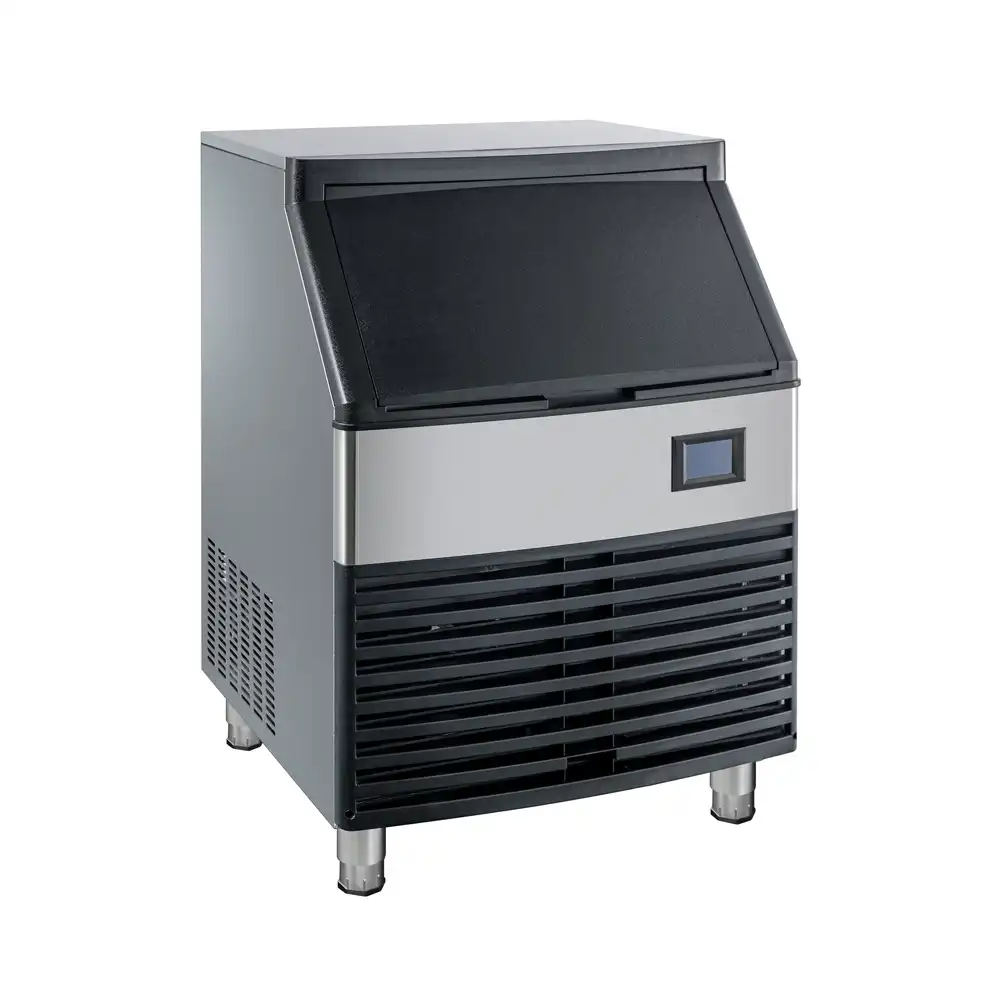
Internal organization counts. Overstuffing the cabinet blocks airflow between shelves and creates uneven cooling. Using GN-compatible pans and shelves keeps air circulating, and pre-installed shelves with a lip prevent containers from shifting when the door opens. Our units ship with pre-installed shelves at standard spacing, but we frequently customize shelf positions based on pan sizes a restaurant group uses — a small detail that makes daily operations smoother.
Common Questions About Chef Base Refrigeration
How is a chef base different from a regular undercounter refrigerator?
A chef base is built for top-down work, not just storage. The top is a structural work surface tested for heavy kitchen use, and the cabinet typically holds temperature under direct heat load from hot pans above. A standard undercounter unit with a thin stainless top cannot handle the same punishment and will transfer heat into the refrigerated space faster. The insulation, top gauge, and edge sealing are all heavier on a purpose-built chef base.
Can a chef base replace a prep table entirely?
Depending on your menu and volume, yes — especially in sauté, grill, and cold-prep stations. However, some kitchens still need a separate dry prep table for tasks that do not involve refrigerated ingredients. In my experience, the best layouts pair a chef base with a small dry prep station adjacent to it, sharing the work zone without mixing hot and cold duties.
Does a chef base use more energy than a separate fridge and prep table?
Typically less, because you are running one compressor instead of two. Combined energy consumption of a separate undercounter fridge and a prep table with a top cooler is higher on a per-cubic-foot basis. Moreover, the integrated insulation in a chef base reduces cold air loss when the door is opened briefly during service, which trims cycle times.
What temperature range should a chef base hold, and how is it verified?
For refrigerated chef bases, the target is 0.5°C to 5°C (33°F to 41°F), with defrost cycles that do not spike above 8°C. Verification should come from a digital controller with a display, and ideally from a remote monitoring option if HACCP compliance is required. I recommend testing temperature at the pan level, not just the cabinet air sensor, because ingredient temperature is what matters for food safety.
How long should a commercial chef base last?
With proper maintenance and a commercial-grade compressor (not a residential unit), 10 to 15 years is realistic. We have customers still running units after 12 years of daily service, provided the condenser coils are cleaned, gaskets are replaced on schedule, and the unit is not overloaded. If you are comparing quotes, ask about compressor warranty term and whether the compressor brand is specified — that reveals more about expected lifespan than the cabinet warranty alone. If your kitchen’s volume or ambient conditions push the envelope, share your daily usage pattern with us at Sales@hzcamay.com or call +8618157202219; we can confirm thermal design margins before you commit to a model.
If you’re interested, check out these related articles:
Heavy Duty Chef Base Refrigeration for Efficient Commercial Kitchens
How to Choose the Best Chef Base Refrigerator for Your Kitchen
Boost Efficiency Energy Efficient Chef Base Units for Commercial Kitchens
Chef Base Fridge vs Undercounter Fridge Which Is Best for Your Kitchen