
Hotel bar managers often discover that the capacity spec of back bar refrigerators (listed in liters or cubic feet) does not match the number of bottles that actually fit. The discrepancy usually comes from shelf layout, compressor hump, and false expectations about bottle stacking. I have spent over twenty-six years manufacturing commercial refrigeration equipment, and I can say that real-world capacity is about how shelf depth, bottle shapes, and door type work together, not about a rated volume. This article examines back bar refrigerator capacity planning and layout decisions that help hotel bars avoid under-stocking during peak service, using lessons from thousands of custom bar cooling projects.
Determining Realistic Capacity Needs for a Hotel Bar
Every hotel bar serves a different crowd. A lobby bar that handles afternoon tea and evening cocktails will need more varied bottle storage than a poolside bar focused on beer and wine. The first step in capacity planning is to estimate the maximum number of bottles you will have open at one time, then add 30% for menu flexibility and seasonal peaks.
| Bar Type | Typical Bottle Count | Recommended Door Configuration |
|---|---|---|
| Lobby Bar (evening service) | 120-200 bottles | 2-3 door glass front |
| Banquet / Event Bar | 200-400 bottles | Multiple units or pass-through |
| Pool / Outdoor Bar | 80-120 bottles | 1-2 door undercounter, solid door option |
| Speakeasy / Cocktail Bar | 100-160 bottles | 2 door glass front with LED display |
These figures are based on our experience supplying bars across global hotel chains. They assume roughly 40% spirits, 30% wines, and 30% mixers and garnishes stored in the same unit. If your bar program leans heavily on champagne or large-format bottles, the same rated capacity will hold fewer bottles because of taller shelf requirements.
The goal is not just to fit the bottles you have, but to keep high-turnover items within an arm’s reach of the bartender. Storing backup inventory in a separate walk-in cooler or undercounter fridge frees up the back bar unit for immediate service needs. In projects we have supported, we often see a 15-20% speed improvement in drink preparation when the most used bottles are on the lowest shelf of a back bar cooler with a glass door.
Key Layout Configurations for Back Bar Coolers
Back bar refrigerators come in three primary layout types: undercounter units that sit beneath the bar counter, upright glass door coolers that stand behind the bar, and pass-through units that allow loading from both the front and back. The right choice depends on the bar’s depth and the workflow.
Undercounter back bar coolers (like our Camay MTR series) can double as a worktop and are ideal when the bar counter needs to support glassware or a small ice bin. They keep the coldest air at the bottom, which works well for bottled beer and white wine, but less well for spirits that do not require high cooling. Upright glass door coolers, on the other hand, display branded bottles and can be positioned at eye level to influence guest ordering. Pass-through units, often found in banquet bars, let staff replenish stock from the back without crossing into the guest area.
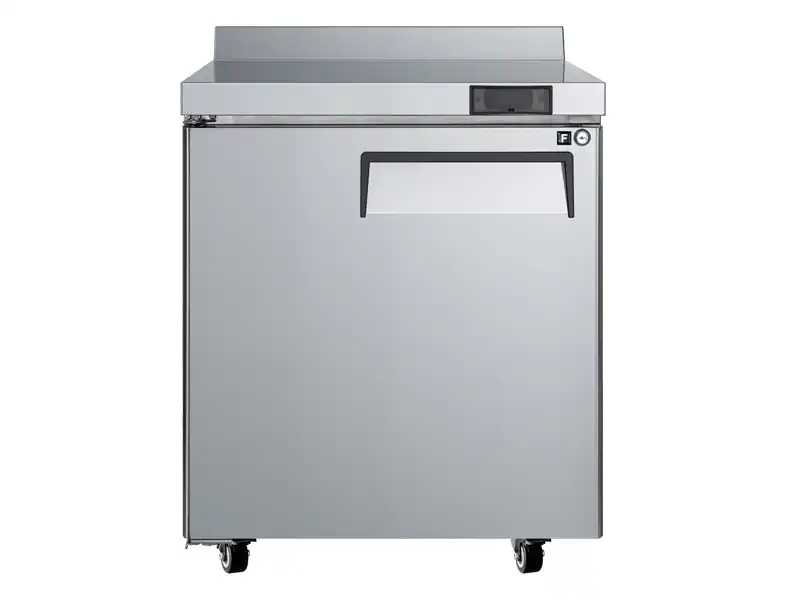
When space is tight, combining a back bar refrigerator with a separate undercounter freezer for glassware chilling can save room. I recall a hotel bar in a historic building where the only way to fit all cooling needs was to split the back bar across two shallow units placed side by side, each with a different temperature zone. The layout worked because the left unit held white wine and mixers at 3°C, while the right unit stored spirits at 5°C.
Impact of Shelf Configuration and Compressor Placement on Usable Storage
Nominal volume (in liters) tells you how much empty space exists inside the cabinet, but it does not account for the compressor hump, shelf brackets, and the dead space above the top shelf where bottles cannot fit. In a 200-liter back bar cooler, the compressor compartment at the bottom typically steals 15-20% of the advertised space. The remaining volume must be divided by unevenly shaped bottles with necks that do not stack.
The industry standard method of measuring storage in bottles uses a “European-style” 0.75L wine bottle as the reference, but a bar may store 330ml beer bottles, 1L spirits, and champagne, all of different diameters. A shelf designed for 0.75L bottles may leave gaps when filled with thinner beer bottles, or may not close if tall champagne bottles are placed vertically. In our manufacturing, we have learned that offering adjustable wire shelves with a lip less than 5 cm high increases the actual bottle count by up to 10% because bartenders can angle bottles slightly to utilize every centimeter.
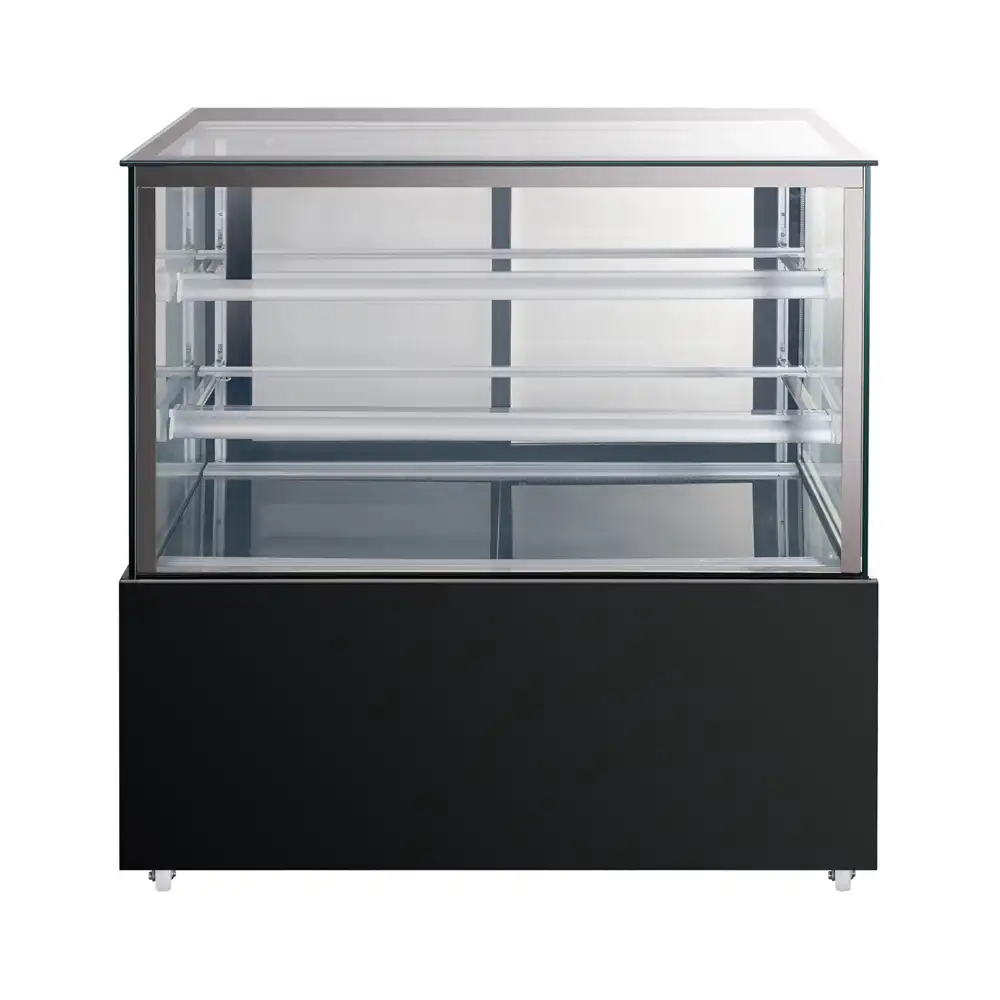
The compressor position also matters. A bottom-mounted compressor with the cold air flowing upward gives the coldest zone at the bottom, which is perfect for beer and wine but can overtake the thermostat if the unit is mostly filled with spirits that need only 5°C. In that case, a side-mounted compressor with a more even temperature distribution may be a better fit. I have worked with bars that had to add separate wine fridges because their back bar cooler was set too cold for spirits, and the bottles at the bottom froze overnight.
If your hotel bar serves specific bottle shapes or has limited depth, confirm the usable shelf dimensions with the manufacturer before ordering. Reach out to Sales@hzcamay.com with your bottle inventory and space constraints, and we can run a capacity simulation based on your exact bottle mix.
Choosing Between Solid and Glass Doors for Hotel Bar Service
Glass doors turn the back bar refrigerator into a merchandising tool. Customers see the label, the brand, and the color of the bottle, which can influence their order. In a lobby bar where guests wait for service, a well-lit glass door cooler can increase premium drink sales by 10-15% compared to an all-solid door setup, according to published hospitality data. Solid doors, however, provide better insulation and are less prone to condensation in high-humidity environments, which makes them the preferred choice for back-of-house operations or pool bars where the unit sits in semi-open areas.
The decision also affects temperature stability. Glass doors lose more cold air when opened because there is no metal skin to block heat transfer, but models with low-E glass can reduce that loss by over 30%. I have seen that in busy hotel bars with high foot traffic, a glass door cooler with a fast-recovery compressor and digital thermostat can maintain the set point within 1°C even with 20-30 door openings per hour, which keeps the health inspector happy and the ice in the mixers unmelted.
Installation and Ventilation Requirements in Tight Bar Footprints
Hotel bars are notorious for constrained spaces—columns, plumbing, electrical panels, and decorative features reduce the available footprint. A back bar refrigerator with rear ventilation may require 10-15 cm of clearance behind it, which can be impossible if the unit is pushed against a marble wall. For those situations, front-venting models with a forward-facing grill are essential. They pull in air from the front and exhaust it through the kickplate, allowing the unit to sit flush against the wall.
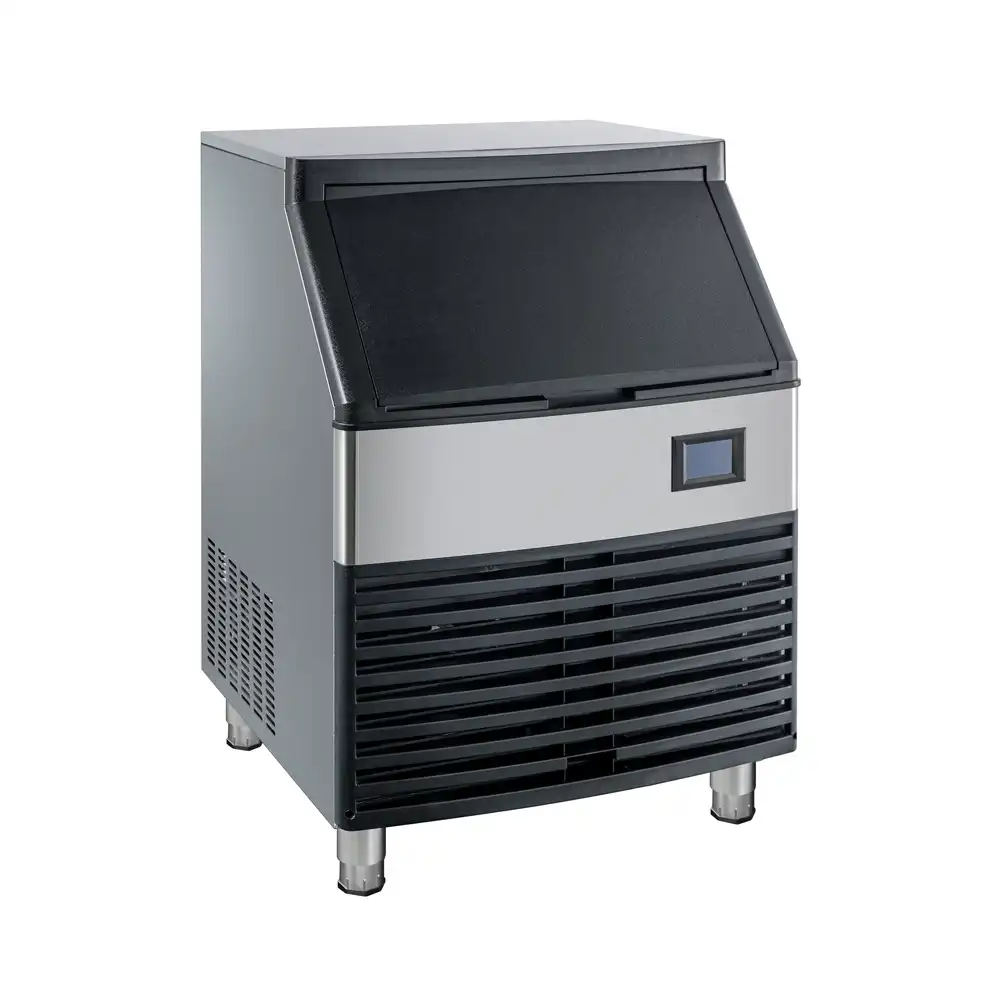
Caster mobility is another often-overlooked factor. Bartenders need to clean under and behind the unit, and if the refrigerator is fixed in place with legs, the floor accumulates debris that eventually affects the compressor’s heat dissipation. I recommend 4-inch casters with locks. They add 6 cm to the unit’s overall height, which must be accounted for if the unit fits under a counter. Electrical planning must also include a dedicated 15A circuit for each back bar cooler to avoid tripping breakers when the compressor and bar blender run simultaneously.
If your current bar layout forces you to limit the refrigerator depth to 55 cm or less, standard full-sized back bar coolers will not fit. That is a moment when customization matters. As a manufacturer, we can shorten the depth of a back bar unit by adjusting the compressor position and shelf depth, but we need the exact floor dimensions and a list of must-keep bottles to make it work.
Reliable Back Bar Refrigeration Depends on Details That Generic Specs Overlook
Hotel bar managers plan for busy nights, not just average stocking levels. After over twenty years in this industry, I have seen that the difference between a bar that runs smoothly and one that runs out of cold beer at 9 PM is rarely the unit’s price tag—it is whether someone thought through the shelf layout, door type, and ventilation before the unit was delivered. A 300-liter back bar cooler with poorly spaced shelves will hold fewer usable bottles than a 250-liter unit designed with a bar’s actual bottle inventory in mind.
If you are planning a new hotel bar or upgrading an existing one, do not purchase based on capacity specs alone. Instead, list every bottle type, measure the available floor space, and decide whether you want glass doors for service or solid doors for storage. Then speak with a manufacturer who can verify whether the unit you are considering will actually hold what you need.
To get a customized recommendation, send your bar floor plan and bottle inventory to Sales@hzcamay.com or call +8618157202219. We can propose a back bar refrigerator configuration with the right door count, shelf spacing, and ventilation placement to keep your bar fully stocked and your bartenders moving fast.
Common Questions About Back Bar Refrigerator Capacity and Layout
How many bottles can a standard back bar refrigerator hold?
A standard 200-liter back bar refrigerator can hold approximately 120 to 150 bottles, assuming 0.75L wine bottles and adjustable shelves. However, if your bar stores a mix of spirit bottles, tall champagne bottles, and small mixers, the usable capacity can drop to 100 bottles or fewer. The actual count depends on shelf depth, the distance between shelf supports, and whether you can fit bottles in two rows. I recommend always asking the manufacturer for a bottle count capacity simulation using your typical bottle dimensions, not just the volume spec.
What is the difference between a back bar cooler and an undercounter refrigerator?
The main difference is the door and the intended use. Back bar coolers almost always have glass doors to display products and influence customer ordering, while undercounter refrigerators typically have solid doors for general storage. Back bar coolers also include dedicated bottle racks and often have LED lighting; undercounter units may lack these features. Temperature control is similar, but back bar coolers are tuned for beverage storage (2°C to 5°C) and can recover temperature quickly after door openings, which matters in busy service hours.
Can I use a regular undercounter refrigerator for back bar storage?
Yes, but you will lose the merchandising and access advantages. An undercounter refrigerator with solid doors can still keep beverages cold, but bartenders have to bend down, open a door, and rummage through shelves that are not optimized for bottle shapes. That adds seconds to every drink, and over a five-hour shift, those seconds add up to a slower bar. If the budget is tight, a solid-door undercounter unit is a functional start, but swapping to a glass-door back bar cooler later will typically pay for itself through faster service and higher drink sales.
How much clearance does a back bar refrigerator need for ventilation?
Most back bar refrigerators need 10 to 15 cm of clearance at the rear if they are rear-ventilated, and 5 cm on each side. Front-venting models can sit flush against the wall, but you still need air intake at the front. In the tightest hotel bars, a front-venting unit on casters is the safest choice because it can be pulled out for cleaning without losing cooling performance during service.
Does Camay offer customized back bar refrigerator dimensions?
Yes. As a manufacturer with 26 years of experience and full OEM/ODM capability, Camay can adjust width, depth, door type, shelf layout, and even integrate with ice makers or undercounter freezers to fit your specific bar layout. We have produced back bar refrigerators as narrow as 60 cm for boutique hotel bars and as deep as 80 cm for high-volume banquet bars. Share your bar’s dimensions and storage requirements with us at Sales@hzcamay.com, and our engineers will propose a configuration that fits your space and capacity needs exactly.
If you’re interested, check out these related articles:
Essential Maintenance Tips for Commercial Reach In Refrigerators
Choosing the Best Commercial Reach In Fridge for Your Restaurant
How to Choose the Best Chef Base Refrigerator for Your Kitchen
Chef Base Fridge vs Undercounter Fridge Which Is Best for Your Kitchen