
I’ve spent over two decades engineering commercial refrigeration for hotels and banquet operations across more than forty countries, and one pattern keeps repeating: kitchen planners order individual salad tables that meet spec sheets perfectly, then discover during the first dinner rush that the units don’t work together the way the floor plan suggested. Buffet salad table combinations fail not because any single unit is defective, but because the interplay between pan rail configurations, compressor heat rejection patterns, and staff movement paths wasn’t accounted for at the specification stage. Getting the combination right from the start means understanding how semi-mega tables, standard prep tables, and mega-top units behave when lined up side by side under real serving loads — not just how they perform in isolation on a test bench.
Salad Table Types and Their Roles in a Buffet Line
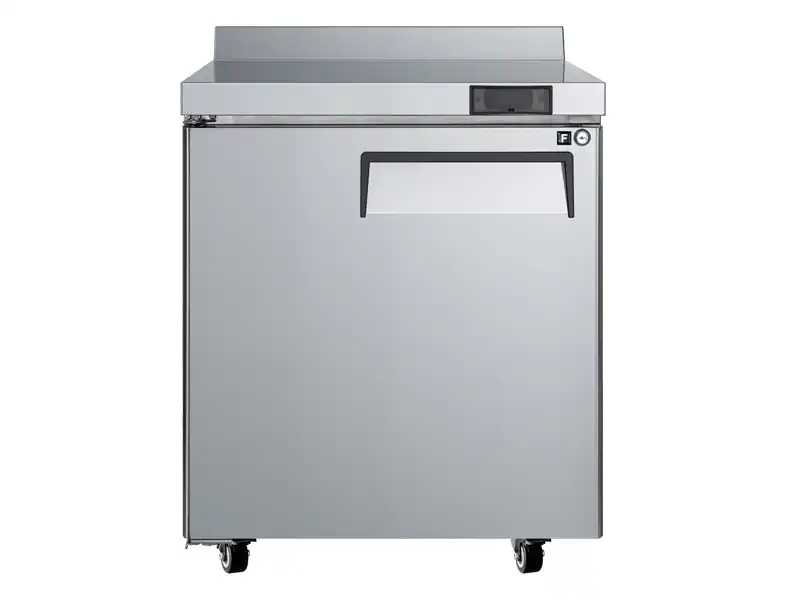
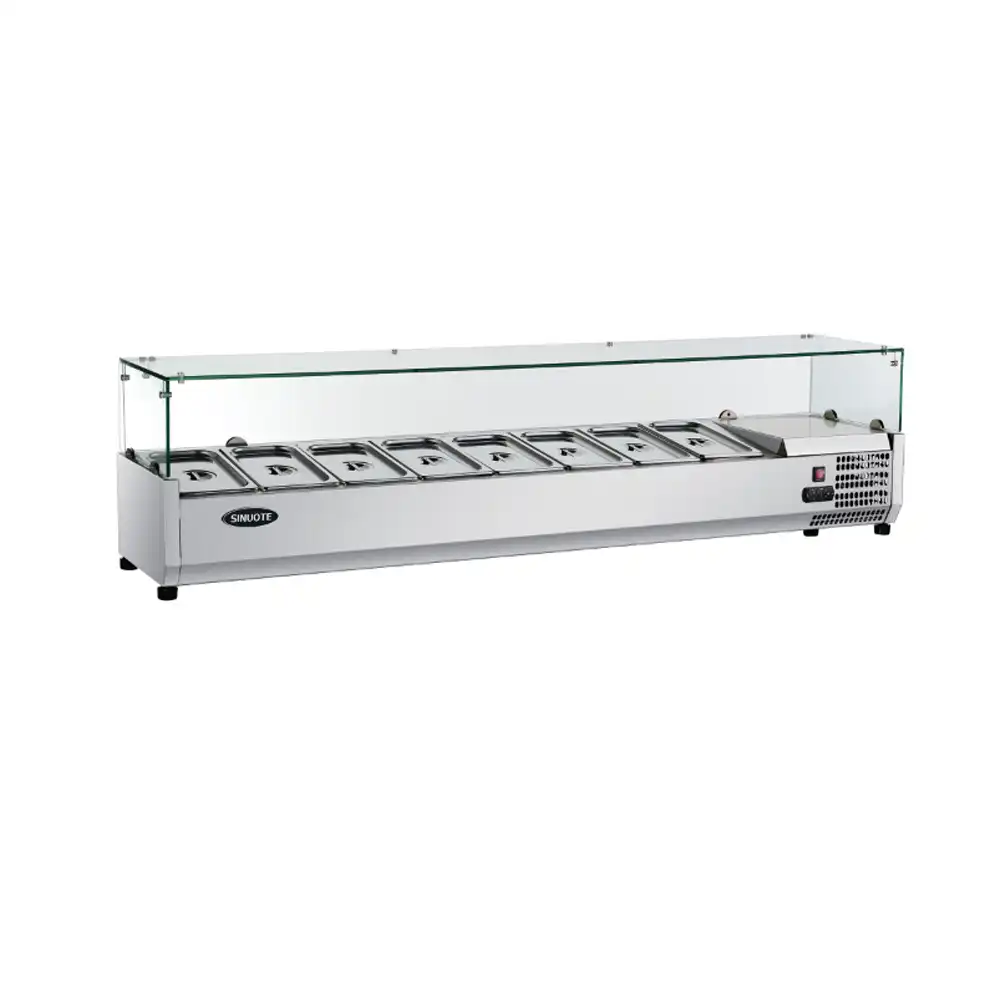
A single salad table rarely serves an entire buffet. Most hotel and banquet operations run three to five units in sequence, and each type plays a different role. Standard refrigerated prep tables with a flat worktop and shallow pan rail suit plated salad service or à la carte prep, where the cook accesses ingredients from above. Semi-mega salad tables raise the pan rail higher above the compressor housing, giving staff more clearance for scooping and replenishing during high-volume service. Mega-top tables extend the pan rail across nearly the entire unit width, maximizing the number of cold-holding wells available to the serving side.
The distinction matters because mixing types without understanding their physical profiles creates workflow friction. A standard-height pan rail butted against a raised semi-mega rail forces staff to adjust their reach angle at every transition point — small on its own, but after three hours of dinner service it translates into slower replenishment and more spills. In projects I’ve specified for hotel banquet halls, we typically lead the line with a mega-top for high-demand greens and composed salads, follow with semi-mega units for proteins and dressings, and end with a standard prep table for plated specials that require more hands-on assembly. The combination isn’t about filling floor space — it’s about matching each table’s access profile to what staff actually do at that station.
How Table Combinations Shape Kitchen-to-Buffet Workflow
The biggest mistake I see in buffet kitchen layouts is treating the salad line as a self-contained island rather than a segment of a longer production-to-service chain. Refill paths determine whether a combination works. If the line of tables sits with its back against a wall and the kitchen entrance is at the far end, staff must walk the entire length of the buffet to restock the first table guests encounter — which is also the highest-turnover station. That geometry guarantees either cold food sitting at unsafe temperatures while the refill run happens, or staff abandoning position to chase empty pans.
A better approach places the high-turnover mega-top unit closest to the kitchen pass-through and builds the line outward from there. The semi-mega and standard tables extend toward the guest entry point in descending order of turnover rate. This way, refill runs are short and the most heavily depleted pans sit nearest the source of fresh product. When we engineer these combinations at the factory level, we also account for compressor exhaust direction — most units vent from the front or bottom-front grille, so aligning heat rejection paths away from adjacent cold-holding surfaces prevents one table’s waste heat from becoming its neighbor’s thermal load.
If your banquet operation serves more than two hundred covers per service, the configuration of pan rail heights, refill access, and exhaust routing across the combination line directly affects holding temperature compliance. It’s worth confirming these details with a manufacturer who has designed multi-table installations for similar volume before finalizing your floor plan. Send your layout and daily cover count to Sales@hzcamay.com for a configuration review.
Engineering Factors That Determine Multi-Table Reliability
Placing three or four refrigerated tables in a row multiplies the electrical and thermal load, but the real stress point isn’t the power draw — it’s the cumulative heat rejection in a confined space. Each table’s compressor cycles independently, and when multiple units share the same air volume in a tight galley kitchen or behind a buffet screen, ambient temperature can climb five to eight degrees above the design baseline within two hours of peak service. That rise forces every compressor to run longer cycles, accelerating wear on components that were spec’d for a cooler operating environment.
This is where insulation quality separates equipment that lasts from equipment that doesn’t. Polyurethane foam insulation with cyclopentane as the blowing agent — the standard in Camay salad tables since we moved away from CFC-based foaming — delivers a closed-cell structure dense enough to hold the cold mass stable even as ambient conditions shift around the unit. Combined with a ventilated cooling system that pulls air across the evaporator and rejects it out the front grille rather than the sides, the thermal envelope of each table stays more self-contained. When I’m evaluating a combination for a customer with a known tight mechanical room or an enclosed servery, I look at the insulation specification before I look at the compressor brand. A Cubigel or Embraco compressor running against poor insulation will fail years before a mid-tier compressor paired with proper foam density.
The pan rail seal is the other overlooked variable. On mega-top and semi-mega tables, the rail gasket must compress evenly across the full width of the unit. In mass production, minor variations in sheet metal flatness can create gaps that bleed cold air into the kitchen, dropping rail temperature at the edges by several degrees. We run laser-level checks on every rail assembly coming off our line because an uneven pan fit doesn’t just waste energy — it creates warm spots where bacterial growth accelerates. In a multi-table configuration, one unit with a compromised rail seal can drag down the performance of the entire line by raising the ambient humidity and temperature around its neighbors.
Matching Configurations to Venue Size and Service Volume
The combination that works for a sixty-room boutique hotel’s continental breakfast won’t hold up under a five-hundred-guest wedding banquet. I’ve developed a rough sizing framework from years of working with hotel F&B directors and catering equipment distributors, and it comes down to three variables: peak hourly covers, menu complexity, and available linear frontage.
| Venue Type | Peak Covers/Hour | Recommended Table Combination | Total Pan Capacity |
|---|---|---|---|
| Small hotel breakfast | 40–80 | 1 standard prep table + 1 semi-mega (2-door) | 12–18 GN 1/3 pans |
| Mid-scale banquet | 100–200 | 1 mega-top (3-door) + 1 semi-mega (2-door) + 1 standard | 24–32 GN 1/3 pans |
| Large banquet hall | 250–500 | 2 mega-top (3-door) + 2 semi-mega + 1 standard prep | 40–56 GN 1/3 pans |
| Convention center | 500+ | 2 mega-top + 2 semi-mega + 2 standard prep (split lines) | 56+ GN 1/3 pans per line |
Menu complexity changes the math quickly. A salad bar with six standard toppings and three dressings can run on two tables with room to spare. Add a composed salad station, a chilled seafood display, and four house-made dressings, and the same two-table setup bottlenecks within the first thirty minutes of service. I always advise operators to count the number of distinct cold items that must be accessible simultaneously, multiply by 1.3 to account for peak-demand backup pans, and match that number against the pan rail capacity of the configuration they’re considering — not against the storage capacity of the cabinet below, which handles backup stock but doesn’t affect front-of-house throughput.
Thermal Performance Across Combined Buffet Lines
Putting five refrigerated tables in a row creates a microclimate, and that microclimate determines whether the food at the far end of the line sits at 34°F or creeps past 41°F by the second hour of service. The strongest predictor of thermal stability across a multi-unit combination isn’t any single spec — it’s the cumulative effect of compressor duty cycling, door seal integrity, and whether the tables are gapped or butted tight against each other.
A three-inch gap between units allows heat from each compressor exhaust to dissipate before it reaches the intake of the next table. In installations where tables must sit flush — common in narrow servery alcoves — the exhaust air from the first unit feeds directly into the condenser intake of the second, raising its head pressure and reducing its cooling capacity. I’ve measured temperature differentials of six degrees at the far-end pan rail between a gapped and a flush installation using identical equipment, same ambient conditions, same load. The fix isn’t expensive: spacer brackets or even a small blower directed between units restores enough airflow to bring the far-end temperature back in line. But it has to be designed in before the stainless steel worktops go in and the line becomes permanent.
Pan lid discipline matters more than most operators realize. Open pan wells dump cold air into the kitchen at roughly four times the rate of lidded wells during slow periods. In a line of five tables with thirty open pan wells, that’s the equivalent of leaving a reach-in door cracked for the entire service. Train staff to close lids on low-turnover pans between rushes, and the combined refrigeration load drops measurably — often enough to let the compressors cycle off for a few minutes per hour, which extends equipment life far more than any maintenance routine.
Common Questions About Buffet Salad Table Configurations
How many salad tables does a typical hotel banquet kitchen need?
It depends on your peak cover count and menu format. For hotels serving under 100 banquet covers per event, two tables — one semi-mega for high-turnover items and one standard prep for plated salads — usually handle the load. Between 100 and 300 covers, we typically specify three to four tables with at least one mega-top leading the line. Above 300 covers at a single seating, the combination needs to account for simultaneous replenishment, which usually means splitting the line into two parallel stations or running four to five tables with dedicated refill access from the back. The number isn’t the hard part — it’s matching the table types to the actual flow of product through each station.
Should all tables in a combination be from the same manufacturer?
Not necessarily, but matching compressor types, refrigerants, and insulation specifications across the line eliminates the most common compatibility problems. When tables from different manufacturers sit adjacent, differences in exhaust direction, operating noise frequency, and defrost cycle timing can create conflicts that are invisible on paper but noticeable in daily operation. I’ve replaced individual units in mixed-brand lines that performed perfectly on their own but couldn’t hold temperature when flanked by tables with different heat rejection patterns. If you do mix brands, test the full combination under load before the first paid event — not during.
What’s the difference between a semi-mega and a mega-top salad table for buffet use?
A semi-mega table raises the pan rail above the compressor deck by roughly four to six inches compared to a standard flat-top prep table, giving staff better reach-over clearance for scooping. A mega-top extends the pan rail across nearly the full cabinet width and often runs deeper, accommodating more GN pans in a single unit. For buffet lines, the mega-top works best at the guest-facing start of the line where variety and visual appeal matter most. Semi-mega tables suit mid-line positions where staff need fast access for replenishment. The two types complement each other — using only one or the other across a five-table line usually means compromising either capacity or access speed somewhere along the sequence.
How do I handle temperature zoning for different food types across multiple tables?
Most commercial salad tables maintain a single temperature zone, typically 33°F to 41°F, which covers the vast majority of cold buffet items. If your menu includes items that require distinct temperature bands — chilled seafood at 30°F to 33°F versus composed salads at 38°F to 41°F — you’ll need either individual tables with independent digital controllers set to different targets, or you’ll need to segregate those items to opposite ends of the line where the natural thermal gradient across the combination provides a few degrees of separation. In practice, we find operators overestimate the need for multi-zone cooling on salad lines; a well-insulated table holding steady at 36°F to 38°F keeps both seafood and salads within safe, quality-preserving ranges for the typical two-hour service window.
How long should a commercial salad table last in banquet service?
With proper maintenance — quarterly condenser cleaning, annual gasket inspection, and keeping the drain lines clear — a well-built salad table with polyurethane insulation and a quality compressor should deliver eight to twelve years of reliable banquet service before the compressor’s duty cycle begins to degrade noticeably. The cabinet itself, if it’s stainless steel inside and out, often outlasts the refrigeration system by another five to seven years. The biggest longevity killer I see in the field is ambient heat buildup around the unit that never gets addressed — it shortens compressor life by years, sometimes cutting a ten-year machine down to five or six. If you’re running a multi-table combination, the gap spacing or active ventilation between units I mentioned earlier is the single highest-return investment you can make in equipment lifespan. Share your current layout details with us at Sales@hzcamay.com or call +8618157202219, and we’ll help you confirm whether your configuration is set up for reliable long-term performance.
If you’re interested, check out these related articles:
How to Choose the Best Chef Base Refrigerator for Your Kitchen
Upright Freezer vs Refrigerator Key Differences Explained