

A commercial kitchen worktop does more than hold ingredients. It survives hundreds of meal services, constant sanitizing, and the weight of heavy equipment while keeping food at safe temperatures. After 26 years manufacturing refrigeration and food-prep equipment for export markets, I have seen how worktop selection directly affects kitchen speed, food safety compliance, and total ownership cost. Choosing commercial kitchen worktops means evaluating material construction, refrigeration integration, and daily durability, not just comparing surface dimensions. Understanding the engineering and procurement factors that matter most, from stainless steel grades to workflow-driven placement, prevents expensive replacement cycles.
What Makes a Commercial Kitchen Worktop Truly Durable?
Durability in a commercial kitchen worktop comes down to three things: the material grade, the manufacturing process, and how the worktop is used day to day. Most buyers start by comparing surface materials, but the construction method and joint quality determine whether a worktop lasts five years or fifteen.
Stainless steel dominates professional kitchens for good reason. It resists corrosion, handles high heat, and withstands aggressive cleaning chemicals without degrading. But not all stainless steel is equal. In our production lines, we use 304 stainless steel for food-contact surfaces because its chromium and nickel content delivers superior resistance to acidic ingredients and repeated sanitizing. Lower-grade alternatives, like 201 or 430 stainless, cost less upfront but show rust spots and pitting within a few years in high-moisture environments.
The manufacturing process matters as much as the material. Worktops with welded seams and rounded internal corners prevent food debris from accumulating in crevices where bacteria grow. A properly fabricated worktop has no sharp edges, no gaps between the surface and the undershelf, and a slight forward pitch that channels liquids toward the drain rather than pooling on the surface. During factory inspections, I check three things on every worktop batch: seam continuity, corner radius consistency, and surface flatness across the full length. A deviation of more than 1.5 mm across a 1500 mm span signals trouble for long-term use.
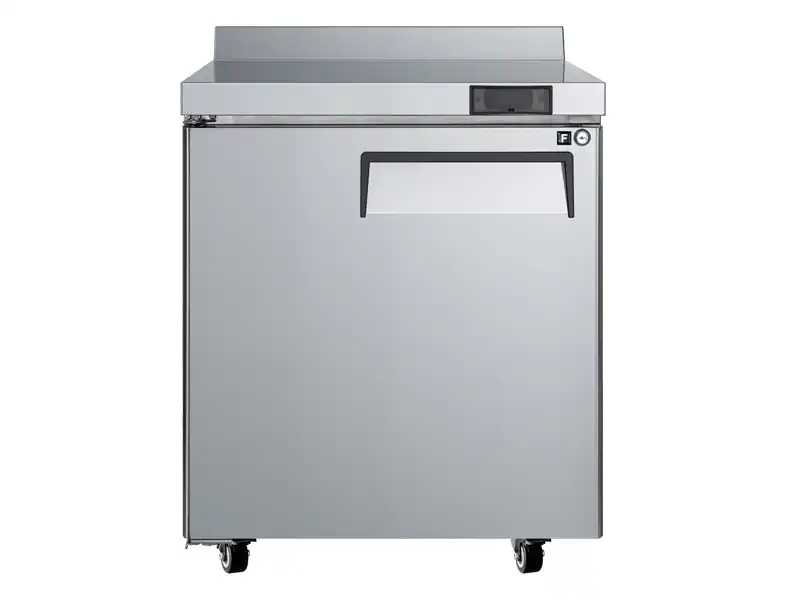
Beyond the worktop itself, the supporting frame and legs or casters take constant abuse. Fixed stainless steel legs with adjustable feet work well for stationary stations. For kitchens that reconfigure layouts seasonally or need to clean under equipment daily, heavy-duty casters with brakes are the better choice. Quality worktop refrigerators with optional 2-inch casters rated for repeated movement across tile and concrete flooring address a detail that matters more than most buyers realize, until a caster fails mid-shift.
Which Stainless Steel Grade Suits Your Commercial Kitchen?
The stainless steel grade stamped on a worktop is not marketing language. It tells you exactly how the surface will perform under your kitchen’s specific conditions. For most commercial kitchens, the decision sits between 304 and 316 stainless steel, with 430 serving budget-conscious operations that handle only dry goods.
Grade 304 stainless steel contains roughly 18% chromium and 8% nickel. This composition creates a passive oxide layer on the surface that self-repairs when scratched, which is why 304 worktops keep their appearance even after years of knife marks and pan contact. The nickel content also resists the organic acids found in tomatoes, citrus, and vinegar-based preparations. For a general-purpose commercial kitchen worktop, 304 is the standard against which other materials are measured. Our worktop refrigerator models, including the MWTF-27-L, use 304 stainless for both the exterior cabinet and the interior liner, pairing a durable prep surface with a refrigerated base.
Grade 316 stainless adds molybdenum to the alloy, typically 2 to 3 percent, which substantially improves resistance to chlorides and salt. This matters in seafood processing areas, kitchens near coastal environments, and any operation using heavy brine solutions. The cost premium over 304 runs roughly 30 to 40 percent, which is justified only when the chloride exposure is continuous. For most restaurant and hotel kitchens, 304 performs identically to 316 over the equipment’s service life.
For buyers considering 430 stainless steel, the trade-off is straightforward. The lower chromium content and absence of nickel make it more affordable but also more susceptible to rust in humid conditions. A 430 worktop can serve adequately in a dry storage or packing area where it never contacts water or acidic foods. Placing one in a dishwashing zone or a prep area with continuous wet conditions, however, guarantees surface degradation within two to three years.
Here is how the common grades compare for commercial kitchen use:
| Grade | Chromium | Nickel | Best For | Limitations |
|---|---|---|---|---|
| 304 | 18% | 8% | General prep, refrigeration worktops | Not ideal for continuous salt exposure |
| 316 | 16-18% | 10-14% | Seafood, coastal kitchens, brine processing | Higher cost; limited benefit for standard kitchens |
| 430 | 16-18% | 0% | Dry storage, packing areas | Rusts in humid or wet conditions |
Beyond the alloy, surface finish affects both hygiene and maintenance. A No. 4 brushed finish, which is standard on most commercial worktops, offers enough texture to hide minor scratches while remaining smooth enough for effective sanitizing. Mirror-polished finishes look impressive but show every scratch and fingerprint, making them impractical for production kitchens.
How Does Worktop-Refrigeration Integration Improve Workflow?
A standalone stainless steel table does one job well: it provides a surface. A worktop integrated with refrigeration does two jobs in the same footprint, and in space-constrained commercial kitchens, that changes everything. I have walked through hundreds of kitchen layouts during factory consultations, and the single most common workflow bottleneck is the distance between cold storage and the prep surface.
Worktop refrigerators combine a durable stainless work surface with a refrigerated cabinet directly underneath. The operator can pull ingredients from the fridge, turn around, and place them on the worktop without taking a step. In a busy prep kitchen, eliminating those steps across an eight-hour shift adds up to measurable time savings. Our MWTF-27-L worktop refrigerator maintains an internal temperature range of 0.5°C to 5°C using R290 refrigerant and a ventilated cooling system, keeping ingredients at safe holding temperatures while the top surface handles full prep loads.
Chef base units take integration further. The MAR-60A countertop refrigerated chef base positions a one-piece worktop with a drip-resistant V-edge directly over a refrigerated compartment. This design carries heavy prep loads while keeping frequently used ingredients within arm’s reach at the grill or sauté station. The 4-inch casters let the unit roll between stations as menu demands shift, and the 117-liter capacity handles ingredient storage for a single station through peak service. The polyurethane and cyclopentane foamed insulation keeps compressor cycles minimal, which matters when the unit sits in a hot kitchen corner near cooking equipment.
For buyers evaluating integrated worktop refrigeration, three configuration decisions drive the outcome: door count and placement, internal shelving layout, and whether the compressor is top-mounted or bottom-mounted. Top-mounted compressors stay cleaner in dusty environments but raise the work surface height slightly. Bottom-mounted designs keep the worktop at standard counter height but need more frequent condenser cleaning in flour-heavy or grease-heavy environments.
If your kitchen layout involves dedicated prep zones for specific menu categories, matching the correct integrated unit to each station pays off quickly. A pizza station benefits from a refrigerated prep table with GN pan compatibility for toppings. A salad station needs a worktop refrigerator with easy-access doors and a corrosion-resistant interior for acidic dressings. Placing the correct integrated unit at each station reduces cross-traffic and keeps each cook in their zone.
If your program involves multiple prep zones with different refrigeration needs, it is worth confirming the internal shelving configuration and door swing direction before finalizing your layout. Reach out at Sales@hzcamay.com to discuss your specific station requirements.
What Should You Check Before Purchasing a Commercial Worktop?
Purchasing a commercial kitchen worktop involves more than matching dimensions to an available floor space. Five factors deserve attention before placing an order, and skipping any of them tends to surface as a problem within the first year of operation.
Weight capacity deserves the first look. A standard stainless steel worktop rated for 150 kg distributed load works for most prep tasks. But if the worktop will hold a countertop mixer, a meat slicer, or stacks of plateware, the frame and leg construction must handle concentrated point loads. Undersized frames flex under heavy equipment, creating gaps where the work surface meets the backsplash and trapping moisture and debris.
Compatibility with existing or planned refrigeration units comes next. Not all worktops sit flush against a refrigerator or freezer cabinet. Integrated worktop refrigerators solve this by design, but standalone worktops placed adjacent to cold storage need matching height and depth to maintain a continuous work surface. A 50 mm height difference between stations becomes a spill hazard and a back strain risk over time.
Drainage and edge design matter more in wet prep areas than buyers typically account for. Worktops in these zones need a slight pitch toward a drain or a raised marine edge that contains liquid spills. The MAR-60A chef base uses a V-edge profile that directs drips downward rather than across the floor. Without this detail, every spill becomes a slip hazard and a cleaning burden.
The certification package must match local health authority requirements. In North American markets, ETL Sanitation certification to NSF standards is the baseline expectation. European and Asian markets carry their own standards, but the underlying requirement is the same: the worktop must use food-grade materials with cleanable surfaces and no harborage points for bacteria. Confirm that the manufacturer holds relevant factory certifications and that individual product lines carry the marks your inspectors will look for.
Installation access is the factor most often overlooked until delivery day. A 72-inch worktop does not fit through a 28-inch doorway without tilting. Delivery routes through narrow hallways, elevators, and doorways need measurement before the worktop ships. I have seen more installation delays caused by access constraints than by any equipment defect.
How Do Installation and Maintenance Affect Long-Term Costs?
The purchase price of a commercial kitchen worktop represents roughly 30 percent of its total ownership cost. Installation, daily maintenance, and eventual replacement make up the rest. Understanding where costs accumulate over a worktop’s service life lets procurement teams make decisions that hold up beyond the warranty period.
Installation of a standalone stainless steel worktop seems straightforward, but leveling is critical and frequently rushed. A worktop that is out of level by even 3 mm across its length causes liquids to pool in one corner, accelerates surface wear at the low point, and creates uneven loading on the leg joints. Adjustable feet solve this during setup, but only if the installer takes the time to check level in both directions with a proper spirit level. For integrated worktop refrigeration units, leveling also affects compressor performance. An out-of-level compressor runs with uneven oil distribution in the crankcase, shortening its service life.
Daily cleaning practices directly determine how long a stainless steel worktop maintains its surface integrity. The biggest mistake I see in commercial kitchens is using steel wool or abrasive pads on stainless surfaces. These tools embed iron particles into the stainless steel grain, which then rust and create the appearance that the worktop itself is rusting. In reality, the stainless steel underneath remains intact, but removing those embedded particles requires chemical passivation. Soft cloths or nylon scrubbing pads paired with a pH-neutral cleaner preserve the passive oxide layer that makes stainless steel corrosion-resistant.
For worktops integrated with refrigeration, condenser coil cleaning deserves a spot on the weekly maintenance checklist. A worktop refrigerator in a flour-dusty bakery or a grease-laden grill station accumulates debris on the condenser fins faster than the same unit in a cool, clean prep room. Clogged condenser coils force the compressor to run hotter and longer, increasing energy consumption by 15 to 25 percent and accelerating compressor wear. On well-designed units, the condenser sits in a position accessible without removing the worktop, which makes this maintenance task practical rather than theoretical.
The table below compares typical maintenance requirements across different worktop configurations:
| Worktop Type | Cleaning Frequency | Key Maintenance Task | Typical Service Life |
|---|---|---|---|
| Standalone stainless | Daily surface; weekly frame check | Leg leveling, seam inspection | 15+ years |
| Worktop refrigerator | Daily surface; weekly condenser | Coil cleaning, gasket check | 10-15 years |
| Chef base unit | Daily surface; weekly condenser | Casters, door seal, V-edge check | 10-15 years |
Energy consumption for refrigerated worktops varies with ambient conditions and usage patterns. A worktop refrigerator rated at 207 W consumes approximately 5 kWh per day under normal operating conditions. In a kitchen with high ambient temperatures near cooking lines, consumption can rise by 20 percent or more. Placing refrigerated worktops away from heat sources and maintaining adequate ventilation clearance around the compressor compartment keeps energy costs predictable.
Common Questions About Commercial Kitchen Worktops
Does a thicker stainless steel gauge mean a more durable worktop?
Gauge measures metal thickness, but the supporting frame and welding quality matter more for everyday durability. A 16-gauge worktop on a weak frame will dent and flex more than an 18-gauge worktop properly supported with cross-bracing. For most commercial kitchen applications, 18-gauge or 16-gauge 304 stainless delivers the right balance of rigidity and cost. Thicker gauges add weight and expense without proportional benefit unless the worktop will support unusually heavy equipment.
Can I place hot pans directly on a stainless steel worktop?
Many cooks assume stainless steel shrugs off any temperature, but direct contact with a 200°C pan discolors the surface over time and may warp thin-gauge material. The discoloration is cosmetic and does not affect food safety, but repeated thermal cycling can loosen welded seams. Trivets or silicone mats for hot pan placement make a practical difference, especially on worktops integrated with refrigeration where heat transfer to the cabinet below affects internal holding temperatures.
What separates a worktop refrigerator from a chef base unit?
A worktop refrigerator offers a flat stainless surface above a refrigerated cabinet, suitable for general prep tasks. A chef base is purpose-built for cooking stations with a heavier-duty worktop designed to support countertop cooking equipment and withstand higher ambient heat. Chef bases also typically include features like drip-resistant edges and heavier casters. In programs we have supported, kitchens placing a standard worktop refrigerator under a countertop grill saw door seal degradation within months from heat exposure. The right unit for the right station matters.
How often should a refrigerated worktop get a deep clean?
A full deep clean including condenser coil brushing, gasket inspection, and drain line flushing should happen every 30 days under normal use. In high-volume or high-grease environments, every two weeks. Removable gaskets simplify this considerably, allowing the gasket to come off for separate cleaning and inspection without removing the door. Rounded inner corners in the cabinet interior also reduce the time needed to wipe down surfaces thoroughly.
Is a backsplash necessary on a commercial worktop?
It depends on the station. In dry prep or packing areas, a backsplash is optional and many kitchens skip it to save cost. In any station where liquids are involved, a backsplash prevents water, oil, and food particles from sliding off the rear edge onto the floor or behind the unit. Wall-mounted worktops without integrated backsplashes leave a gap between the worktop and the wall that collects debris and is difficult to clean. For refrigerated worktops placed against a wall, the backsplash also protects the condenser air intake from wall dust accumulation.
If your operation is evaluating worktop specifications for a new kitchen or renovation, sharing your station layout and refrigeration requirements confirms the right configuration before ordering. Contact us at Sales@hzcamay.com or call +8618157202219 with your project details.
If you’re interested, check out these related articles:
Upright Freezer vs Refrigerator Key Differences Explained
Boost Kitchen Efficiency Workflow Optimization with Chef Base Fridges
Essential Maintenance Tips for Commercial Reach In Refrigerators
Heavy Duty Chef Base Refrigeration for Efficient Commercial Kitchens