

Most kitchen equipment buyers focus on purchase price when comparing chef bases. That narrow view misses the larger cost story. A chef base that runs sixteen hours a day, seven days a week, will consume far more in electricity over its service life than its initial invoice suggests. The difference between a unit built with cost-driven component choices and one engineered for thermal efficiency can be thousands of dollars in utility bills, and the gap widens every year the equipment operates. Energy-efficient chef bases reduce operating costs through deliberate engineering decisions made at the manufacturing stage — decisions that procurement teams can evaluate once they know what to look for beyond the spec sheet.
What Makes a Chef Base Energy-Efficient
A chef base is not simply a refrigerator with a worktop bolted on top. It operates in a hostile thermal environment — positioned directly beside grills, fryers, and ovens that radiate heat onto the cabinet and into the compressor compartment. An energy-efficient chef base manages this environment through four interdependent systems: insulation, compressor technology, refrigerant selection, and control logic.
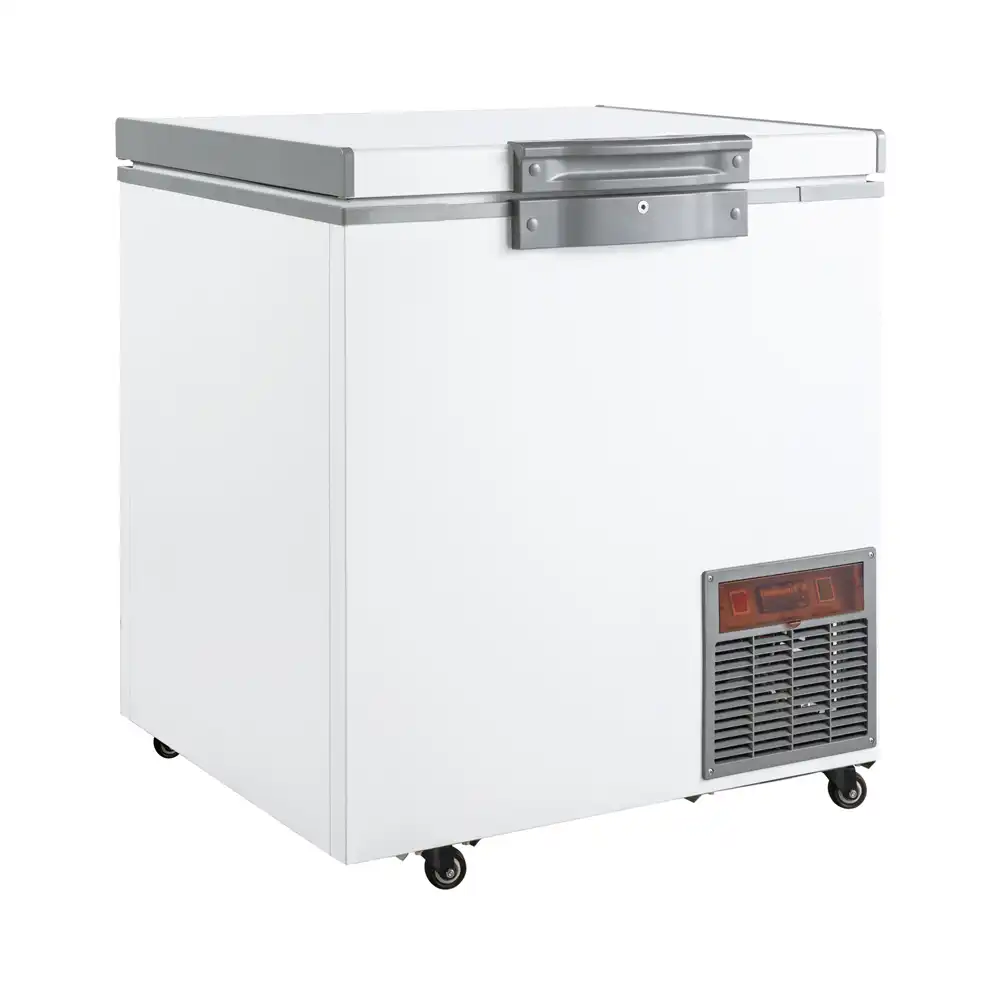 Insulation is the foundation. Polyurethane foam injected between the inner and outer stainless steel walls creates the thermal barrier. The thickness and density of this foam layer determine how much heat penetrates the cabinet before the compressor ever cycles on. Camay’s manufacturing uses cyclopentane-blown polyurethane insulation, a CFC-free process that achieves high R-value without the environmental compromise of older blowing agents. This matters in practice: a cabinet that holds its cold air longer cycles the compressor less frequently, directly reducing power draw over a shift.
Compressor type is the second lever. Many entry-level chef bases use smaller compressors that run nearly continuously to maintain temperature. Units with properly sized heavy-duty compressors — like the Cubigel model in the Camay MAR-60A chef base — reach setpoint quickly and then cycle off for meaningful periods. The upfront component cost is higher, but the operating pattern shifts from near-continuous runtime to intermittent cycling, which cuts total kilowatt-hours.
Refrigerant choice also affects both efficiency and regulatory compliance. R290 propane-based refrigerant has a global warming potential near zero and better thermodynamic properties than legacy HFC refrigerants, which means the system achieves target temperatures with less compressor work. The same Camay chef base runs on R290 and meets ENERGY STAR requirements, which means it has been tested against a recognized measurement standard rather than relying on manufacturer claims.
Digital temperature control closes the loop. Mechanical thermostats allow several degrees of temperature swing before reacting, which forces the compressor to over-cool to compensate. A digital controller with a thermistor sensor holds temperature within a narrower band, preventing unnecessary compressor runs. The MAR-60A includes a digital control system with optional IoT connectivity, which also allows remote monitoring — useful for multi-site operators tracking energy usage across locations.
How Manufacturing Quality Controls Lifetime Operating Cost
The components described above only deliver their rated efficiency if the cabinet is assembled to hold those thermal specifications over years of hard use. This is where manufacturing quality separates equipment that saves money from equipment that only promises to.
Door gaskets are a small detail with outsized impact. A magnetic gasket that seals evenly around the entire door perimeter prevents cold air leakage. When gaskets are poorly fitted or made from lower-grade materials that lose flexibility after exposure to kitchen heat and cleaning chemicals, cold air escapes steadily. The compressor runs extra cycles to compensate, and the energy meter spins faster. Camay builds its chef base with removable gaskets in a self-closing door design with lock and key — the self-closing mechanism ensures the door does not stay ajar during busy service, and the removable design means gaskets can be replaced in the field when they eventually wear, restoring the original seal rather than forcing the compressor to fight a permanent leak.
Stainless steel grade and fabrication quality affect more than appearance. A worktop that resists dents and does not warp under the weight of heavy stock pots remains flat over its life. The Camay MAR-60A uses a one-piece worktop with a drip-resistant V edge. The one-piece construction eliminates seams where food debris and moisture can collect and corrode the surface, and the structural rigidity means the top does not develop low spots that trap water and compromise sanitation.
Internal cabinet design contributes to both cooling efficiency and labor cost. Rounded interior corners reduce the time staff spend scrubbing gaskets and corners, but they also improve airflow along the interior walls. The unit’s ventilated cooling system uses a fan to circulate cold air evenly, which prevents warm pockets that would otherwise trigger the thermostat prematurely.
Selecting a Chef Base That Returns the Investment
Procurement teams evaluating chef bases should move beyond the upfront price comparison and ask three questions that predict long-term cost performance.
First, what insulation specification does the manufacturer publish? Look for polyurethane/cyclopentane foam with a stated thickness. If a datasheet omits insulation details entirely, assume the minimum thickness that passes a spot temperature test — not the thickness that withstands years of ambient heat from adjacent cooking equipment. The Camay chef base’s insulation is foamed-in-place polyurethane/cyclopentane, CFC-free, with the foam bonding directly to the stainless steel walls to eliminate air gaps that reduce effective R-value.
Second, which compressor brand is installed and what is the unit’s amp draw? The MAR-60A specification lists a Cubigel compressor and 115V/60Hz operation. Amp draw is not always published, but the unit’s ENERGY STAR certification provides an independent verification of efficiency. When comparing models, the Energy Guide label’s annual kilowatt-hour estimate is the most useful single number for operating cost projections — multiply it by the local utility rate to estimate annual electricity cost.
Third, what is the warranty structure on the compressor and on the cabinet? A manufacturer that offers longer coverage on the compressor expects it to last, which often correlates with properly sized components rather than marginal selections that barely meet the temperature spec on day one. The cabinet warranty should cover delamination of insulation, because foam that separates from the wall creates a thermal short circuit that the compressor cannot overcome.
| Evaluation Factor | What to Check | Why It Affects Cost |
|---|---|---|
| Insulation type | Polyurethane/cyclopentane, stated thickness | Higher R-value reduces compressor cycle frequency |
| Compressor brand | Cubigel, Embraco, or equivalent | Proper sizing prevents continuous runtime and extends service life |
| Refrigerant | R290 or next-generation low-GWP | Better thermodynamic efficiency, lower environmental compliance risk |
| Door design | Self-closing with replaceable gaskets | Prevents cold air leaks during service, maintains seal integrity over time |
| Certification | ENERGY STAR, DOE compliance | Independent verification that efficiency claims are test-proven |
Where the Cost Equation Shifts Over Time
The first-year operating cost between a standard chef base and an energy-efficient model may differ by only a hundred dollars or so, depending on utility rates and kitchen ambient conditions. The difference accumulates.
Year three is when sub-assembly quality starts to separate. A gasket that was marginal at installation may have lost enough flexibility to no longer seal fully. A compressor that was slightly undersized from the start has spent two years running longer cycles than intended, accumulating wear on the start components and run capacitor. The energy gap between the two units widens, and the cheaper unit also faces a higher probability of a service call — which costs both the repair invoice and the downtime when a cook line loses its refrigerated prep surface.
Year five and beyond, the insulation quality becomes the dominant factor. Foam that was improperly bonded or insufficiently thick may have developed air gaps, allowing moisture ingress that further degrades the thermal barrier. The energy-efficient unit with foamed-in-place polyurethane insulation bonded to the cabinet walls maintains its original R-value. The cumulative electricity cost difference between the two units can exceed the initial purchase price difference several times over.
This is the cost-control argument for energy-efficient chef bases: not that they save energy per se, but that they continue saving energy over a service life that can extend beyond ten years in a properly maintained kitchen.
Common Questions About Energy-Efficient Chef Base Ownership
What is the payback period for upgrading to an energy-efficient chef base?
Payback depends on local electricity rates and daily operating hours, but in a typical restaurant kitchen with a 16-hour daily runtime and a utility rate of $0.12 per kilowatt-hour, the incremental cost of a high-efficiency unit can be recovered within three to five years through reduced electricity consumption. The calculation should include not just the compressor savings but also reduced HVAC load — less waste heat released into the kitchen means the air conditioning system works slightly less, a secondary benefit that rarely appears in simple payback calculations.
Can an existing chef base be made more energy-efficient without replacement?
Partial improvements are possible but limited. Replacing the door gasket restores the original seal and may recover efficiency that was lost over time. Cleaning the condenser coil improves heat rejection and reduces compressor head pressure, which can lower amp draw. Adding a night curtain or cover during off-hours reduces cold air loss if the unit is not actively accessed. These steps are cost-effective maintenance practices, but they cannot replicate the efficiency of thicker factory-installed insulation or a digital control system designed into the unit from the start.
How does ambient kitchen temperature affect chef base energy consumption?
Ambient heat is the primary external factor driving compressor runtime. A chef base positioned directly adjacent to a grill or charbroiler faces cabinet surface temperatures that can exceed 100°F, which dramatically increases heat gain through the walls. Energy-efficient units with higher-grade insulation and properly sized compressors handle this condition with less runtime penalty. If your kitchen’s ambient temperature at the chef base location exceeds 90°F during service, the insulation specification becomes the most important factor in operating cost — more important than compressor brand or refrigerant type.
Does ENERGY STAR certification guarantee lower operating costs?
ENERGY STAR certification confirms the unit has been tested to a recognized efficiency standard, which provides a baseline assurance that the manufacturer’s efficiency claims are independently verified. However, the test conditions are standardized and may not reflect a specific kitchen’s ambient environment. A certified unit with thick insulation and a mid-size compressor will outperform a minimally compliant certified unit in a hot kitchen. The certification is a screening tool, not a comparison tool — use the annual kilowatt-hour estimate on the Energy Guide label to compare specific models.
What maintenance practices keep a chef base at peak energy efficiency over its service life?
Condenser coil cleaning is the single most impactful maintenance task. Dust and grease that accumulate on the coil fins insulate the heat rejection surface, forcing the compressor to run longer to achieve the same cooling effect. Clean coils every three months in a typical kitchen, or monthly if the unit is positioned near fryers. Door gasket inspection should be done quarterly; replace any gasket that shows cracking or fails the dollar-bill test. Verify the digital temperature setpoint annually against a calibrated thermometer to confirm the controller is reading accurately. For units like the Camay MAR-60A with optional IoT connectivity, remote temperature logging can identify gradual efficiency degradation before it appears on the electric bill. Share your kitchen layout and equipment placement details with our team at Sales@hzcamay.com or call +8618157202219 — we can help you match the right specifications to your actual operating conditions.
If you’re interested, check out these related articles:
Boost Kitchen Efficiency Workflow Optimization with Chef Base Fridges
Essential Commercial Chef Base Fridge Installation Tips
Boost Savings with Energy Efficient Commercial Upright Freezers
Optimizing Kitchen Efficiency with Integrated Worktop Refrigeration