
Energy efficient ice makers for hotels lower long-term energy costs when insulation quality and compressor efficiency take precedence over surface-level ratings. Drawing on 26 years of commercial refrigeration manufacturing, I have seen many hotels buy ice machines that look efficient on paper but consume significantly more power in real-world operation because of undersized condensers, poor insulation, or water-related scale buildup. This article breaks down the engineering factors that determine actual energy consumption in a hotel kitchen setting, from capacity planning to manufacturer claims, so you can make a buying decision that holds up over years of continuous use.
How Do You Determine the Right Ice Production Capacity for Your Hotel Kitchen?
Calculating daily ice production needs is the foundation of energy-efficient operation. An undersized machine will run almost continuously, wasting electricity and wearing out faster. Oversized units cycle on and off more often, which also wastes energy because the compressor draws high starting current each time.
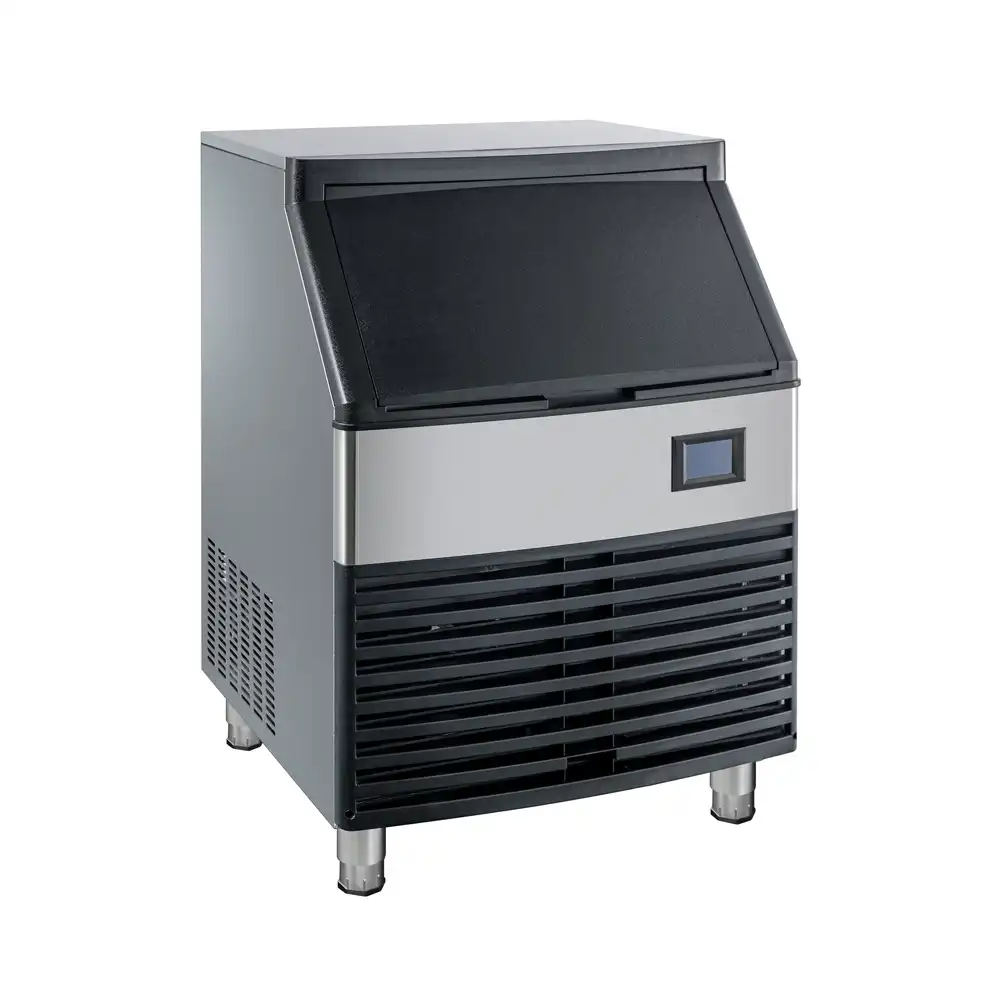
Start by listing every ice-dependent area: the main kitchen for food prep cooling, banquet and event service, in-room dining, the bar, and any satellite pantries. A full-service hotel with a restaurant and bar can easily require 224–336 kg (500–750 lbs) of ice per day during peak occupancy. High-end cocktail bars need clear, hard cube ice, which requires longer freezing cycles and thus consumes more energy than softer ice types. If your kitchen uses ice for displaying seafood or salad bars, flake ice is better but the machine often runs at lower efficiency due to the scraper and constantly frozen evaporator surface.
| Ice Type | Best Use | Energy Note |
|---|---|---|
| Cube ice | Cocktails, beverage service | Longer freeze cycle, moderate energy use per pound |
| Flake ice | Food display, salad bars | Constant auger motor, higher energy per pound |
| Nugget ice | Soft drinks, blended drinks | Moderate energy, continuous production possible |
What Is the Daily Ice Demand for a Typical Hotel?
Rather than guess, tally actual demand from each outlet. A 200-room hotel with two meals per guest and minimal bar service might need 90–135 kg (200–300 lbs) daily. Add banquet service for weddings and conferences, and demand can triple on certain days. The ice maker must handle peak load, not average load. If you size for average, the machine will overwork during high demand, driving up energy consumption and shortening component life.
How Does Ice Type Influence Capacity Needs?
Cube ice is the most common, but the ice type changes the machine’s internal dwell time. Nugget ice makers are slightly less energy efficient per pound because the compressor runs longer to keep the evaporator cold enough for extrusion. Flake ice machines draw constant power for the auger motor. So when selecting capacity, consider the ice type’s real energy consumption, not just the rated production.
What Engineering Features Actually Impact Ice Maker Energy Efficiency?
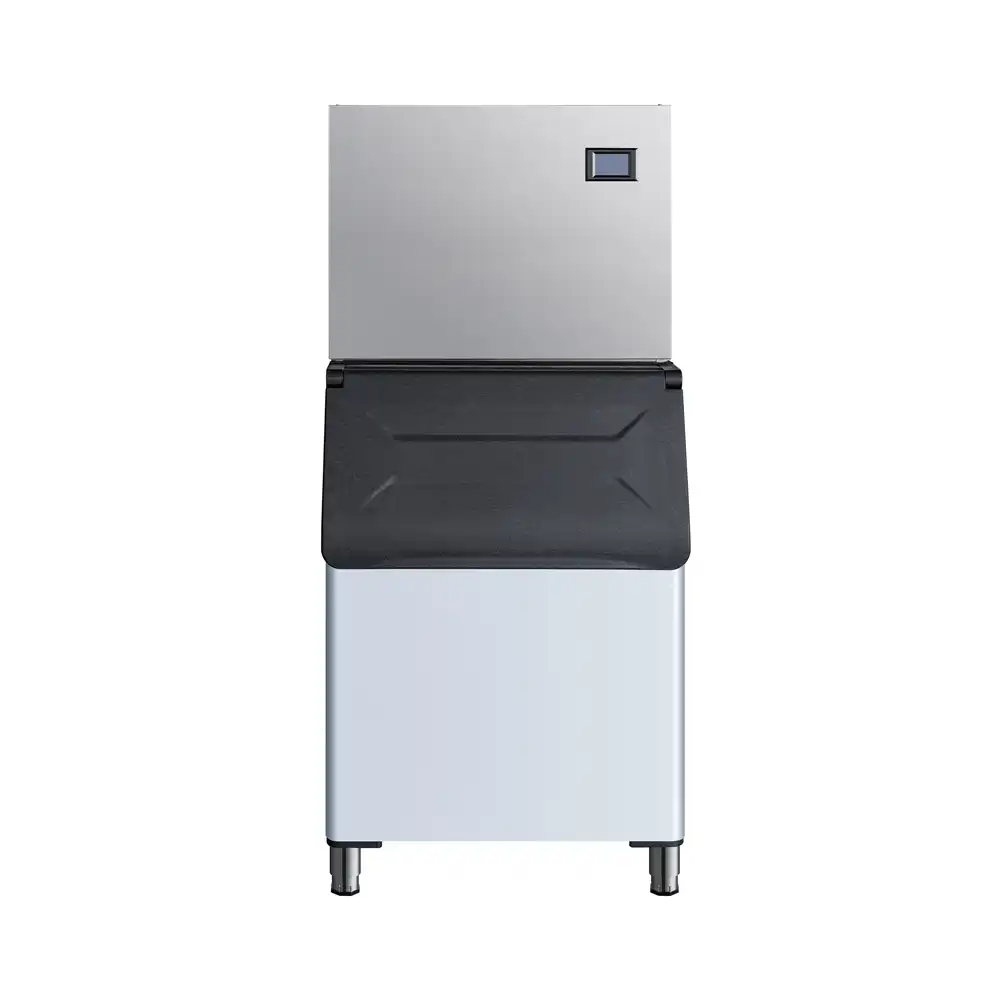
Energy star ratings give a snapshot, but the hardware inside the machine determines how much power it draws over months of operation. The first thing I check is insulation. Many manufacturers use thin, low-density foam that allows heat to slip into the ice storage bin, forcing the compressor to run more to maintain temperature. At Camay, our ice makers use a food-grade PE liner with whole-foaming technology and polyurethane/cyclopentane insulation, which keeps the cold in and significantly reduces compressor cycle time. The difference can be 10–15% lower daily energy consumption compared to a poorly insulated competitor with the same rated capacity.
The compressor and refrigerant pair is equally critical. High-efficiency compressors like the Cubigel units we use in our FB series maintain consistent cooling without hunting. R290 refrigerant, a hydrocarbon with low global warming potential, also has better thermodynamic properties than older HFCs, meaning it transfers heat more efficiently and reduces compressor load. That contributes directly to lower energy bills and less heat rejection into the kitchen, which can also ease the load on the HVAC system.
Why Does Insulation Quality Matter So Much?
A hotel ice maker runs 24/7. Every hour, heat from the kitchen tries to penetrate the storage bin. If insulation is subpar, the compressor cycles on more frequently to pull out the same heat. Over a year, this adds hundreds of kilowatt-hours. Look for manufacturers that provide insulation thickness and density specifications. A well-insulated bin will keep ice frozen longer, so the compressor can stay off longer per cycle.
How Do Compressor and Refrigerant Choices Influence Energy Use?
Compressors vary in efficiency based on design and displacement. A fixed-speed compressor that is correctly matched to the evaporator and condenser will run at its sweet spot, drawing least power for the heat load. Variable-speed compressors can adjust to demand and save more energy in fluctuating loads. R290’s lower compression ratio requirement means less work for the motor. So when evaluating ice makers, ask about the compressor brand and refrigerant type, not just the energy star rating.
How Does Water Quality Affect Ice Maker Efficiency and Longevity?
Water quality is often overlooked in energy calculations, but it has a direct effect. Hard water containing calcium and magnesium forms scale on the evaporator plate and water circuit. A thin layer of scale acts as an insulator, forcing the refrigeration system to work harder to freeze water. According to industry observations, scale buildup as thin as 1.5 mm can increase energy consumption by 12–18%. In a hotel, where dozens of gallons of water pass through the ice maker daily, this happens fast unless prevented.
The solution is a combination of water filtration and machine self-cleaning. Multi-stage filtration removes sediment, chlorine, and hardness minerals. Our FB series ice makers include a self-cleaning function that flushes the water circuit and evaporator surface, reducing manual cleaning intervals and maintaining heat transfer efficiency. Without proper filtration, you might find yourself descaling the ice maker every few weeks, and each cleaning cycle with chemicals adds downtime and energy cost.
If your hotel’s water supply is particularly hard (above 150 ppm total dissolved solids), investing in a water softener or reverse osmosis system upstream can pay back through lower energy bills and longer machine life. It also improves ice taste and clarity, which matters for guest satisfaction.
If your hotel kitchen’s ice maker selection involves varying ice types and water conditions, confirming the correct filtration and machine configuration before ordering can save thousands in operating costs. Reach out at Sales@hzcamay.com with your water quality report and daily ice needs, and we will give you a tailored recommendation that matches your actual kitchen conditions.
What Maintenance Practices Keep Your Ice Maker Running Efficiently?
Even the most efficient ice maker loses its edge without routine maintenance. The condenser coil, whether air-cooled or water-cooled, collects grease and dust in a kitchen. A dirty condenser raises head pressure, causing the compressor to work harder and draw more current. I have seen air-cooled units in hotel kitchens where the condenser hasn’t been cleaned in six months, and the energy consumption jumped 20% over the baseline. Clean the condenser coil every month, and more often if the kitchen has heavy cooking with airborne grease.
Inspect the water system for scale and slime. The self-cleaning feature helps, but you still need to periodically sanitize the bin and check the water inlet valve for clogs. A partially blocked water valve can slow the fill cycle, causing longer freeze times and ice bridging, which wastes energy because the machine runs longer to produce the same amount of ice.
Keep at least 6 inches of clearance on all sides, especially for air-cooled models. A machine pushed against a wall or with boxes stacked on top cannot reject heat effectively, driving up electricity use.
How Can You Evaluate Ice Maker Energy Claims Before Buying?
Manufacturers often list energy consumption under controlled conditions—ambient temperature 21°C, water temperature 15°C, and a clean condenser. In a hotel kitchen, the ambient is often 30–35°C near cooking equipment, and the machine runs in a higher heat zone. So the actual energy use can be 15–25% higher than the label suggests.
To evaluate claims, ask for the energy consumption data at the climate class your kitchen operates in. Our Camay ice makers are tested at ST~T climate class (38°C ambient, 53% humidity), which represents a tropical/hot environment. If a manufacturer only provides data at ISO standard room conditions, assume real-world numbers will be higher.
Look for certifications beyond ENERGY STAR: DOE compliance in the US, CE for Europe, and ETL safety and sanitation marks. These indicate the machine has passed strict performance tests. Also request the total cost of ownership calculation that includes energy cost over 5 years at your local electricity rate and expected maintenance costs. A machine that costs 10% less up front but uses $300 more electricity per year is a poor investment.
What Certifications Should You Verify?
Certifications like ETL Safety, ETL Sanitation (NSF standard), and DOE ensure the ice maker meets safety, sanitation, and minimum energy standards. If buying internationally, check for CE and local certifications. In my experience, hotels that skip this step sometimes end up with units that cannot be legally installed per local codes.
How Do You Calculate Total Cost of Ownership for an Ice Maker?
Take the rated daily energy consumption in kWh, multiply by 365, then by your electricity cost per kWh. Add estimated annual maintenance (filter replacements, cleaning chemicals). Compare with the machine’s expected life. For example, a 500-lb/day ice maker using 5.5 kWh/day at $0.12/kWh costs $240 per year in electricity. Over 8 years, that’s $1,920. If a more efficient model uses 4.2 kWh/day, you save $83 per year, totaling $664 over 8 years, which more than offsets a higher purchase price.
Selecting an ice maker based on engineering fundamentals rather than marketing labels delivers real energy savings. If your hotel kitchen handles banquets and room service simultaneously, confirming capacity and water treatment early prevents costly rework. For a detailed energy and cost analysis, contact Zhao Ming at +86 181 5720 2219 or Sales@hzcamay.com.
Common Questions About Hotel Kitchen Ice Makers
What is the difference between air-cooled and water-cooled ice makers in terms of efficiency?
Air-cooled machines use fans to dissipate heat and are simpler to install. They work well if the kitchen has good ventilation, but they use more electricity to run the fan and can raise kitchen temperature. Water-cooled units use a water stream to remove heat, which is quieter and more efficient in hot kitchens, but they consume a significant amount of water—often 100 gallons or more per 100 lbs of ice produced. If water cost is not a concern, water-cooled can be slightly more energy efficient, but for most hotels, air-cooled with proper ventilation is the better overall choice.
How often should I clean the ice maker to maintain efficiency?
Clean the condenser coil monthly, descale the water circuit every 3–6 months depending on water hardness, and sanitize the storage bin weekly to prevent slime. A dirty machine can use 15–25% more energy. Setting a maintenance schedule with your kitchen team is essential.
Does a larger ice production capacity always mean higher energy use?
Not necessarily proportionate. Larger machines have more efficient components per pound of ice produced, but they cycle off more. A 1,000-lb/day machine might use 6–7 kWh/day, while a 500-lb/day unit uses 4–5 kWh/day. The larger machine will have shorter run times but draws more power when running. Sizing correctly to avoid under- or over-sizing is the key to minimizing energy cost per pound.
What should I look for in an ice maker to last in a hotel kitchen?
Stainless steel construction, a heavy-duty compressor matched to the application, and a self-cleaning function. The evaporator should be a high-quality copper-nickel alloy that resists corrosion from water chemicals. At Camay, we use copper-nickel evaporators that freeze and harvest faster while resisting scale. Also check that the control board is sealed against moisture, and that the manufacturer offers accessible spare parts and technical support for the expected lifetime of the machine.
Can I use undercounter ice makers for hotel banquet service?
Undercounter units typically produce 50–100 lbs per day, which is insufficient for a banquet operation that can require 200+ lbs in an evening. They are suitable for satellite stations or executive lounges. For main hotel kitchens, a full-size modular ice maker with remote condenser is preferable to keep heat and noise out of the kitchen. If your hotel is planning a kitchen upgrade or new build, sharing your ice demand profile and water quality report with our engineering team lets us recommend the right ice maker and complementary filtration. You can reach Zhao Ming and the Camay team at Sales@hzcamay.com or call +86 181 5720 2219. We will send a detailed energy and cost analysis for your specific conditions.
If you’re interested, check out these related articles:
Boost Kitchen Efficiency Workflow Optimization with Chef Base Fridges
Upright Freezer vs Refrigerator Key Differences Explained
Essential Maintenance Tips for Commercial Reach In Refrigerators
Boost Efficiency Energy Efficient Chef Base Units for Commercial Kitchens
How to Choose the Best Chef Base Refrigerator for Your Kitchen