

An energy-efficient pizza worktable does not earn its keep through a label alone. The real savings come from a combination of purposeful engineering—high-density insulation, a carefully matched compressor and refrigerant—and consistent maintenance that prevents gradual energy waste. Over twenty years in commercial refrigeration manufacturing, I have watched restaurants overlook the simplest performance-preserving routines, leaving efficiency on the table. Choosing the right equipment and keeping it running at peak condition puts control of electricity costs back where it belongs: with the operator.
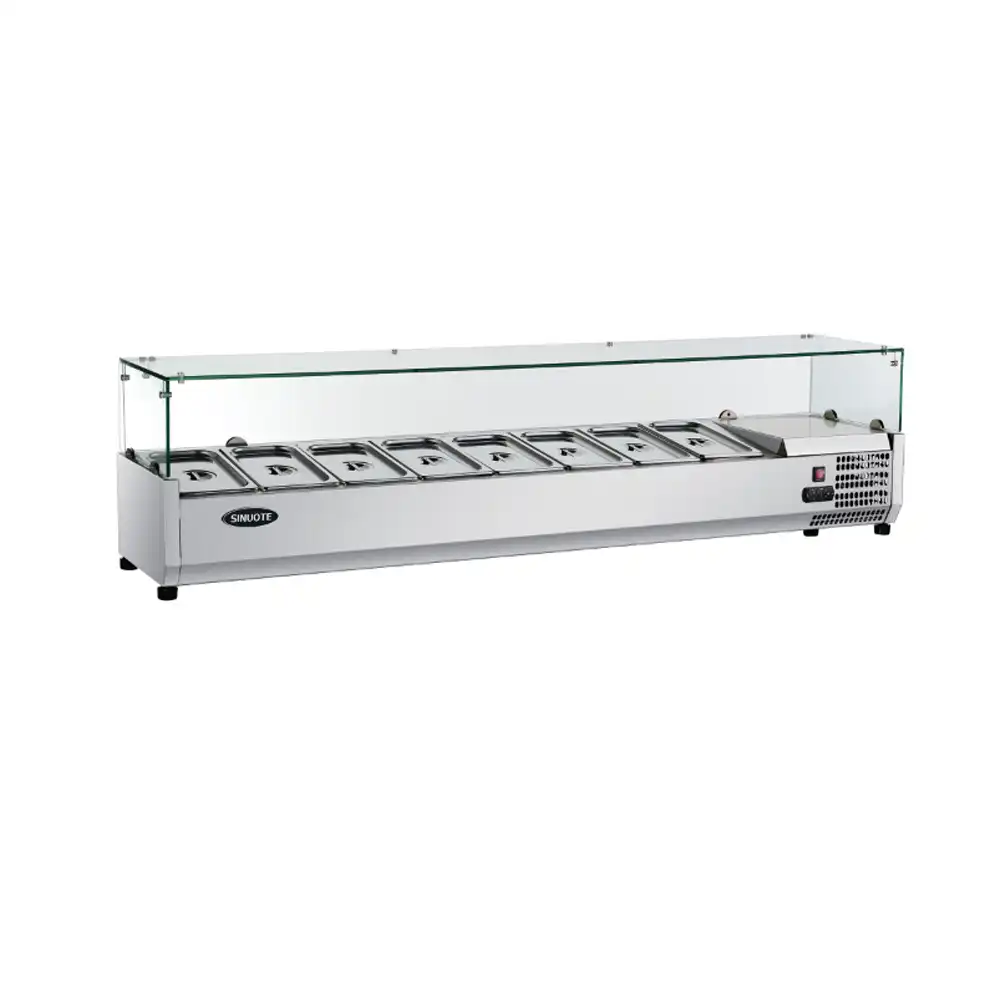
What Makes a Pizza Worktable Energy Efficient?
Energy efficiency in a pizza prep table is not a single feature. It is the result of several design and component choices working together. The insulation that lines the cabinet walls, the refrigerant flowing through the evaporator, the compressor’s cycle logic, and the quality of door gaskets all contribute to the daily kilowatt-hour consumption. A unit running R290 refrigerant, for example, typically operates at lower discharge temperatures than older R134a systems, which reduces compressor workload and power draw. Pair that with polyurethane foam insulation and a well-calibrated digital thermostat, and the compressor spends fewer hours cycling on and off. Certifications like ENERGY STAR provide a useful baseline, but they do not tell you whether the insulation thickness or condenser location was chosen deliberately for efficiency or simply to meet the minimum pass mark.
Key Specifications for Selecting an Energy-Efficient Pizza Worktable
When comparing models, look past the pan count and exterior dimensions. The specifications that drive energy performance are buried deeper, and they matter.
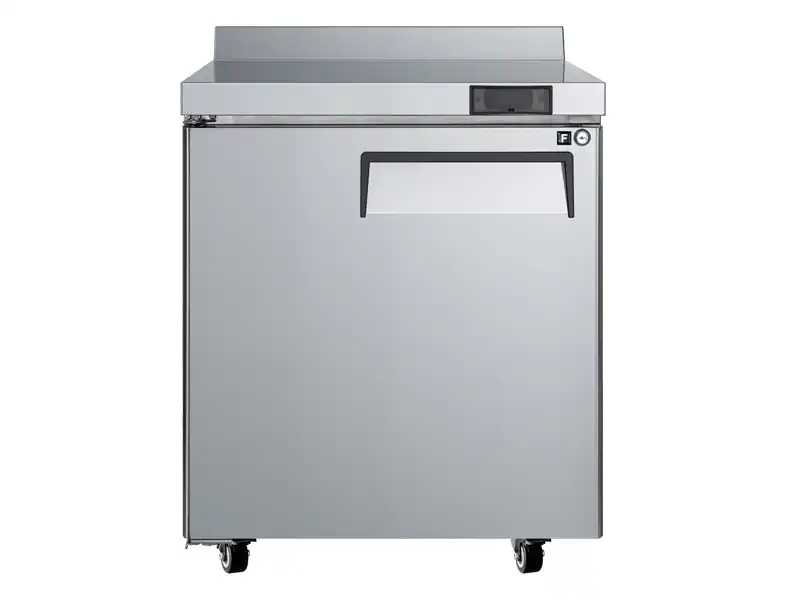
| Specification | What to Look For | Why It Matters |
|---|---|---|
| Refrigerant | R290 or similar hydrocarbon | Lower global warming potential and better thermodynamic efficiency than legacy refrigerants |
| Insulation | Polyurethane or Cyclopentane, minimum 40 mm thickness | Reduces heat gain; thinner foam forces the compressor to run longer |
| Compressor | Cubigel, Embraco, or Secop | Reliable brands with wide operating envelopes protect efficiency under varying ambient temperatures |
| Temperature Control | Digital thermostat with ±0.5°C accuracy | Prevents overcooling and unnecessary defrost cycles |
| Door Gaskets | Removable magnetic gaskets | Damaged or loose gaskets leak cold air and raise consumption by 10–15% |
| Certifications | ENERGY STAR, ETL, DOE | Independent verification that efficiency claims are tested, not assumed |
A pizza kitchen running a 1,800 mm table with six GN 1/3 pans might be tempted to choose the lowest-priced option. But if that unit uses a generic compressor and thin insulation, the electricity meter will claw back the savings within the first year. I have seen identical pan-capacity tables from different ranges draw 140 W and 190 W under the same ambient conditions simply because of insulation density and compressor selection. Those 50 W compound into measurable money over a 16-hour operating day.
If your kitchen’s energy usage patterns are unusual—extended closing hours, open-air shop fronts, or seasonal temperature spikes—it is worth confirming the table’s rated ambient temperature range with the manufacturer before committing. Reach out at Sales@hzcamay.com with your operating conditions and we can confirm the appropriate model.
Maintenance Practices That Directly Impact Energy Consumption
Maintenance is where the efficiency you paid for is either preserved or quietly eroded. The most significant factor is the condenser coil. In a pizza kitchen, airborne flour, oil vapor, and dust settle on coil fins and choke the heat exchange. A coil caked with debris forces the compressor to run longer and hotter, pulling extra amps for the same cooling output. Remove the front panel and brush or vacuum the coil monthly; in heavy flour environments, every two weeks. Our own field observations show that a plugged condenser can raise energy consumption by 20% before a single overtemp alarm triggers.
Door gaskets are the next pressure point. Even a 1 mm gap along the seal path leaks conditioned air. Replace gaskets annually on a high-volume table, and sooner if you see cracks or feel cold air escaping. Use the removable gasket design on well-engineered tables to make replacement a five-minute task rather than a service call.
Temperature verification rounds should be part of the shift checklist. Place an independent thermometer in the rail and the cabinet once a week and compare it to the digital display. A drift of more than 1°C usually signals a sensor misalignment or low refrigerant charge. Addressing either early prevents the compressor from running extended cycles to chase a phantom setpoint. Airflow inside the cabinet also demands attention: packing ingredient bins against the rear wall blocks the cold air curtain and creates warm spots that the thermostat fights by overcooling the rest of the compartment.
Balancing Initial Investment with Long-Term Energy Savings
A pizza worktable with high-performance insulation and a branded compressor typically costs more upfront. The table below illustrates how that premium can translate into net savings over a five-year ownership cycle, based on a constant $0.12 per kWh rate and 16 hours of daily operation.
| Scenario | Daily Energy Draw | Annual Energy Cost | 5-Year Cost |
|---|---|---|---|
| Entry-level table (190 W) | 3.04 kWh | $133 | $665 |
| High-efficiency table (140 W) | 2.24 kWh | $98 | $490 |
| Savings | 0.80 kWh/day | $35 | $175 |
The difference narrows or widens with local electricity rates, but in every case the gap grows over the life of the equipment. The $175 saved per unit across a chain of three stores already covers the cost of a preventive maintenance visit or replacement parts. When the table also offers a removable condenser access panel and easy gasket change—design choices that lower maintenance labor—the operating cost advantage compounds.
Installation Tips for Sustained Energy Performance
Even a well-chosen table underperforms if it is squeezed into a hot corner. Leave at least 150 mm of clearance behind and beside the unit for condenser airflow. Do not pile sheet trays or ingredient bins on top of the compressor deck. Install the table away from open ovens, grills, and direct afternoon sunlight. Use the adjustable feet or casters to level the cabinet on uneven flooring—an off-level door seal is as wasteful as a worn gasket. Finally, plug the table into a dedicated circuit. Sharing a line with a high-draw mixer or dough machine can cause voltage drops that stress the compressor and shorten its service life.
Practical Questions About Energy-Efficient Pizza Worktables
What is the single most effective maintenance task for keeping energy consumption low?
Regular condenser coil cleaning. In a pizza kitchen, flour and oil buildup cuts heat rejection efficiency faster than any other factor. A monthly visual check with a brush and shop vacuum usually recovers most of the lost efficiency.
How do I know if my current pizza worktable is wasting energy?
Two signs stand out. First, the compressor runs continuously during the afternoon peak without cycling off; second, the condenser area feels hotter than usual or the fan runs noisily. If the cabinet temperature is still correct, start by cleaning the condenser and checking the door gasket alignment. If consumption stays high after that, the refrigerant charge or the thermostat calibration may need professional attention.
Do ENERGY STAR certified tables guarantee the lowest operating cost?
They guarantee that the unit passed a specific test protocol, but not that every ENERGY STAR table uses the same efficiency margin. Two certified tables can still show a measurable power difference based on insulation thickness, compressor type, and door seal design. Treat the certification as a minimum filter, then compare rated wattage and ambient temperature range.
Can a pizza worktable be too energy efficient for its own good?
That is a misconception. A table designed for low energy draw will still hold temperature safely if it is sized correctly for the kitchen’s production volume and ambient environment. Undersizing the table to save power, however, risks food safety. Always match capacity to peak pan count and throughput, then chase the lowest power draw within that correctly sized range.
How does ambient temperature affect real-world energy performance?
A table rated for a climate class of ST~T can operate in ambient temperatures up to 38°C. In a kitchen that regularly exceeds 35°C near the prep line, the compressor works harder and the effective daily energy consumption will be higher than the nameplate rating. In such cases, investing in thicker insulation and a higher-capacity compressor delivers better long-term value. If your kitchen layout places the pizza station in a consistently hot zone, share your floor plan with us at Sales@hzcamay.com or call +8618157202219 and we can recommend a configuration matched to the actual thermal load.
If you’re interested, check out these related articles:
Boost Efficiency Energy Efficient Chef Base Units for Commercial Kitchens
Choosing the Best Commercial Reach In Fridge for Your Restaurant
How to Choose the Best Chef Base Refrigerator for Your Kitchen