

Running a commercial freezer operation means watching energy costs closely. Those utility bills add up fast, and the difference between an efficient system and a neglected one can mean thousands of dollars annually. After years of designing and manufacturing commercial refrigeration equipment, we’ve seen firsthand how small adjustments in temperature management, maintenance routines, and equipment choices translate into measurable savings on the balance sheet.
Temperature Settings That Actually Save Money
Getting temperature right is where most energy savings begin. Many operators set their freezers colder than necessary, thinking it provides extra protection for stored products. It doesn’t. What it does is force compressors to cycle more frequently, consuming power without delivering any real benefit to food quality or safety.
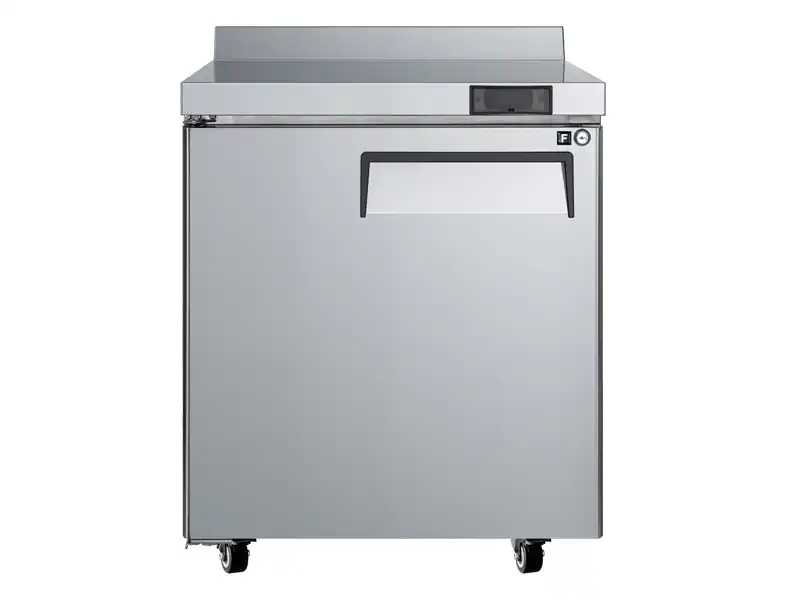
The sweet spot for standard commercial freezers sits between -18°C and -23°C (0°F to -10°F). At these temperatures, frozen goods remain safely preserved while the system operates within its designed efficiency range. Our Camay Commercial Worktop Refrigerator Cooler Fridge maintains -22°C to -18°C (-8°F to 1°F) through smart digital controls that prevent the kind of temperature drift that wastes energy. The 1-Door Commercial Solid Door Freezer operates efficiently within -25°C to -15°C, while Ultra Freezer models handle specialized applications requiring -15°C to -45°C.
Calibrating thermostats accurately matters more than most people realize. A sensor reading two degrees off target means the compressor compensates constantly, shortening its lifespan and increasing power draw. Regular monitoring catches these issues before they become expensive problems.
| Freezer Type | Recommended Temperature Range | Energy Impact | Food Safety Impact |
|---|---|---|---|
| Standard Commercial | -18°C to -23°C (0°F to -10°F) | Optimal | Excellent |
| Ice Cream Freezers | -23°C to -26°C (-10°F to -15°F) | Higher | Excellent |
| Blast Freezers | -35°C to -40°C (-31°F to -40°F) | Highest | Rapid Freezing |
| Ultra-Low Freezers | -45°C to -86°C (-49°F to -123°F) | Specialized | Scientific Storage |
Maintenance That Pays for Itself
Preventative maintenance isn’t glamorous, but it delivers one of the clearest returns on investment in commercial refrigeration. A freezer that receives regular attention maintains consistent compressor efficiency and reliable heat exchange. One that gets ignored gradually loses performance until something fails entirely, usually at the worst possible time.
Coil Cleaning Schedules That Make Sense
Condenser coils on the exterior dissipate heat. Evaporator coils inside absorb it. When dust accumulates on condenser coils, airflow becomes restricted, and the compressor works harder to achieve the same cooling effect. This translates directly into higher electricity consumption.
In high-dust environments like busy kitchens or warehouses near loading docks, monthly condenser coil cleaning keeps systems running efficiently. Cleaner settings can stretch this to quarterly intervals. Evaporator coils typically need attention during defrost cycles, roughly twice per year, to maintain proper heat exchange.
Door Seals and Insulation Integrity
A compromised door seal creates a constant energy leak. Cold air escapes, warm humid air enters, and the freezer runs more frequently trying to compensate. Frost buildup accelerates, further reducing efficiency.
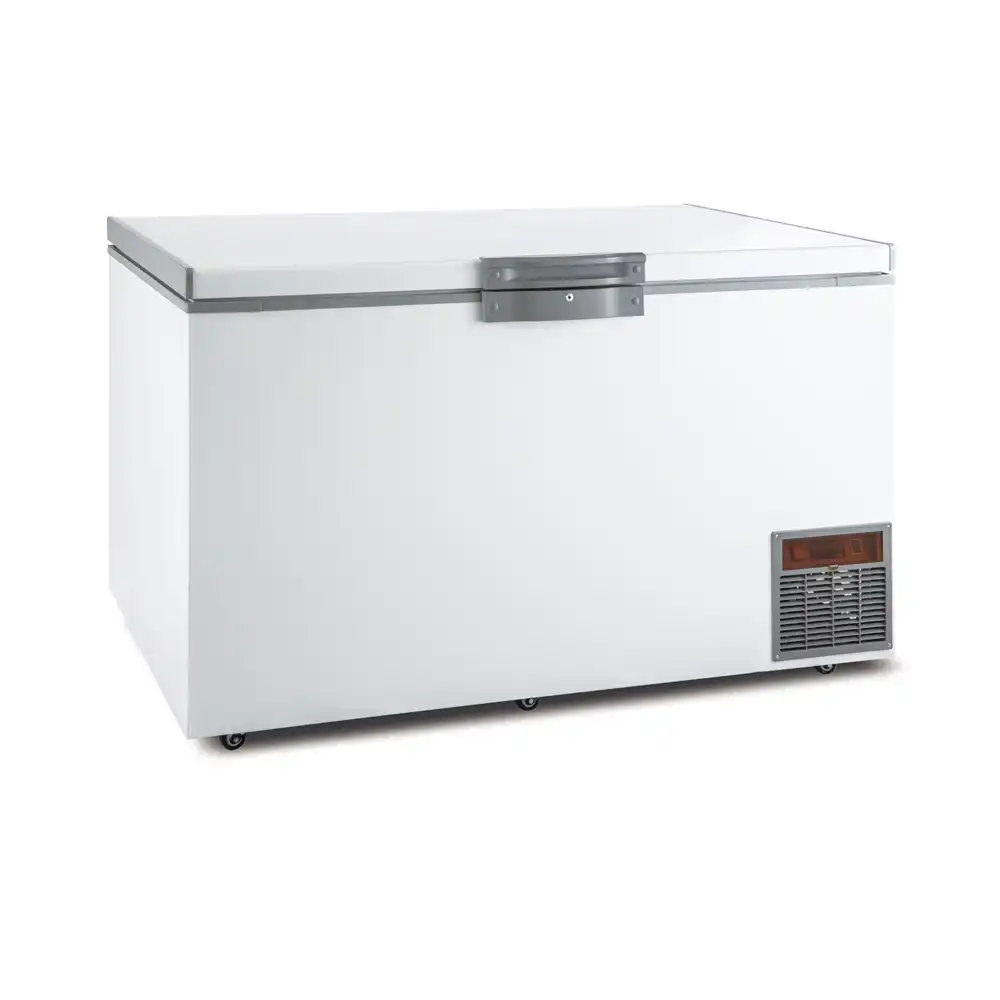
Our Camay Commercial Solid Door Undercounter features removable gaskets specifically designed for easy cleaning and replacement. When a seal shows cracks or gaps, replacing it promptly prevents the cascade of problems that follow. The polyurethane/Cyclopentane foamed insulation standard in our units minimizes heat transfer through walls, but even the best insulation can’t overcome a failing door seal.
Maintenance Checklist
| Frequency | Task | Details |
|---|---|---|
| Daily | Door seal inspection | Check for proper closure and visible damage |
| Daily | Temperature verification | Confirm readings match setpoints |
| Weekly | Exterior cleaning | Wipe down surfaces, check for obstructions |
| Weekly | Interior organization | Ensure airflow paths remain clear |
| Monthly | Condenser coil cleaning | Remove dust buildup (more often in dusty environments) |
| Quarterly | Gasket deep cleaning | Clean gasket grooves and inspect for wear |
| Semi-annually | Evaporator coil service | Clean during scheduled defrost cycles |
| Annually | Professional inspection | Comprehensive system evaluation |
Placement and Loading Strategies
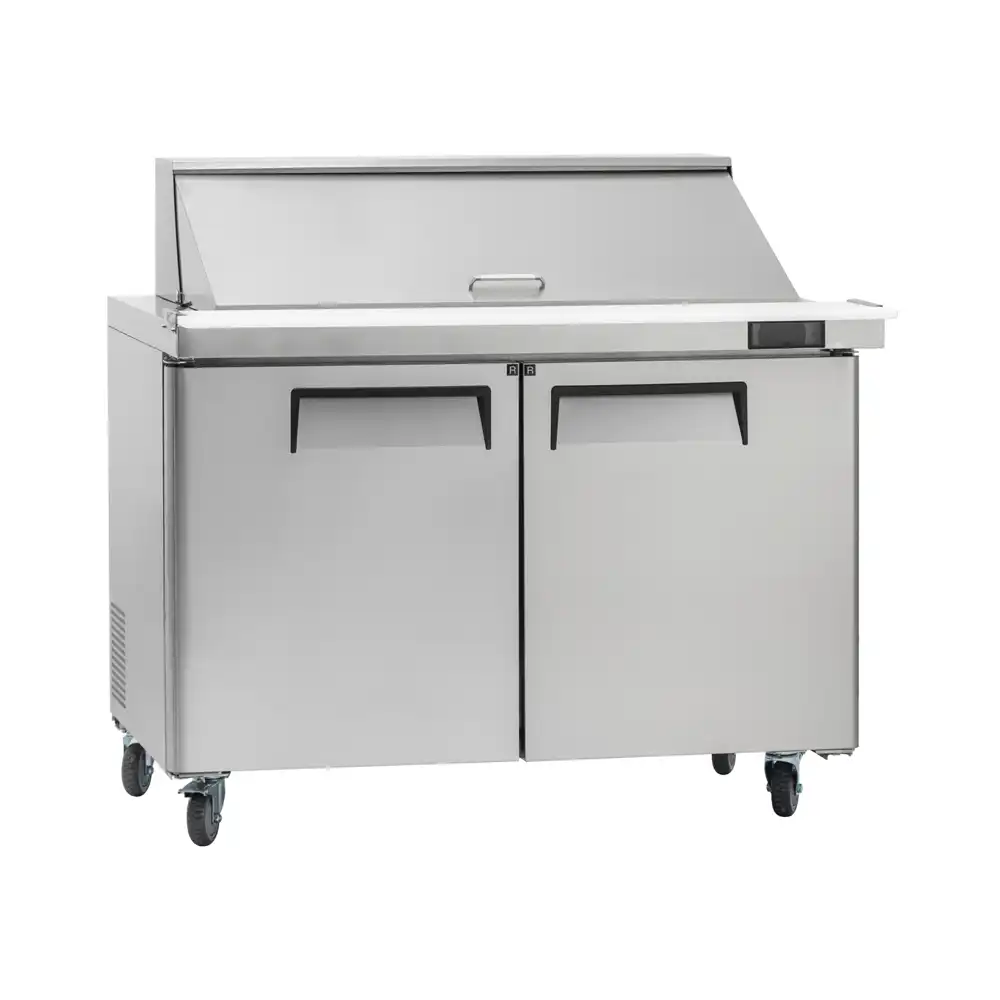
Where you put a large-capacity freezer and how you fill it affects energy consumption more than many operators expect. A freezer pushed against a wall with minimal clearance struggles to dissipate heat efficiently. The compressor runs longer and harder, consuming extra power to achieve temperatures that a properly positioned unit reaches easily.
Maintain at least 15 cm (6 inches) of clearance around the unit. This allows adequate airflow for heat dissipation. Room temperature matters too. A freezer operating in a 25°C environment works less than one in a 35°C space. Our products perform optimally in ambient temperatures up to 38°C (100.4°F) with 53% humidity, but cooler surroundings always mean lower operating costs.
Loading practices create their own efficiency dynamics:
- Avoid overfilling because restricted airflow creates warm spots that force longer compressor cycles
- Keep units reasonably full since frozen items act as thermal mass, helping maintain stable temperatures during door openings
- Organize inventory logically to reduce the time doors stay open during retrieval
- Pre-cool hot items to room temperature before loading to prevent sudden temperature spikes
- Stack containers thoughtfully to allow cold air circulation without blocking vents
Modern Technology Worth the Investment
Refrigeration technology has advanced significantly in recent years, and the efficiency gains from modern equipment are substantial. ZHEJIANG KAIMEI integrates these innovations into our Product Catalogue because they deliver real value to operators managing energy costs.
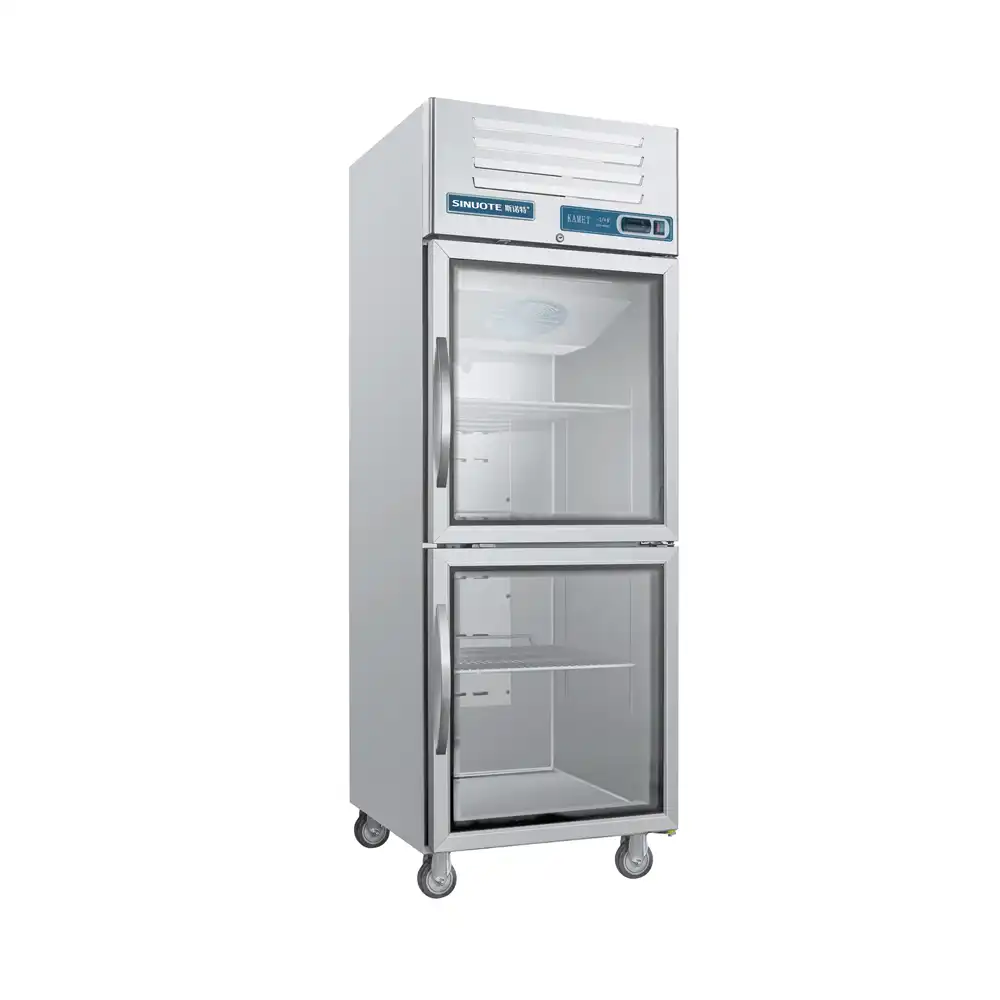
Smart digital temperature controls with optional IoT and WiFi functions enable precise monitoring and remote management. Instead of discovering a temperature problem during a morning inspection, operators receive alerts immediately. This precision minimizes fluctuations that waste energy and compromise product quality.
High-efficiency compressors from manufacturers like Cubigel and SECOP consume less power while delivering reliable cooling performance. Eco-friendly R290 refrigerant reduces environmental impact while providing excellent thermodynamic properties. The polyurethane/Cyclopentane foamed insulation in our units is CFC-free and delivers outstanding thermal retention.
LED lighting inside freezer compartments generates less heat than traditional bulbs, reducing the cooling load while cutting lighting energy consumption. Variable speed compressors adjust output based on actual demand rather than cycling between full power and off, maintaining more consistent temperatures with lower overall energy use.
| Feature | Older Freezers | Modern ZHEJIANG KAIMEI Freezers |
|---|---|---|
| Compressor Type | Single-speed | High-efficiency, often variable speed |
| Refrigerant | HFCs (e.g., R404A) | Eco-friendly R290 |
| Insulation | Thinner, less efficient foams | Thick Polyurethane/Cyclopentane, CFC-free |
| Temperature Control | Analog, basic digital | Smart digital, IoT/WiFi optional |
| Certifications | Fewer, less stringent | ETL, DOE, ENERGY-STAR, CE, ISO |
| Energy Consumption | Higher | Significantly lower |
The Numbers Behind Energy Efficiency
Calculating return on investment for energy efficiency improvements reveals their true value. Upgrading an older large-capacity freezer to a modern Energy Star certified unit can reduce electricity consumption by 30-50%. For a unit running continuously, this represents substantial annual savings that compound over the equipment’s lifespan.
Beyond direct utility cost reductions, energy-efficient operations contribute to a smaller carbon footprint. This matters increasingly for businesses facing sustainability requirements from customers, regulators, or corporate policies. Some jurisdictions offer incentives or rebates for energy-efficient equipment purchases, improving the payback period further.
The cost-benefit analysis typically shows that initial investments in efficient equipment or comprehensive maintenance programs pay for themselves within two to four years through reduced operating expenses. After that payback period, the savings continue for the remaining life of the equipment.
Why Efficiency Matters Beyond the Utility Bill
Energy efficiency in commercial refrigeration serves multiple business objectives simultaneously. Lower power consumption reduces operating costs directly. Stable, well-maintained temperatures prevent food spoilage and the associated waste costs. Reliable systems avoid the emergency repair expenses and lost inventory that come with unexpected failures.
Regulatory compliance increasingly requires attention to energy consumption and refrigerant choices. Equipment meeting current standards positions businesses well for future requirements. Brand reputation benefits too, as customers and partners increasingly value sustainable practices.
Common Questions About Large-Capacity Freezer Efficiency
How much energy does a large commercial freezer use?
Energy consumption varies considerably based on size, age, insulation quality, usage patterns, and ambient conditions. Large-capacity commercial freezers typically consume between 1,000 and 5,000 kWh annually, though specific figures depend on the model and operating environment. Regular maintenance and proper temperature settings minimize consumption within any given unit’s range.
What temperature setting balances food safety with energy savings?
For most large-capacity commercial freezers, -18°C to -23°C (0°F to -10°F) provides the optimal balance. This range maintains food safety while keeping the system within its efficient operating parameters. Setting temperatures colder than this increases energy consumption without improving preservation outcomes.
Will upgrading an old freezer really reduce electricity costs?
Modern large-capacity freezers incorporate significant efficiency improvements over older models. Advanced compressor technology, superior insulation, smart controls, and better door seals all contribute to lower power consumption. Operators typically see 30-50% reductions in electricity use after upgrading, with the initial investment recovering through utility savings within a few years.
What indicates a freezer is running inefficiently?
Watch for unusually high electricity bills, excessive frost buildup, compressors running almost continuously, warm spots inside the compartment, and visible damage to door seals. Any of these symptoms suggests efficiency problems that maintenance or equipment upgrades can address.
How does ZHEJIANG KAIMEI approach energy efficiency in equipment design?
We integrate high-efficiency compressors, superior-grade insulation, and precision temperature controls into our commercial refrigeration equipment. Our commitment to sustainable cold chain solutions means our products meet or exceed industry energy standards while delivering reliable performance. Certifications including ETL, DOE, ENERGY-STAR, CE, and ISO reflect this commitment to quality and efficiency.
Work With ZHEJIANG KAIMEI on Your Cold Storage Needs
ZHEJIANG KAIMEI CATERING EQUIPMENT CO., LTD. manufactures commercial refrigeration equipment designed for efficiency and reliability. Our engineering team can help identify the right solutions for your specific operational requirements. Reach us at +8618157202219 or Sales@hzcamay.com to discuss your cold storage challenges.
If you’re interested, check out these related articles:
Essential Maintenance Tips for Commercial Reach In Refrigerators
Chef Base Fridge vs Undercounter Fridge Which Is Best for Your Kitchen