
Hotel kitchens operate under pressure that most people never see. A single compromised ingredient can cascade into a service failure, a guest complaint, or worse. Standard refrigeration handles everyday storage well enough, but when you’re working with high-value seafood, specialty meats, or delicate produce, the margin for error shrinks considerably. Ultra freezers address this gap directly. They push temperatures far below conventional limits, which fundamentally changes how long ingredients remain safe and how much of their original quality survives storage. For operations juggling premium menus, seasonal purchasing, and tight waste targets, this technology shifts what’s operationally possible.
How Ultra Freezer Technology Works in Commercial Kitchens
The difference between standard freezing and ultra-low temperature freezing isn’t just a matter of degree. Standard commercial freezers typically hold around -18°C to -25°C. Ultra freezers reach -45°C, with some laboratory-grade units going as low as -86°C. At these temperatures, enzymatic activity and microbial growth don’t just slow down—they effectively stop.
What happens at the cellular level matters for food quality. When ingredients freeze slowly at higher temperatures, large ice crystals form inside cell structures. These crystals puncture cell walls, which is why poorly frozen proteins release excess moisture and turn mushy when thawed. Ultra-low temperatures freeze food rapidly enough that ice crystals remain small, preserving cellular integrity.
For hotel kitchens, this translates to practical advantages. Premium ingredients maintain their texture and flavor through storage. Prepared components hold up better for batch cooking workflows. The technology supports culinary techniques that depend on precise preservation, including sous vide preparation and individual quick freezing of specialty items.
Why Hotels Invest in Ultra-Low Temperature Storage
The benefits stack up across several operational areas. Extended shelf life allows purchasing teams to buy in bulk when prices are favorable or when seasonal ingredients peak. Nutrient retention stays higher because degradation processes are suspended rather than merely slowed. Texture and taste preservation means chefs can maintain consistency across service periods, even when working with delicate ingredients that would deteriorate quickly under standard refrigeration.
Inventory management becomes more predictable. When ingredients last longer without quality loss, waste drops and menu planning gains flexibility. Hotels can offer seasonal dishes year-round or maintain backup stocks of high-demand items without the spoilage risk that would make such practices cost-prohibitive under conventional storage.
Strengthening Food Safety Through Extreme Cold
Temperature control sits at the center of food safety management. Pathogens that cause foodborne illness need certain conditions to multiply—adequate warmth, moisture, and time. Ultra-low temperatures eliminate the warmth factor so completely that bacterial populations cannot grow, even over extended storage periods.
This aligns directly with HACCP compliance requirements. Critical control points in food safety protocols often center on temperature management during storage and handling. Ultra freezers provide the precision needed to establish and maintain these control points reliably. Temperature stability isn’t just about hitting a target number; it’s about holding that number consistently, without fluctuations that could allow brief windows of microbial activity.
The Mechanism Behind Pathogen Control
Bacterial growth follows predictable patterns tied to temperature ranges. Most foodborne pathogens thrive between 4°C and 60°C—the danger zone that food safety training emphasizes. Standard freezing at -18°C stops most growth but doesn’t eliminate all enzymatic activity. Some degradation continues, just slowly.
At -45°C and below, even the most cold-tolerant microorganisms become dormant. Enzymatic reactions that break down proteins and fats essentially halt. This isn’t just about safety during storage; it affects what happens after thawing. Ingredients that have been held at ultra-low temperatures show less degradation and lower bacterial counts when they return to working temperatures, giving kitchen staff a safer starting point for preparation.
Temperature Stability and Ingredient Quality
Consistency matters as much as the target temperature. Fluctuations—even brief ones—can trigger partial thawing and refreezing cycles that damage food quality. Each cycle allows some ice crystal growth, some cellular damage, some moisture loss.
Quality ultra freezer systems maintain temperature stability through several design features: thick insulation that minimizes heat transfer, compressor systems sized appropriately for the cabinet volume, and control systems that respond quickly to temperature changes. For hotel operations, this stability protects both food safety and the investment in premium ingredients.
Managing Ingredients Strategically with Extended Preservation
The operational implications of ultra-low temperature storage extend beyond food safety into procurement, menu development, and cost management. When ingredients can be held safely for weeks or months rather than days, purchasing decisions change.
Hotels can take advantage of seasonal pricing without being constrained by immediate use requirements. A shipment of wild-caught salmon at peak season pricing can be preserved at quality levels that would be impossible with standard freezing. Specialty items that arrive sporadically—certain game meats, exotic produce, artisanal dairy—can be stockpiled when available rather than scrambled for when needed.
Menu flexibility increases substantially. Chefs can develop dishes around ingredients that would otherwise be available only briefly, extending seasonal menus or maintaining signature items year-round. Prepared components—sauces, stocks, portioned proteins—can be batch-produced during slower periods and held for high-volume service without quality degradation.
Which Ingredients Benefit Most from Ultra-Low Storage
Not every ingredient needs ultra-low temperatures, but certain categories show dramatic improvements in storage outcomes.
High-value seafood represents the clearest case. Scallops, premium fish varieties, and shellfish are notoriously sensitive to storage conditions. The delicate proteins and fats in seafood degrade quickly, and texture changes are immediately noticeable to diners. Ultra-low temperatures preserve these ingredients at quality levels that standard freezing cannot match.
Specialty meats—wagyu beef, game, heritage pork—carry significant cost per portion. Quality loss during storage directly affects both guest experience and food cost calculations. The cellular preservation that ultra-low temperatures provide maintains the marbling, tenderness, and flavor profiles that justify premium pricing.
Delicate produce presents different challenges. Berries, tropical fruits, and certain vegetables suffer from both texture degradation and nutrient loss under standard freezing. Rapid freezing at ultra-low temperatures minimizes ice crystal damage, preserving both structural integrity and nutritional value.
Prepared components round out the high-benefit category. Stocks, sauces, portioned proteins, and pre-prepped ingredients for banquet service all benefit from extended safe storage without quality compromise.
Selecting the Right Ultra Freezer System
Choosing equipment requires balancing several factors against specific operational needs. Capacity requirements depend on menu complexity, purchasing patterns, and service volume. A hotel with extensive banquet operations and seasonal menu changes needs different storage capacity than one focused on consistent à la carte service.
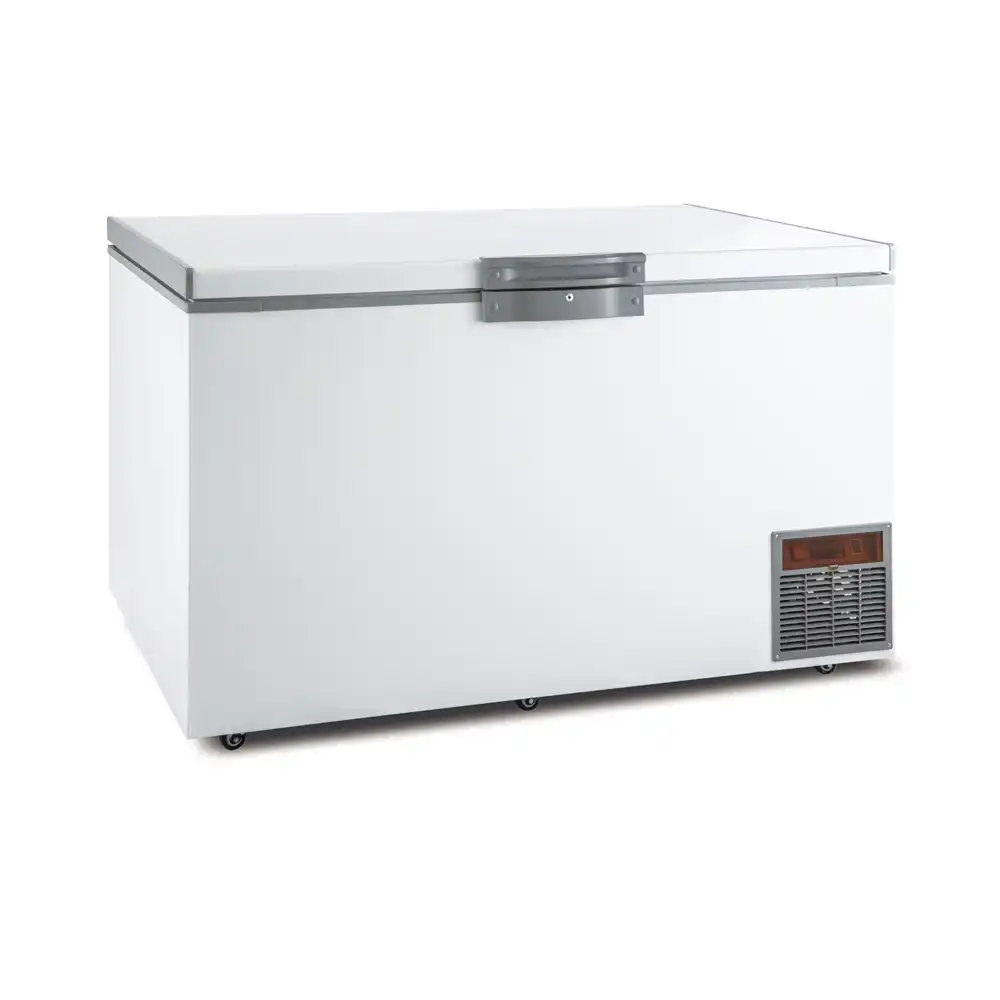
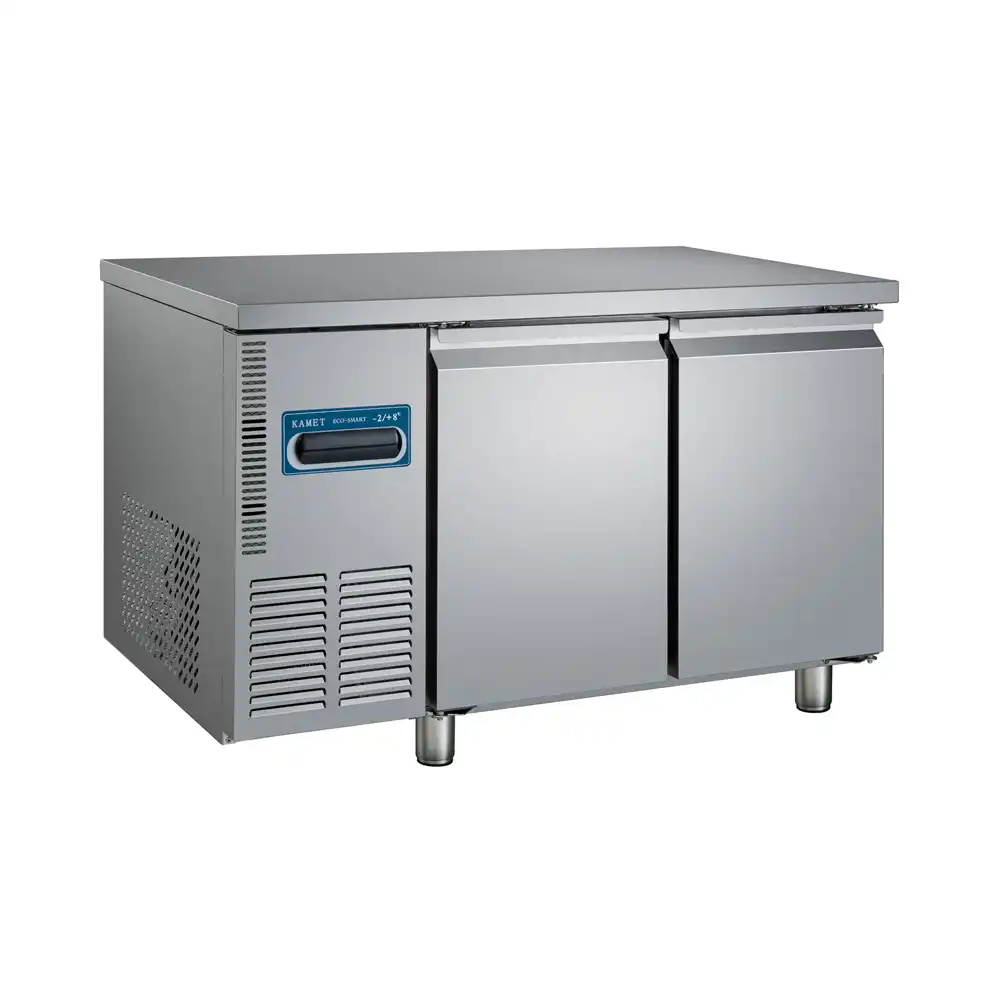
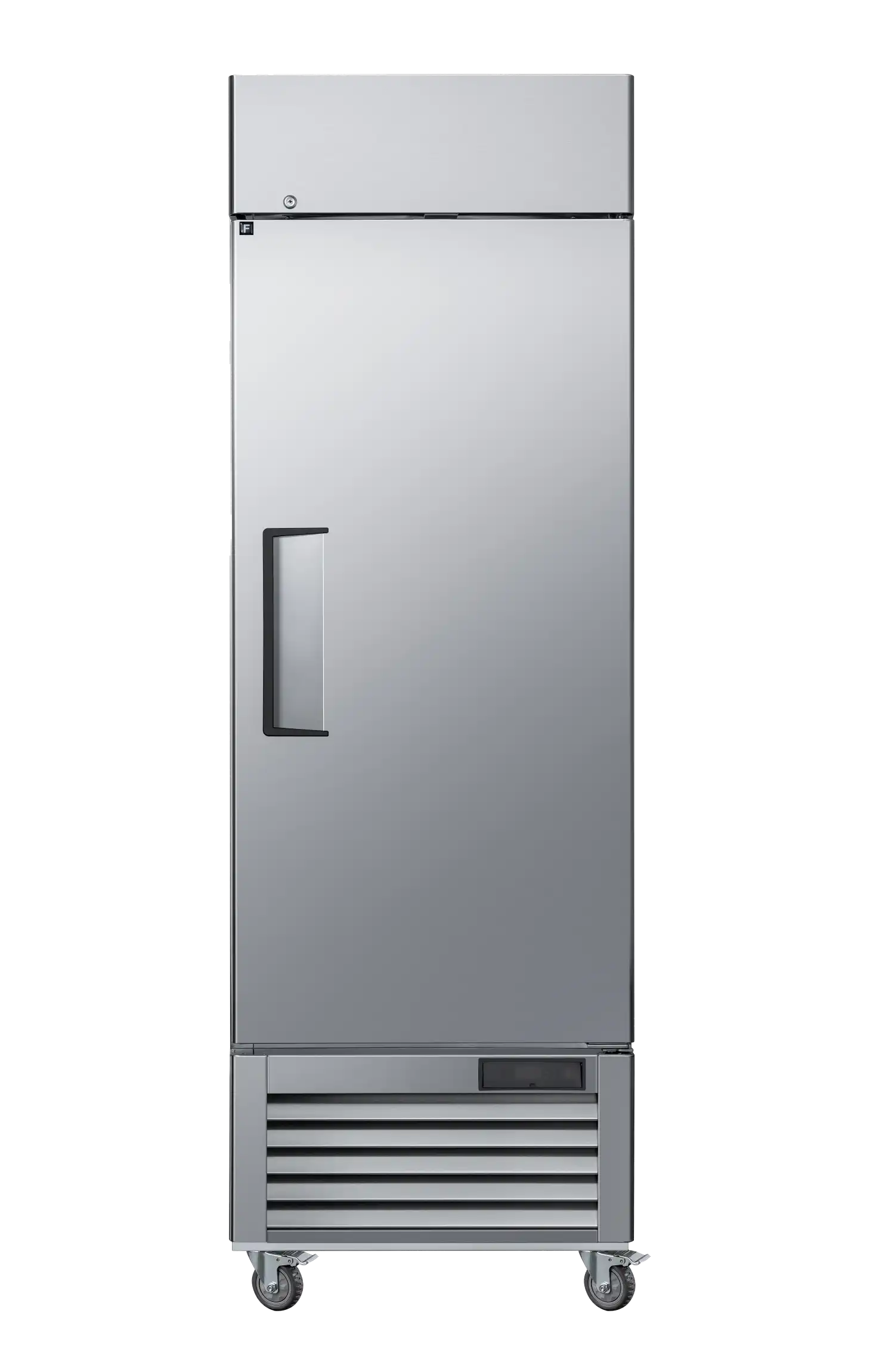
Available space often constrains options. Ultra freezers come in various configurations—chest models that maximize storage density, upright units that offer easier access and organization, undercounter models that fit into prep station workflows. Kitchen layout and workflow patterns should guide format selection.
Energy efficiency has become increasingly important as operating costs rise and sustainability commitments expand. Modern ultra freezer designs incorporate several efficiency features: enhanced insulation that reduces the work required to maintain temperatures, variable-speed compressors that adjust output to actual demand, and smart controls that optimize defrost cycles and respond to usage patterns.
How Ultra Freezers Compare to Standard Commercial Units
The technical differences between ultra freezers and standard commercial freezers reflect their different purposes.
| Feature | Standard Commercial Freezer | Ultra Freezer |
|---|---|---|
| Temperature Range | -18°C to -25°C | -15°C to -45°C (some to -86°C) |
| Primary Function | General frozen storage | Deep freezing, long-term preservation |
| Insulation | Standard polyurethane | Ultra-thick polyurethane or cyclopentane |
| Compressor Type | Single-stage | Cascade or specialized single-stage |
| Typical Application | Everyday food storage | High-value ingredients, extended preservation |
The temperature range difference drives most other distinctions. Reaching and maintaining -45°C requires more robust insulation to prevent heat infiltration and more powerful or specialized compressor systems to achieve the necessary cooling. Energy consumption runs higher as a result, though the gap has narrowed as efficiency technologies have improved.
For most hotel operations, ultra freezers complement rather than replace standard commercial freezers. Standard units handle everyday storage needs efficiently; ultra freezers provide specialized preservation for ingredients where quality and safety benefits justify the additional investment.
Training and Maintenance for Reliable Performance
Equipment performance depends on proper operation and maintenance. Staff training should cover both food handling procedures specific to ultra-low temperature storage and basic equipment operation. Proper loading practices—avoiding overloading, maintaining air circulation, organizing for efficient access—affect both food quality and equipment performance.
Temperature monitoring deserves particular attention. While modern units include digital controls and alarms, staff should understand what normal operation looks like and how to respond to alerts. Record-keeping supports both regulatory compliance and troubleshooting; temperature logs can reveal developing problems before they cause food safety issues.
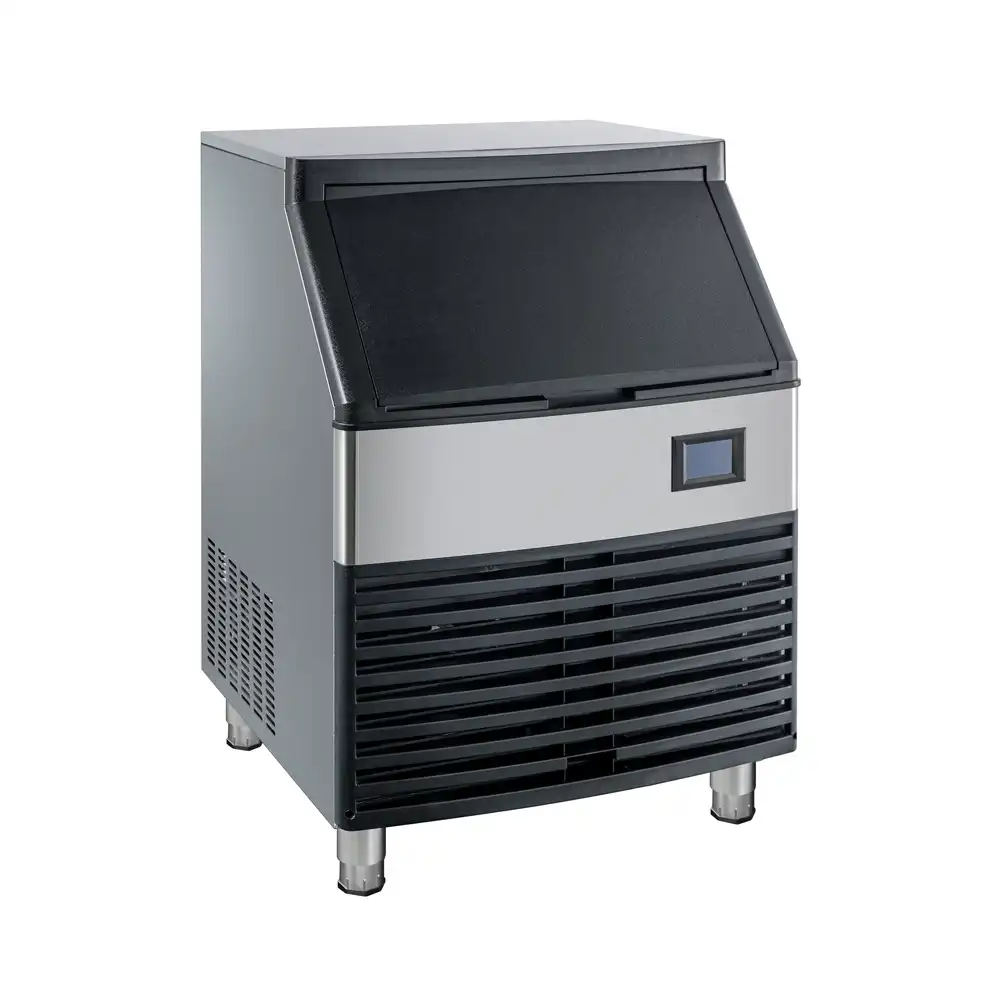
Maintenance schedules should include regular cleaning, defrost procedures appropriate to the unit type, and periodic system checks. Condenser coils need cleaning to maintain heat transfer efficiency. Door seals require inspection for wear that could allow warm air infiltration. Compressor systems benefit from professional inspection on a regular schedule.
Emergency preparedness protects the investment in stored inventory. Backup power arrangements, protocols for equipment failure, and clear procedures for handling temperature excursions should all be established before they’re needed.
Frequently Asked Questions About Hotel Ultra Freezers
What regulatory requirements apply to ultra freezer use in hotel food service?
Ultra freezers themselves don’t face regulations distinct from general food safety requirements. However, their use must align with HACCP principles, local health codes, and applicable FDA guidelines. The key compliance elements involve temperature monitoring, documentation, and staff training. Temperature logs should demonstrate consistent maintenance of safe storage conditions. Staff should be trained on proper handling procedures for ultra-frozen ingredients, including thawing protocols. Modern ultra freezer systems often include data logging capabilities that support compliance documentation.
How much can ultra freezers reduce food waste in hotel operations?
The waste reduction potential varies by operation, but the mechanism is straightforward: ingredients that remain safe and high-quality longer get used rather than discarded. Hotels can purchase seasonal ingredients at peak quality and hold them for extended periods. Bulk purchasing becomes practical for items that would otherwise spoil before use. Prepared components can be batch-produced and held without the quality degradation that would make them unusable. The specific savings depend on menu complexity, purchasing patterns, and current waste levels, but operations with significant premium ingredient usage typically see meaningful reductions.
What should hotels expect for energy costs with ultra-low temperature freezers?
Ultra freezers consume more energy than standard freezers—the physics of maintaining lower temperatures requires more work from the refrigeration system. However, modern designs have narrowed this gap considerably. Enhanced insulation reduces heat infiltration, meaning the compressor runs less frequently. Variable-speed compressors adjust output to actual demand rather than cycling between full power and off. Smart controls optimize defrost timing and respond to usage patterns. The energy cost should be weighed against the value of reduced waste, extended ingredient usability, and quality preservation. For operations handling significant volumes of premium ingredients, the cost-benefit calculation typically favors ultra-low temperature storage.
Partner with ZHEJIANG KAIMEI for Advanced Refrigeration Solutions
Elevate your hotel’s culinary standards and food safety protocols with industry-leading refrigeration solutions. As a professional one-stop-shop refrigeration equipment manufacturer, ZHEJIANG KAIMEI CATERING EQUIPMENT CO., LTD offers expert consultation and tailored ultra freezer systems designed for superior ingredient safety and operational efficiency. Contact us today at +8618157202219 or Sales@hzcamay.com to discuss your specific needs and ensure your kitchen operates at peak performance.
If you’re interested, check out these related articles:
Boost Efficiency Energy Efficient Chef Base Units for Commercial Kitchens
Essential Commercial Chef Base Fridge Installation Tips
Ultimate Buyers Guide for Commercial Reach In Refrigerators