
Commercial kitchens rarely have the luxury of extra square footage. Most operate with 30-40% less space than what would be considered ideal, which means every piece of equipment needs to earn its place. Under-counter refrigeration has become one of the more practical responses to this reality. These units tuck cold storage into otherwise wasted space beneath prep surfaces, keeping ingredients within arm’s reach while freeing up floor area for movement and additional workstations. For kitchens serious about commercial kitchen space optimization, this approach addresses both storage needs and workflow efficiency in a single footprint.
Why Under-Counter Refrigeration Works in Tight Commercial Spaces
Under-counter refrigeration units solve a specific problem: how to keep frequently used ingredients cold and accessible without sacrificing valuable floor space. When positioned correctly, these units can increase usable counter space by up to 25% compared to traditional upright models. That gain matters in kitchens where prep cooks are constantly reaching, turning, and moving between stations.
The ergonomic benefits extend beyond space savings. Staff spend less time walking to a central walk-in cooler when ingredients are stored at point-of-use. This compact refrigeration approach supports faster ticket times during service rushes and reduces the physical strain of repeated trips across the kitchen. Temperature control remains precise in quality units, which is non-negotiable for food safety compliance. In high-volume environments where every inch of counter space gets used, these space-saving refrigeration solutions become essential rather than optional.
Placing Under-Counter Units for Maximum Efficiency
Strategic placement determines whether under-counter refrigeration actually improves workflow or just adds another obstacle. The most effective approach positions these units directly below prep stations where their contents will be used. Kitchens that integrate units this way typically see staff movement reduced by 15-20% during service.
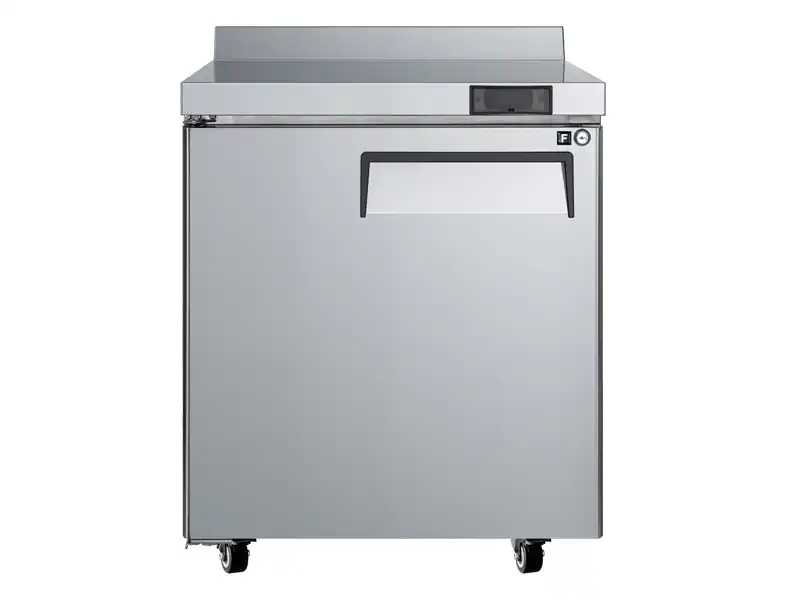
This creates a modular kitchen setup where each workstation becomes more self-sufficient. A garde manger station with its own under-counter unit for salad components operates independently from the sauté station with its proteins and mise en place stored below. Units like the Camay Commercial Worktop Refrigerator Cooler Fridge (Model MWTF-27-L) serve double duty as both cold storage and additional work surface, which is exactly the kind of integrated kitchen systems thinking that makes small kitchens function like larger ones.
Layout Principles That Support Natural Kitchen Flow
Kitchen workflow design should follow the logic of how food actually moves through preparation. A well-planned layout can reduce food preparation time by 10-15% while minimizing cross-contamination risks. Under-counter refrigeration fits into this picture when positioned to support specific tasks rather than placed wherever there happens to be room.
Refrigerated prep tables near cooking lines keep fresh ingredients immediately available. Cold storage for proteins belongs near the grill station. Dairy and produce for pastry work should be accessible from the baking area. This kind of strategic equipment placement requires thinking through each station’s needs before finalizing the restaurant kitchen layout. ZHEJIANG KAIMEI CATERING EQUIPMENT CO., LTD provides custom kitchen fabrication services that can integrate under-counter units into purpose-built workstations, ensuring the refrigeration becomes part of the workflow rather than an afterthought.
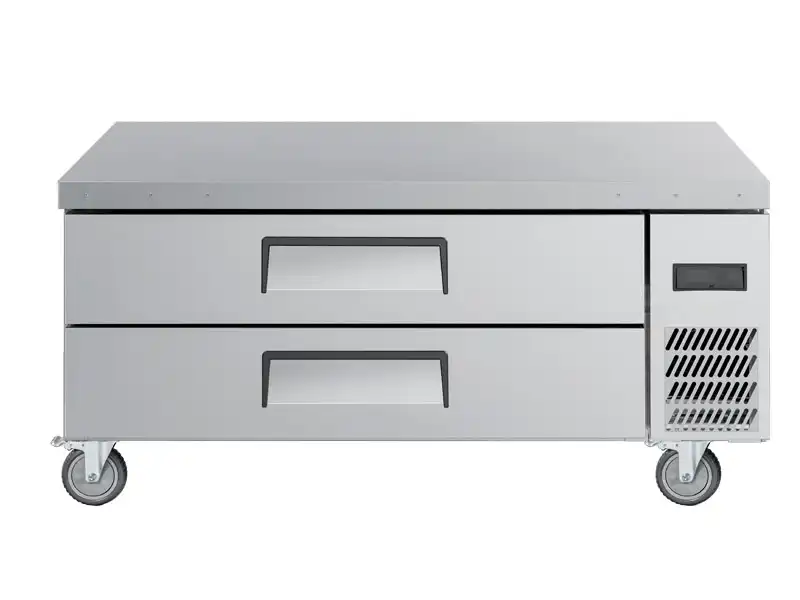
Article Recommendation: If you are looking to enhance your kitchen’s efficiency, explore “Boost Kitchen Efficiency Workflow Optimization with Chef Base Fridges”.
Matching Under-Counter Refrigeration to Operational Requirements
The right under-counter refrigeration depends entirely on what a kitchen actually needs to store and how quickly it needs to access those items. A small bistro that switched to specialized under-counter units increased cold storage capacity by 30% without expanding its footprint. That kind of result comes from matching equipment to specific operational demands rather than buying generic solutions.
Under-counter freezer options make sense for operations that need frozen proteins or ice cream at the ready. Beverage coolers commercial applications require different temperature ranges and door configurations than food prep units. Reach-in refrigerators like the Camay Commercial Solid Door Undercounter (Model MTR-72) offer versatile storage for operations with varied inventory. The selection process should weigh temperature control systems, energy efficiency refrigeration ratings, and durability commercial appliances construction against the specific demands of daily service.
What are the best under-counter refrigerator brands for commercial use? ZHEJIANG KAIMEI CATERING EQUIPMENT CO., LTD manufactures a range of certified units designed for the demands of professional kitchens.
| Feature | Under-Counter Refrigerator | Upright Refrigerator |
|---|---|---|
| Space Utilization | High (under counters) | Moderate (floor) |
| Accessibility | Immediate, point-of-use | Requires movement |
| Counter Space | Adds | Consumes |
| Mobility | Often casters | Less mobile |
| Capacity | Smaller | Larger |
| Energy Efficiency | Good (localized use) | Varies |
Advantages of Under-Counter Refrigerators for Commercial Kitchens
Under-counter refrigerators contribute to commercial kitchen layout optimization in several concrete ways. They maximize floor space by utilizing the area beneath counters that would otherwise go unused. Workflow ergonomics improve because ingredients sit at point-of-use rather than across the kitchen. Food safety benefits from dedicated cold storage zones that maintain consistent temperatures for specific ingredient categories. These units prove particularly valuable in small kitchen solutions and high-volume prep areas where efficiency directly affects service speed and food quality.
Sizing and Selecting the Right Unit for Your Operation
Selecting the right size and type of under-counter refrigerator starts with understanding peak demand patterns and menu complexity. A breakfast-focused operation needs different cold storage solutions than a dinner service with extensive protein options. Available power supply affects which units are viable in specific locations.
Evaluate whether refrigeration or freezer capabilities better serve each station’s needs. Check power consumption refrigeration specifications against your electrical capacity and operating budget. Measure the available space carefully, accounting for door swing clearance and ventilation requirements. This assessment process leads to cost-effective kitchen equipment choices that actually fit the operation rather than forcing compromises after installation.
Installation and Maintenance Practices That Extend Equipment Life
Proper installation and consistent maintenance can extend the lifespan of commercial refrigeration units by 20-30%. That represents significant savings over the equipment’s service life, both in replacement costs and avoided downtime during repairs.
Ventilation requirements commercial kitchens must meet are not suggestions. Inadequate airflow around condenser coils causes compressors to work harder and fail sooner. Following manufacturer guidelines for food service equipment installation prevents these problems from the start. Ongoing refrigeration maintenance tips include cleaning condenser coils quarterly, inspecting door gaskets monthly for wear, and monitoring temperature settings daily. Establishing preventative maintenance refrigeration schedules catches small issues before they become expensive emergency repairs.
Article Recommendation: To ensure the longevity of your equipment, review “Essential Maintenance Tips for Your Commercial Chef Base Refrigerator”.
Solving Common Integration Challenges
Integrating under-counter refrigerators into existing kitchens can present obstacles, though most have straightforward solutions. Addressing heat dissipation and drainage issues proactively prevents roughly 40% of early equipment failures. These problems are easier to solve during planning than after installation.
Ventilation and power supply planning should happen before equipment arrives. Some units generate more heat than others, which affects placement near cooking equipment. Noise reduction refrigeration features matter in open kitchen concepts where guests can hear equipment running. Building troubleshooting commercial refrigerators knowledge into staff training helps identify problems early. For small kitchen solutions, careful selection and thoughtful placement mitigate most integration challenges before they affect operations.
Frequently Asked Questions About Under-Counter Refrigeration
What makes under-counter refrigerators a practical choice for commercial kitchen layouts?
Under-counter refrigerators address the space constraints most commercial kitchens face by converting unused area beneath counters into functional cold storage. This placement puts ingredients at point-of-use, which speeds up prep work and reduces unnecessary movement during service. The dedicated storage zones also support food safety compliance by maintaining consistent temperatures for specific ingredient categories. Kitchens with limited square footage benefit most, though even larger operations find value in reducing the distance between storage and workstations.
How does ZHEJIANG KAIMEI CATERING EQUIPMENT CO., LTD build durability and energy efficiency into its under-counter units?
ZHEJIANG KAIMEI CATERING EQUIPMENT CO., LTD constructs under-counter refrigeration units using high-grade stainless steel exteriors and interiors that withstand the demands of commercial kitchen environments. Advanced insulation techniques maintain temperature consistency while reducing compressor workload, which directly affects energy consumption. The temperature control systems in these units respond quickly to door openings and temperature fluctuations, maintaining food safety standards while keeping operating costs manageable over the equipment’s service life.
Can under-counter refrigeration be built to fit unusual kitchen configurations?
Custom fabrication is available for kitchens with non-standard dimensions or specific workflow requirements. ZHEJIANG KAIMEI CATERING EQUIPMENT CO., LTD designs and manufactures under-counter refrigerator layouts that integrate into unique spaces, whether that means unusual depths, specific door configurations, or integration with custom millwork. This approach ensures the refrigeration supports the intended workflow rather than forcing the kitchen design to accommodate standard equipment dimensions.
Optimize Your Kitchen with ZHEJIANG KAIMEI
Commercial kitchens benefit from refrigeration equipment designed specifically for professional demands. ZHEJIANG KAIMEI CATERING EQUIPMENT CO., LTD manufactures under-counter refrigeration solutions built for durability, energy efficiency, and seamless integration into working kitchens. Contact us at +8618157202219 or Sales@hzcamay.com to discuss how our manufacturing capabilities can address your specific space and operational requirements.