

A commercial kitchen refrigeration layout can make or break a banquet operation. I’ve seen kitchens where cooks walk twice the distance they need to because someone placed the reach-in cooler on the wrong wall. That kind of inefficiency compounds fast when you’re plating 500 covers. Getting the placement right from the start protects your margins, keeps food safe, and makes the work less exhausting for everyone on the line.
Where You Put Refrigeration Units Shapes Everything Else
The position of each refrigeration unit determines how smoothly ingredients move through your kitchen. A zone-based approach works well here. Ingredients should flow logically from receiving to prep, then to cooking, and finally to service. When refrigeration sits in the right spots along that path, you reduce unnecessary handling and keep temperatures stable.
Cross-contamination risks drop significantly when raw proteins stay separated from ready-to-eat items. This supports HACCP compliance without requiring constant vigilance. Placing prep area refrigeration, such as Work Top units or salad prep tables, directly beside workstations cuts down on staff movement. A cook who can reach ingredients without leaving their station works faster and stays more focused.
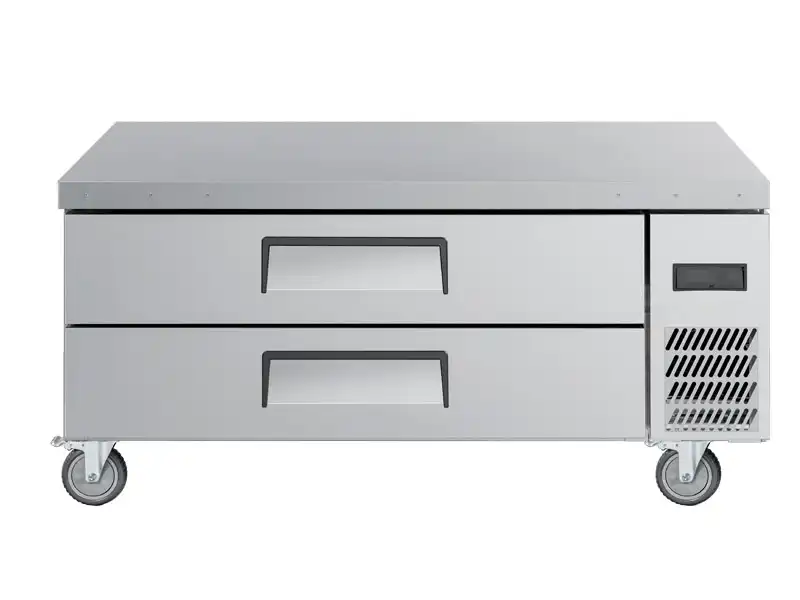
Cold chain management depends on logical positioning. Temperature fluctuations happen when ingredients travel too far between cold storage and prep surfaces. For banquet kitchens, dedicated refrigeration for specific stations makes a noticeable difference. A Chef Base under the hot line keeps proteins at safe temperatures until the moment they hit the grill. A Pizza Table at the pizza station eliminates the back-and-forth that slows down service.
Ventilation and clearance matter more than many operators realize. Compressors need airflow to run efficiently. Crowding a refrigeration unit against a wall or next to a fryer forces it to work harder, which shortens its lifespan and increases energy costs. Our OEM and ODM project experience consistently confirms that thoughtful placement improves productivity across the board.
Matching Refrigeration Units to Banquet Volume and Workflow
The right commercial kitchen refrigeration layout starts with selecting units that fit your actual operational demands. ROI varies considerably depending on how well each piece of equipment matches your menu, service style, and peak volumes.
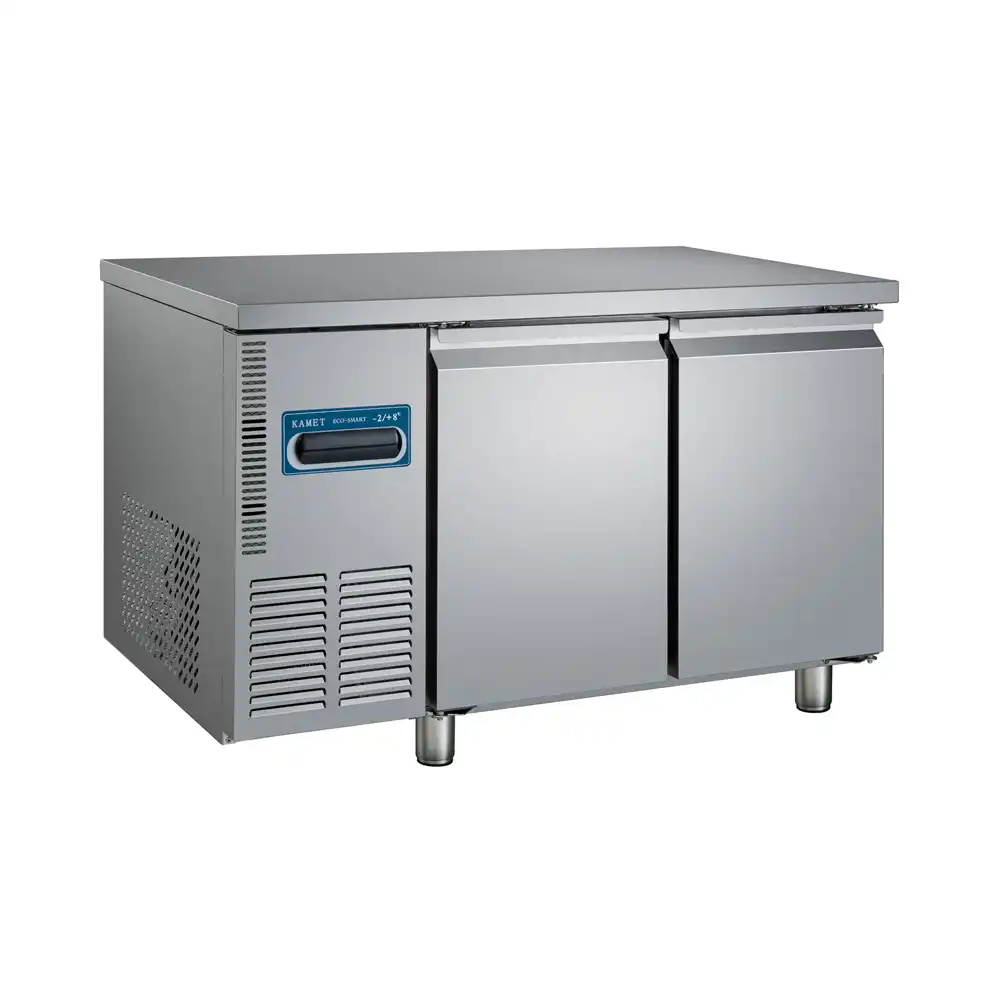
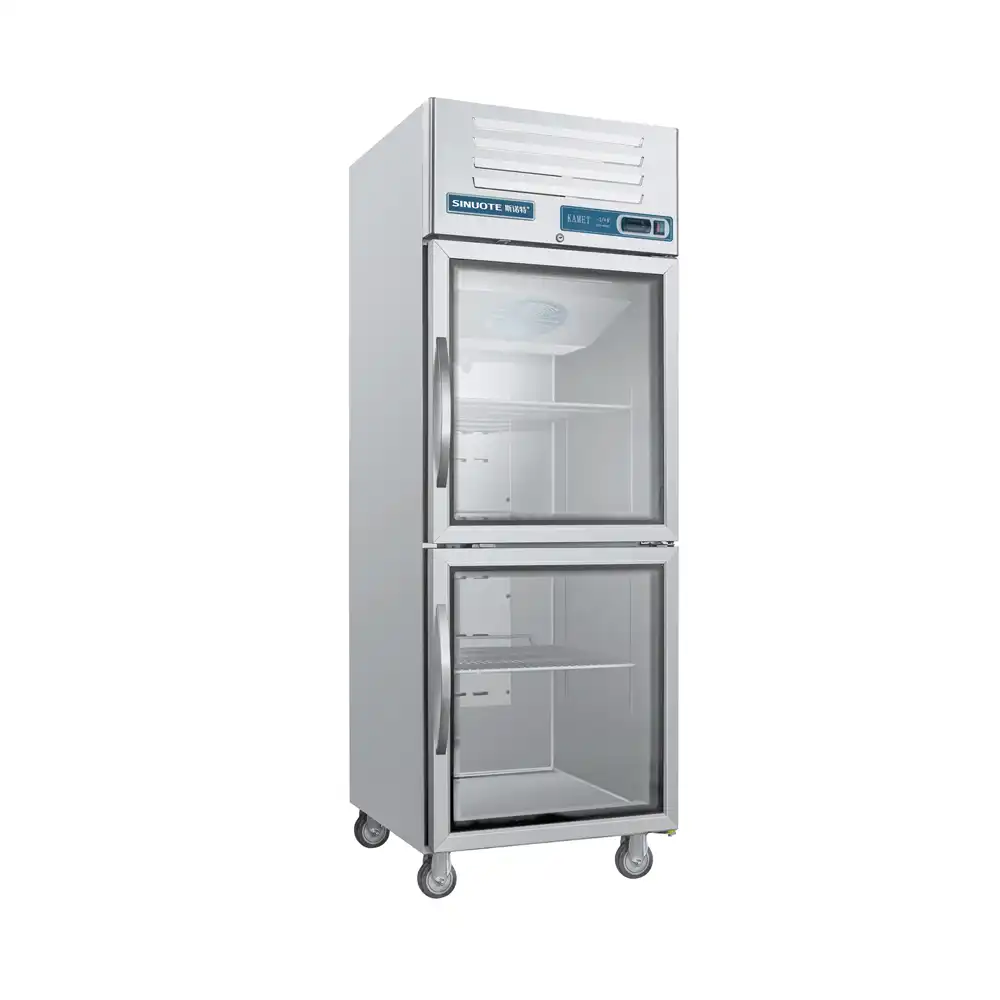
Walk-in coolers handle bulk storage for large ingredient volumes. They’re essential for operations that receive deliveries in quantity and need to hold inventory for several days. For immediate access during service, Under Counter and Solid Door Freezer Cooler units keep frequently used items within arm’s reach of cooking stations.
Blast chillers serve a specific but critical function. Rapidly cooling cooked food prevents bacterial growth during the danger zone window. For large-scale catering where food is prepared hours before service, blast chillers protect both quality and safety. Modular refrigeration systems offer flexibility when menus change seasonally or when kitchen layouts need adjustment.
What Factors Should Drive Your Equipment Selection?
Capacity planning requires honest assessment of peak demand. Undersized units create bottlenecks during busy service periods. Oversized units waste energy and floor space. Inventory management practices should inform capacity decisions, not just current menu requirements.
Power consumption deserves careful analysis. Energy-efficient refrigeration units, particularly those using R290 refrigerant, reduce long-term operational costs. The upfront price difference often pays back within two to three years through lower utility bills.
Temperature control precision is non-negotiable for food safety. Digital systems with accurate sensors maintain consistent conditions. Construction quality matters for durability. Stainless steel exteriors resist corrosion in humid kitchen environments. Features like removable gaskets and round-corner interiors simplify cleaning and extend equipment life.
| Feature | Walk-in Coolers | Reach-in Refrigerators (e.g., Camay MR-49) | Chef Base Units (e.g., Camay MAR-60A) | Pizza Prep Tables (e.g., VRX395-1600) |
|---|---|---|---|---|
| Application | Bulk storage, large ingredient volumes | General storage, easy access to various ingredients | Under cooking equipment, ingredient prep | Pizza ingredient storage and preparation |
| Capacity | Very High (e.g., 1252 L for a 2-door reach-in) | Medium to High (e.g., 1252 L) | Low to Medium (e.g., 117 L) | Low (e.g., 58 L) |
| Temperature Range | Varies, typically 0.5°C to 5°C | 0.5°C to 5°C (33°F to 41°F) | 0.5°C to 5°C (33°F to 41°F) | +2°C to +8°C |
| Space Efficiency | Requires dedicated room | Vertical, maximizes wall space | Utilizes under-counter space, integrated worktop | Countertop, integrates prep and storage |
| Energy Efficiency | Good insulation, larger compressors | Polyurethane/Cyclopentane insulation | Polyurethane/Cyclopentane insulation | Polyurethane/Cyclopentane insulation |
| Mobility | Fixed installation | Often on casters or legs | Often on casters | Fixed or small casters |
| Certifications | ETL, DOE, ENERGY-STAR, CE | ETL, DOE, ENERGY-STAR, CE | ETL, DOE, ENERGY-STAR, CE | CE |
If you’re interested, check 《Ultimate Buyers Guide for Commercial Reach In Refrigerators》.
Getting More From Every Square Foot and Kilowatt
Space and energy efficiency in a commercial kitchen refrigeration layout directly affect operating costs. Well-optimized layouts typically reduce utility bills by 15-25% compared to poorly planned configurations. The savings come from strategic unit placement, quality insulation, and smart monitoring systems.
Space-saving refrigeration solutions earn their keep in tight kitchens. Under Counter units like the Camay MTR-48 provide 368L capacity while doubling as a work surface. Integrated worktop refrigeration, such as the Camay Commercial Worktop Refrigerator Cooler Fridge (MWTF-27-L), offers 202L capacity for beverages and food with a convenient prep surface on top. These units use polyurethane/cyclopentane foamed insulation, which reduces energy consumption compared to older insulation materials.
Smart digital temperature control systems add another layer of efficiency. Optional IoT and WiFi functions allow remote monitoring, which catches problems before they become expensive failures. Precise temperature management prevents the energy waste that comes from overcooling.
Regular refrigeration maintenance protocols protect your investment. Cleaning condenser coils removes the dust buildup that forces compressors to work harder. Checking door seals catches gaps that let cold air escape. These practices extend equipment lifespan and prevent the costly breakdowns that always seem to happen during the busiest service.
How Layout Decisions Affect Daily Operations
The connection between commercial kitchen refrigeration layout and operational efficiency shows up in measurable ways. Shorter travel distances between prep areas and cold storage mean staff spend less time walking and more time producing. Service speeds up. Productivity increases.
Inventory management improves when refrigeration placement supports proper stock rotation. Items stored in logical locations get used in the right order. Waste decreases. Placing a salad prep table like the Camay MSR-48M near salad stations streamlines assembly and keeps ingredients at safe temperatures throughout service.
These efficiencies accumulate. Lower labor costs per cover. Reduced utility bills. Less food waste. The commercial kitchen refrigeration layout that seemed like a planning detail becomes a competitive advantage.
Staying Compliant While Preparing for What Comes Next
Regulatory compliance shapes every commercial kitchen refrigeration layout decision. Food safety regulations, including HACCP guidelines, establish strict requirements for temperature control and storage practices. Meeting these standards protects your operation from violations and, more importantly, protects your guests from foodborne illness.
International certifications like ETL, DOE, ENERGY-STAR, and CE indicate that equipment meets recognized performance and safety standards. Specifying certified equipment simplifies compliance documentation and demonstrates due diligence.
Environmental standards continue evolving. The phase-out of refrigerants like R22 has accelerated adoption of eco-friendly alternatives. R290, a natural refrigerant with low global warming potential, now appears in many commercial units. Choosing equipment with modern refrigerants avoids future retrofit costs as regulations tighten.
Future kitchen technology will increasingly incorporate IoT capabilities. Remote monitoring catches temperature excursions before they compromise food safety. Predictive maintenance algorithms identify failing components before they cause breakdowns. Modular refrigeration designs and energy-efficient models like the Camay Commercial Solid Door Undercounter (MTR-72) position your commercial kitchen refrigeration layout for long-term adaptability.
The Real Cost of Getting Placement Wrong
Poor placement in a commercial kitchen refrigeration layout creates problems that compound over time. A refrigerator positioned next to an oven without adequate separation forces its compressor to run almost continuously. Energy consumption spikes. The compressor wears out faster. Internal temperatures fluctuate, creating conditions where bacterial growth accelerates.
Hot spots inside refrigeration units cause uneven cooling. Items stored in warmer zones spoil faster than expected. Food waste increases. Quality suffers when ingredients don’t hold at optimal temperatures.
Kitchen ventilation requirements exist for good reason. Heat needs somewhere to go. Proper airflow around refrigeration units allows compressors to reject heat efficiently. The Camay MWTF-27-L, for example, features robust insulation and efficient cooling systems designed to maintain optimal temperatures even in demanding environments. But no amount of engineering can fully compensate for placement that traps heat around the unit.
Preventative maintenance combined with optimal placement creates consistent internal temperatures. Food quality stays high. Shelf life extends to its full potential. Waste drops. The integrated approach to commercial kitchen refrigeration layout pays dividends across multiple operational metrics.
Frequently Asked Questions About Commercial Kitchen Refrigeration Layout
What are the best practices for arranging refrigeration units in a busy banquet kitchen?
Create distinct zones for receiving, prep, cooking, and serving. Position refrigeration within each zone so ingredients don’t travel far between cold storage and work surfaces. Maintain clear pathways wide enough for staff carrying sheet pans or pushing carts. Keep high-use items within easy reach of the stations that need them most. Allow sufficient clearance around units for ventilation and maintenance access. Modular designs provide flexibility for future menu changes or kitchen reconfiguration.
How can I ensure my kitchen refrigeration layout meets all health and safety regulations?
Start with HACCP principles. Your layout should facilitate proper temperature control at every stage and prevent cross-contamination between raw and ready-to-eat items. Ensure refrigeration units maintain consistent temperatures and allow for easy cleaning. Proper ventilation prevents heat buildup that can affect performance. Clear labeling of storage areas supports staff compliance. Consult local health codes during design, as requirements vary by jurisdiction. Fire safety regulations may also affect placement near cooking equipment or exits.
What common mistakes should be avoided when designing a commercial kitchen refrigeration system?
Underestimating capacity needs creates bottlenecks during peak service. Neglecting ventilation requirements shortens equipment life and increases energy costs. Placing heat-generating equipment too close to refrigeration units forces compressors to work harder than necessary. Ignoring future expansion plans leads to costly retrofits. Failing to consider ergonomic workflow increases staff fatigue and slows service. Inadequate maintenance access makes routine cleaning difficult, which degrades performance over time. Overlooking energy efficiency features raises operating costs for the life of the equipment.
Partner with ZHEJIANG KAIMEI for Expert Refrigeration Solutions
ZHEJIANG KAIMEI CATERING EQUIPMENT CO., LTD. specializes in designing and supplying commercial kitchen refrigeration layout solutions tailored to hotel and banquet operations. As a professional one-stop-shop refrigeration equipment manufacturer, we bring practical expertise to every project. Contact us at +8618157202219 or Sales@hzcamay.com to discuss how optimized cold storage can improve your kitchen’s efficiency and compliance.