

Running a commercial kitchen means juggling dozens of moving parts at once. The layout you choose affects everything from how fast orders go out to how tired your team feels at the end of a shift. I’ve seen kitchens where a poorly placed prep station added thirty seconds to every plate, and over a busy service, that adds up to real money. Getting the workflow right isn’t about fancy design principles—it’s about watching how people actually move through the space and eliminating the friction points that slow them down.
What Makes a Commercial Kitchen Layout Actually Work
The difference between a kitchen that hums and one that constantly bottlenecks usually comes down to how well the zones connect. A solid commercial kitchen workflow moves ingredients from receiving through storage, prep, cooking, plating, and out to service without anyone having to double back or wait for someone else to get out of the way.
Each zone needs its own equipment and supplies within reach. When a cook has to walk across the kitchen for a cutting board or dig through a shared drawer for a thermometer, those seconds multiply across every task. Placing refrigeration units near prep stations cuts down on ingredient retrieval time significantly. The Camay Commercial Worktop Refrigerator Cooler Fridge (Model MWTF-27-L) fits this approach well—its stainless steel build handles the abuse of a busy line, and the temperature range of 0.5°C to 5°C keeps proteins and produce at safe holding temps without constant adjustment.
The shape of your workflow matters too. A straight-line setup works in narrow spaces, pushing everything from raw to finished in one direction. U-shaped layouts suit larger kitchens where multiple cooks need access to shared equipment. Either approach, when done right, typically reduces unnecessary movement by around 30%. That efficiency shows up directly in faster ticket times and lower labor costs per cover.
Equipment placement also needs to account for maintenance access. Cramming a refrigeration unit into a tight corner might save floor space, but if a technician can’t reach the condenser coils, you’ll pay for it in repair bills and downtime. The Camay 60″ Countertop Refrigerated Chef Base (Model MAR-60A) addresses this by combining a sturdy worktop with refrigerated storage underneath, giving cooks immediate access to chilled ingredients while keeping the mechanical components accessible.
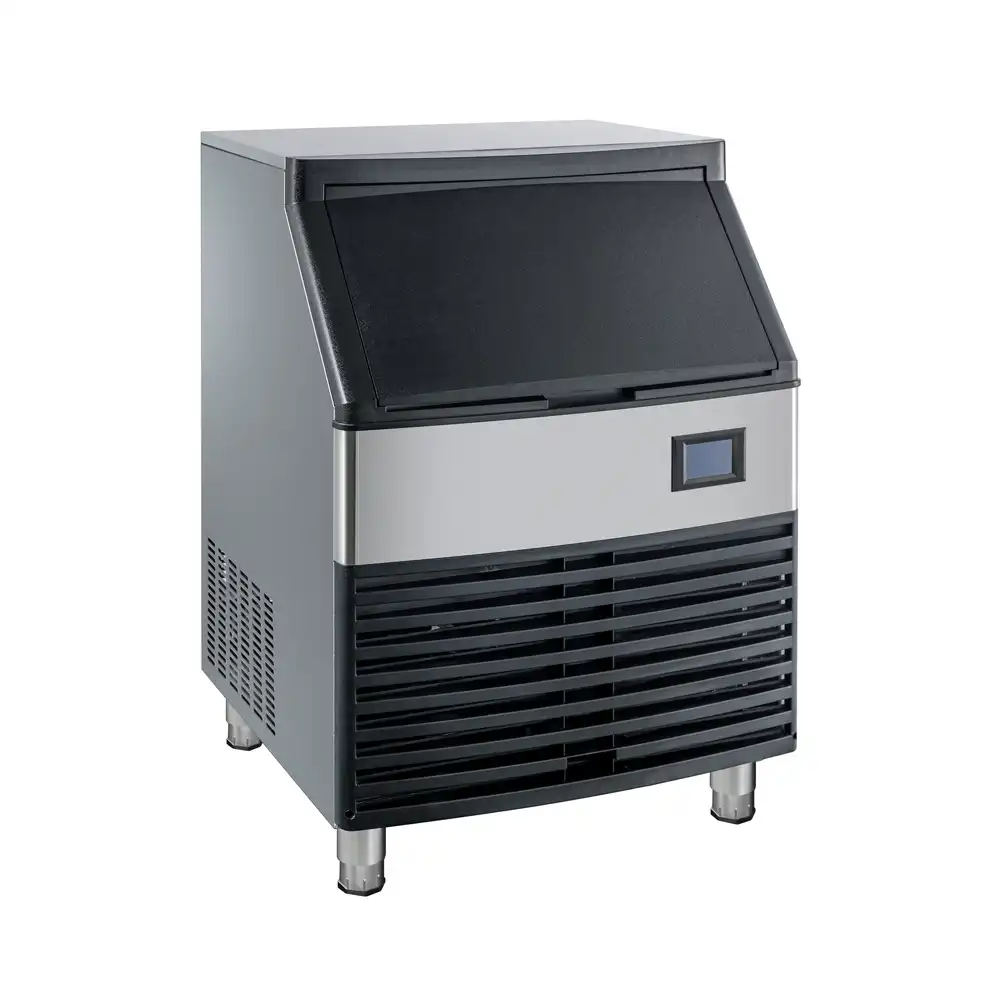
Thoughtful positioning of supporting equipment prevents service delays during rush periods. A Ice Maker (Model FB210A) placed near beverage stations or the pass keeps bartenders and servers from crossing through the hot line during peak hours.
Designing Workstations That Don’t Wear People Out
Ergonomics sounds like corporate jargon until you watch a cook wince while reaching for a hotel pan stored too high, or notice how the prep team slows down after hour six because the cutting surface sits at the wrong height. Physical strain accumulates, and it shows up as slower work, more mistakes, and eventually, turnover.
Adjustable-height prep tables let different cooks work comfortably at the same station. Anti-fatigue mats make a measurable difference during long shifts—the cushioning reduces leg and back strain enough that people stay sharper through the dinner rush. Good task lighting cuts down on eye fatigue and helps with precision knife work.
The “zone of comfortable reach” concept matters here. Frequently used ingredients and tools should sit within arm’s length of where the cook stands. Anything that requires bending, stretching, or walking breaks the rhythm of prep work. Organizing storage so that high-rotation items stay at waist to chest height keeps the workflow smooth.
Safety and ergonomics overlap more than people realize. A cook who’s tired from awkward postures makes more mistakes—dropped pans, slipped knives, burns from rushed movements. Equipment design plays into this too. Recessed handles on units like the Camay Commercial Solid Door Undercounter (Model MTR-72) reduce the chance of catching a sleeve or bumping a hip while moving through tight spaces. Self-closing doors on the Camay Commercial Worktop Refrigerator Cooler Fridge prevent the kind of accidents that happen when someone forgets to shut a door during a busy service.
Placing Refrigeration and Cooking Equipment for Logical Flow
Where you put your cold storage relative to your cooking line shapes how smoothly ingredients move through the kitchen. The goal is minimizing the distance between where food is stored and where it gets used, while keeping raw and cooked items separated to prevent cross-contamination.
A Chef Base like the Camay 60″ Countertop Refrigerated Chef Base (Model MAR-60A) works well directly under cooking equipment. Cooks can pull proteins or prepped vegetables from the refrigerated drawers without stepping away from the range. The worktop surface doubles as a staging area for plating, which keeps everything within reach during service.
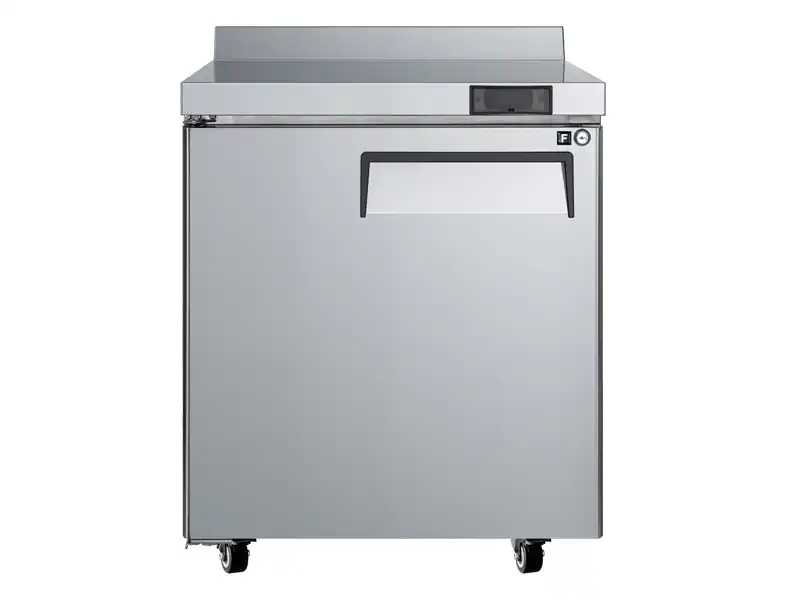
Placing a Work Top refrigerator adjacent to the cooking line creates a similar advantage. The Camay Commercial Worktop Refrigerator Cooler Fridge positioned next to a flat-top or range means fresh produce and proteins stay cold until the moment they hit the heat. This arrangement supports food safety while speeding up execution.
The cooking line itself should follow the sequence of preparation. If a dish moves from searing to sautéing to finishing, the equipment should sit in that order. Cooks shouldn’t have to carry hot pans across traffic lanes or reach over other stations to complete a dish.
Ventilation placement ties into this arrangement. Hoods need to capture heat and fumes from the cooking line effectively, which means positioning them based on where the heat actually generates. Poor ventilation makes the line uncomfortable and can affect food quality when smoke or grease particles settle on finished plates.
The refrigeration units from ZHEJIANG KAIMEI use R290 refrigerant and precise digital temperature controls, which helps maintain consistent holding temperatures even when doors open frequently during service. That consistency matters for food quality and safety compliance.
Making Small Kitchens Work Harder
Compact commercial kitchens require different thinking than spacious ones. Every square foot needs to justify its existence, and equipment choices have to balance functionality against footprint.
Vertical storage reclaims space that would otherwise go unused. Wall-mounted shelving, overhead pot racks, and tall narrow shelving units keep supplies accessible without eating into floor area. The key is organizing these vertical spaces so frequently used items stay within easy reach while less common equipment goes higher or lower.
Multi-functional equipment reduces the total number of units you need. A Chef Base that combines refrigeration with a work surface eliminates the need for separate cold storage and prep table in that spot. This consolidation frees up floor space for traffic flow or additional production capacity.
Undercounter refrigeration fits into spaces that would otherwise go unused. The Camay Commercial Undercounter Refrigerator (Model MTR-60) and Camay MTR-48 2-Door Commercial Undercounter Refrigerator slide under existing counters, providing cold storage without claiming additional floor area. Optional casters on these units allow for easy movement during deep cleaning.
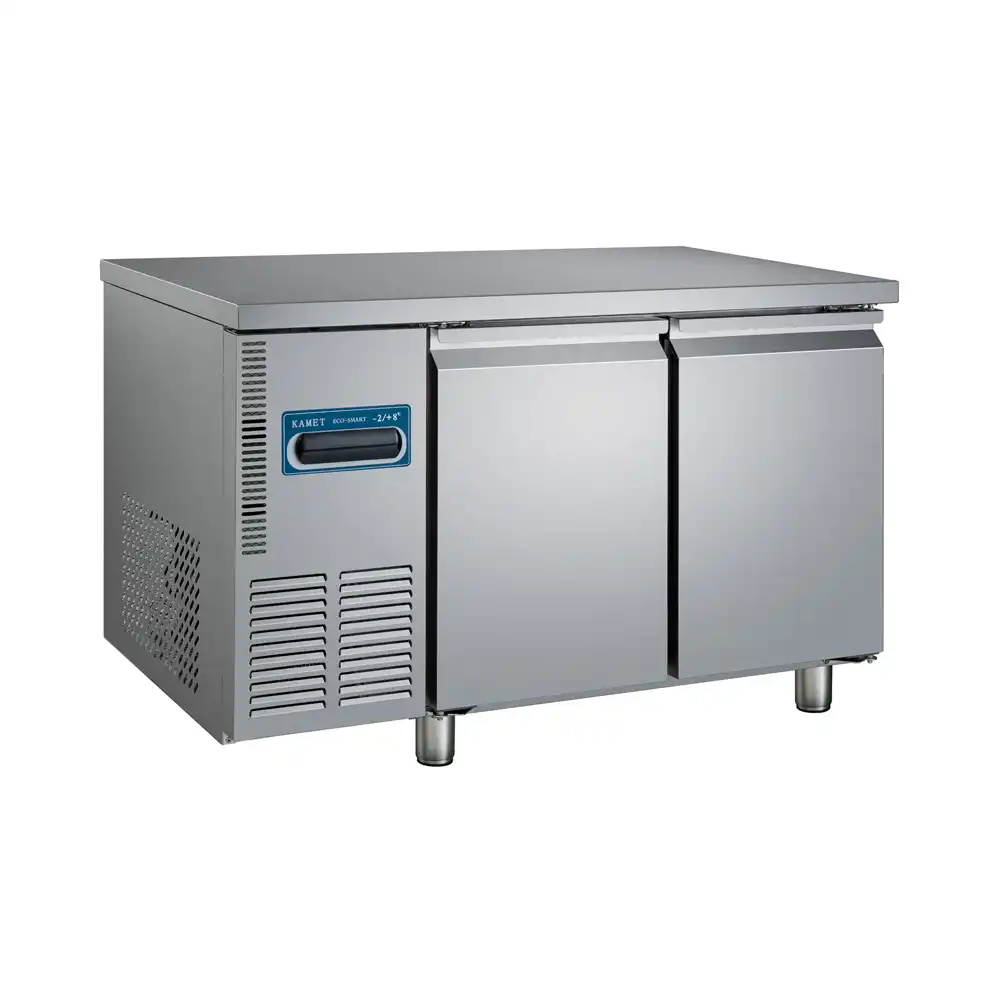
Modular systems offer flexibility as operations evolve. Rather than committing to fixed configurations, modular components can be rearranged when menus change or volume increases. Custom fabrication sometimes makes sense for unusual spaces where standard equipment doesn’t fit well.
Compact versions of essential equipment—smaller Pizza Table units, narrow salad prep stations—create dedicated workstations in tight areas without overwhelming the space. The goal is ensuring that limited square footage still supports a logical commercial kitchen workflow rather than forcing cooks to work around each other constantly.
How Layout Decisions Affect Food Safety
The physical arrangement of a kitchen either supports food safety practices or works against them. Cross-contamination risks increase when raw and cooked foods share pathways or when dirty and clean operations happen in adjacent spaces.
Separating zones by function creates natural barriers against contamination. Raw ingredient prep should happen in a different area than final plating. The flow from receiving to storage to prep to cooking should move in one direction, with cooked food never passing back through raw prep areas.
Handwashing stations need to be positioned where staff will actually use them—near prep areas, between zones, and at the entrance to the kitchen. If washing hands requires walking across the kitchen, people skip it when they’re busy. Multiple small sinks placed strategically work better than one large sink in an inconvenient location.
Ventilation affects air quality and can influence how airborne contaminants move through the space. Proper hood placement and adequate exhaust capacity keep cooking fumes from settling on prep surfaces or finished dishes.
Equipment design contributes to hygiene maintenance. The Camay Commercial Worktop Refrigerator Cooler Fridge features removable gaskets and round-corner inner shelves that make thorough cleaning easier. Corners and crevices that trap food particles become contamination risks over time, so equipment that minimizes these problem areas simplifies sanitation routines.
Dish handling requires its own traffic pattern. Soiled dishes should move to the warewashing area along a path that doesn’t cross the clean dish return route. This prevents recontamination of sanitized items before they return to service.
Building a Kitchen That Adapts Over Time
Commercial kitchen investments need to account for change. Menus evolve, service styles shift, and technology advances. A layout that works perfectly today might create problems when you add a new menu category or increase volume.
Modular equipment and flexible infrastructure make adaptation easier. Rather than building around fixed configurations, leaving some flexibility in utility connections and equipment placement allows for future adjustments without major renovation.
Menu-driven design means the layout supports your current offerings while leaving room for expansion. If you’re primarily a grill operation now but might add a pizza program later, planning utility rough-ins for that possibility costs less than retrofitting later.
Smart equipment features add operational flexibility. Digital temperature controls with remote monitoring capabilities, like those available on ZHEJIANG KAIMEI refrigeration units, allow managers to track conditions without being physically present. Optional IoT and WiFi functions enable alerts for temperature excursions and can help optimize energy usage based on actual demand patterns.
Energy efficiency matters for both operating costs and environmental compliance. Equipment using eco-friendly R290 refrigerant and high-quality insulation—polyurethane with cyclopentane foaming—reduces energy consumption significantly compared to older designs. These savings compound over the equipment’s lifespan and help meet increasingly stringent sustainability requirements.
Planning for adaptability means your kitchen investment continues to serve the operation well even as circumstances change, rather than becoming a constraint that limits growth.
Optimize Your Kitchen with ZHEJIANG KAIMEI
Elevate your commercial kitchen’s efficiency and productivity with expertly designed layouts and premium refrigeration solutions. As a Professional One-Stop-Shop Refrigeration Equipments Manufacturer, ZHEJIANG KAIMEI CATERING EQUIPMENT CO., LTD is ready to help you optimize your operations. Contact us today at +8618157202219 or Sales@hzcamay.com for a personalized consultation and discover how our equipment seamlessly integrates into your ideal chef workstation.
Frequently Asked Questions About Commercial Kitchen Layouts
How can I maximize space in a small commercial kitchen without sacrificing workflow?
Start by auditing how your team actually moves through the space during service. Vertical storage—wall shelving, overhead racks—frees floor area without reducing capacity. Multi-functional equipment like chef bases that combine refrigeration with work surfaces eliminates redundant units. Even in tight quarters, maintaining distinct zones for prep, cooking, and washing prevents the chaos that comes from everyone working on top of each other. Undercounter refrigeration units fit into otherwise dead space under existing counters, and modular designs allow reconfiguration as needs change.
What are the key considerations for designing an efficient chef workstation?
The workstation should put everything a cook needs within arm’s reach during their specific tasks. Counter height matters—too high or too low creates strain over a full shift. Storage for frequently used ingredients and tools should sit at waist to chest level, minimizing bending and reaching. Integrating refrigeration directly into the station, whether through an undercounter unit or a chef base, eliminates trips to a central walk-in. Clear pathways around the station prevent collisions with other team members. The commercial kitchen workflow improves when each station functions as a self-contained production unit.
How does kitchen layout impact food safety and hygiene in a commercial setting?
Layout determines whether food safety practices happen naturally or require constant vigilance. Separating raw prep from cooked food handling prevents cross-contamination at a structural level. The path soiled dishes take to warewashing should never cross the return route for clean items. Handwashing stations placed at zone transitions encourage compliance without disrupting work rhythm. Equipment choices matter too—refrigeration units with removable gaskets and rounded interior corners simplify the thorough cleaning that prevents bacterial growth. Ventilation placement affects air quality and how contaminants move through the space. A well-designed layout makes following food safety protocols the path of least resistance rather than an extra burden.