
Choosing Commercial Back Bar Refrigeration That Actually Performs
Getting back bar refrigeration right matters more than most operators realize until something goes wrong. A unit that can’t keep up during Friday night service or one that quietly drains your electricity budget month after month—these problems compound fast. The technology in this category has moved forward considerably, particularly around energy consumption and temperature control precision. What follows covers the technical ground you need to make a sound decision, from cooling metrics that actually predict real-world performance to refrigerant choices that affect both your utility bills and regulatory standing.
What the Performance Numbers Actually Tell You
The specifications on a back bar refrigerator data sheet aren’t just marketing figures—they predict how the unit will behave when your bar is three deep and servers are grabbing bottles every few seconds.
Cooling capacity determines whether your unit can actually chill incoming product fast enough. Temperature stability—measured as variance from the setpoint—directly affects product quality and food safety compliance. A unit holding ±0.5°C keeps beverages at consistent serving temperature and prevents the slow spoilage that happens when temperatures drift.
Recovery rate deserves more attention than it typically gets. This measures how quickly internal temperature returns to setpoint after door openings. In a busy environment, doors open constantly. A unit that takes ten minutes to recover versus one that recovers in five minutes will run its compressor harder, use more energy, and potentially let product temperatures creep into unsafe ranges during rush periods.
BTU per hour reflects raw cooling power, but context matters—a higher BTU rating in a smaller cabinet means faster pull-down and better recovery. Noise levels become relevant when the unit sits near customer seating or in open kitchen layouts. Anything above 50 dB starts becoming noticeable in conversation-level environments.
| Metric | Why It Matters | Target Performance |
|---|---|---|
| Cooling Capacity | Determines pull-down speed under load | Rapid pull-down, consistent operation |
| Temperature Stability | Affects product quality and safety compliance | ±0.5°C variance |
| Recovery Rate | Predicts performance during high-traffic periods | Within 5 minutes after 30-sec door open |
| BTU per Hour | Indicates cooling power relative to cabinet volume | Optimized for unit volume |
| Noise Levels | Impacts customer and staff environment | Below 50 dB |
| Airflow Management | Ensures uniform temperature throughout cabinet | Even distribution, no warm spots |
Energy-Saving Technology That Delivers Real Results
The engineering behind efficient back bar refrigeration has changed substantially over the past decade. Several design elements now work together to reduce energy consumption while maintaining or improving cooling performance.
Refrigerant selection sits at the foundation. R290 and R600a—both hydrocarbon refrigerants—offer thermodynamic properties that translate to better cooling efficiency per watt consumed. They also carry dramatically lower global warming potential than older HFC refrigerants, which matters increasingly as regulations tighten.
Variable-speed compressors represent perhaps the most significant efficiency advancement. Traditional compressors cycle fully on or fully off, which wastes energy during periods of lower demand. Variable-speed units modulate their output to match actual cooling requirements, reducing energy consumption in back bar fridge applications by meaningful margins.
Insulation quality affects how hard the compressor needs to work. Polyurethane and cyclopentane foamed insulation minimizes heat transfer through cabinet walls. Better insulation means the compressor runs less frequently to maintain setpoint.
Digital temperature controls with optional IoT connectivity allow precise management and, importantly, let operators monitor performance remotely. LED interior lighting generates less heat than incandescent alternatives while using less power—a small factor individually, but these details accumulate.
Door gasket condition often gets overlooked, yet a worn or poorly sealed gasket forces continuous cold air loss. Quality gaskets and proper door alignment prevent this efficiency drain.
Running Costs and Return on Investment
The purchase price of a back bar refrigerator represents only part of the total cost. Energy consumption over a typical 10-15 year equipment lifespan often exceeds the initial investment.
Units certified to ENERGY STAR standards or equivalent demonstrate verified efficiency performance. The certification process requires independent testing, so these ratings provide reliable comparison points between models.
Upgrading from an older HFC-refrigerant unit to a current R290 model can reduce energy costs by 30-50%, depending on the baseline equipment and local electricity rates. This translates to payback periods that often fall within two to four years for the efficiency premium.
Maintenance costs factor in as well. Units designed with accessible components and durable construction require less service intervention over their lifespan. Stainless steel construction resists corrosion in the humid environment behind a bar, extending useful life.
Estimating Your Potential Savings
Calculating the financial benefit of an efficiency upgrade requires a few data points. Start with the energy consumption specification of your current unit—either from the nameplate or manufacturer documentation. If that’s unavailable, your utility bills and operating hours can provide estimates.
Compare this against the rated consumption of a new efficient model. The difference, multiplied by your electricity rate and annual operating hours, gives you projected annual savings. Divide the price premium of the efficient unit by annual savings to determine payback period.
For operations running refrigeration 24 hours daily, even modest per-hour savings compound significantly over a year.
If you’re interested, check 《Optimizing Kitchen Efficiency with Integrated Worktop Refrigeration》.
Refrigerant Regulations and Environmental Considerations
Refrigerant choice now carries regulatory implications beyond efficiency. Global warming potential (GWP) and ozone depletion potential (ODP) determine whether a refrigerant meets current and anticipated regulations.
High-GWP refrigerants face phaseouts in multiple jurisdictions. Equipment purchased today with older refrigerants may face service limitations or compliance issues before the end of its useful life. R290, with a GWP of 3 compared to R134a’s GWP of 1430, aligns with the direction regulations are moving globally.
Certifications like ETL, DOE, and CE indicate that equipment meets established safety and environmental standards. For operations in multiple markets or those planning for long-term equipment use, choosing refrigerants and equipment that exceed current minimum requirements provides regulatory buffer.
Natural refrigerants like R290 and R600a represent the sustainable refrigeration direction. Their thermodynamic efficiency and minimal environmental footprint make them the practical choice for new equipment purchases.
Keeping Equipment Running at Peak Efficiency
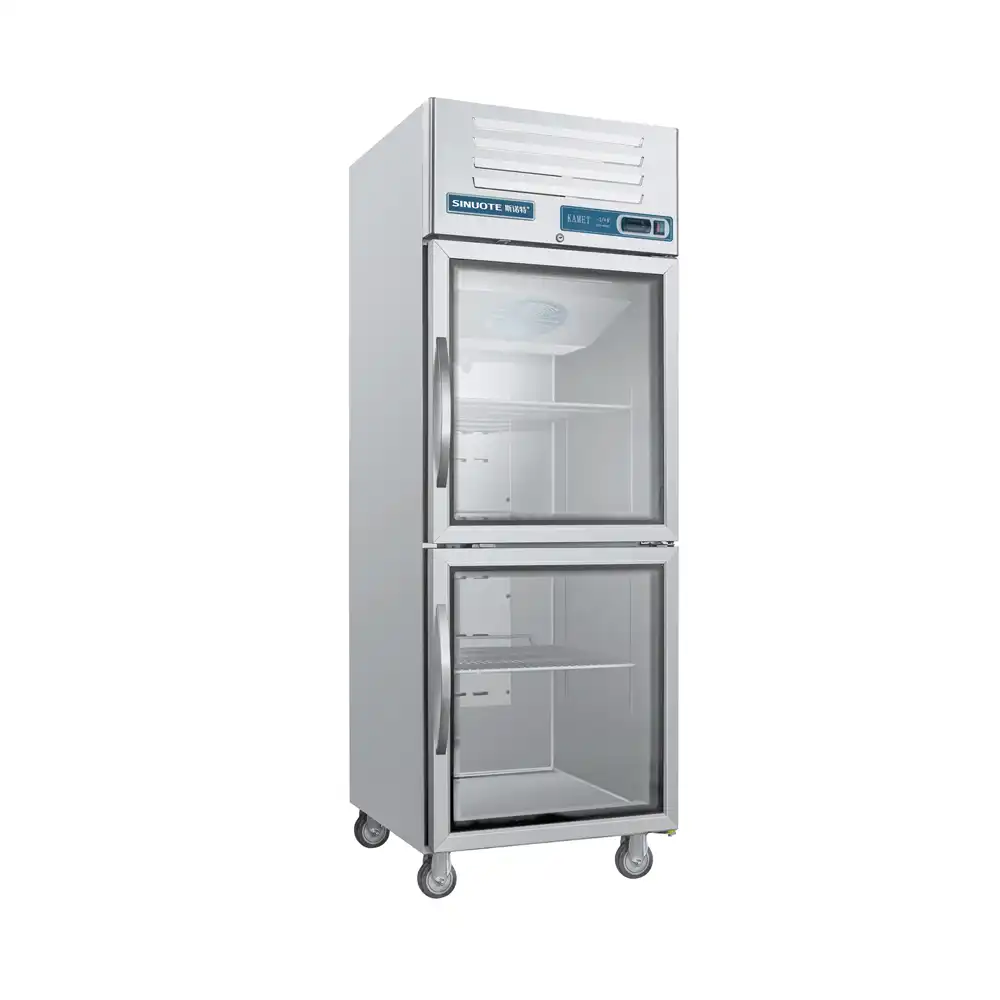
Stainless steel construction provides the durability commercial coolers need in demanding environments. The material resists corrosion from spills, cleaning chemicals, and the humidity inherent to refrigeration equipment.
Maintenance requirements for modern back bar refrigeration are straightforward but consequential. Neglected maintenance degrades efficiency gradually—often invisibly until energy bills climb or cooling performance noticeably suffers.
Condenser coils collect dust and grease from kitchen environments. Dirty coils force the compressor to work harder, increasing energy consumption and accelerating wear. Monthly cleaning maintains heat exchange efficiency.
Door gaskets require weekly inspection. Small tears or gaps allow continuous cold air loss. Replacing a worn gasket costs little compared to the energy waste and temperature instability it prevents.
| Maintenance Task | Frequency | Purpose |
|---|---|---|
| Condenser Coil Cleaning | Monthly | Maintain heat exchange efficiency |
| Door Gasket Inspection | Weekly | Prevent cold air leaks |
| Interior Cleaning | Weekly | Hygiene and odor prevention |
| Temperature Calibration | Quarterly | Verify control accuracy |
| Refrigerant Level Check | Annually (technician) | Ensure optimal system charge |
For more detailed guidance on maintaining your commercial refrigeration units, explore our article on 《Essential Maintenance Tips for Commercial Reach In Refrigerators》.
Matching Equipment to Your Operation
The right back bar refrigeration depends on your specific operational context. Space constraints, product mix, service volume, and installation conditions all influence the optimal choice.
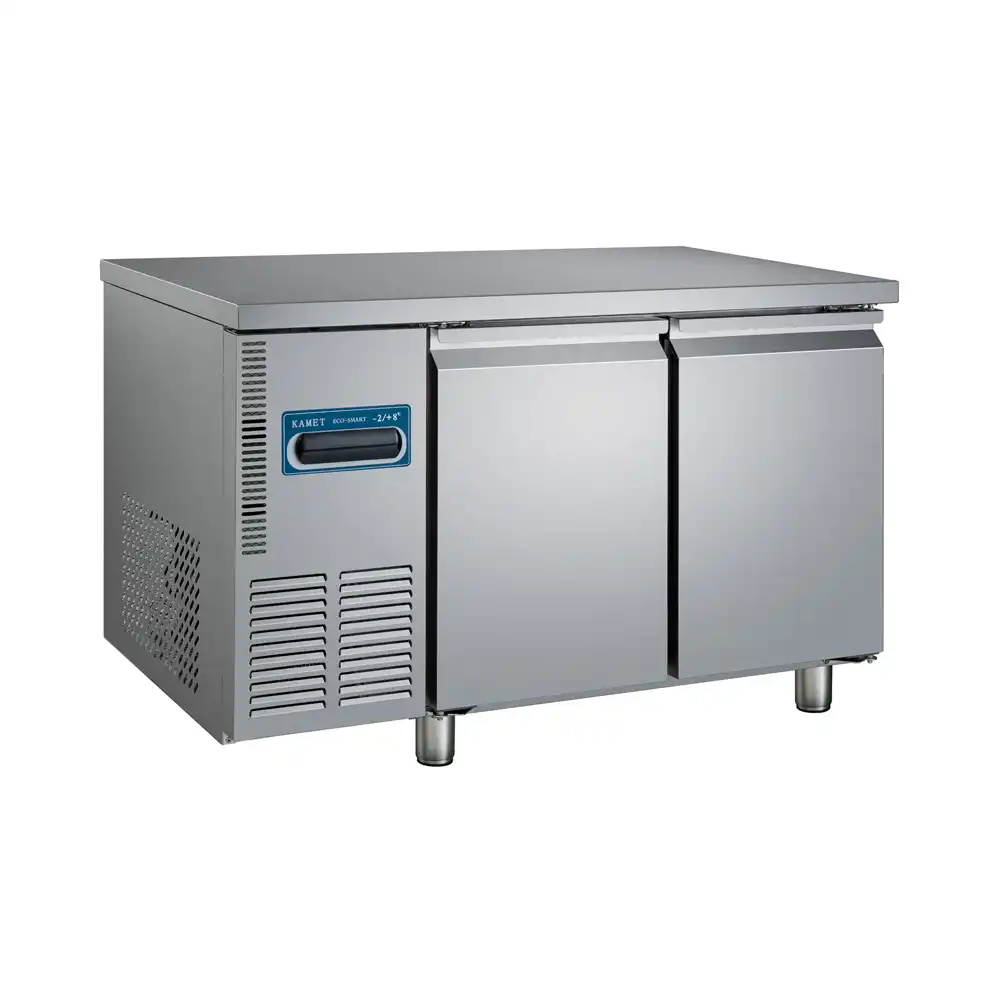
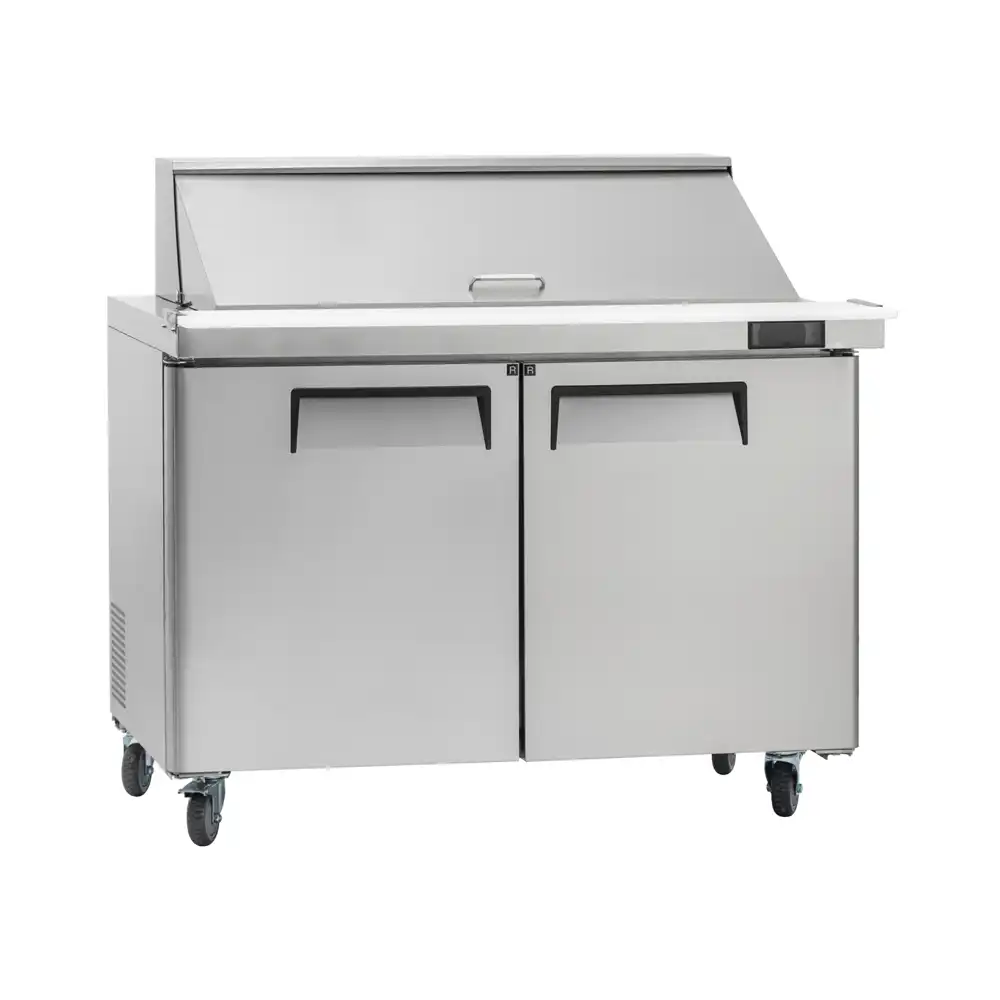
Under Counter units maximize floor space utilization while keeping product within easy reach. Work Top configurations provide prep surface above refrigerated storage—valuable in tight back bar layouts.
Installation requirements deserve attention before purchase. Electrical capacity, ventilation clearance, and ambient temperature conditions affect both installation feasibility and operating efficiency. Units designed for built-in installation require less clearance than freestanding models.
Customization options—drawer configurations, interior finishes, door styles—allow matching equipment to workflow patterns. A unit configured for your specific product mix and service style operates more efficiently than a generic solution.
Supplier reliability matters for equipment with a 10-15 year expected lifespan. Access to technical support, spare parts availability, and warranty terms affect total cost of ownership beyond the purchase price.
Common Questions About Back Bar Refrigeration
What performance specifications matter most when comparing back bar refrigerators?
Cooling capacity and temperature stability predict real-world performance most reliably. Cooling capacity determines whether the unit keeps up during high-demand periods. Temperature stability—look for ±0.5°C or better—ensures consistent product quality. Recovery rate indicates how the unit handles frequent door openings. Energy consumption directly affects operating costs, while noise levels matter in customer-facing environments.
How do I figure out whether an energy-efficient model will actually save money?
Compare the rated energy consumption of your current unit against a prospective replacement. Multiply the difference by your electricity rate and annual operating hours to estimate yearly savings. Divide the price premium of the efficient model by annual savings to calculate payback period. For 24-hour operations, even small hourly consumption differences add up substantially over a year.
What refrigerant should I look for in new back bar refrigeration equipment?
R290 offers the best combination of efficiency and environmental performance currently available. Its thermodynamic properties deliver strong cooling efficiency, while its GWP of 3 far undercuts older refrigerants like R134a at 1430. R600a provides similar benefits. Both natural refrigerants align with current regulatory trends and anticipated future requirements.
What maintenance keeps back bar refrigerators running efficiently?
Condenser coil cleaning monthly prevents heat exchange degradation from dust and grease buildup. Weekly door gasket inspection catches wear before it causes significant cold air loss. Quarterly temperature calibration verification ensures controls remain accurate. Annual refrigerant level checks by a qualified technician confirm optimal system charge. These routine tasks preserve both efficiency and equipment lifespan.
Do smart features actually improve refrigeration efficiency?
Digital temperature controls maintain more precise setpoints than mechanical thermostats, preventing the overcooling that wastes energy. Remote monitoring enables early detection of performance issues before they escalate into failures or efficiency losses. Energy management systems in advanced units can optimize operation based on usage patterns and time-of-use electricity rates.
Partner with ZHEJIANG KAIMEI for Superior Refrigeration Solutions
Elevate your establishment’s efficiency and sustainability with ZHEJIANG KAIMEI CATERING EQUIPMENT CO., LTD. As a professional One-Stop-Shop Refrigeration Equipments Manufacturer, we specialize in advanced, energy-saving back bar refrigerators designed for peak performance and reliability. Contact us today at +8618157202219 or Sales@hzcamay.com for a personalized consultation and discover how our solutions can optimize your operations.