
Commercial kitchens live and die by their cold chain. When a freezer struggles to hold temperature during a Friday dinner rush, you feel it in spoiled inventory, stressed staff, and margins that shrink before your eyes. Solid door freezers have earned their place in back-of-house operations precisely because they handle these pressures without drama. They keep things cold, stay efficient, and last longer than most alternatives. This piece walks through what makes them work, how to choose the right one, and what keeps them running well for years.
What Makes Solid Door Freezers the Workhorse of Back-of-House Storage
Solid door freezers exist for one purpose: reliable, efficient cold storage in environments where nobody cares about seeing what’s inside. The design trades visibility for insulation performance. That tradeoff matters more than most operators realize.
The physics are straightforward. A solid panel insulates better than glass. Less heat transfer means the compressor runs fewer cycles. Fewer cycles mean lower energy bills and less mechanical wear. Over a five-year span, that difference compounds into real money.
Durability follows the same logic. Glass doors can crack. Solid steel panels don’t. In a kitchen where carts bump into equipment and staff move fast, that resilience prevents downtime and replacement costs.
| Feature | Solid Door Freezer | Glass Door Freezer |
|---|---|---|
| Energy Efficiency | High (Superior insulation) | Moderate (More heat transfer) |
| Temperature | Excellent consistency | Good (More susceptible to fluctuations) |
| Durability | High (Robust construction) | Moderate (Glass susceptible to damage) |
| Visibility | Low (Internal contents not visible) | High (Products visible) |
| Application | Back-of-house storage, long-term preservation | Front-of-house display, quick access |
| Cost | Lower operational cost (energy savings) | Higher operational cost (more energy consumption) |
How Better Insulation Translates to Lower Bills
The insulation inside a solid door freezer does most of the heavy lifting. Manufacturers like ZHEJIANG KAIMEI use polyurethane/cyclopentane foamed insulation, which is CFC-free and dense enough to create a genuine thermal barrier. That density keeps cold air in and warm air out.
When insulation performs well, the compressor doesn’t have to work as hard. It cycles on, brings temperature down, and cycles off. With poor insulation, it runs constantly, burning electricity and wearing out faster. The energy savings from quality insulation typically pay for themselves within the first few years of operation.
Optimizing your kitchen’s refrigeration strategy is crucial for long-term success. For those interested in maximizing their investment, exploring options for efficient cold storage is highly recommended. If you’re interested, check 《Boost Savings with Energy Efficient Commercial Upright Freezers》.
Matching a Solid Door Freezer to Your Kitchen’s Actual Needs
Picking the right unit means thinking beyond the spec sheet. Capacity numbers and footprint dimensions matter, but they only tell part of the story. The real question is whether the freezer fits your operation—physically, operationally, and financially.
Getting Capacity and Footprint Right
Start with volume. How much frozen product moves through your kitchen on a busy day? Include buffer for peak periods and seasonal fluctuations. Underestimating leads to overcrowding, which restricts airflow and compromises temperature consistency.
Space constraints often dictate format. Upright freezers for restaurants work well in tight kitchens because they use vertical space efficiently. Chest freezers hold more bulk but spread across the floor. Measure your available area carefully, and don’t forget door swing clearance and ventilation gaps.
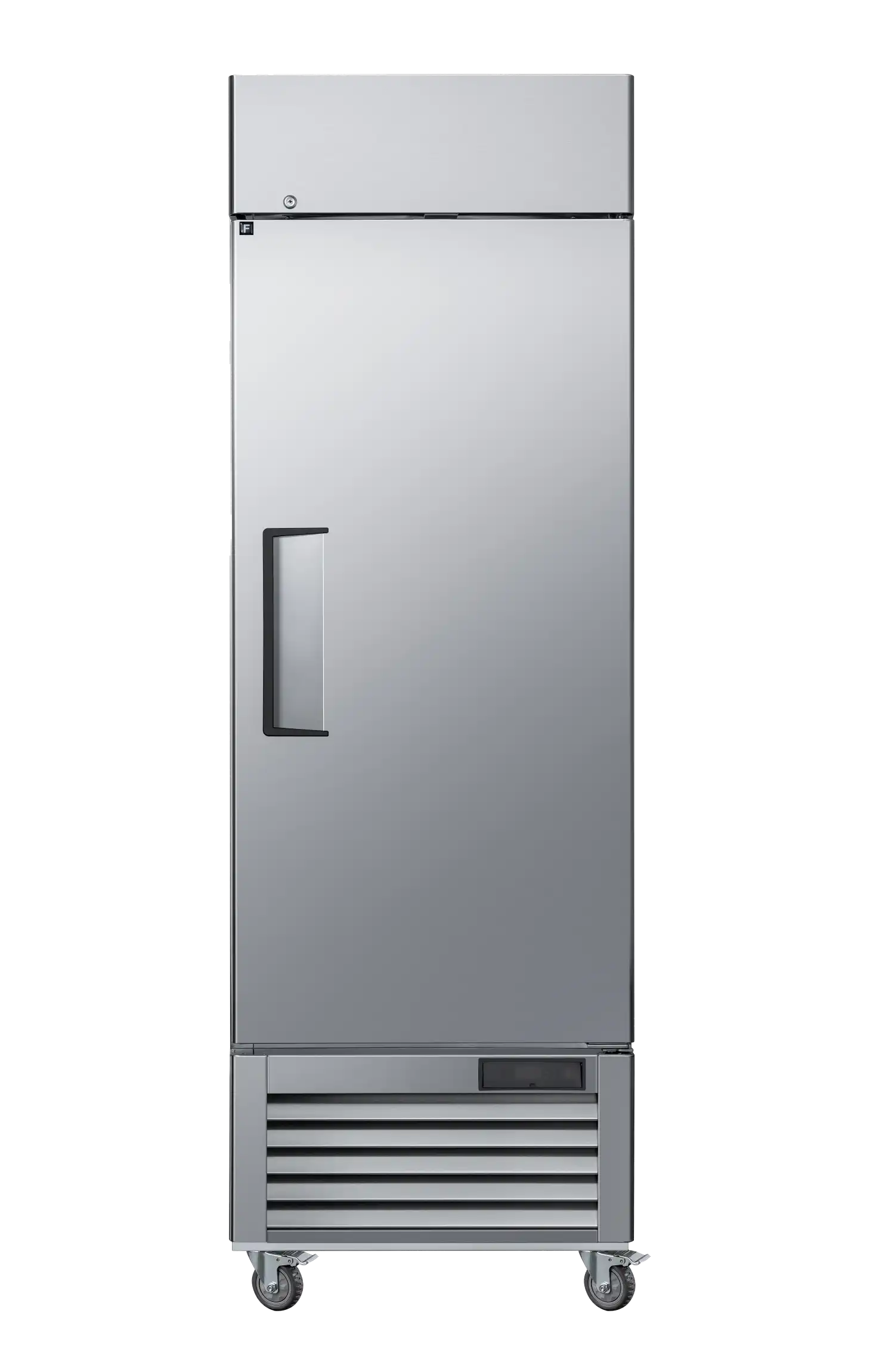
The MF-23 1-Door Commercial Solid Door Freezer offers 547 L (19.32 Cuft) capacity within a 685×800×2115 mm footprint. That combination fits many commercial kitchen layouts while providing meaningful storage volume.
Why Material Choice Affects Both Durability and Safety
Commercial kitchens are hard on equipment. Grease, moisture, temperature swings, and constant cleaning take their toll. Stainless steel handles this environment better than alternatives. It resists corrosion, cleans easily, and doesn’t harbor bacteria in pores or crevices.
NSF certification confirms that equipment meets public health standards for food contact surfaces. This isn’t just a regulatory checkbox—it reflects design decisions that make cleaning effective and contamination less likely. All ZHEJIANG KAIMEI commercial refrigeration units feature stainless steel construction and comply with relevant food safety regulations.
Features That Separate Reliable Freezers from Problematic Ones
Modern solid door freezers include features that weren’t standard a decade ago. Some of these genuinely improve performance and longevity. Others are marketing additions that rarely matter in practice. Knowing the difference helps you spend wisely.
Self-closing doors prevent the energy loss that happens when someone forgets to push a door fully shut. In a busy kitchen, this happens more often than anyone wants to admit. A lock and key add security for high-value inventory.
Digital temperature control allows precise management of internal conditions. Some units include IoT and WiFi functions for remote monitoring. Whether that’s useful depends on your operation—multi-location operators often find value in remote alerts, while single-site kitchens may not need them.
Automatic defrost cycles prevent ice buildup without manual intervention. Ice accumulation restricts airflow, forces the compressor to work harder, and eventually damages components. Automatic systems handle this quietly in the background.
R290 refrigerant has become standard in quality units. It offers strong energy efficiency and lower environmental impact than older refrigerants. As regulations tighten around high-GWP refrigerants, R290 also provides some future-proofing.
Heavy-duty door hinges matter more than they might seem. Commercial freezers get opened and closed constantly. Cheap hinges wear out, doors sag, seals fail, and efficiency drops. Removable gaskets make replacement straightforward when seals eventually need attention.
Looking Beyond the Sticker Price
The purchase price of a commercial solid door freezer represents only part of what you’ll spend over its useful life. Energy consumption, maintenance, repairs, and downtime all factor into the true cost of ownership.
A unit that costs more upfront but runs efficiently and rarely breaks down often costs less over ten years than a cheaper model that struggles from day one. This calculation requires honest assessment of your operation’s demands and realistic expectations about equipment lifespan.
| Factor | Impact on TCO | Consideration |
|---|---|---|
| Initial Purchase Price | Direct upfront cost | Varies by brand, capacity, and features |
| Energy Consumption | Significant long-term operational expense | Look for ENERGY STAR ratings, efficient refrigerants |
| Maintenance Costs | Regular cleaning, preventative service | Easy-to-clean design, accessible components |
| Repair Costs | Unexpected breakdowns, parts replacement | Component quality, warranty, service network |
| Downtime Losses | Lost revenue, spoiled inventory | Equipment reliability, quick service response |
| Refrigerant Type | Environmental impact, potential future costs | R290 is eco-friendly and efficient |
What Warranty and Support Actually Mean in Practice
A warranty protects against manufacturing defects, but its real value depends on how easy it is to use. A comprehensive warranty that covers parts and labor means little if the manufacturer lacks a service network or spare parts availability.
ZHEJIANG KAIMEI provides technical assistance and maintains spare parts inventory to minimize downtime when issues arise. That support structure matters as much as the warranty document itself.
For those considering a new commercial freezer, understanding the nuances of different models is key. Learn more about the distinctions between various freezer types to make an informed decision. If you’re interested, check 《Upright Freezer vs Refrigerator Key Differences Explained》.
Making Installation and Maintenance Work for You
Even the best solid door freezer underperforms when installed poorly or neglected. These practices don’t require special expertise, but they do require attention.
Placement matters. Keep freezers away from heat sources like ovens, grilles, and direct sunlight. Ensure adequate airflow around the unit—cramming a freezer into a tight corner restricts ventilation and forces the compressor to work harder.
Level the unit properly. An unlevel freezer causes doors to seal poorly and internal components to operate under strain. Most units have adjustable feet that make leveling straightforward.
Connect to a dedicated electrical circuit. Sharing circuits with other high-draw equipment can cause voltage fluctuations that stress the compressor.
Let the freezer reach its set temperature before loading it with product. Dumping warm inventory into a new unit forces the system to work overtime from the start.
Clean condenser coils regularly. Dust and grease accumulation on coils reduces heat transfer efficiency and can lead to compressor failure. This is the single most important preventative maintenance task.
Inspect door gaskets frequently. Cracks or tears compromise the seal, causing energy loss and temperature fluctuations. Replacement gaskets are inexpensive compared to the cost of running a compromised unit.
Monitor temperature consistently. Digital controls make this easy, and IoT systems can provide alerts when temperatures drift outside acceptable ranges.
Verify that automatic defrost functions correctly. Ice accumulation indicates a problem that needs attention before it becomes serious.
Schedule professional inspections annually. Technicians can identify developing issues and address them before they cause failures.
Working with ZHEJIANG KAIMEI on Your Refrigeration Needs
ZHEJIANG KAIMEI CATERING EQUIPMENT CO., LTD. manufactures a full range of Solid Door Freezer Cooler units designed for commercial kitchen demands. The focus on energy efficiency, durable construction, and practical features reflects years of experience with what actually matters in restaurant operations.
Contact the team at +8618157202219 or Sales@hzcamay.com to discuss specific requirements. They can help match equipment to your kitchen’s particular needs and constraints.
Frequently Asked Questions About Commercial Solid Door Freezers
What are the key differences between solid door and glass door commercial freezers for restaurants?
Solid door freezers provide better insulation, which means more consistent temperatures and lower energy consumption. Glass doors let you see what’s inside, which matters for front-of-house display but adds no value in back-of-house storage. Solid doors also handle the physical demands of busy kitchens better than glass, which can crack under impact. For storage applications where visibility isn’t needed, solid doors make more sense financially and operationally.
How does freezer energy efficiency impact restaurant operating costs?
Energy costs represent a significant portion of restaurant operating expenses, and refrigeration accounts for a substantial share of that energy use. An efficient solid door freezer—typically indicated by Energy Star ratings and modern refrigerants like R290—consumes less electricity to maintain target temperatures. Over a ten-year equipment lifespan, the difference between an efficient unit and an average one can amount to thousands of dollars in utility savings. That makes efficiency a legitimate financial consideration, not just an environmental one.
What maintenance is required for commercial solid door freezers to ensure longevity?
The most important maintenance task is cleaning condenser coils regularly. Dust and grease buildup forces the compressor to work harder and can cause premature failure. Beyond that, check door gaskets for damage, ensure the unit stays level, verify that automatic defrost cycles function properly, and monitor temperatures for unexpected drift. Annual professional inspections catch developing problems before they become expensive failures. Following manufacturer guidelines for these tasks typically extends equipment life by several years.