

Keeping perishables safe across a supermarket floor demands more than just cold air. It requires systems that hold temperature without flinching, day after day, through constant door cycles and fluctuating ambient conditions. Solid door refrigerators have become the backbone of back-of-house cold storage for exactly this reason. Their sealed construction eliminates the thermal leakage that plagues display units, and that stability translates directly into longer shelf life and lower energy bills. After years of working with supermarket operators, the pattern is clear: the stores that invest in proper solid door units spend less time managing spoilage and more time managing growth.
How Solid Door Refrigeration Strengthens Supermarket Cold Chain Operations
Effective supermarket cold chain management covers every stage from receiving dock to customer basket. Solid door commercial refrigeration solutions anchor the storage phase, maintaining the consistent temperatures that prevent quality degradation between delivery and display. These industrial refrigeration units handle high-volume throughput without the temperature swings that compromise food safety. The global cold chain market is projected to reach $447.8 billion by 2027, reflecting how seriously the industry now treats preservation infrastructure. Solid door freezer cooler systems fit naturally into this framework, providing the thermal reliability that cold chain logistics demand.
Why Energy Efficiency Matters More Than Most Operators Realize
Refrigeration often accounts for up to 60% of a supermarket’s electricity bill. That number surprises many operators until they see their first detailed energy audit. Solid door refrigerators address this directly through superior insulation that keeps cold air inside where it belongs. Less thermal leakage means compressors run shorter cycles, which cuts power consumption in supermarkets significantly over a year of operation.
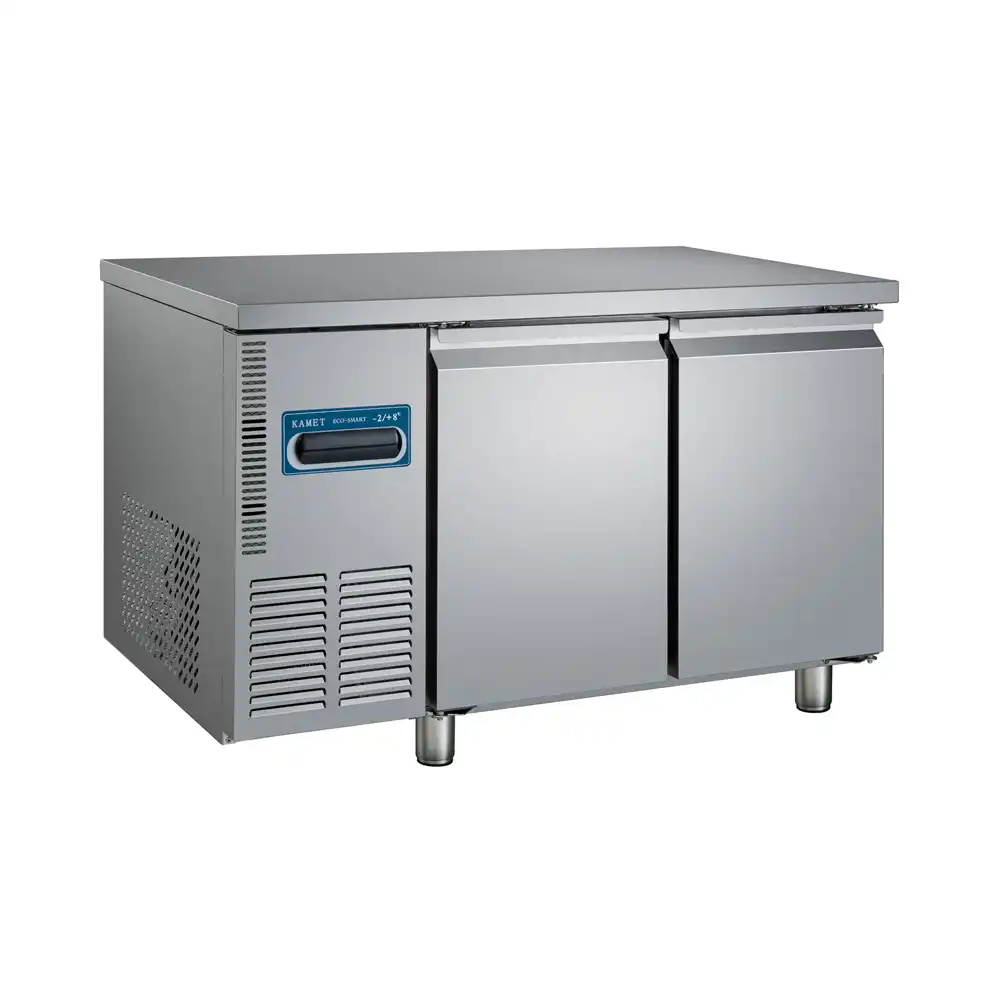
The Camay Commercial Solid Door Undercounter (MTR-72) demonstrates this principle in practice. Its polyurethane/cyclopentane foamed insulation creates a thermal barrier that outperforms standard construction, while the R290 refrigerant delivers cooling performance with a lower environmental footprint. These design choices make energy-efficient refrigerators a practical investment rather than a theoretical improvement. Sustainable refrigeration practices start with equipment that does more work with less electricity.
For related strategies on reducing operational costs, our guide on 《Boost Efficiency Energy Efficient Chef Base Units for Commercial Kitchens》 covers complementary approaches to kitchen refrigeration.
Temperature Control as the Foundation of Food Safety Compliance
Bacterial populations double roughly every 20 minutes when temperatures drift above safe thresholds. This biological reality makes precise temperature control non-negotiable for any supermarket handling perishables. Solid door refrigerators provide the stable environment that HACCP principles require, holding products within the 0.5°C to 5°C range where microbial growth slows dramatically.
Modern units incorporate smart digital temperature control systems that track conditions continuously. Optional IoT and WiFi functions allow remote monitoring, which means temperature excursions trigger alerts before they become food safety incidents. This level of oversight supports regulatory compliance for food storage while extending shelf life for products that would otherwise degrade faster under variable conditions.
Why is precise temperature control essential for food safety in supermarket refrigeration?
Bacterial growth accelerates rapidly when temperatures exceed safe limits. Maintaining consistent cold storage between 0.5°C and 5°C slows microbial proliferation to levels that preserve product safety. This temperature discipline forms the core of HACCP compliance and foodborne illness prevention, protecting both inventory value and consumer health.
Matching Refrigeration Equipment to Actual Operational Demands
Not every supermarket needs the same refrigeration configuration. Back-of-house storage requirements differ from display needs, and bulk preservation demands different features than quick-access holding. The lifespan and return on investment for refrigeration equipment depend heavily on selecting units that match actual use patterns rather than defaulting to generic specifications.
Insulation materials determine thermal performance. Compressor technology affects both efficiency and noise levels. Cold room design influences airflow patterns that can either support or undermine temperature consistency. Evaluating these factors before purchase prevents the common mistake of installing equipment that works adequately but never performs optimally.
What are the critical factors for selecting solid door refrigerators in supermarket cold chains?
Capacity must match inventory volume with room for seasonal peaks. Energy ratings directly affect operating costs over the equipment’s lifespan. Construction quality, particularly door seals and compressor components, determines long-term reliability. Features like self-closing doors reduce human error, while easy-to-clean interiors support food safety protocols. Prioritize units designed for commercial duty cycles rather than adapted residential equipment.
| Feature | Solid Door Refrigerator (e.g., Camay MTR-72) | Glass Door Refrigerator (e.g., Camay DBG0.6L1A) |
|---|---|---|
| Primary Use | Back-of-house storage, bulk preservation | Front-of-house display, impulse purchases |
| Insulation | Superior (Polyurethane/Cyclopentane) | Moderate (Glass allows heat transfer) |
| Energy Efficiency | High | Lower (due to glass) |
| Temperature Stability | Excellent | Good, but more susceptible to ambient changes |
| Product Visibility | None | High |
For detailed selection criteria, our resource 《Choosing the Best Commercial Reach In Fridge for Your Restaurant》 provides additional guidance applicable to supermarket contexts.
Maintenance Practices That Prevent Expensive Surprises
Preventative maintenance reduces refrigeration system breakdowns by up to 75%. That statistic reflects what happens when operators treat maintenance as scheduled work rather than emergency response. Dirty condenser coils force compressors to work harder. Worn door seals leak cold air continuously. Low refrigerant levels compromise cooling capacity before anyone notices the temperature drift.
Smart refrigeration solutions now include remote monitoring systems that track performance metrics in real time. IoT capabilities flag anomalies before they escalate into failures, allowing maintenance teams to address issues during planned service windows rather than during peak business hours. This integration supports HVAC coordination across the facility while protecting the cold chain from preventable disruptions.
Partner with ZHEJIANG KAIMEI for Reliable Cold Chain Solutions
ZHEJIANG KAIMEI CATERING EQUIPMENT CO., LTD operates as a professional one-stop-shop refrigeration equipment manufacturer with deep experience in supermarket applications. Our solid door refrigerator systems deliver the energy efficiency, food safety compliance, and operational reliability that modern cold chains require. Contact us at +8618157202219 or Sales@hzcamay.com to discuss how our solutions fit your specific refrigeration infrastructure needs.
How do solid door refrigerators contribute to energy efficiency and cost savings in supermarkets?
Superior insulation minimizes cold air loss compared to glass door alternatives, which reduces compressor runtime and lowers electricity consumption. Over a typical equipment lifespan, these savings compound substantially. Advanced models add variable speed compressors and smart defrost cycles that optimize energy use further. The impact shows up directly on utility bills and indirectly through reduced maintenance costs from less stressed components.
What are the key differences between solid door and glass door refrigerators for supermarket storage?
Solid door units prioritize thermal stability for back-of-house storage where product visibility matters less than preservation quality. Their opaque, heavily insulated doors maintain consistent temperatures regardless of ambient conditions. Glass door refrigerators serve front-of-house display functions where customers need to see products, but the glass construction allows more heat transfer and typically increases energy consumption. Each type serves a distinct role in supermarket cold chain operations.
What maintenance practices are essential for extending the lifespan of supermarket solid door refrigerators?
Regular condenser coil cleaning maintains efficient heat exchange. Door seal inspections catch leaks before they waste energy. Refrigerant level monitoring ensures cooling capacity stays within specifications. Proper airflow around units prevents heat buildup that strains compressors. Scheduled professional inspections identify wear patterns early, preventing the cascade failures that turn minor issues into major repairs. Consistent maintenance protects both equipment investment and cold chain integrity.