
Space matters in a coffee shop. Every inch you give to equipment is an inch you’re not using for customers, prep, or movement. I’ve seen too many shops where the ice machine sits awkwardly in a corner, blocking traffic or forcing baristas to walk extra steps hundreds of times a day. The placement decision seems minor until you watch someone work around it for an eight-hour shift.
Where Your Ice Maker Sits Changes Everything
Poor equipment layout costs more than most owners realize. The average coffee shop loses 15-20% of potential floor area to planning mistakes that seemed reasonable at the time. Thoughtful ice maker placement can recover up to 10% of that space, which translates to room for another two-top table or a smoother path between stations. The real cost isn’t just square footage. It’s the cumulative drag on workflow when your barista has to pivot around a badly positioned machine fifty times an hour. Building the ice machine into your back-of-house plan from day one prevents the expensive retrofit that happens when you finally get frustrated enough to fix it.
Under-Counter and Modular Units Free Up Real Estate
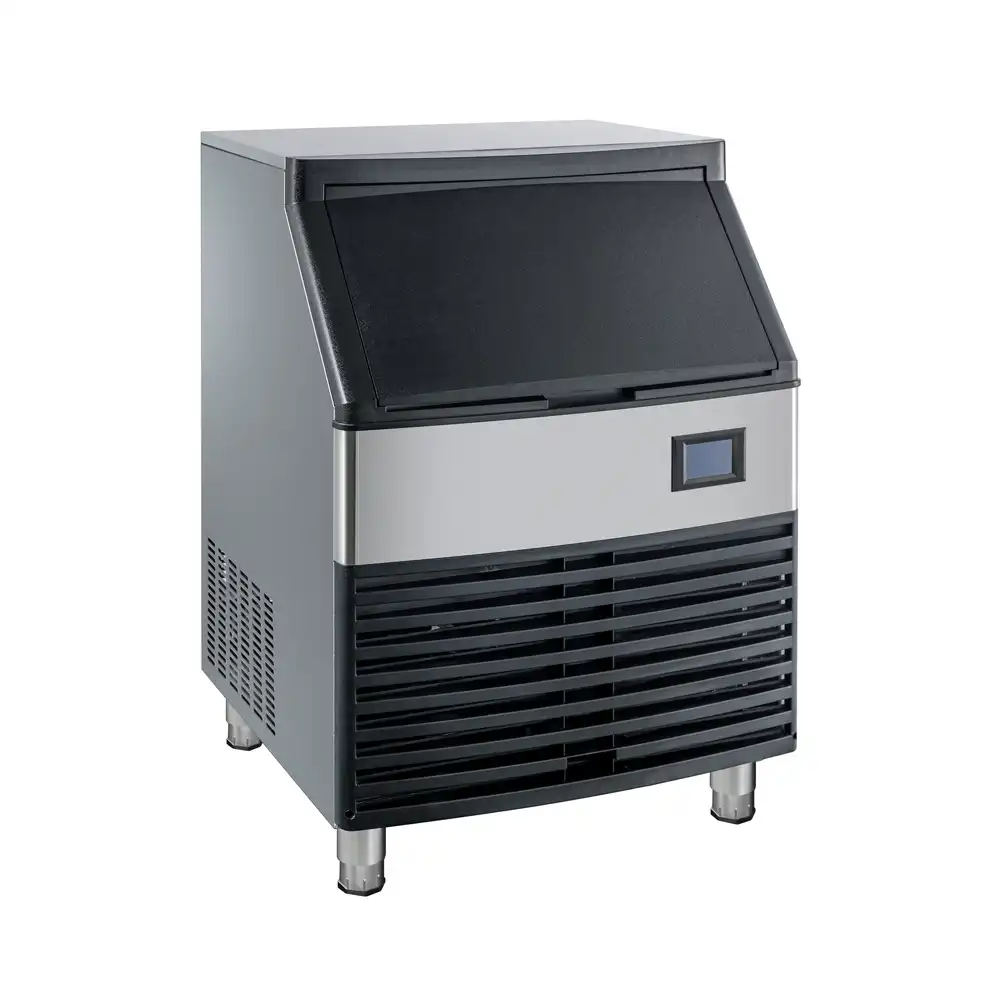
Under-counter and modular ice makers exist specifically for tight spaces, and they deliver. These units can reduce required floor space by up to 30% compared to traditional standalone models, which matters when your entire back-of-house might be smaller than a bedroom. Under-counter models like the Cube Ice Making Machine (Model FB210A) slide beneath existing counters, keeping your sight lines clean and your counter space available for actual work. Modular designs take a different approach by separating the ice-making head from the storage bin. This separation lets you tuck the compressor somewhere less visible while keeping the bin within arm’s reach of your drink station. Remote condenser setups push this flexibility even further.
What type of ice maker is best for a small coffee shop?
Air-cooled under-counter models with integrated bins usually make the most sense for small operations. Units producing 50-100 lbs per day balance footprint against demand without forcing you to sacrifice half your workspace. The FB210A, at 660×670×940 mm, fits spaces that would reject larger commercial units outright.
Layout Strategies That Actually Work in Cramped Spaces
The “zone” approach works. Designating specific areas for espresso, prep, and ice can improve workflow efficiency by 25% even when you’re working with minimal square footage. The principle is simple: reduce unnecessary movement. Every step your barista doesn’t have to take is time saved and energy preserved. Placing the ice maker near the beverage station eliminates the back-and-forth that kills speed during rushes. Equipment height and accessibility matter too. A bin that requires bending or reaching repeatedly creates strain that accumulates over months. Even small footprints can function smoothly when the planning accounts for how bodies actually move through space.
If you’re looking to optimize your kitchen further, consider reading about 《Optimizing Kitchen Efficiency with Integrated Worktop Refrigeration》.
Efficiency Hits Your Bottom Line Harder Than You’d Expect
The purchase price of an ice maker is just the beginning. Inefficient models can increase utility costs by 15-20% annually through higher energy and water consumption. That’s money leaving your business every month, invisible until you compare bills. Downtime during peak hours hurts worse. Running short on ice when the afternoon rush hits can cost 5-10% in lost revenue, and customers remember when their iced latte takes twice as long. Regular maintenance, including proper water filtration, keeps production consistent and prevents the kind of breakdown that always seems to happen on your busiest Saturday. Models using R290 refrigerant offer better long-term efficiency, which compounds into real savings over the machine’s lifespan.
How much space does a commercial ice maker need?
Compact models can start at 15″W x 24″D x 34″H, but the machine itself is only part of the equation. You need an additional 4-6 inches around the unit for ventilation and service access. Skimp on this clearance and you’ll pay for it in premature wear and repair bills when heat can’t dissipate properly.
Matching Ice Type and Capacity to What You Actually Serve
Different drinks need different ice. Full cube ice melts slowly and looks right in cold brew. Nugget ice blends easily and works for smoothies and frozen drinks. Getting this match right can reduce ice waste by 10% while improving what ends up in the cup. Oversizing your ice maker wastes space and energy. Undersizing leaves you scrambling during rushes. The Cube Ice Making Machine (Model FB210A) produces up to 100 kg per 24 hours with 45 kg storage capacity, which fits the demand profile of many cafes without requiring excessive floor space.
| Ice Type | Best For | Characteristics |
|---|---|---|
| Full Cube | Cold Brew, Iced Coffee | Slow-melting, classic appearance |
| Nugget | Blended Drinks, Smoothies | Soft, chewable, blends easily |
| Flaked | Food Displays, Specialty Drinks | Fast cooling, molds easily |
Maintenance Determines Whether Your Investment Lasts
Consistent preventative maintenance can add 2-3 years to an ice maker’s operational life and reduce emergency repair costs by up to 40%. Those numbers aren’t theoretical. They reflect the difference between machines that get regular attention and machines that run until something breaks. Sanitation matters for both health and performance. Routine cleaning prevents bacterial growth that affects ice quality and can trigger health code violations. Water filter replacement follows a schedule, not a “when I remember” approach. The shops that treat maintenance as optional are the same ones calling for emergency service on holiday weekends.
What are the benefits of modular ice maker systems?
Modular systems offer configuration flexibility that fixed units can’t match. Separating the condenser and bin means you can place each component where it makes sense for your specific layout rather than accepting the footprint of an all-in-one machine. For small coffee shops trying to maximize every inch, this adaptability often makes the difference between a workable layout and a compromised one.
Partner with ZHEJIANG KAIMEI for Optimized Refrigeration Solutions
ZHEJIANG KAIMEI CATERING EQUIPMENT CO., LTD offers professional refrigeration equipment designed for the specific demands of coffee shop operations. Contact us at Phone: +8618157202219 or Email: Sales@hzcamay.com for a personalized consultation on ice maker solutions that fit your space and workflow requirements.
Frequently Asked Questions
How can I choose an energy-efficient ice maker for my coffee shop?
Look for Energy Star ratings first. Air-cooled and remote condenser options typically use less energy than water-cooled alternatives. Check the ice-to-water ratio since inefficient machines waste water producing each pound of ice. R290 refrigerant indicates newer, more environmentally responsible design that also tends toward better efficiency. ZHEJIANG KAIMEI CATERING EQUIPMENT CO., LTD carries energy-saving commercial ice makers built to reduce long-term operational costs.
What are the common challenges in optimizing ice maker space in small coffee shops?
Limited counter and back-of-house space creates the obvious constraint, but ventilation requirements often surprise owners who didn’t account for clearance needs. Balancing production capacity against footprint requires honest assessment of your actual ice demand rather than worst-case projections. Under-counter and modular designs help, but professional consultation catches problems that aren’t obvious until installation day.
Can ZHEJIANG KAIMEI CATERING EQUIPMENT CO., LTD assist with custom layout solutions for ice makers?
Yes. As a professional refrigeration equipment manufacturer, ZHEJIANG KAIMEI CATERING EQUIPMENT CO., LTD provides tailored layout solutions for coffee shop ice makers. The process involves assessing your space, understanding your workflow patterns, and matching ice production needs to equipment that fits both physically and operationally.