
Commercial kitchens run on rhythm. When that rhythm breaks—when a cook has to cross the room for ingredients or wait for someone to clear a prep station—the whole line slows down. Worktop combination solutions address this problem directly by consolidating storage, preparation, and sometimes cooking functions into unified workstations. The result is fewer steps, faster prep cycles, and staff who can actually maintain their pace through a busy service.
Workflow Changes When Everything Sits Within Reach
The fundamental shift with integrated worktops comes down to movement patterns. In a traditional setup, a cook might prep vegetables at one station, walk to a separate refrigerator for proteins, return to a different cutting surface, then move again to begin cooking. Each trip adds seconds that compound across hundreds of tasks per shift.
Integrated solutions compress this sequence. A refrigerated chef base positions chilled ingredients directly beneath the cutting surface. The cook reaches down rather than walking across the kitchen. Our Camay 60″ Countertop Refrigerated Chef Base (Model MAR-60A) exemplifies this approach—it combines a sturdy work surface with refrigerated storage underneath, keeping frequently used ingredients at proper temperatures exactly where prep happens.
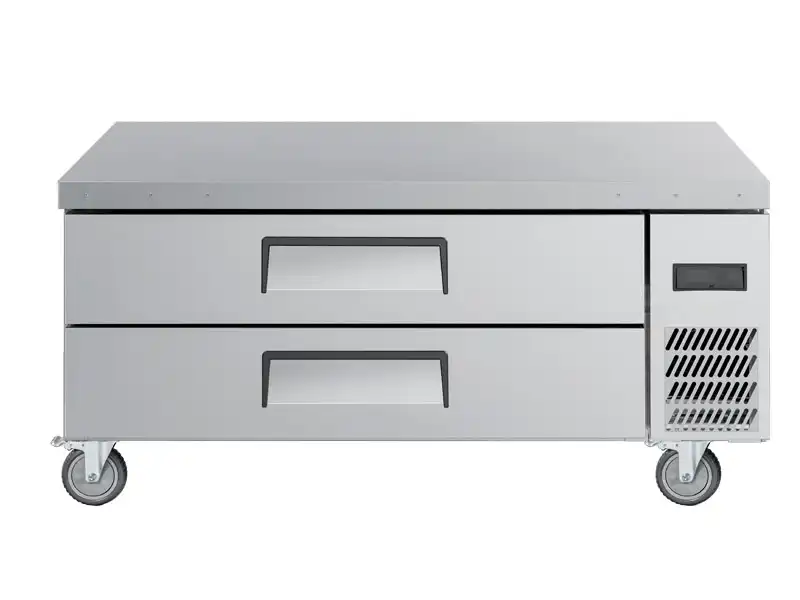
Traditional layouts scatter functions across separate units, creating fragmented workflows. Integrated designs create continuous workspaces instead. Beyond efficiency gains, this arrangement reduces physical strain on staff. Features like self-closing doors and optional casters for repositioning add practical flexibility that kitchens actually use during service adjustments.
Core Advantages Beyond Saving Floor Space
Integrated worktops deliver benefits that extend past the obvious space savings. They represent a practical upgrade path because they extract more utility from existing square footage. One restaurant client documented a 15% reduction in operational costs after switching to integrated worktop systems—gains that came from smoother workflows and less ingredient waste rather than any single dramatic change.
Temperature Control and Food Safety
Refrigerated worktops serve a critical food safety function by maintaining precise temperatures for perishable items. Units like our Camay Commercial Worktop Refrigerator Cooler Fridge Model MWTF-27-L hold ingredients between 0.5°C and 5°C for refrigeration or -22°C to -18°C for freezer applications. These consistent temperatures prevent bacterial growth and extend usable shelf life.
The proximity factor matters too. When chilled ingredients sit directly at the prep station, they spend less time at ambient temperatures during use. This reduced exposure window is significant for cross-contamination prevention. Internal testing indicates refrigerated worktops can extend ingredient freshness by approximately 30%, which translates directly to reduced spoilage costs.
Material Selection for Commercial Durability
Commercial kitchens subject worktops to constant abuse—heavy impacts, acidic ingredients, aggressive cleaning chemicals, and thermal shock from hot pans. Material choices determine whether a surface holds up for years or degrades within months.
Why Stainless Steel Dominates Commercial Applications
High-grade stainless steel, particularly 304 grade, remains the standard for commercial kitchen surfaces. The material resists corrosion from acidic foods and cleaning agents, withstands mechanical abuse, and cleans easily because its non-porous surface prevents bacterial absorption. Industry surveys consistently show 304-grade stainless steel in roughly 90% of commercial kitchen installations.
| Material | Strengths | Limitations |
|---|---|---|
| Stainless Steel | Durable, hygienic, corrosion-resistant | Can scratch, shows fingerprints |
| Solid Surface | Non-porous, seamless, repairable | Less heat resistant, can stain |
| Quartz | Extremely durable, non-porous, attractive | Heavy, expensive, can chip |
| Laminated Wood | Cost-effective, variety of finishes | Not heat resistant, prone to water damage |
Modular Systems and Layout Flexibility
Modular kitchen systems allow configurations that adapt as operations change. A kitchen might start with a particular menu focus, then shift direction based on customer demand or seasonal availability. Fixed installations make such transitions expensive. Modular worktop combinations accommodate change without requiring complete rebuilds.
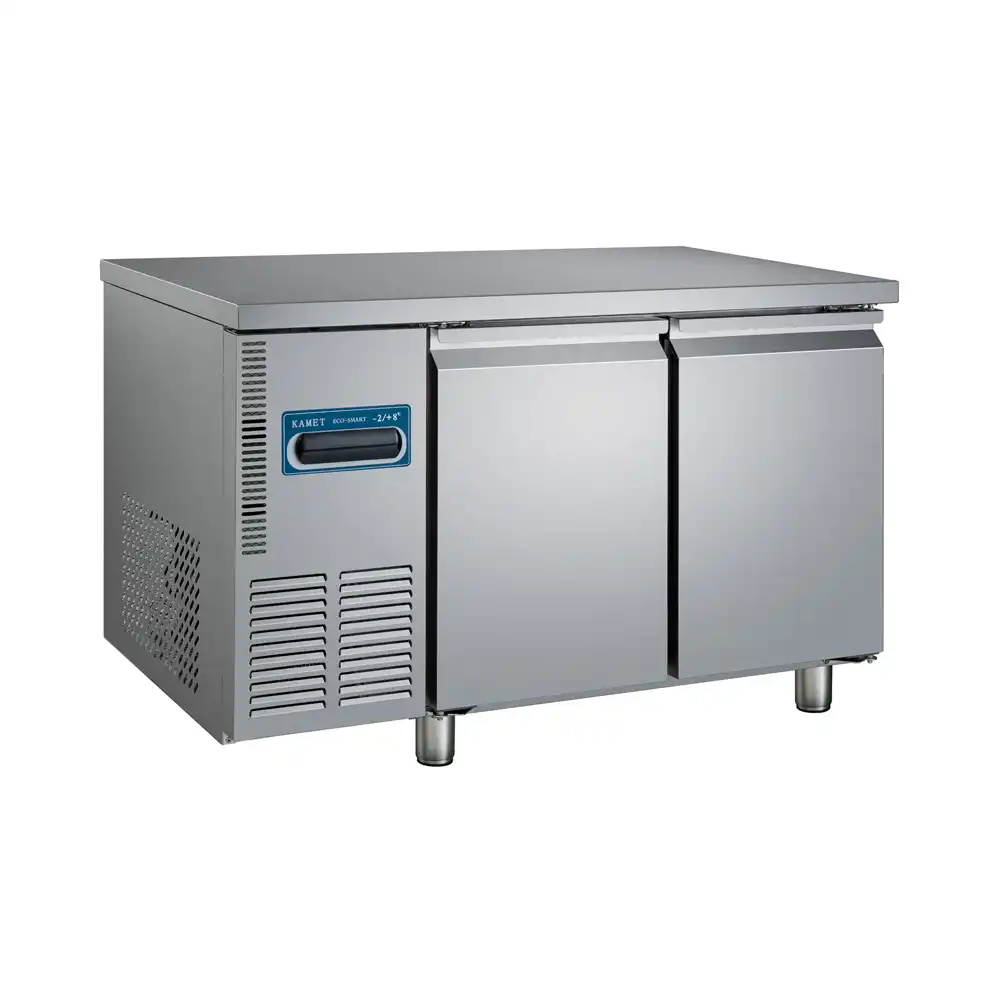
Undercounter units like the Camay MTR-48 2-Door Commercial Undercounter Refrigerator integrate beneath worktops to provide cold storage without claiming additional floor space. This arrangement keeps refrigerated capacity accessible while preserving the open floor area that kitchen staff need to move efficiently. Optional casters on many models enable repositioning as workflow requirements shift. If you’re interested, check 《Boost Efficiency Energy Efficient Chef Base Units for Commercial Kitchens》.
The Case for Ergonomic Worktop Design
Ergonomics in kitchen design affects more than comfort—it influences error rates, injury frequency, and sustained productivity across long shifts. Worktops positioned at awkward heights force repetitive bending or reaching. Over an eight-hour shift, these small inefficiencies accumulate into genuine fatigue.
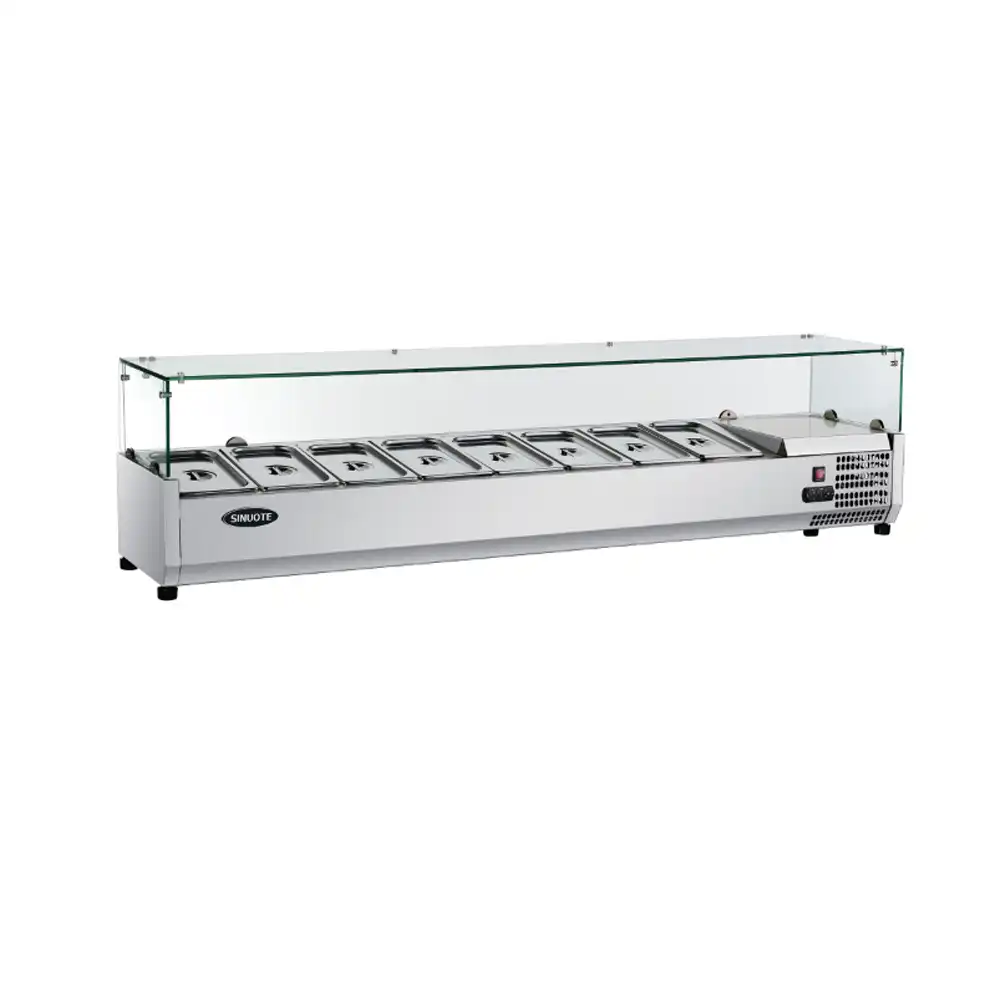
Properly configured worktop combinations can reduce staff fatigue by roughly 20%, with corresponding reductions in mistakes and injuries. Design details matter: rounded corners prevent bruising during rushed movements, recessed handles eliminate snag points, and surfaces that clean easily reduce the physical effort of sanitation tasks. Our Camay Commercial Undercounter Refrigerator incorporates these features specifically because they affect daily operations.
Custom Solutions and Return on Investment
Custom worktop solutions cost more upfront than standard units but often deliver stronger returns over their service life. The difference comes from precision fit—when units match a kitchen’s exact dimensions and workflow patterns, nothing gets wasted.
How Tailored Configurations Reduce Operating Costs
Generic equipment rarely fits perfectly. Gaps waste space, awkward placements slow movement, and mismatched capacities create bottlenecks. Custom fabrication eliminates these compromises. Every refrigerated drawer, integrated sink, and work surface occupies its optimal position.
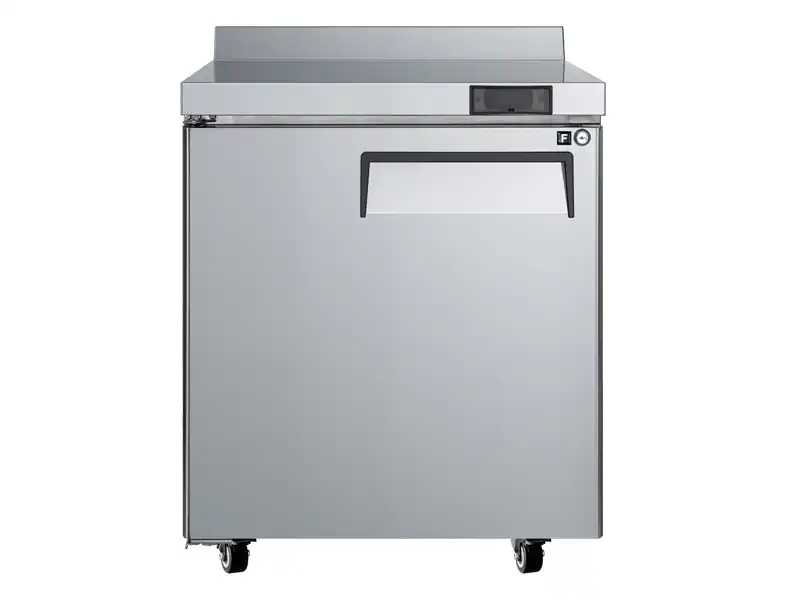
The financial impact shows up across multiple categories: labor costs drop when staff move efficiently, food waste decreases when storage matches actual usage patterns, and energy consumption falls when refrigeration capacity aligns with real needs rather than oversized estimates. Custom installations typically achieve full ROI approximately 25% faster than generic alternatives, primarily through these cumulative operational savings.
Frequently Asked Questions
What are the primary advantages of integrating refrigerated worktops into a commercial kitchen?
Refrigerated worktops keep ingredients at safe temperatures right at the prep station, which reduces both food safety risks and the time staff spend walking to separate refrigerators. The combination of proper temperature control and convenient access cuts waste from spoilage while speeding up prep workflows. Most kitchens see measurable efficiency improvements within the first few weeks of use.
How do ZHEJIANG KAIMEI’s custom worktop solutions cater to unique kitchen layouts and operational needs?
We analyze each kitchen’s specific dimensions, workflow patterns, and menu requirements before designing custom worktop combinations. This process ensures units fit precisely into available space while positioning storage, prep surfaces, and refrigeration where they actually get used. The result is equipment that works with your kitchen’s natural rhythm rather than forcing awkward adaptations.
What materials does ZHEJIANG KAIMEI recommend for durable and hygienic commercial kitchen worktops?
We primarily specify 304-grade stainless steel for commercial applications because it handles the combination of mechanical stress, chemical exposure, and sanitation requirements that commercial kitchens demand. The material’s non-porous surface prevents bacterial absorption while resisting corrosion from acidic foods and cleaning agents. Alternative materials suit specific applications, but stainless steel remains the most reliable choice for high-volume operations.
Enhance Your Kitchen Operations
ZHEJIANG KAIMEI CATERING EQUIPMENT CO., LTD provides professional one-stop refrigeration solutions designed for commercial kitchen efficiency. Contact us at +8618157202219 or Sales@hzcamay.com to discuss worktop combination solutions tailored to your specific operational requirements.