

Energy-Efficient Ultra Freezer Solutions for Sustainable Operations
Running an ultra-low temperature freezer feels a bit like keeping a small power plant humming in the corner of your facility. The electricity meter spins, the compressor cycles, and month after month, those utility bills stack up. But the landscape has shifted. Energy-efficient ultra freezer technology has matured to the point where significant cost reductions are genuinely achievable without compromising the precise temperature control that sensitive materials demand. What follows covers the mechanisms behind these savings and the specific technologies making them possible.
Why Ultra-Low Temperature Storage Efficiency Matters Now
The need for reliable ultra-low temperature storage keeps growing across pharmaceutical research, biorepositories, and food preservation operations. Yet conventional units carry a heavy energy burden that hits both the budget and environmental targets. An older -80°C freezer can draw as much power annually as an entire household. That translates directly into operational costs that compound year over year.
The pressure comes from multiple directions. Electricity rates climb. Carbon reduction mandates tighten. Facilities managers face hard questions about energy allocation. An energy-efficient ultra freezer addresses these concerns simultaneously. The investment pays back through lower utility expenses, reduced maintenance cycles, and alignment with sustainability commitments that increasingly influence procurement decisions and regulatory standing.
Mechanisms Behind Operational Cost Reduction
Energy-efficient ultra freezers cut operational costs through deliberate engineering choices that minimize electricity draw and extend equipment service life. The financial case becomes clear when you calculate total lifecycle costs rather than just the purchase price. Lower utility bills, fewer service calls, and reduced downtime all factor into the return on investment.
Insulation and Sealing That Actually Performs
Thermal retention starts with the materials separating the freezer chamber from ambient conditions. Polyurethane and cyclopentane foamed insulation, both CFC-free, provide exceptional resistance to heat transfer. The thickness matters. So does the consistency of application throughout the cabinet walls, door, and lid.
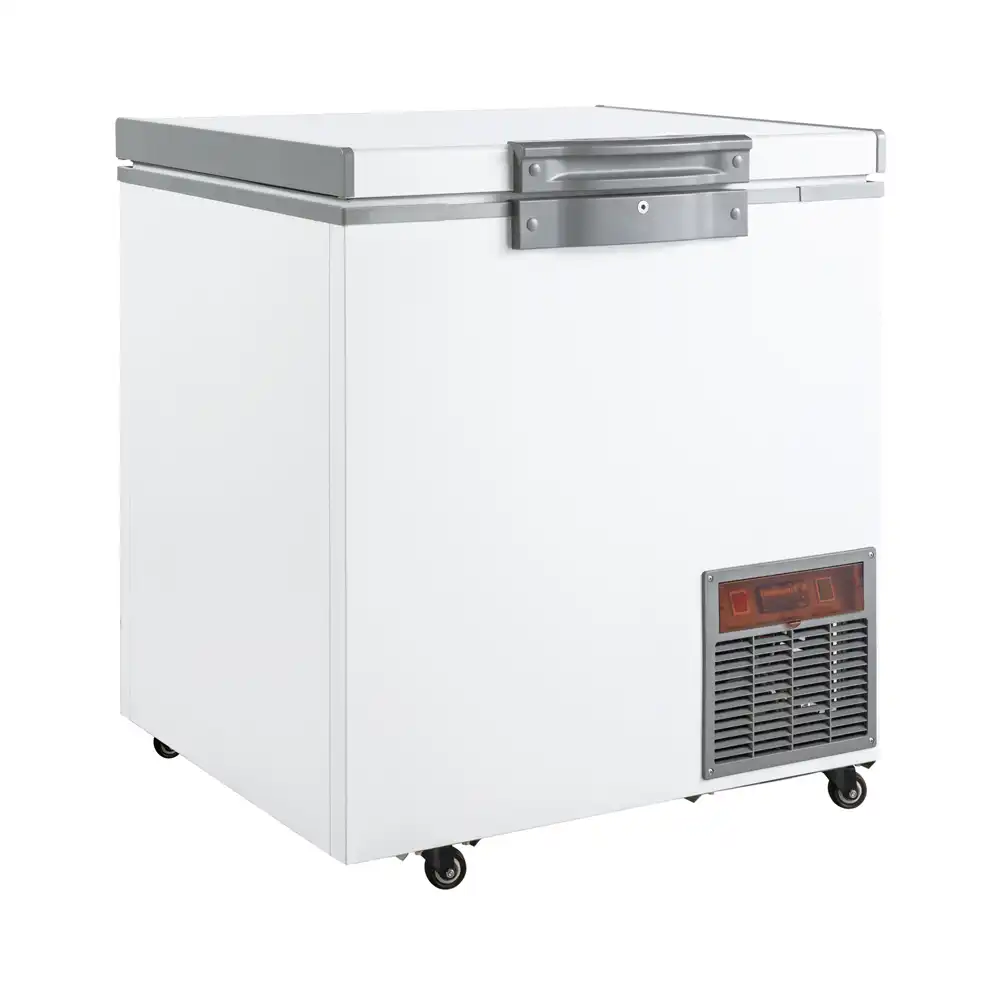
Sealing technology prevents the cold air loss that forces compressors to work harder. Double door seal designs and multi-gasket configurations maintain an airtight barrier even after years of daily opening and closing. The -86°C ULT Freezer (Model DW45W788) demonstrates this approach with ultra-thick foam insulation combined with double door seals. The result is thermal retention that holds steady regardless of how often staff access the unit.
Refrigeration Systems Built for Efficiency
The compressor and refrigeration circuit determine how much electricity the unit actually consumes. High-efficiency compressors from manufacturers like SECOP or Cubigel deliver reliable cooling with reduced power draw. These components have proven track records in demanding applications.
Refrigerant choice affects both efficiency and environmental impact. Eco-friendly R290 refrigerant, used in units like the Camay Commercial Worktop Refrigerator Cooler Fridge (Model MWTF-27-L), improves thermodynamic performance while carrying a lower global warming potential than older HFC alternatives. Variable speed compressors adjust output to match actual cooling demand rather than cycling between full power and off. Cascaded refrigeration systems in ultra-low temperature applications achieve extreme cold more efficiently by staging the cooling process.
If you’re interested, check 《Boost Kitchen Efficiency Workflow Optimization with Chef Base Fridges》.
Technologies Driving Measurable Energy Savings
Beyond structural improvements, specific technologies push efficiency further. These innovations address temperature stability, power consumption patterns, and operational intelligence in ways that compound savings over time.
Monitoring Systems That Prevent Waste
Smart digital temperature control systems with IoT and WiFi connectivity transform how facilities manage their cold storage assets. Remote monitoring allows operators to track performance from anywhere, catching deviations before they become problems. Data logging creates records for compliance documentation and trend analysis.
Predictive analytics identify patterns that suggest maintenance needs before failures occur. A compressor showing early signs of strain can be serviced during scheduled downtime rather than failing during a critical storage period. This proactive approach prevents the energy spikes and temperature excursions that accompany equipment problems.
Defrosting and Heat Exchange Improvements
Traditional defrost cycles consume significant energy and cause temperature fluctuations that stress both the equipment and stored materials. Smart defrost systems activate based on actual frost accumulation rather than fixed timers. The unit defrosts only when necessary, maintaining temperature uniformity while reducing energy consumption.
Enhanced heat exchangers and efficient fan designs improve thermal transfer throughout the system. When heat moves more effectively, the compressor runs less frequently and for shorter periods. The cumulative effect shows up in monthly utility bills and in the consistent temperature curves that sensitive samples require.
The Case for Sustainable Cold Chain Investment
The benefits of energy-efficient ultra freezer technology extend beyond utility cost reduction. Regulatory frameworks increasingly require documentation of energy efficiency and environmental impact. Healthcare and pharmaceutical operations face particular scrutiny regarding cold chain integrity and sustainability practices.
Sample integrity depends on consistent temperature maintenance. The -86°C ULT Freezer (Model DW45W788) provides the stable ultra-low temperature environment that biological samples and pharmaceutical materials require for long-term viability. Fluctuations compromise research outcomes and product quality. Efficient units maintain tighter temperature control because their systems run more smoothly and respond more precisely to changing conditions.
| Feature Category | Traditional Ultra Freezer | Energy-Efficient Ultra Freezer |
|---|---|---|
| Energy Consumption | High (e.g., 20-25 kWh/day) | Low (e.g., 8-12 kWh/day) |
| Insulation | Standard foam | Polyurethane/Cyclopentane, Vacuum Insulation Panels |
| Refrigerant | Older HFCs | Eco-friendly R290, Hydrocarbon mixed |
| Compressor | Fixed speed | Variable speed, High-efficiency SECOP/Cubigel |
| Monitoring | Basic analog | Smart digital with IoT/WiFi |
| Defrost System | Timed manual/automatic | Smart, demand-based automatic |
Consider how adopting more efficient refrigeration can impact your operations by reading 《Boost Savings with Energy Efficient Commercial Upright Freezers》.
Optimize Your Operations with ZHEJIANG KAIMEI CATERING EQUIPMENT CO., LTD
As a leading Professional One-Stop-Shop Refrigeration Equipments Manufacturer, ZHEJIANG KAIMEI CATERING EQUIPMENT CO., LTD is dedicated to providing professional, energy-efficient ultra freezer solutions tailored to your specific needs. We offer advanced refrigeration technology designed to optimize your operations and reduce your carbon footprint. Contact us today at Sales@hzcamay.com or +8618157202219 for a personalized consultation.
Frequently Asked Questions About Energy-Efficient Ultra Freezers
What makes an ultra freezer energy-efficient?
Several design elements work together. Advanced insulation materials like polyurethane and cyclopentane foam minimize heat transfer into the cabinet. Variable speed compressors adjust cooling output to match actual demand rather than running at full capacity constantly. Smart defrost systems activate only when frost accumulation requires it. Intelligent monitoring enables proactive maintenance that keeps all components running at peak efficiency. The combination reduces power consumption while maintaining the precise temperature stability that sensitive materials require.
How much can operational costs drop with an energy-efficient ultra freezer?
Energy savings typically range from 30% to 60% compared to older conventional models. The actual reduction depends on several factors: ambient temperature conditions, how frequently the unit is accessed, the specific efficiency technologies implemented, and the baseline consumption of the equipment being replaced. A lifecycle cost analysis that accounts for both the initial investment and projected operational savings over 10 to 15 years reveals the full financial picture. Most facilities find the payback period falls within three to five years.
What should guide the selection of a sustainable ultra freezer?
Start with the Power Usage Effectiveness rating and compare it across models in your target temperature range. Check the refrigerant type. Natural refrigerants like R290 offer both efficiency and environmental advantages. Evaluate insulation specifications and compressor technology. Look for smart monitoring capabilities that support remote access and data logging. Beyond the equipment itself, consider the manufacturer’s track record for product longevity and service support. A sustainable investment performs reliably for years, and after-sales support matters when questions arise or maintenance becomes necessary.