

Integrating worktops with refrigeration units changes how a commercial kitchen actually functions. The difference shows up in tighter workflows, better use of floor space, and cleaner prep zones. Getting this right means thinking through placement, materials, specs, and long-term upkeep before anything gets bolted down. What follows covers the practical side of making these systems work together.
Planning That Actually Fits Your Kitchen
Good planning starts with watching how your kitchen moves. Where do cooks reach for cold ingredients? Where do they prep? The answers shape where refrigerated worktops belong.
A few things matter here:
- Workflow mapping: Trace the path ingredients take from storage to plate. Refrigerated worktops should sit where cooks need cold items most, not where there happens to be space.
- Space math: Every square foot counts. Layouts need to balance surface area, equipment footprint, and clear paths for staff carrying hot pans.
- Body mechanics: Worktop height affects fatigue. Position units so staff aren’t hunching or reaching awkwardly through a shift.
- Storage volume: Estimate how much refrigerated space you actually need. Undersizing means constant restocking; oversizing wastes energy and floor space.
- Room to grow: Menus change. Build in flexibility so you’re not ripping out equipment in two years.
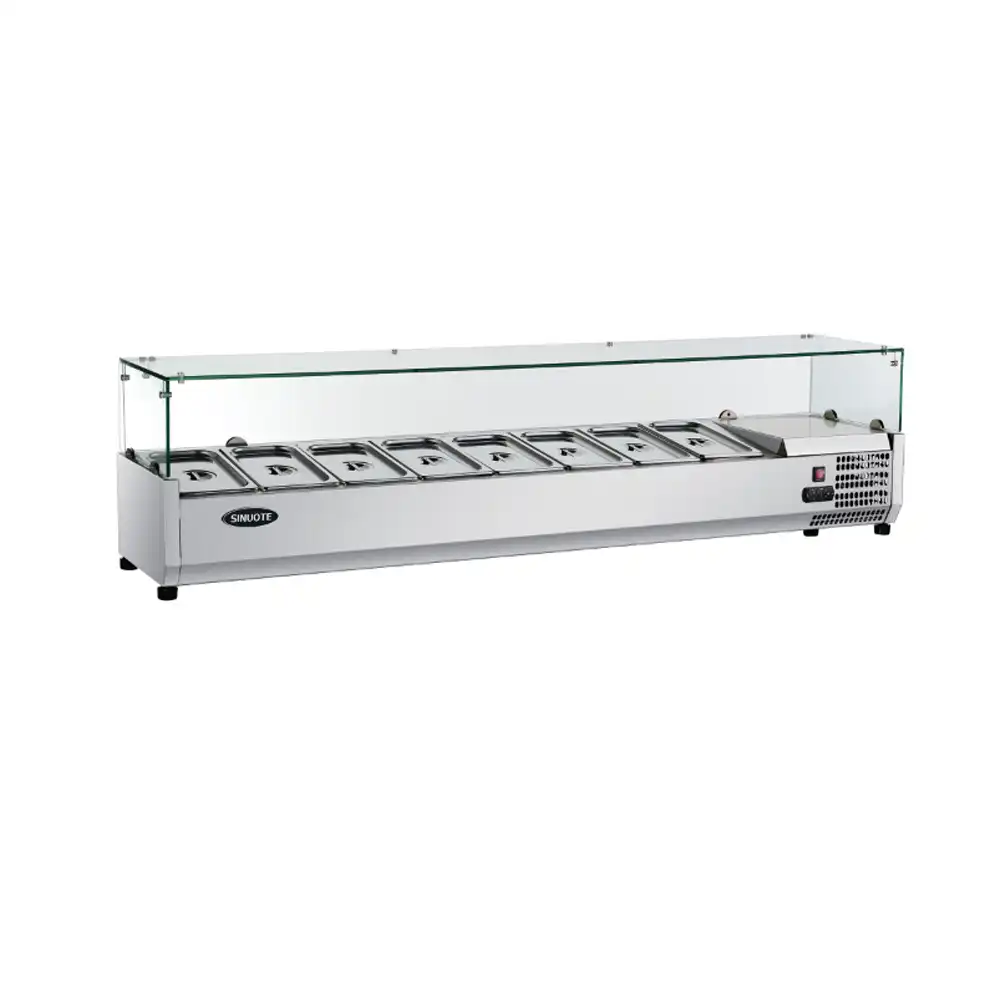
A pizzeria, for instance, might place a Pizza Table like the Camay VRX395-1600 right at the make station. With 58 liters of capacity and a +2°C to +8°C range, toppings stay cold where hands can reach them. A salad operation could use a Semi Mega Salad Table such as the Camay MSR-48M, holding 368 liters at 0.5°C to 5°C. The point is matching equipment to actual work patterns.
Picking Materials That Hold Up
Material choice affects durability, cleaning, and whether health inspectors raise eyebrows. Commercial kitchens punish surfaces, so what you pick needs to handle heat, moisture, impacts, and constant sanitizing.
| Material Type | Key Properties | Thermal Conductivity | Hygiene Rating | Durability |
|---|---|---|---|---|
| Stainless Steel | Non-porous, corrosion-resistant, heat-tolerant | High | Excellent | High |
| Solid Surface | Seamless, non-porous, repairable | Medium | Very Good | Medium |
| Quartz | Non-porous, scratch-resistant, impact-resistant | Low | Excellent | High |
| Laminated | Cost-effective, wide range of aesthetics | Low | Good | Medium |
Stainless steel, especially 304-grade, remains the workhorse. Bacteria can’t penetrate its surface, and it survives years of scrubbing. The Camay Commercial Worktop Refrigerator Cooler Fridge (Model MWTF-27-L) uses this construction for exactly those reasons. Solid surface materials work well when you need sinks integrated without seams, eliminating the crevices where grime collects. Whatever you choose, verify it meets food safety requirements and carries appropriate certifications like NSF where needed.
Technical Specs Worth Understanding
Specifications determine whether a unit performs reliably or becomes a headache. Energy draw, temperature stability, and compressor quality all factor into daily operations and long-term costs.
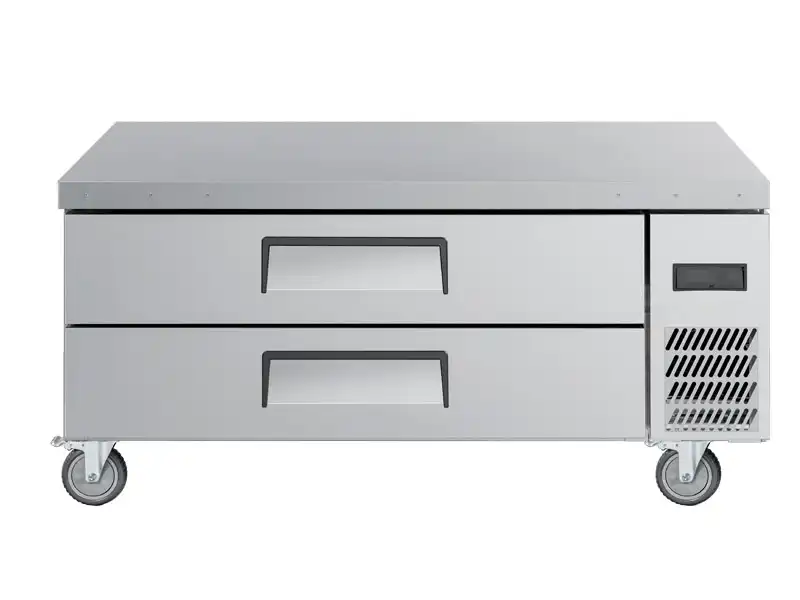
The Camay 60″ Countertop Refrigerated Chef Base (Model MAR-60A) runs a heavy-duty compressor with R290 refrigerant, holding internal temps between 0.5°C and 5°C. Polyurethane and cyclopentane insulation cuts energy use. Several Camay models, including the MTR-72, offer smart digital controls with optional IoT and WiFi connectivity for remote monitoring. That means catching temperature drift before it becomes a food safety problem.
| Feature | Camay MWTF-27-L (Freezer) | Camay MAR-60A (Refrigerator) | Camay MTR-72 (Refrigerator) |
|---|---|---|---|
| Classification | Freezer | Refrigerator | Refrigerator |
| Inner Temperature | -25°C to -15°C (-13°F to 5°F) | 0.5°C to 5°C (33°F to 41°F) | 0.5°C to 5°C (33°F to 41°F) |
| Refrigerant | R290 | R290 | R290 |
| Compressor | Cubigel | Heavy-duty | Cubigel |
| Insulation | Polyurethane/Cyclopentane, CFC-free | Polyurethane/Cyclopentane, CFC-free | Polyurethane/Cyclopentane, CFC-free |
| Cooling System | Ventilated | Ventilated | Ventilated |
For more on getting the most from these setups, see 《Optimizing Kitchen Efficiency with Integrated Worktop Refrigeration》.
Installation That Prevents Problems Later
How equipment gets installed determines whether it runs smoothly for years or causes recurring issues. Shortcuts here cost more in repairs and downtime than doing it right the first time.
- Airflow clearance: Refrigeration units need breathing room. Blocking ventilation forces compressors to work harder, shortening their lifespan and spiking energy bills.
- Electrical setup: Check voltage and amperage requirements against your circuits. Dedicated lines with proper grounding prevent tripped breakers and potential hazards.
- Level surfaces: An unlevel unit causes doors to seal poorly and cooling to distribute unevenly. Take the time to get this right. Models with adjustable legs or casters, like the Camay Commercial Worktop Refrigerator Cooler Fridge, make this easier.
- Tight seals: Where worktops meet refrigeration units, proper sealing keeps moisture out and maintains thermal performance. Gaps also create places for bacteria to hide.
- Drainage connections: Automatic defrost systems need somewhere for water to go. Connect drain lines correctly to avoid puddles and potential slip hazards.
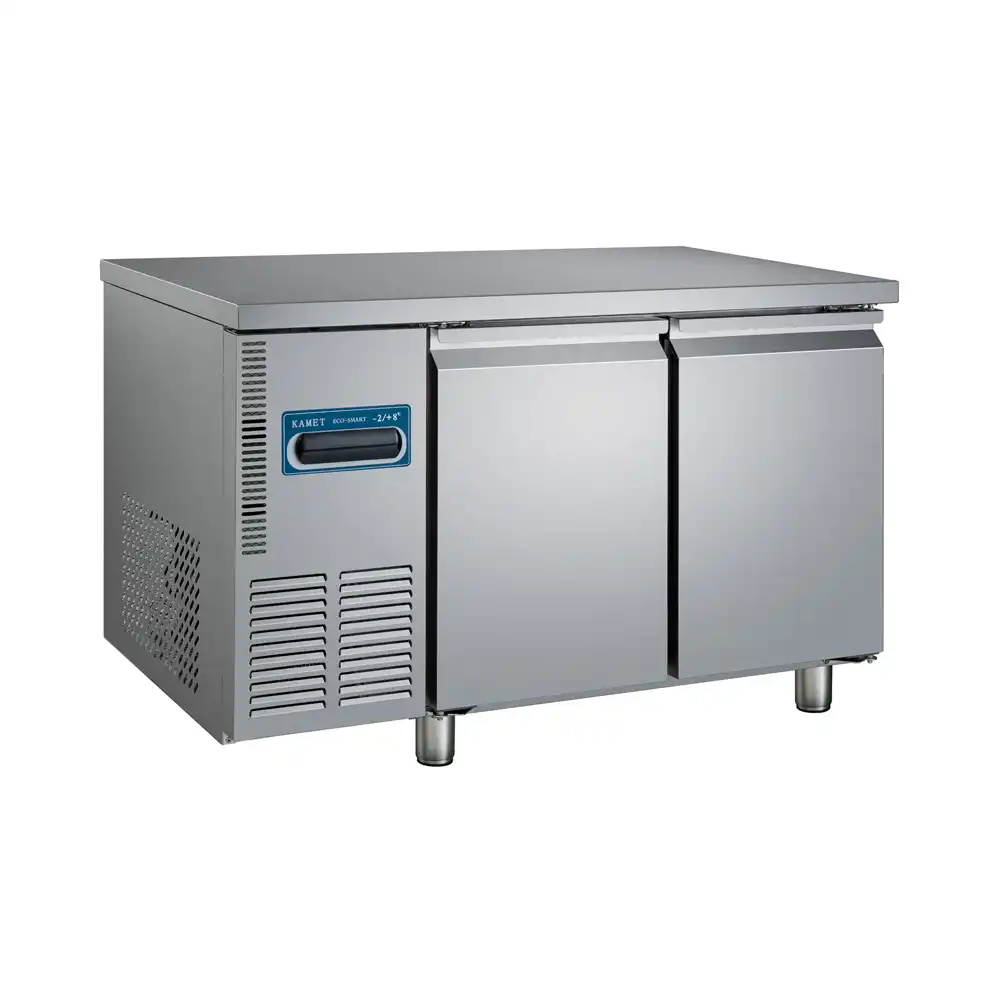
The Camay MTR-48 2-Door Commercial Undercounter Refrigerator features self-closing doors and removable gaskets, both of which simplify long-term maintenance when installed correctly.
Keeping Equipment Running Long-Term
Maintenance separates equipment that lasts a decade from equipment that fails in three years. A consistent routine catches small issues before they become expensive repairs.
- Daily cleaning: Wipe down surfaces, interior compartments, and door gaskets. Camay units like the MWTF-27-L have removable gaskets and rounded interior corners that make this faster.
- Condenser coil care: Dust and grease accumulate on coils, forcing compressors to work harder. Clean them periodically to maintain efficiency.
- Temperature checks: Verify that displayed temps match actual internal conditions. Digital systems with IoT capability help track this continuously.
- Seal inspection: Worn or damaged gaskets let cold air escape. Check them regularly and replace when they show wear.
- Annual professional service: Have a technician inspect refrigerant levels, electrical connections, and mechanical components once a year. This catches problems that visual inspection misses.
These steps protect your investment in Work Top and refrigeration systems. For more detailed guidance, see 《Essential Maintenance Tips for Your Commercial Chef Base Refrigerator》.
Meeting Safety and Compliance Requirements
Regulations exist for good reasons, and inspectors take them seriously. Building compliance into your design from the start avoids costly retrofits and potential shutdowns.
- Food safety rules: HACCP guidelines and local equivalents require proper temperature control, contamination prevention, and sanitation protocols. Integrated refrigeration supports these when designed correctly.
- Health department standards: Materials, construction quality, and operational safety all face scrutiny. Stainless steel construction helps meet these requirements.
- Electrical codes: Installations must follow recognized safety standards. Products carrying ETL, CE, or PSE certifications have been tested against these requirements.
- Environmental compliance: R290 refrigerant, used in Camay units, meets current environmental regulations while providing effective cooling.
- Workplace safety: Equipment placement should minimize physical hazards and support safe movement through the kitchen.
Camay products carry certifications including ETL, DOE, ENERGY-STAR, CE, and ISO. The MTR-60 Commercial Undercounter Refrigerator, for example, holds both ETL and ENERGY STAR certification.
Frequently Asked Questions About Integrated Kitchen Systems
What are the best materials for worktops integrated with refrigeration units?
Stainless steel handles the demands of commercial kitchens better than most alternatives. It resists bacteria, cleans easily, and survives years of heavy use. Solid surface materials work well when seamless integration matters, such as around sinks. The right choice depends on your specific operation, but food safety and durability should drive the decision.
How do integrated refrigeration units impact kitchen workflow efficiency?
Placing refrigerated storage at prep stations cuts the distance cooks travel and keeps ingredients at safe temperatures until they’re needed. This speeds up service and reduces the window for temperature abuse. The efficiency gains compound over a busy shift.
What are the key considerations for maintaining hygiene with integrated worktops?
Seamless construction and non-porous materials eliminate hiding spots for bacteria. Establish a cleaning schedule that covers all surfaces, seals, and joints. Regular inspection catches wear before it creates contamination risks. Meeting food safety regulations requires consistent attention to these details.
Elevate Your Commercial Kitchen with ZHEJIANG KAIMEI’s Expertise
As a professional One-Stop-Shop Refrigeration Equipments Manufacturer, ZHEJIANG KAIMEI CATERING EQUIPMENT CO., LTD offers unparalleled solutions for integrating worktops with refrigeration units. Contact us today at Phone: +8618157202219 or Email: Sales@hzcamay.com to design a high-performance, compliant, and efficient kitchen tailored to your needs. Partner with us for superior quality and seamless integration.