
Mastering Central Kitchen Equipment Selection for Peak Performance
Getting equipment choices right in a central kitchen makes or breaks daily operations. The wrong refrigerator, an undersized oven, or a prep station that fights your workflow—these mistakes compound quickly when you’re producing food at scale. What follows covers the decisions that actually matter: layout logic, equipment categories, refrigeration specifics, cost realities, and how to think about growth before you need it.
Strategic Planning for Central Kitchen Layout and Workflow
Central kitchen design starts with how people and ingredients move through space. A receiving dock that feeds directly into storage, storage that opens near prep, prep that flows toward cooking stations—this sequence sounds obvious until you see kitchens where staff walk past the dishwashing area three times to complete a single task.
The physical arrangement determines labor costs more than most operators realize. Bottlenecks at prep stations during peak hours, cross-traffic between hot and cold sections, storage that requires a journey to access—these layout failures accumulate into thousands of wasted hours annually. Equipment placement follows workflow logic, not the other way around.
Essential Equipment Categories for Central Kitchen Success
Central kitchens depend on five equipment categories working together. Missing capacity in any single category creates cascading problems across the operation.
| Equipment Category | Examples | Key Function |
|---|---|---|
| Cooking | Ovens, Ranges, Fryers | Heat treatment, volume cooking |
| Refrigeration | Walk-ins, Blast Chillers | Food preservation, rapid cooling |
| Preparation | Slicers, Mixers, Processors | Ingredient processing, portioning |
| Warewashing | Dishwashers, Sinks | Sanitation, hygiene |
| Storage | Shelving, Dry Storage Bins | Organized ingredient holding |
The balance between categories shifts based on menu complexity and production volume. A central kitchen producing 5,000 meals daily for institutional clients needs different proportions than one supplying 50 restaurant locations with varied menus.
Advanced Refrigeration Solutions for Food Safety and Preservation
Refrigeration carries more operational weight in central kitchens than in single-location restaurants. Product moves through temperature-controlled environments multiple times: receiving, storage, prep holding, post-production cooling, and dispatch staging. Each transition point presents contamination and quality risks.
Blast chillers have become standard for operations producing food that travels before service. Dropping cooked product from 160°F to 38°F within 90 minutes isn’t optional—it’s the difference between safe food and liability. Ultra-low temperature freezers serve operations with extended holding requirements or specialized products.
Modern units deliver precise temperature control while consuming less energy than equipment from even five years ago. The technology improvements are real, though marketing claims often outpace actual performance gains.
Ensuring Food Safety and Hygiene with Advanced Equipment
Equipment design directly affects sanitation outcomes. Smooth interior surfaces without crevices, removable gaskets that actually come off for cleaning, rounded corners that don’t trap debris—these features matter during the 2 AM deep clean when staff are tired and cutting corners becomes tempting.
HACCP-compliant temperature monitoring has moved from premium feature to baseline requirement. Units like the Camay Commercial Worktop Refrigerator Cooler Fridge incorporate easy-cleaning construction that supports daily sanitation protocols without requiring disassembly.
Stainless steel remains the standard material for good reason: it survives aggressive cleaning chemicals, resists corrosion, and doesn’t harbor bacteria in surface imperfections.
For further insights into maintaining your refrigeration units, consider reading 《Essential Maintenance Tips for Commercial Reach In Refrigerators》.
Evaluating Durability and Efficiency in Cooking and Preparation Gear
Central kitchen equipment runs harder than restaurant equipment. A prep mixer that operates two hours daily in a restaurant might run eight hours in a central kitchen. This usage intensity changes the durability calculation entirely.
Material thickness, motor ratings, bearing quality, and construction methods separate equipment that lasts from equipment that becomes a maintenance burden. Energy ratings matter too—a 10% efficiency difference compounds significantly when equipment runs continuously.
The evaluation process requires looking past spec sheets. How does the compressor sound after four hours of continuous operation? Do the door hinges show wear patterns after a year? These questions get answered by talking to operators who’ve used the equipment, not by reading manufacturer literature.
Long Term Cost Implications of Central Kitchen Equipment Choices
Purchase price represents perhaps 30% of total equipment cost over its operational life. Energy consumption, maintenance labor, parts replacement, and eventual disposal costs make up the rest.
| Equipment Type | Initial Cost | Energy Efficiency | Expected Lifespan | Maintenance Frequency |
|---|---|---|---|---|
| High-Efficiency Refrigerator | Higher | Excellent | 10-15 years | Low |
| Standard Refrigerator | Moderate | Good | 7-10 years | Medium |
| Basic Prep Table | Low | N/A | 5-7 years | Low |
| Commercial Oven | High | Variable | 10-15 years | Medium |
| Industrial Mixer | High | Good | 10-20 years | Low |
The Camay Commercial Worktop Refrigerator Cooler Fridge uses R290 refrigerant and polyurethane/cyclopentane foamed insulation—choices that reduce energy consumption measurably over the unit’s lifespan. These material decisions don’t show up in purchase price comparisons but appear clearly in utility bills.
Scalability and Future Proofing Your Central Kitchen Investment
Growth assumptions built into equipment decisions often prove wrong in both directions. Operations that planned for 50% expansion sometimes contract. Operations that bought conservatively sometimes need to double capacity within two years.
Modular equipment designs accommodate uncertainty better than fixed configurations. Units that can be reconfigured, expanded, or repurposed protect against planning errors.
Technology integration presents a different kind of future-proofing question. Equipment with IoT and WiFi monitoring capabilities costs more upfront but enables operational visibility that manual monitoring can’t match. Whether this capability justifies the premium depends on operational scale and management sophistication.
Partnering with a Trusted One Stop Shop for Comprehensive Solutions
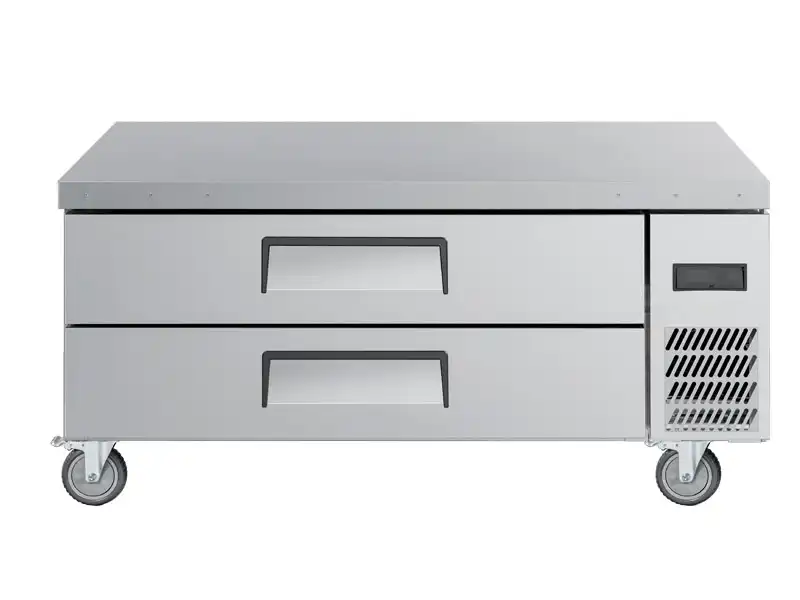
Single-vendor relationships simplify procurement but require finding vendors with genuine breadth. A manufacturer that actually produces refrigeration, prep equipment, and storage solutions differs from a distributor that assembles products from multiple sources.
The integration benefits are real: equipment designed to work together, consistent quality standards, single-point accountability when problems arise. Project management from a knowledgeable vendor prevents the coordination failures that plague multi-vendor installations.
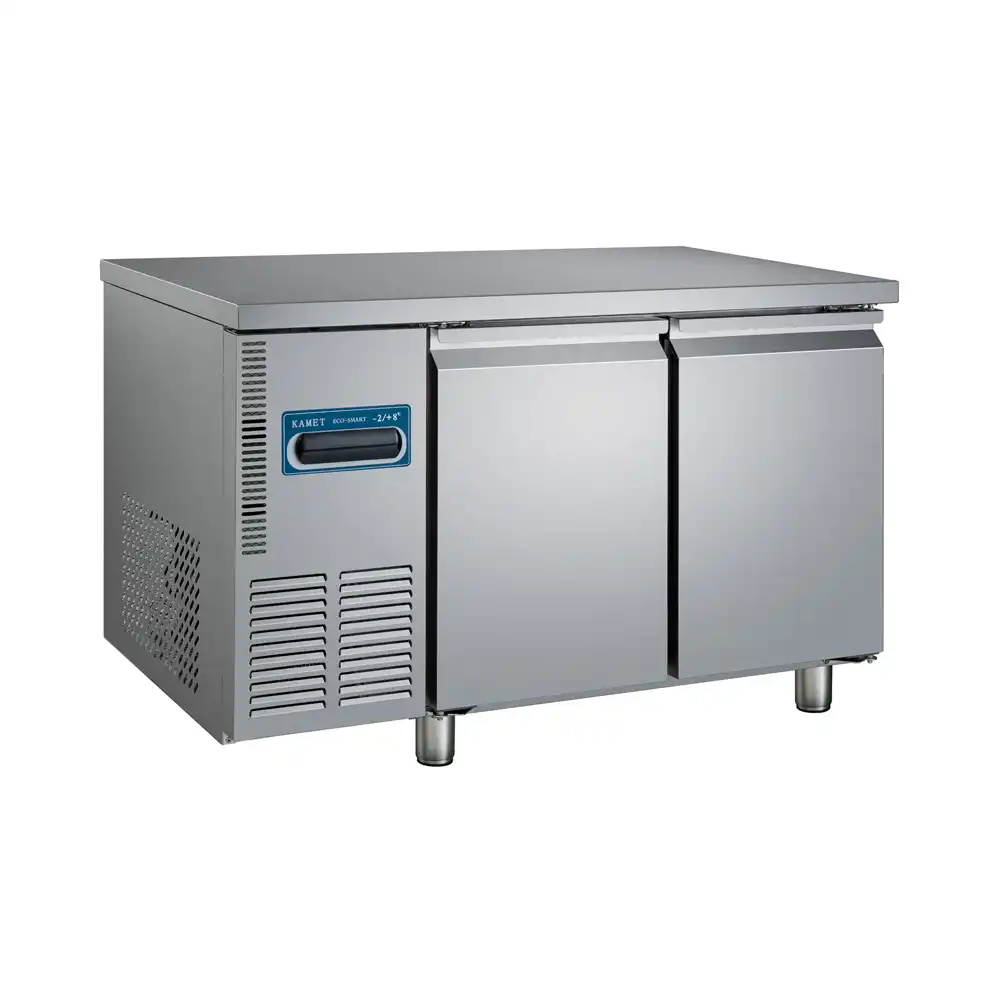
For those looking to optimize their kitchen workflow, exploring 《Boost Kitchen Efficiency Workflow Optimization with Chef Base Fridges》 can provide valuable insights.
Optimize Your Central Kitchen Operations
ZHEJIANG KAIMEI CATERING EQUIPMENT CO., LTD. brings manufacturing expertise and comprehensive solutions to central kitchen projects. As a refrigeration equipment manufacturer operating as a genuine one-stop-shop, we handle the complexity that multi-vendor approaches create.
Reach us at +8618157202219 or Sales@hzcamay.com to discuss your project requirements and explore how purpose-built equipment supports your operational goals.
What are the key considerations for selecting refrigeration equipment for a central kitchen?
Energy efficiency, precise temperature control, construction quality for continuous use, and cleaning accessibility top the list. Capacity must match production volume with some margin for peak demand. Advanced monitoring features add value at scale. Our Solid Door Freezer Cooler and undercounter models address these requirements directly.
How does ZHEJIANG KAIMEI support the entire central kitchen equipment procurement process?
We provide consultation, layout planning, equipment selection, manufacturing, and ongoing support as an integrated service. Our position as a refrigeration equipment manufacturer means we control quality throughout the process rather than coordinating between separate suppliers. Our Product Catalogue covers the full range of central kitchen needs.
What are the benefits of investing in high-quality, durable central kitchen equipment?
Lower maintenance costs, reduced energy consumption, better food safety outcomes, and longer service life add up to superior total cost of ownership. The premium for quality equipment typically pays back within three to five years through operational savings.
Can ZHEJIANG KAIMEI provide customized refrigeration solutions for specific central kitchen needs?
Yes. We design and manufacture equipment tailored to specific operational requirements, including specialized units such as Ultra Freezer configurations for particular storage applications. Custom solutions start with understanding your workflow, capacity needs, and space constraints.